




Miniature Brass Mantle Clock
A miniature brass mantle clock brings remarkable precision and presence to a desk or shelf without demanding the space of a full-sized timepiece.
Miniature Brass Mantle Clock
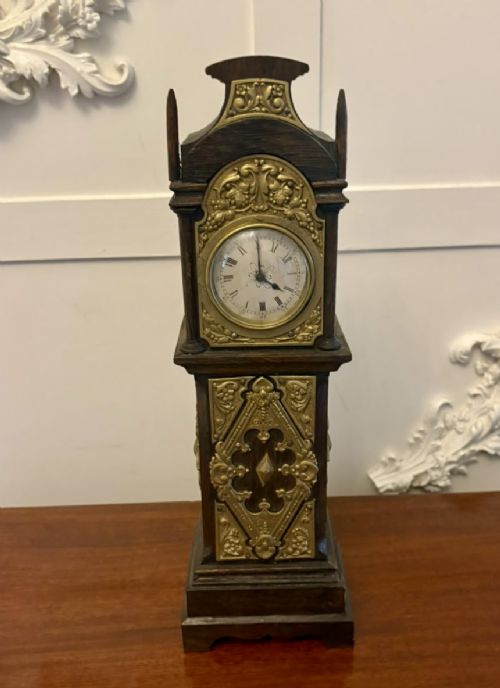
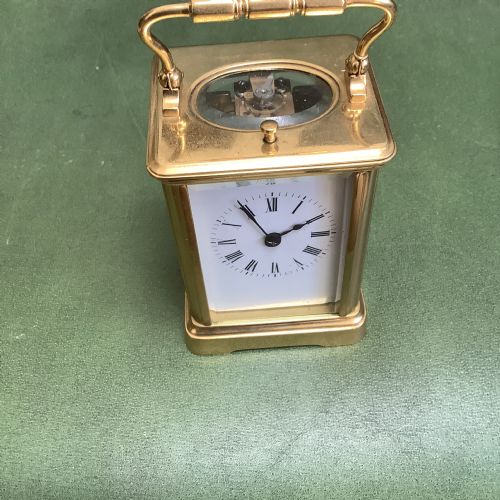
When you search for a miniature brass mantle clock, you are looking at small-scale horological pieces designed for travel, bedside use, or compact display. The selections on this page span several decades and styles, capturing the shift from nineteenth-century carriage designs to twentieth-century bracket and alarm formats.
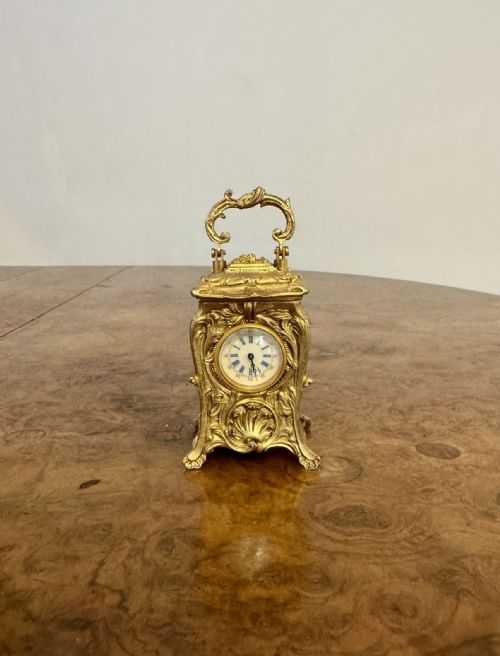
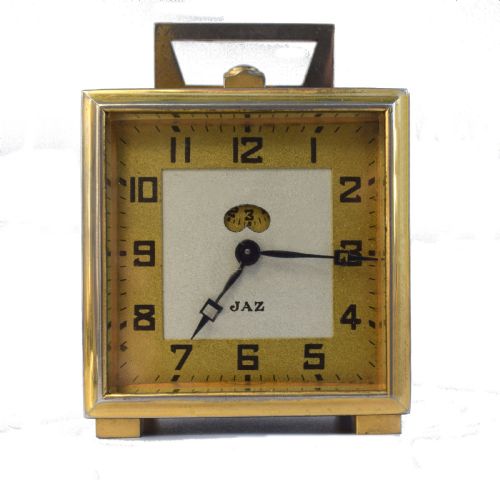
The versions you are most likely to meet here include Victorian carriage clocks housed in bevelled glass and brass cases, alongside French bedside pieces and diminutive bracket clocks. These items originate from periods ranging from the Regency era through to the 1930s Art Deco movement.
Each piece demonstrates how makers adapted traditional clockmaking mechanics into diminutive proportions. Whether cased in brass, ormolu, or mahogany, these portable timepieces reflect the domestic and travel requirements of their original owners.
Materials and construction methods
The construction of these pieces relies heavily on cast and polished brass, often combined with heavy bevelled glass panels that reveal the internal movement. Ormolu and gilt brass finishes appear frequently, providing a reflective surface that highlights the intricate metalwork.
Dials frequently feature white enamel with distinct numerals, whilst specialised examples incorporate decorative elements such as Limoges enamel or leather outer cases. Internal movements range from standard time-only mechanisms to eight-day striking trains and integrated alarm complications.
Miniature Brass Mantle Clock Retail Price Guide 2026
Typical asking prices for miniature brass mantle clock among the pieces listed under this phrase on Sellingantiques today, from the lower quarter to the upper quarter. They describe what is for sale here now, not the wider market.
Some tiny travelling clocks come with miniature leather carrying cases, proving that even Victorian timepieces needed a proper winter coat.
Distinctions in standard and execution
Quality in these timepieces rests on the crispness of the brass casting and the integrity of the bevelled glass panels. Superior examples exhibit precise engraving, well-fitted doors, and unblemished enamel dials.
The sophistication of the internal movement further separates standard production from finer work, particularly where complications like striking trains or alarms operate smoothly. Maker attribution also plays a role, with signed pieces from established firms demonstrating higher levels of mechanical finish.
Mappin & Webb·Adams of Lombard Street·Jaz
The Miniature Brass Mantle Clock Glossary
- Carriage clock
- A small, portable spring-driven clock designed for travel during the nineteenth century, typically featuring a brass frame inset with glass panels and a swing handle on top.
- Ormolu
- Gilt bronze, created by applying a finely ground high-carat gold-mercury amalgam to a bronze object before heating to drive off the mercury.
- Bracket clock
- A portable table clock originally designed to sit upon a wall bracket, featuring a mechanical movement and frequently a carrying handle.
- Enamel dial
- A clock face formed by fusing powdered glass to a metal substrate at high temperatures, producing a durable, smooth white surface for painted numerals.
Miniature Brass Mantle Clock: Frequently Asked Questions
How do I wind a miniature brass mantle clock?
Most of these clocks utilise a small key inserted into the winding square on the dial or backplate. Turn the key gently until you feel resistance, taking care not to over-wind the mainspring.
Check whether your model is an eight-day or daily movement to establish the correct winding schedule for the mechanism.
What is the difference between a carriage clock and a bracket clock?
Carriage clocks are characterised by their brass and glass cases with integral carrying handles, designed specifically for travel. Bracket clocks are typically wooden-cased table timepieces derived from earlier architectural styles.
Both serve as portable timekeepers, but their external housings reflect different domestic traditions and periods.
How do I date a Victorian brass clock?
Dating relies on stylistic clues such as the shape of the brass case, the font of the numbers on the enamel dial, and any maker marks. Victorian pieces often display Rococo Revival influences or simpler architectural brass framing.
Comparative examination of the escapement and glass bevelling also helps narrow the manufacturing period.
Where should I place a miniature clock at home?
These pieces suit stable surfaces away from direct sunlight, excessive moisture, and temperature fluctuations that might affect the delicate internal metalwork. Desks, mantles, and bedside tables provide ideal settings where their proportions can be appreciated.
Ensure the surface is level so the pendulum or balance wheel beats evenly.