



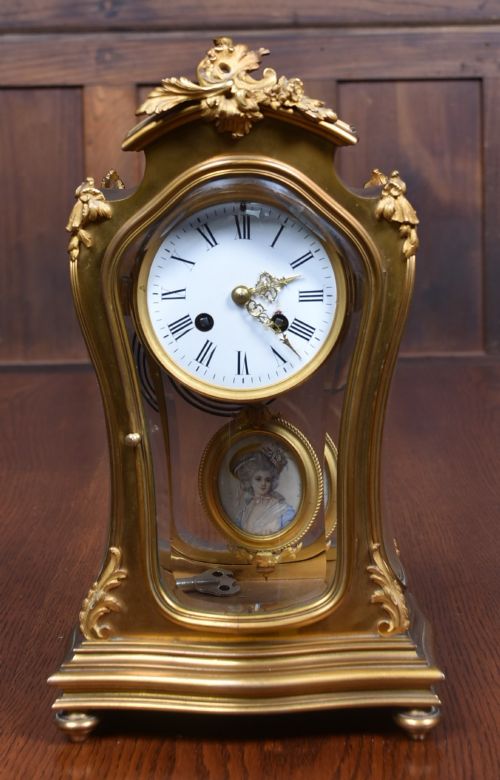


Antique Miniature Clock
An antique miniature clock packs fine horological mechanics and decorative arts into a remarkably small domestic scale.
Antique Miniature Clock
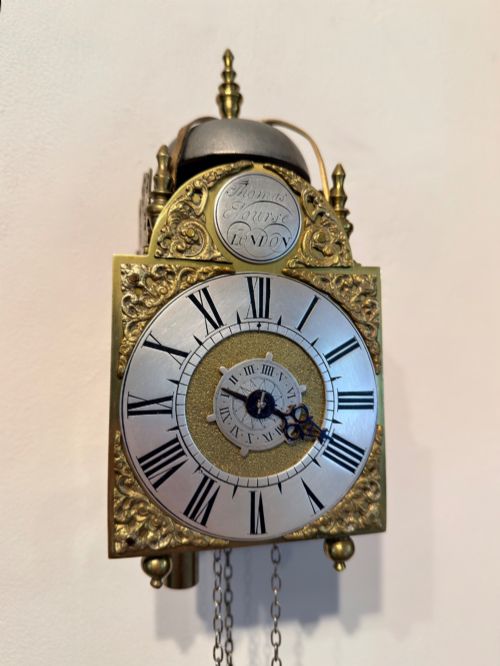
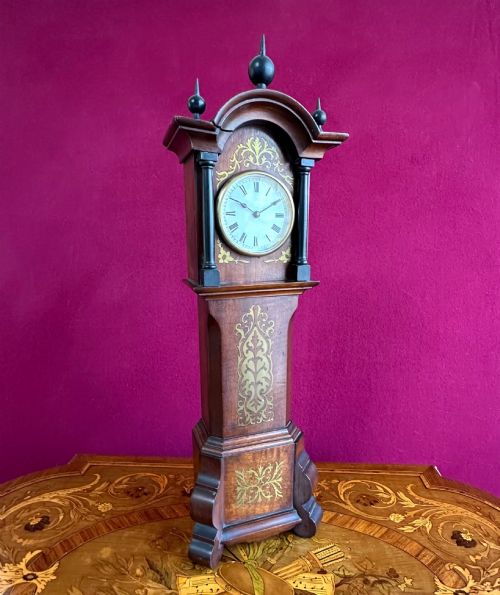
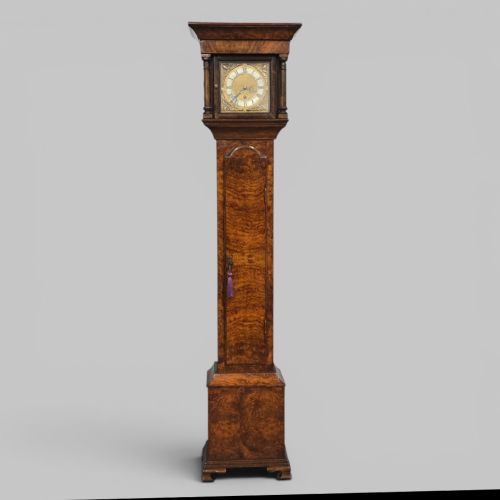
When you search for an antique miniature clock, you encounter a diverse array of diminutive timekeepers spanning the nineteenth and early twentieth centuries. These pieces encompass travel timepieces, bracket models, portico desk formats, and scaled-down longcase designs often termed grandfather or grandmother clocks.
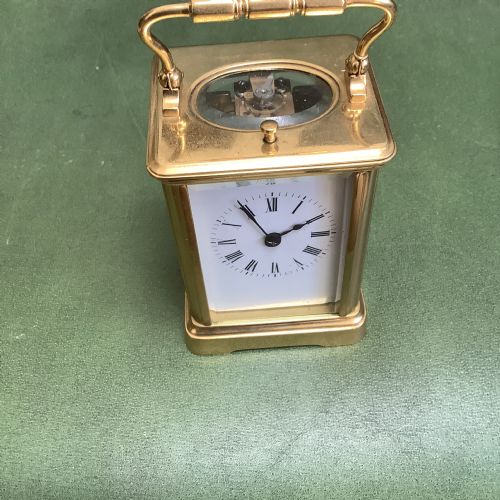
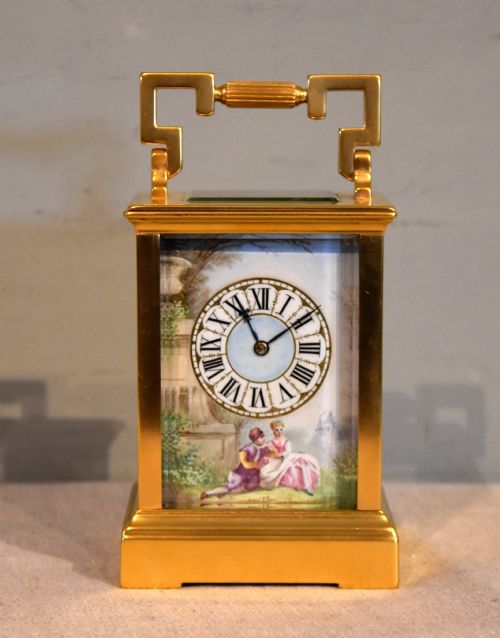
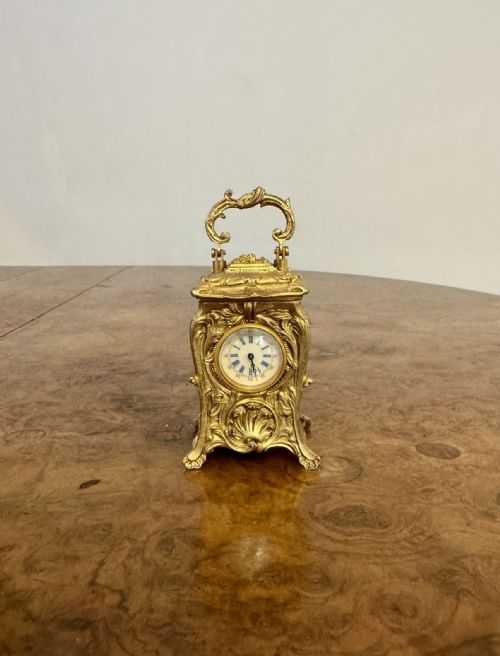
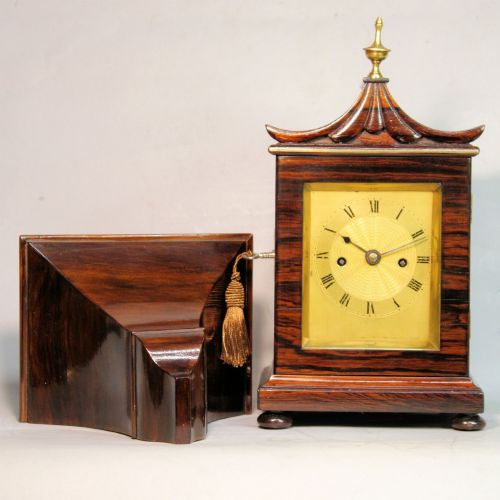
Carriage clocks and brass mantel formats dominate the selection, frequently housed in glass-panelled brass cases or enriched with enamel work. Alongside these travel pieces, English bracket clocks with fusee movements and mahogany longcase examples appear regularly across the inventory.
The aesthetic vocabulary draws upon Georgian, Regency, Victorian, Edwardian, and Art Deco eras, sometimes styled in deliberate revivals of earlier periods. Originating from English, French, Swiss, and Viennese makers, these items served as portable bedchamber timepieces or decorative mantel ornaments.
Materials and mechanical construction
Brass, gilt brass, and ormolu form the structural chassis for many French and English carriage styles, often enclosing intricate gear trains driven by springs or fusee mechanisms. Mahogany, walnut, and rosewood timber cases provide housing for shelf and longcase variations, frequently embellished with inlay or brass mounts.
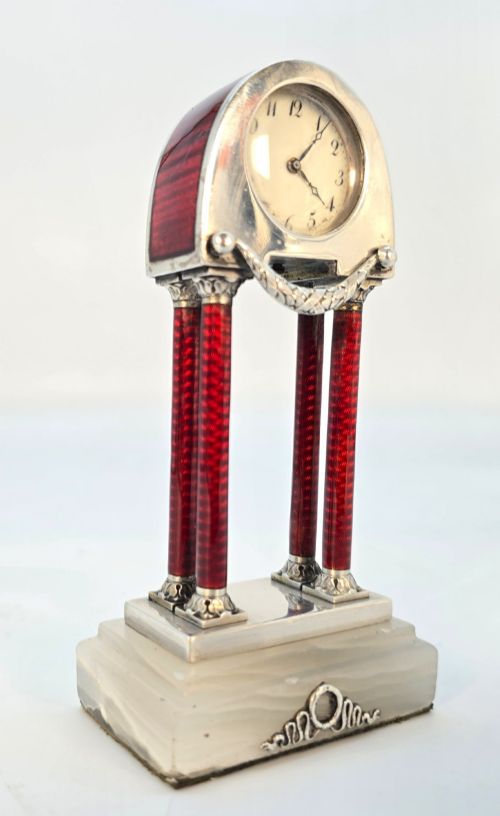
Silver casings, sometimes executed in vermeil or enhanced with hammered finishes, house specialised boudoir and dressing table pieces. Vitreous enamel dials, champlevé enamel borders, guilloché patterns, and porcelain panels supply the visual decoration across both Swiss travel clocks and Viennese desk pieces.
Materials span natural mahogany and walnut timbers alongside precious metals, hand-painted porcelain, and vibrant guilloché enamels.
Distinctions in horological and decorative execution
Quality rests upon the precision and complexity of the internal movement, separating simple timepieces from examples equipped with striking mechanisms, alarm functions, or repeating capabilities. Signed movements by recognised makers carry greater technical authority than unmarked workshop output.
The cabinetry and exterior ornamentation establish the visual tier, ranging from plain wooden carcasses to heavily chased gilt-bronze cases, hand-painted porcelain plaques, and undamaged enamel dial work. Preservation of original mercury gilding, glass panels, and matching winding keys elevates an example above altered or later-assembled pieces.
Mappin & Webb·Georg Adam Scheid·J Batson & Son·Grimaldi and Johnson·Webster London·J.H. Rose Ramsgate·Gurdon Woodbridge·Payne London·Gibbs London·Wilson And Gill London
The Antique Miniature Clock Glossary
- Carriage clock
- A portable spring-driven timepiece designed for travel, typically featuring a rectangular brass and glass case with a folding handle on top.
- Fusee
- A conical pulley used in mechanical clocks to equalize the diminishing power of the mainspring as it unwinds, ensuring steady timekeeping.
- Champlevé
- An enamelling technique where troughs are dug into a metal surface and filled with vitreous enamel before firing and polishing.
- Grandmother clock
- A slender, scaled-down version of a longcase clock, shorter than a traditional grandfather clock but taller than a table model.
- Guilloché
- A decorative mechanical engraving technique that produces precise, intricate repeating patterns upon metal surfaces beneath translucent enamel.
Antique Miniature Clock: Frequently Asked Questions
What is a carriage clock?
A carriage clock is a small, spring-driven timepiece originally built for travellers during the nineteenth century. These clocks are housed in brass and glass frameworks, allowing the internal gear train to be viewed from multiple angles.
Most variants feature a swinging handle on the top plate and were supplied with a dedicated travelling case. They range from plain brass timepieces to heavily engraved and enamelled examples.
How do fusee movements work?
A fusee movement uses a conical pulley connected to the mainspring via a cord or chain. As the spring unwinds and loses tension, the chain moves to a wider section of the cone, maintaining consistent torque on the escapement.
This mechanism was standard in better-quality English clocks to improve timekeeping accuracy over the running period of the watch train.
Where were miniature longcase clocks used?
Miniature longcase clocks, often called grandmother or grandfather clocks depending on their height, were placed in hallways, parlours, and bedchambers where full-sized floor clocks would not fit. They replicated the proportions and striking mechanisms of domestic tall clocks on a compact scale.
Cabinetmakers utilised mahogany, walnut, and rosewood veneers, sometimes incorporating marquetry or Chippendale styling to suit polite domestic interiors.
How do you date an antique miniature clock?
Dating relies upon stylistic markers, case materials, escapement types, and any signatures inscribed on the dial or movement backplate. Victorian and Edwardian pieces often display distinct revival styles or manufacturing stamps unique to French and English workshops.
Documented retailer signatures and hallmarks on silver or gilt-bronze cases provide reliable benchmarks for establishing the period of production.