


English Chamber Clock
An english chamber clock is a historic weight-driven timekeeper designed for domestic walls or tables, prized by collectors for its brass framework and early escapement mechanics.
English Chamber Clock
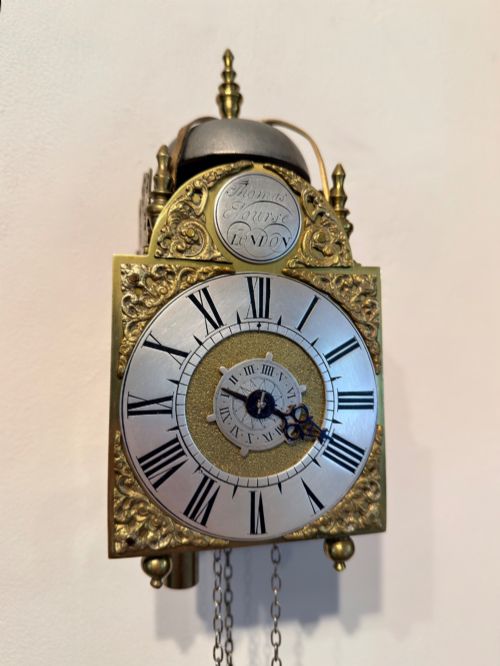
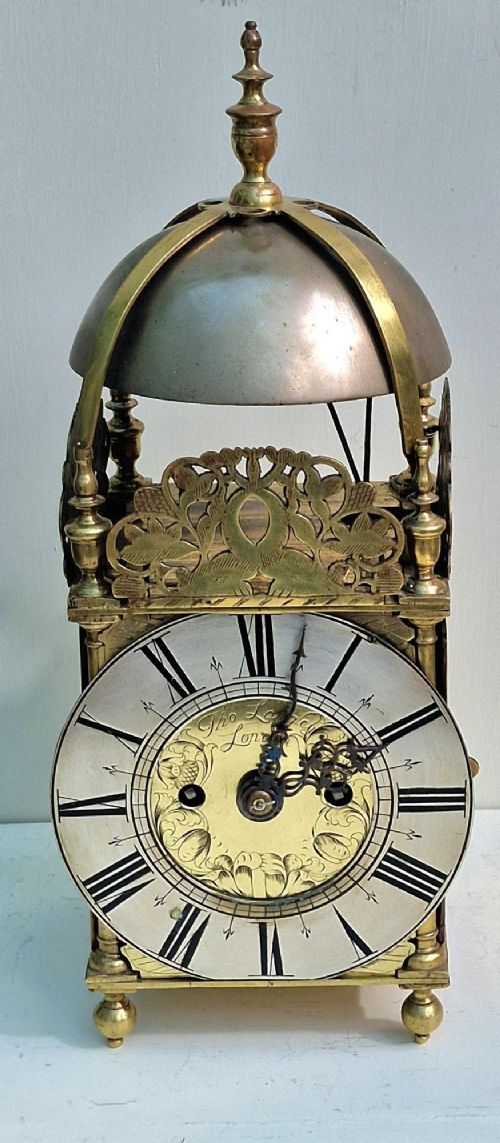
An english chamber clock is primarily represented on this page by lantern clocks, wall clocks, and table clocks spanning the seventeenth century, eighteenth century, and nineteenth century. These domestic timepieces include first, second, and third period examples featuring architectural brass cases and traditional dial layouts.
The selection ranges from early seventeenth century pieces made around sixteen twenty to later eighteenth century productions with verge escapements and alarms. Regional makers from London, Lancashire, Wiltshire, and Yorkshire contribute to the variety of styles seen across the inventory, including Georgian and Queen Anne interpretations.
What varies in quality
The degree of original survival in the brass framework and movement separates standard examples from exceptional ones. Early periods and signed London or provincial dials command attention for their historical integrity.
The complexity of the mechanism, such as the inclusion of alarms or quarter striking trains, distinguishes simpler wall clocks from sophisticated chamber clocks.
The listings span the seventeenth century, eighteenth century, and nineteenth century, incorporating brass, iron, steel, and silvered metal.
Thomas Langley·John Spershott·Windmills and Bennet·Samuel Tinham·Peter Closon·John Waller·James Ogden Senior·William Barrow·William Clement
The English Chamber Clock Glossary
- Lantern clock
- A domestic brass weight-driven clock of the seventeenth century with an open cage frame. It usually hangs on a wall by a hook and bracket.
- Verge escapement
- An early type of clock escapement that controls the drop of the weights through the interaction of a crown wheel and pallets. It governs the beat of the pendulum or balance.
- Fusee
- A conical drum used in spring-driven clocks to equalize the pull of the mainspring as it unwinds. It ensures even timekeeping power throughout the running period.
- Chapter ring
- The circular band on a clock dial that bears the hour numerals. In these pieces it is typically made of brass with engraved markings.
English Chamber Clock: Frequently Asked Questions
How did people use an english chamber clock?
These timepieces served as domestic timekeepers in substantial homes, mounted on walls using hooks and spikes or placed upon tables.
Owners relied on their striking trains and alarms to regulate daily household routines and labour.
What is a first period lantern clock?
First period pieces represent the earliest style of English brass chamber clocks, typically dating to the early seventeenth century.
They exhibit specific structural characteristics in their brass casting and dial engraving that distinguish them from later provincial work.
Where were these clocks made outside London?
Makers worked in various regional centres across England, including Lancashire, Yorkshire, and Wiltshire.
Provincial smiths often incorporated local stylistic preferences into their brass cases and movement designs.
How do you distinguish seventeenth century from nineteenth century examples?
Seventeenth century pieces display period-specific hand-cut brass work, original verge escapements, and early signature engraving.
Nineteenth century items often reflect later revivals or reproductions of traditional lantern styles with different mechanical tolerances.