




Miniature Longcase Clock
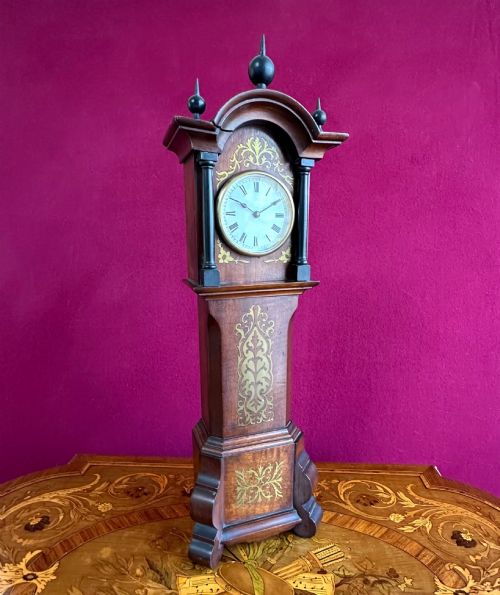
A miniature longcase clock scales down the grand floor-standing timepiece into a compact piece built for table or sideboard display.
What miniature longcase clock pieces are
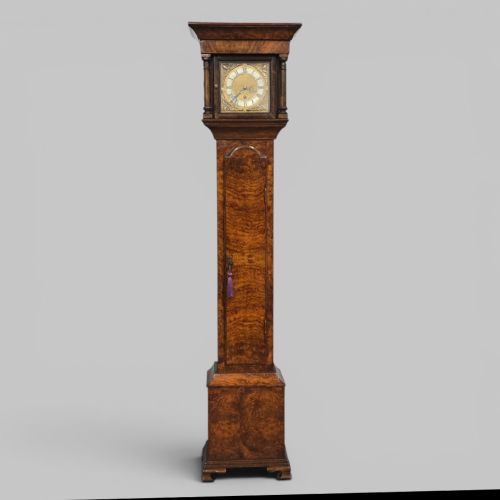
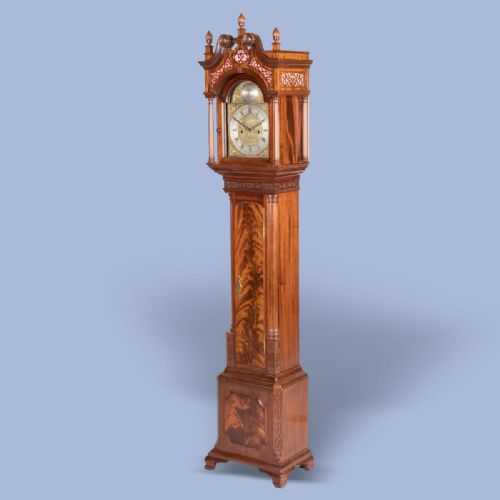
When you search for a miniature longcase clock, you encounter scaled-down versions of tall grandfather clocks, often referred to in periods as grandmother or granddaughter clocks. These items appear across Edwardian, late Victorian, and 1920s eras, alongside pieces built in 17th century style, Chippendale style, Georgian style, and Jacobean style. They function primarily as decorative timekeepers that capture the formal presence of full-sized furniture in a smaller footprint.
The material palette of these pieces relies heavily on timbers such as mahogany, walnut, oak, and brass, supplemented by glass doors and dial glazing. Workshops produced them in various stylistic interpretations, ranging from plain wooden cases to inlaid surfaces and barley twist columns. Most examples integrate standard clockwork movements adapted for smaller proportions.
How they were made
Cabinetmakers constructed the main body using timber veneers and solid woods like mahogany, walnut, and oak, frequently applying string inlay or crossbanding for decorative contrast. Brass components appeared in dial faces, bezels, and fittings, while glass protected the clock face and sometimes the trunk door.
Clockmakers fitted mechanical movements inside these wooden housings, utilising spring-driven or weight-driven systems depending on the model. Certain pieces incorporated quarter-striking mechanisms, musical chimes, or specific movements by known makers.
Materials recorded in these listings include brass, glass, mahogany, and walnut across Edwardian, Victorian, and 1920s periods.
What varies in quality
The grade of a miniature longcase clock depends on the precision of the cabinetwork, the richness of the timber selection, and the sophistication of the movement inside. Finer examples display careful timber matching, neat string inlay, and robust mechanical engineering that maintains accurate timekeeping.
Execution of period revival styles also dictates distinction, where pieces adhering closely to traditional proportions and high-grade materials outrank simpler, mass-produced variants. The integration of specialised quarter-striking or musical movements elevates the overall standard of the piece.
Edward Funnell·Cottell Brothers Swindon·Winterhalder and Hoffmeier·Elliott of London·Thomas Leeds
The Miniature Longcase Clock Glossary
- Grandmother clock
- A term for a medium-sized floor-standing or large table clock that sits smaller than a traditional grandfather clock.
- Crossbanding
- A strip of veneer laid around the border of a panel so that the grain runs at right angles to the central part.
- Quarter striking
- A clock movement mechanism that chimes the quarters of the hour on bells or gongs.
- String inlay
- A narrow line of contrasting wood or material embedded flush into the surface of a furniture piece for decoration.
- Barley twist
- A carved wooden column or furniture leg turned in a spiral twist resembling a stalk of barley.
Frequently Asked Questions
What is a miniature longcase clock?
A miniature longcase clock is a scaled-down version of a traditional floor-standing grandfather clock, designed to sit on a table, shelf, or desk.
These pieces replicate the classic hood, trunk, and base proportions of taller clocks while housing functional clockwork movements.
How do I tell different periods apart?
Distinguishing periods involves examining the timber choices, inlay techniques, and stylistic references used in the cabinetwork. Edwardian and late Victorian pieces often feature mahogany with string inlay, whereas 1920s examples or 17th century style revivals adopt distinct structural details.
Matching the construction methods and dial styles to historical eras helps narrow down the date of manufacture.
Where should I place one?
These clocks suit rooms where a full-sized grandfather clock would overwhelm the floor space, such as on a sturdy sideboard, desk, or dedicated table.
Ensure the surface is level and stable to support the weight of the wooden case and mechanical movement.
Did they use real wood?
Maker workshops constructed these clock cases using traditional hardwoods like mahogany, walnut, and oak, frequently combined with matching veneers.
Brass and glass also appear extensively in the dial assemblies, bezels, and door panels.