

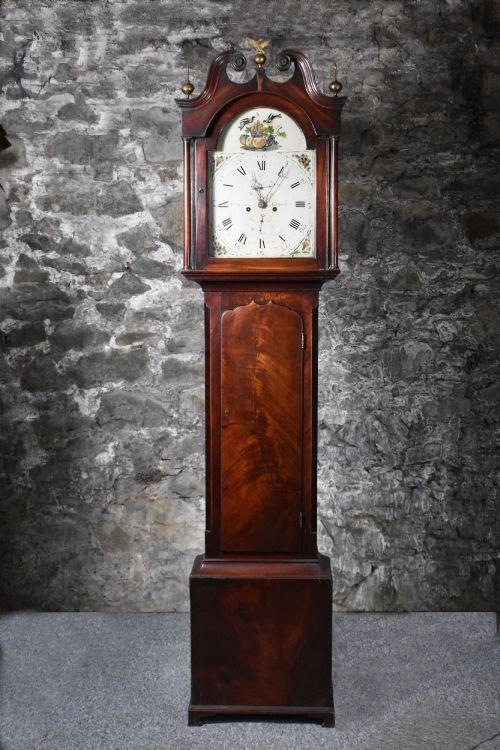


Antique Horology Grandfather Clock
An antique horology grandfather clock is a tall floor-standing timepiece that anchors a room with mechanical rhythm and period presence.
Antique Horology Grandfather Clock
When you search for an antique horology grandfather clock, you encounter tall case clocks spanning the seventeenth, eighteenth, and nineteenth centuries. These pieces combine heavy wooden cabinetry with intricate brass and iron gear trains designed to measure time over long spans.
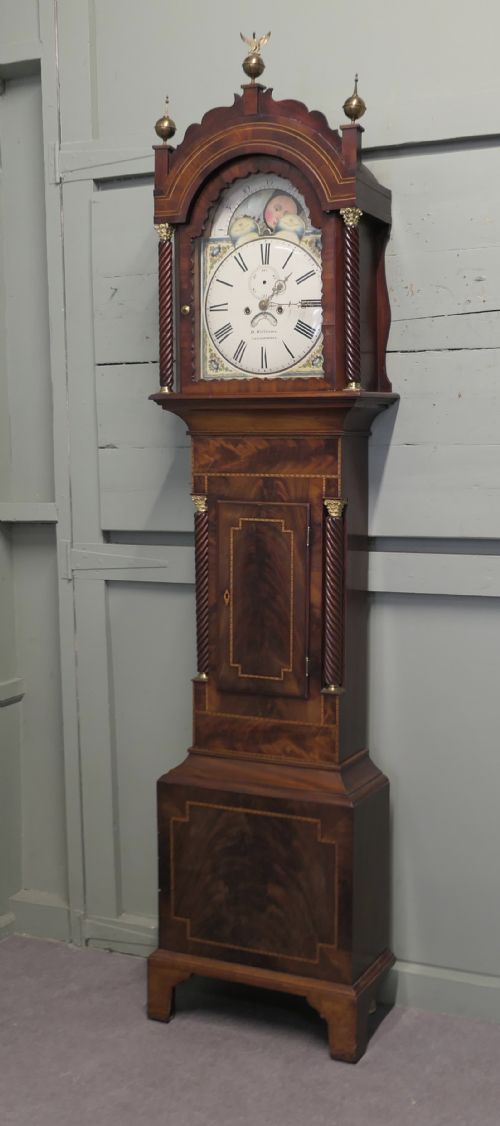
The versions most frequently met on this page are Georgian oak and mahogany examples, alongside Scottish variants and dial-and-movement fragments. These range from simple thirty-hour oak provincial models to eight-day London creations featuring striking mechanisms or phase dials.
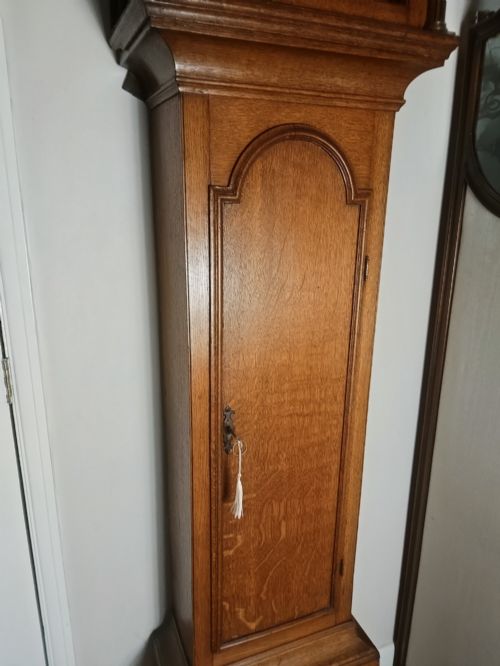
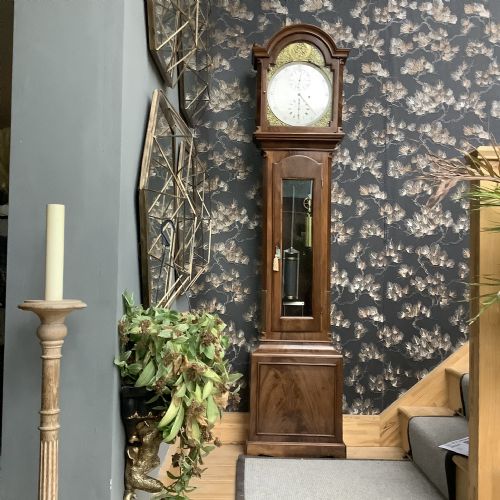
Cabinet forms vary from restrained panelled oak to figured mahogany and burr walnut with marquetry inlay. Standing heights differ considerably, encompassing full-scale floor clocks as well as smaller regional variants.
Construction and Materials
Cabinetmakers utilised solid timbers such as oak, mahogany, walnut, and ebony, constructing tall vertical trunks to house suspended weights and swinging pendulums. Wood surfaces were finished with polish or wax, while interior movements relied on cast brass wheels, steel pinions, and iron framing.
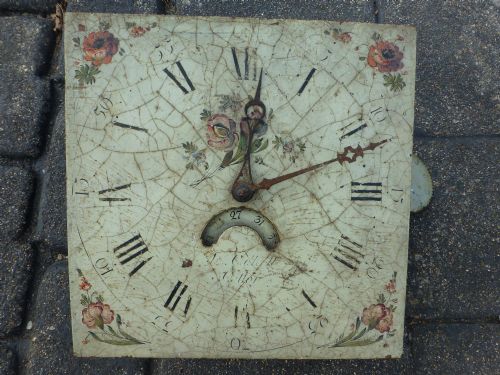
Clock faces combined brass chapter rings, engraved spandrels, and painted iron dials often featuring lunar phases or tidal indicators. Dial plates were frequently signed by the provincial or metropolitan maker directly upon the metal surface.
Certain dials incorporate rocking ship automata that sway back and forth with the pendulum beat to simulate ocean travel.
Distinctions in Quality
Quality rests upon the original partnership between the cabinetmaker and the horologist, where proportions remain balanced and cabinetry integrates harmoniously with the movement. Finer pieces demonstrate crisp dial engraving, high-grade timber selection, and sophisticated complications such as strike-silent levers or rocking ship automata.
Execution of movement mechanics dictates lasting performance, separating standard utility pieces from workshop triumphs by noted London or regional makers. The crispness of cast brass spandrels and the subtlety of wood figure elevate certain examples above simpler provincial output.
D Williams of Crickhowell·Henry Weedon London·Henry Massy·David Craig Ford Path head·Richard Prew Of Tewksbury·Richard Biggs Romsey·Thomas Lees Bury·William Chisholm Of Aberdeen·Dent of London·R Lawson Leigh·Joseph Windmills London·Herbert of Haversham·John Drew London·Rowning of Newmarket·Thomas Hall Romsey·Thos Newsom of Tottenham
The Antique Horology Grandfather Clock Glossary
- Longcase clock
- The formal term for a tall pendulum clock housed in a wooden floor-standing case, commonly known as a grandfather clock.
- Moonphase
- A dial mechanism displaying the lunar cycle through a rotating painted disc showing the phases of the moon.
- Spandrel
- The ornamental corner piece mounted on a clock dial surrounding the central chapter ring, often cast in brass.
- Regulator
- A precision pendulum clock designed for high accuracy, frequently utilised as a standard for setting other timepieces.
- Strike and silent
- A mechanical feature allowing the clock's striking train to be manually silenced at night without stopping the movement.
Antique Horology Grandfather Clock: Frequently Asked Questions
How do I wind an antique grandfather clock?
Winding involves using a crank key to raise the heavy lead or iron weights suspended inside the trunk. Care must be taken not to overwind the mechanism once resistance is felt.
Most eight-day movements require weekly winding, while thirty-hour models need attention daily or weekly depending on the train layout.
Where should I place a longcase clock?
Position the clock against a sturdy interior wall away from direct sunlight, central heating vents, and damp exterior stone. A stable floor prevents vibration from interfering with the pendulum beat.
Allow sufficient clearance above for the case hood to slide forward safely during routine maintenance and setting.
How do I tell if the movement is original?
Examine the mounting cheeks inside the hood to see if the fixing layout matches the spacing of the movement pillars. Unaltered examples show consistent wear patterns between the dial feet and the seat board.
Look for signature consistency where the maker's name on the dial corresponds with historical records for that workshop.
What does strike silent mean?
A strike-silent mechanism includes a small lever on the dial face that prevents the hour rack from releasing the hammer. This stops the clock from chiming during night hours.
Horologists added this feature to bedroom and parlour clocks to prevent nocturnal disturbance while maintaining accurate timekeeping.