


Edwardian Carved Mahogany Clock
An edwardian carved mahogany clock brings rich timber grain and precise movement together, offering a dependable focal point for any room.
Edwardian Carved Mahogany Clock
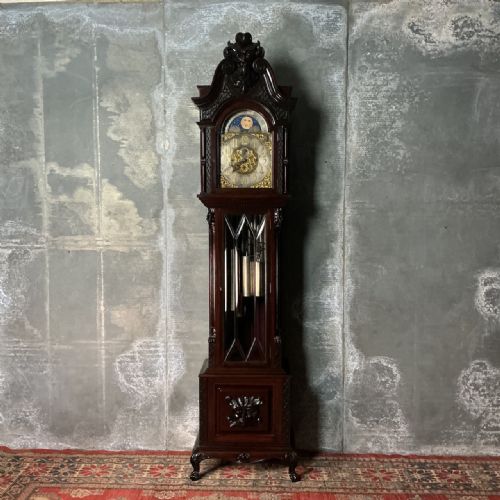
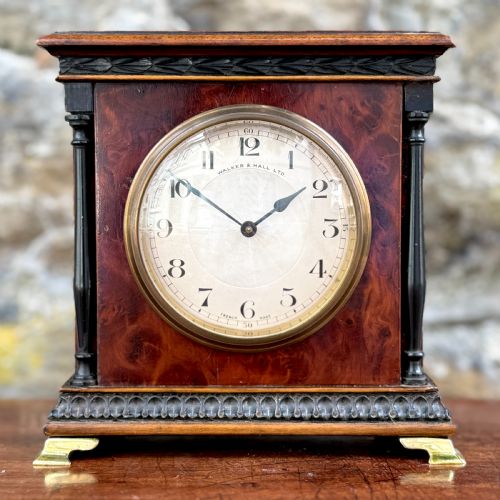
The edwardian carved mahogany clock encompasses a varied selection of timepieces, spanning tall longcase models, compact mantel designs, and wall-mounted drop dials. Buyers seeking an edwardian carved mahogany clock frequently encounter architectural cases shaped by revivalist tastes as well as simpler domestic forms.
While the evidence records pieces originating across the nineteenth and twentieth centuries, the prevailing items combine rich dark timbers with traditional dial configurations. Many examples integrate chiming mechanisms or fusee movements alongside carved wooden details.
Originating predominantly from British workshops, these timepieces range from modest domestic clocks to monumental longcase editions. Selecting an edwardian carved mahogany clock involves balancing room scale with the desire for musical or striking movements.
Evaluating quality
Quality rests upon the depth of timber selection, such as figured mahogany or burr veneers, paired with crispness in the hand-carved wooden details. Finer examples display superior movement complexity, including multi-train chiming mechanisms or precision fusee engineering.
The integration of the brass dial, legible enamel numerals, and a well-proportioned case structure distinguishes standard production from exhibition pieces. Superior workshops also ensured harmonious acoustic qualities in striking and musical longcase models.
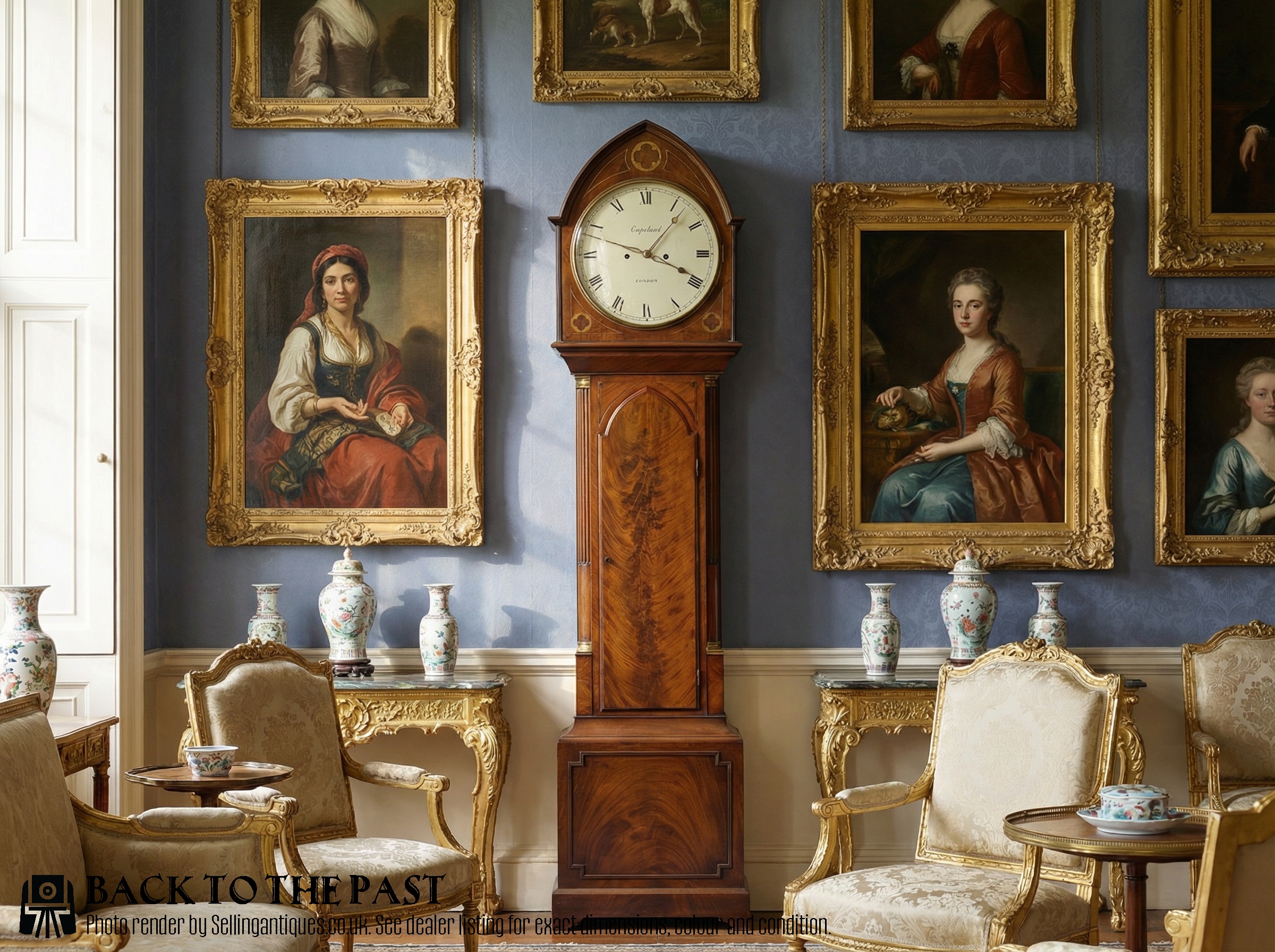
Some drop dial clocks bear the history of municipal life, having once kept time inside busy town halls and public libraries.
Walker and Hall·Balbiani Brookley·Goldsmiths and Silversmiths London
The Edwardian Carved Mahogany Clock Glossary
- Fusee
- A conical pulley used in spring-driven clocks to maintain even power as the mainspring unwinds. This mechanism improves timekeeping accuracy across the duration of the wind.
- Drop dial
- A wall clock featuring an extended wooden trunk below the circular dial. This form was widely utilised in offices, public buildings, and domestic interiors.
- Grandmother clock
- A slender, scaled-down version of the traditional longcase clock. These compact timepieces fit easily into rooms with lower ceilings while retaining standard mechanical movements.
- Three train
- A clock movement driving three separate gear trains for timekeeping, striking the hour, and playing chimes or melodies on gongs or bells. Such systems are typical of musical longcase clocks.
Edwardian Carved Mahogany Clock: Frequently Asked Questions
Where should I place a longcase clock?
Longcase clocks require a stable, dry interior wall with adequate floor space to stand plumb. Avoid placing them near direct heat sources or damp areas that could affect the wood and movement.
Ensure the case is securely anchored if there are children or pets in the household. A level floor is essential for the pendulum to swing evenly and keep accurate time.
How do fusee wall clocks work?
A fusee movement uses a spiral-grooved cone connected to the mainspring by a cord or chain. As the spring loses tension, the chain pulls on a wider part of the cone to maintain steady power.
This clever mechanical device ensures consistent force is delivered to the escapement throughout the entire running period between windings.
What is a chiming movement?
A chiming movement sounds the quarters, halves, or full hours using hammers that strike against bells, rods, or gongs. These mechanisms add an auditory dimension to the room.
Multi-train clocks manage these complex sequences alongside standard timekeeping, requiring careful adjustment during setup.
How do I identify a revival style?
Revival pieces borrow decorative motifs from earlier eras, such as Chippendale or Regency designs, applied to Edwardian or later carcasses. Look at the boldness of the carving and the construction methods.
Cabinetmakers of the period often reinterpreted historic aesthetics using contemporary workshop techniques and timber preparations.