
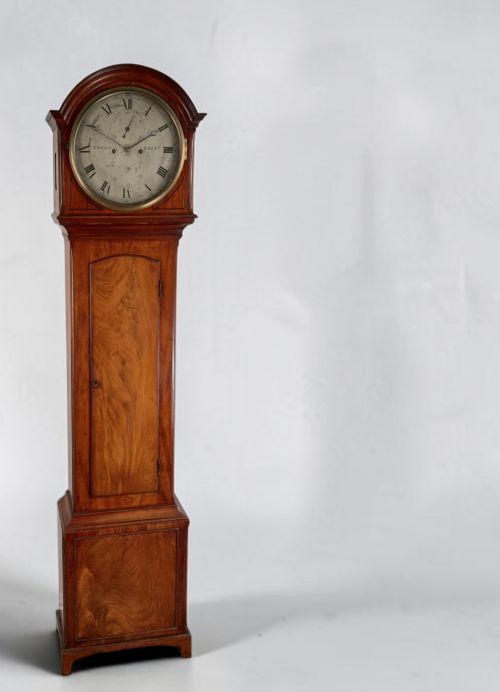
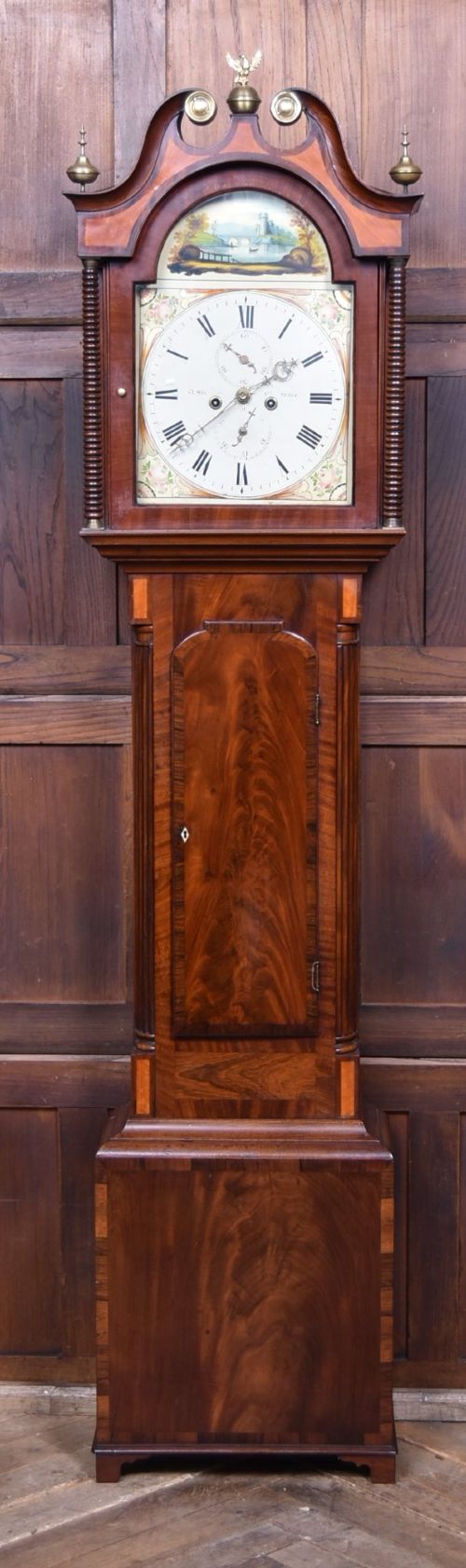

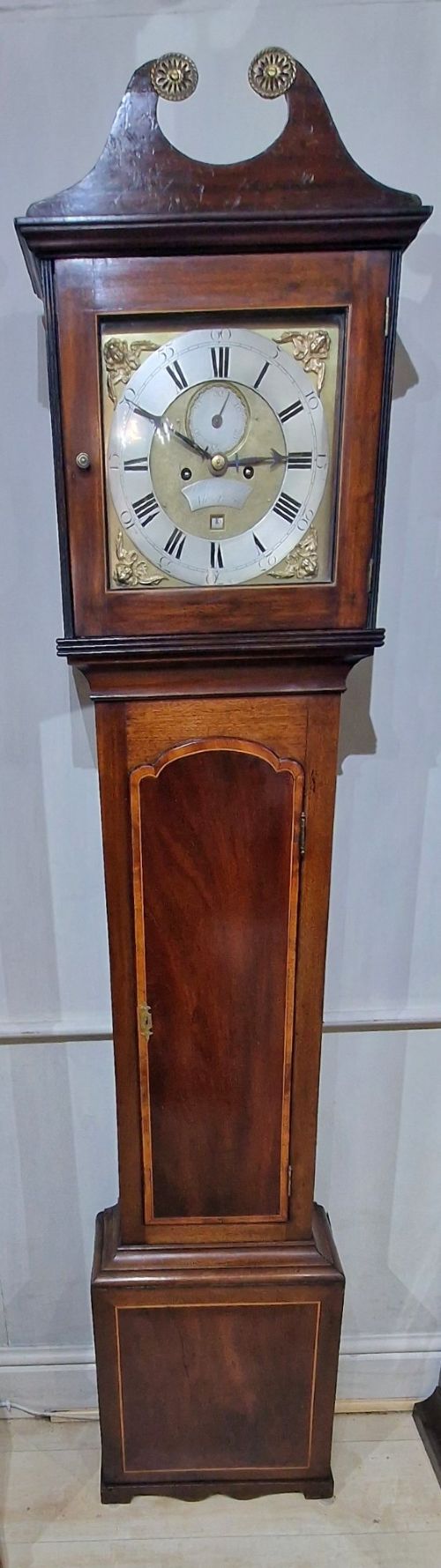
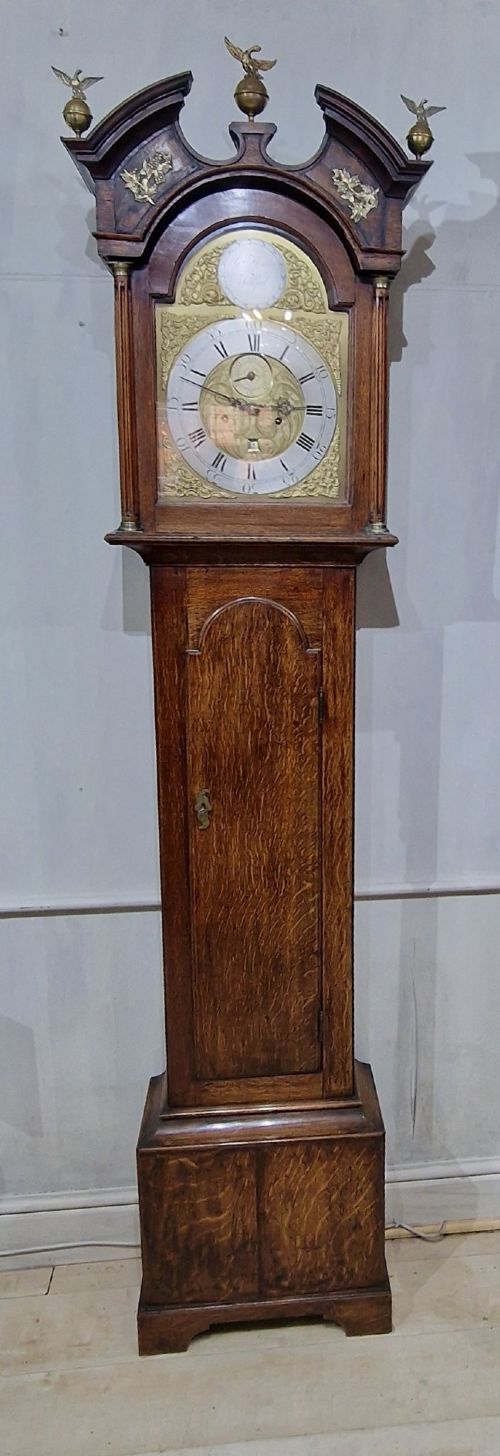

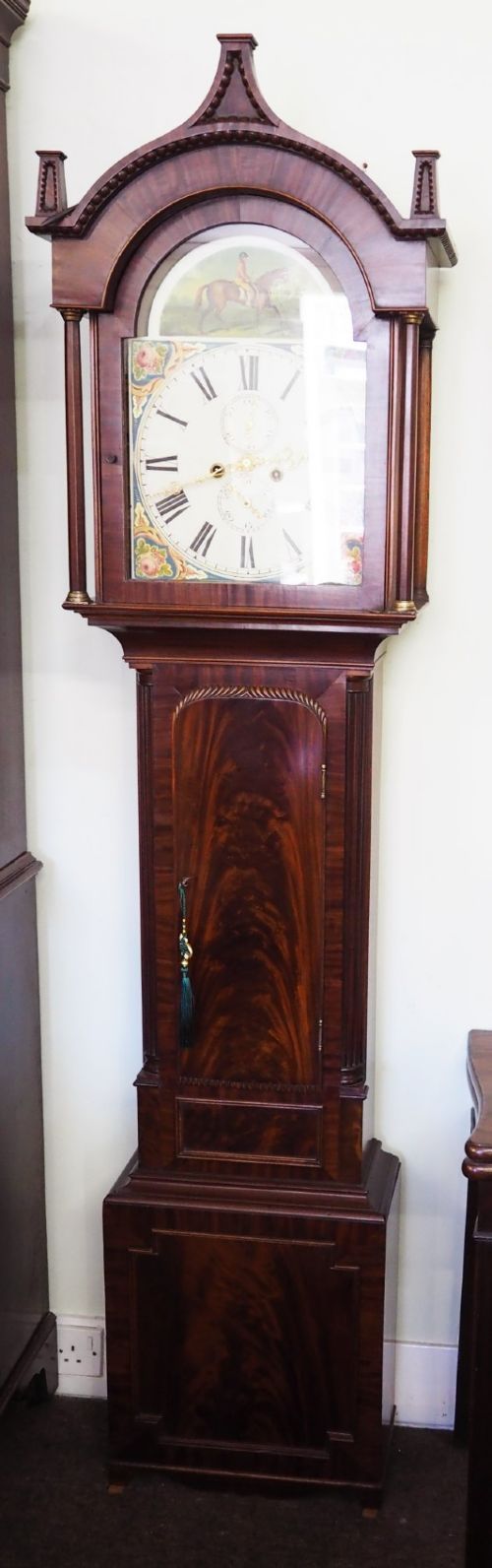


Scottish Tallcase Clock
A Scottish tallcase clock brings provincial craftsmanship and stately presence into a room, measured out in the slow swing of a pendulum.
Scottish Tallcase Clock
A Scottish tallcase clock stands as a traditional floor-standing timekeeper, enclosing weights and a pendulum within a wooden trunk. These pieces appear across Georgian, Regency, and Victorian periods, reflecting shifting tastes in provincial cabinetmaking.
The most common examples on this page are mahogany and oak cases housing painted iron or brass dials. Regional centres such as Edinburgh, Glasgow, and smaller towns like Montrose and Peebles each contributed distinct local variations to the form.
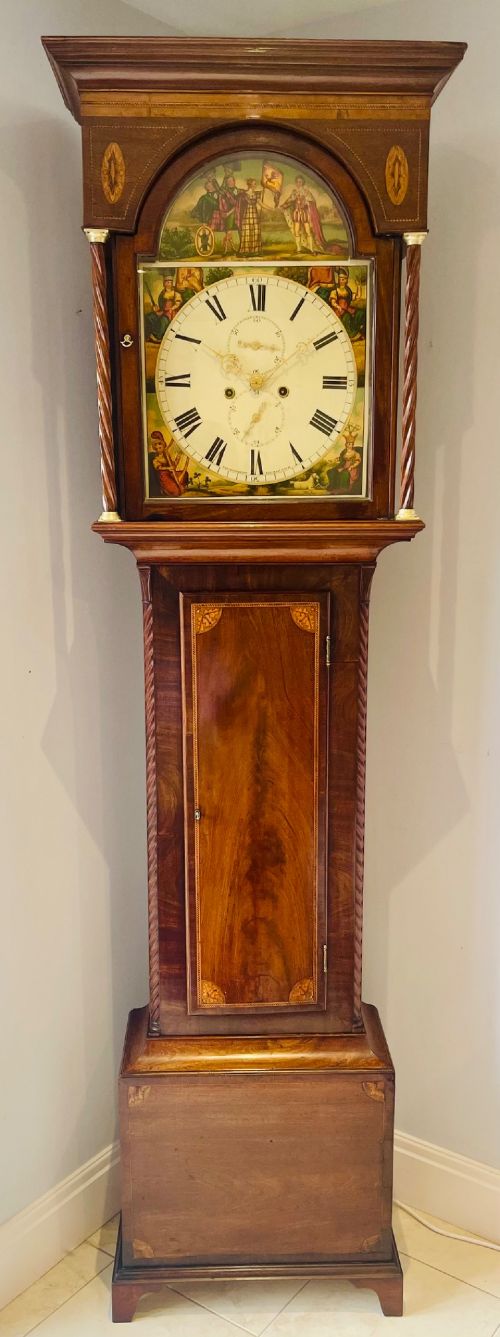
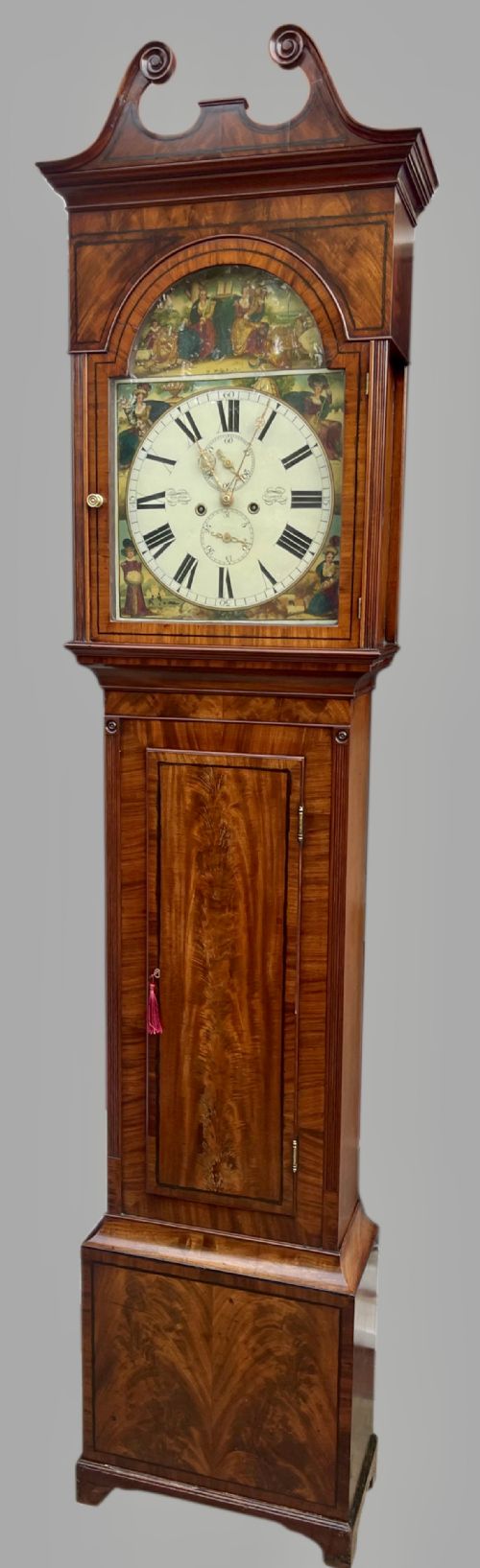
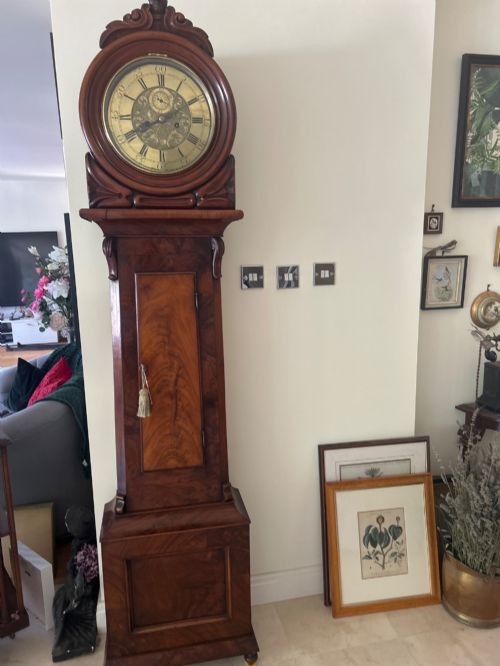
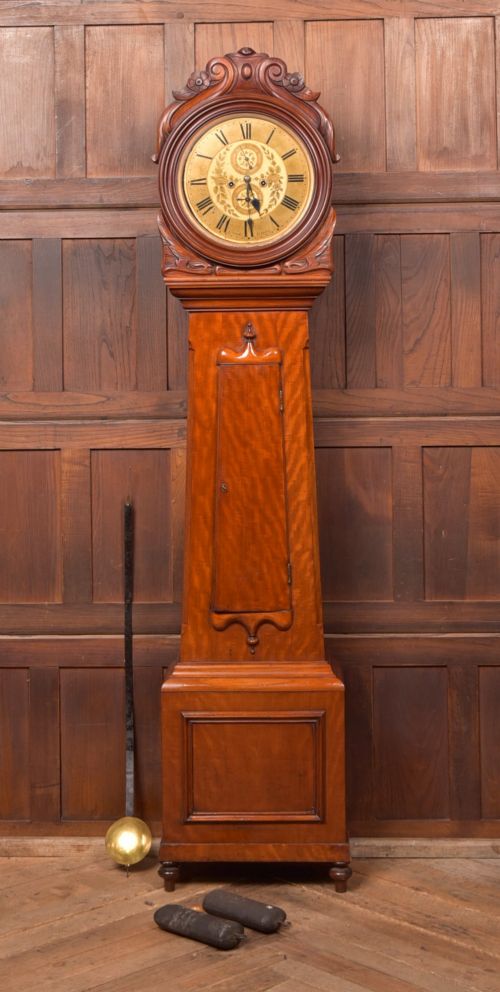
Buyers encounter traditional arched dials, square dials, and the distinctive circular drumhead face associated with nineteenth-century Scottish makers. Many incorporate eight-day movements, while others follow a simpler thirty-hour configuration.
Materials and Construction
Cabinetmakers constructed the tall cases primarily using solid and veneered mahogany, flame mahogany, and oak. Glass protected the dial door, while brass and painted iron formed the clock faces and movement components.
Movements required intricate metalworking by trained horologists, housed within timber trunks built by regional joiners. Some specialised examples featured lacquer work or chinoiserie decoration applied to the exterior case.
Listings span the eighteenth, nineteenth, and Victorian periods, utilising oak, mahogany, flame mahogany, brass, and painted iron.
Factors of Quality
Quality rests in the harmony between the cabinetmaker's joinery and the horologist's movement. Finely figured mahogany timbers, well-proportioned hoods, and crisp dial signage elevate an example above standard utility pieces.
The integrity of the painted iron or brass dial and the signature of a recorded maker distinguish superior clocks. Original case surfaces and undisturbed movement components carry greater weight than heavily restored interiors.
Green of Edinburgh·D. Straiton, Montrose·Tait, Peebles·James Hendrie, Falkirk·Andrew Thom·Joseph Gibson Ecclefechan·David Morice of Auchtermuchty·Whitelaw of Edinburgh·John Breakenrig·Ninian Davidson of Dunse·William Chisholm Of Aberdeen·ROBERT DARLING - MELROSE·W M Smith Of Leith·Aitchison of Glasgow
The Scottish Tallcase Clock Glossary
- Drumhead clock
- A tallcase clock featuring a circular dial housing mounted directly above the waist trunk, popular in nineteenth-century Scotland.
- Regulator
- A precision timekeeper designed for high accuracy, often featuring a deadbeat escapement and a heavy pendulum.
- Longcase clock
- An alternative term for a tallcase or grandfather clock, sheltering a pendulum and driven by descending weights.
- Moonphase
- A dial mechanism tracking the phases of the lunar cycle, typically displayed on an arched subsidiary dial.
- Eight-day movement
- A clock mechanism requiring winding only once a week, utilising two suspended weights rather than one.
Scottish Tallcase Clock: Frequently Asked Questions
Where were these clocks made?
Makers and urban workshops across Scotland produced these timepieces, ranging from large cities like Edinburgh and Glasgow to smaller burghs such as Peebles, Montrose, and Dunse.
Local cabinetmakers supplied the wooden housings while regional horologists signed and fitted the internal movements.
What is a drumhead clock?
A drumhead clock is a specific tallcase variant featuring a round dial enclosure that resembles a drum resting upon the waist trunk.
This style gained particular favour during the nineteenth century in mahogany and figured mahogany executions.
How do eight day movements work?
An eight-day movement relies on two heavy iron or lead weights suspended by cords or chains inside the trunk, which slowly descend as gravity pulls them downward over the course of a week.
Owners use a crank key to wind the weights back to the top once every week.
How do I fit a tallcase clock in a modern room?
Tallcase clocks require a stable, plumb wall surface and adequate vertical clearance to accommodate their height and swinging pendulum.
Placing them away from direct heat sources and exterior damp walls helps protect the wood and internal metal components.