


Edinburgh Grandfather Clock
An edinburgh grandfather clock is a tall timepiece of local craftsmanship, offering traditional measurement of hours in polished mahogany or lacquered wood.
Edinburgh Grandfather Clock
When you search for an edinburgh grandfather clock, you are looking at tall case clocks originating from Scotland through the Georgian and nineteenth century periods. These floor-standing pieces range from restrained mahogany designs to ornate lacquer finishes.
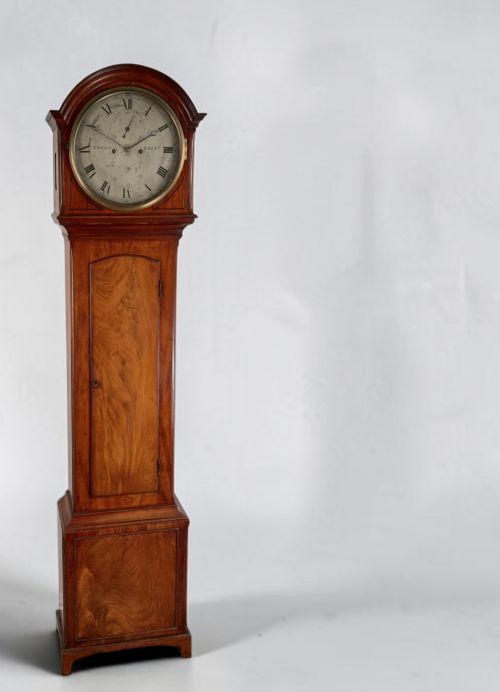
The version you are most likely to meet on this page is the tall mahogany longcase clock bearing the signature of a local Scottish maker upon the dial. Examples span eras from George III through to George IV and the wider nineteenth century.
Makers working in the city produced pieces that combined regional horological traditions with classic cabinetmaking forms. Longcase clocks and regulators appear frequently among the listed types.
Quality and craftsmanship
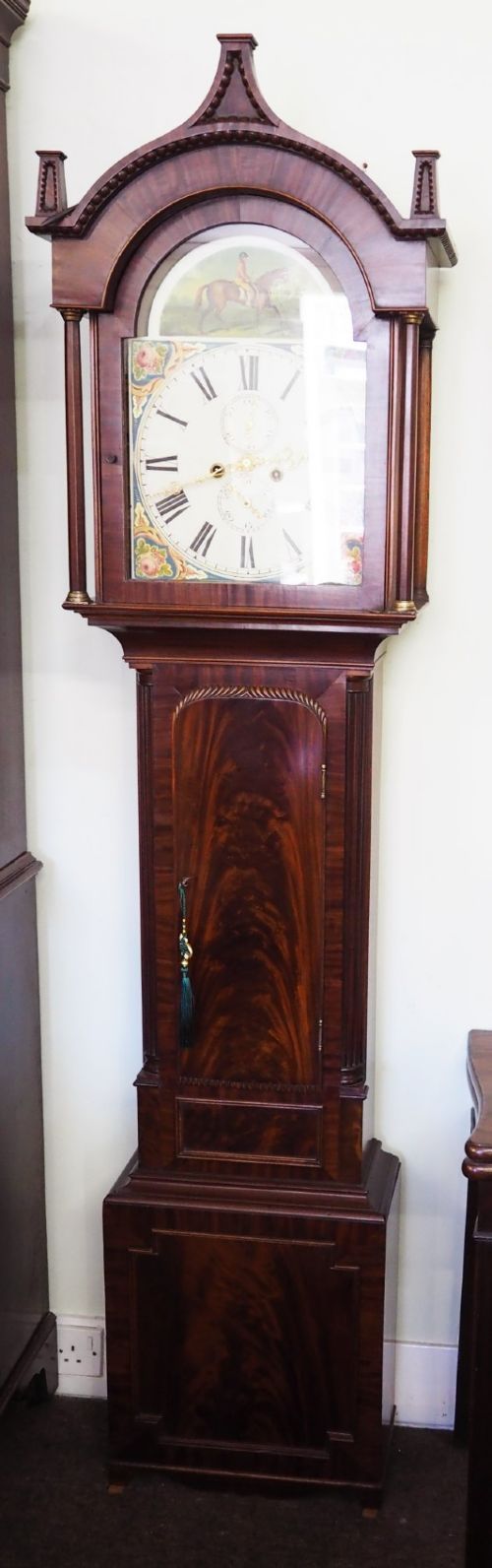
The distinction between ordinary and superior pieces rests upon the quality of the cabinetwork and the reputation of the horologist who signed the dial. Finer examples display carefully figured flame mahogany and subtle marquetry inlay.
Movement sophistication also separates standard domestic clocks from precision regulators built for exact timekeeping. The crispness of the engraved brass dial lettering indicates the skill of the original maker.
Listings feature mahogany, flame mahogany, and lacquered wood surfaces paired with brass and painted iron dials.
Green of Edinburgh·Whitelaw of Edinburgh·John Breakenrig·G Brown Edinburgh·J Melrose Edinburgh·Darling Edinburgh·Hutton Edinburgh·Robert Hinmers·Thomas Reid·Ritchie of Edinburgh·James Macfarlane·Robert Bryson·James Love·Bryson of Edinburgh·W Wighton Edinburgh·Adam Pringle·Andrew Scott·Barrie of Edinburgh·Grey of Edinburgh·Thomas Morgan Edinburgh·MacGregor of Edinburgh·Barnes of Edinburgh
The Edinburgh Grandfather Clock Glossary
- Longcase clock
- An alternative term for a tall pendulum clock housed in a wooden floor-standing case. These instruments measure time through the controlled descent of weights.
- Regulator
- A high-precision clock designed for exact timekeeping and often featuring a simplified dial arrangement. Such mechanisms were utilised by astronomers and watchmakers as standard references.
- Flame mahogany
- A wood veneer cut from the branch junction of the mahogany tree to create a distinctive flickering pattern. Cabinetmakers employed this technique on prominent door and trunk surfaces.
- Chinoiserie
- A decorative style reflecting European interpretations of Chinese artistic motifs and lacquerwork. Edinburgh makers applied these painted and gilt designs to select wooden cases.
- George III
- The historical period spanning the late eighteenth and early nineteenth centuries when many of these tall clocks were constructed. Pieces from this era often display classic proportions.
Edinburgh Grandfather Clock: Frequently Asked Questions
Where were these clocks made?
These tall timepieces were constructed by horologists and cabinetmakers working in Edinburgh workshops. Their dials frequently bear the specific name of the maker and the city.
Makers incorporated regional Scottish design characteristics into the wooden cases, distinguishing them from London or provincial English equivalents.
How do I wind the clock?
Traditional longcase clocks operate using suspended weights that descend within the trunk over a period of seven days. Winding involves inserting a key into the dial holes to draw the weights back to the top.
Careful handling ensures the internal brass gear train and pendulum remain undisturbed during the process.
What periods do they cover?
The available selection spans the Georgian era, George III and George IV reigns, and the broader nineteenth century. Cabinet styles evolved from restrained eighteenth-century mahogany proportions toward later Victorian interpretations.
Signed dials and specific timber choices help historians date individual mechanisms and cases.
How do regulators differ?
Regulators were built for supreme timekeeping accuracy rather than simple domestic use. They typically feature clean dial layouts with separate minute and second indicators.
These precision instruments represent the peak of eighteenth and nineteenth-century Scottish clockmaking skill.