


George III Tall Case Clock
A george iii tall case clock brings the steady tick of the eighteenth and early nineteenth centuries into a hallway.
George III Tall Case Clock
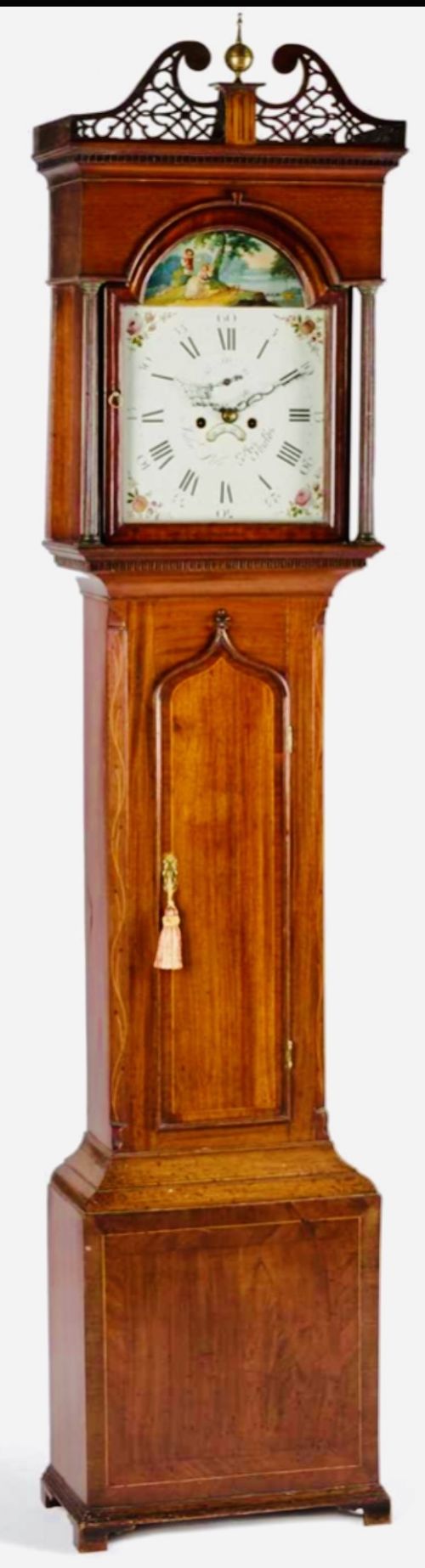
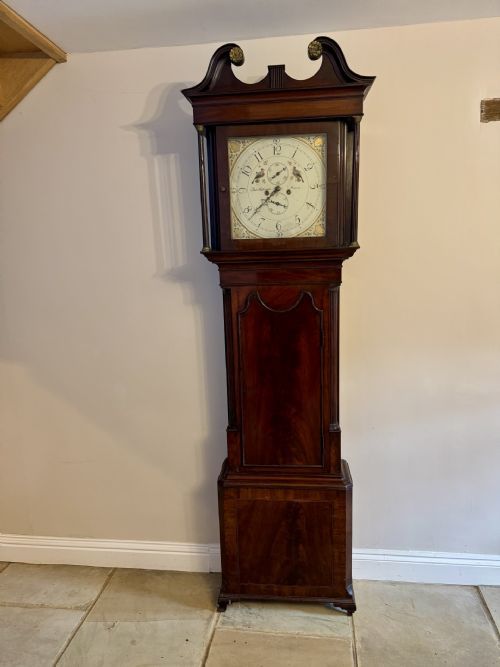
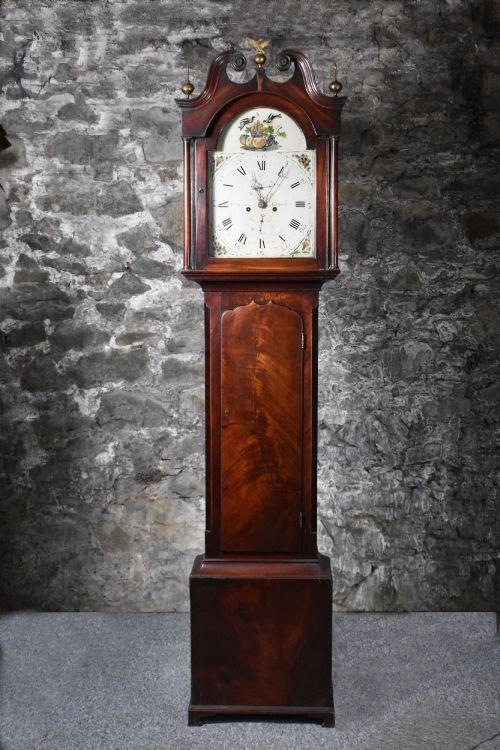
A george iii tall case clock stands as a substantial vertical timepiece housing weights and a pendulum inside a tall wooden trunk. These pieces belong primarily to the Georgian era and the eighteenth and nineteenth centuries, taking the form of longcase clocks and grandfather clocks.
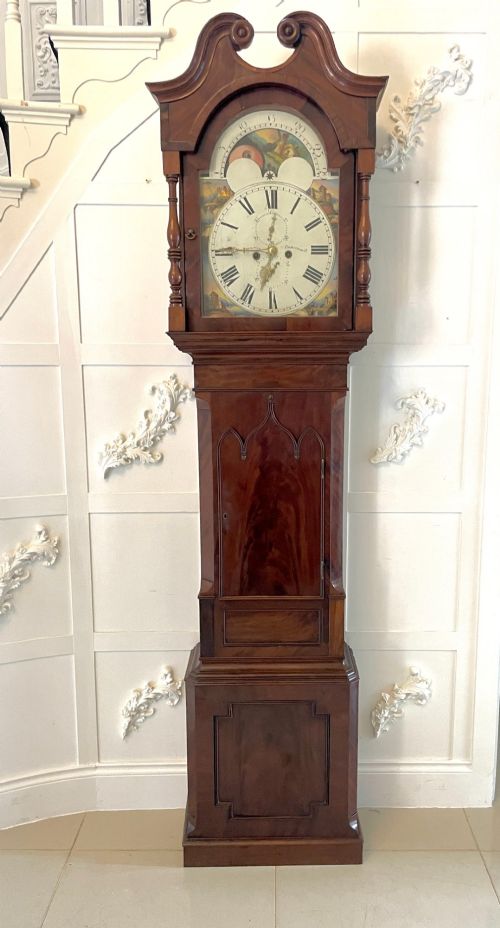
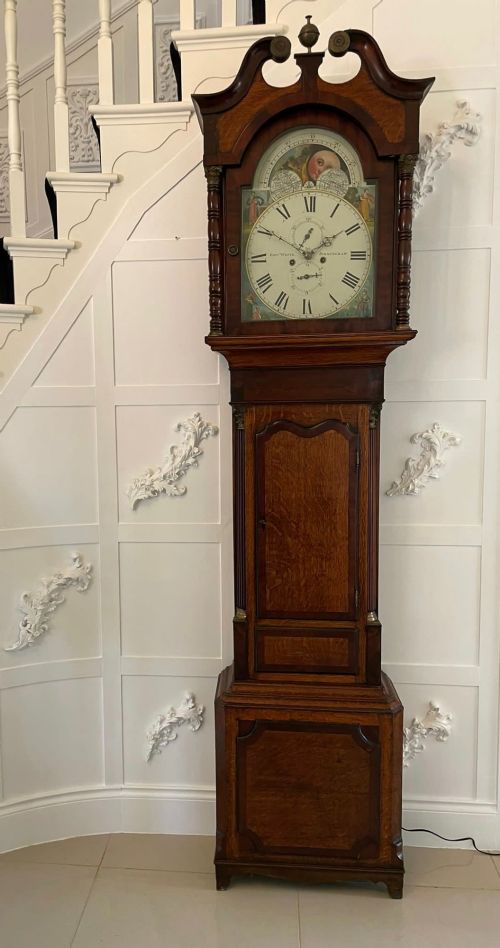
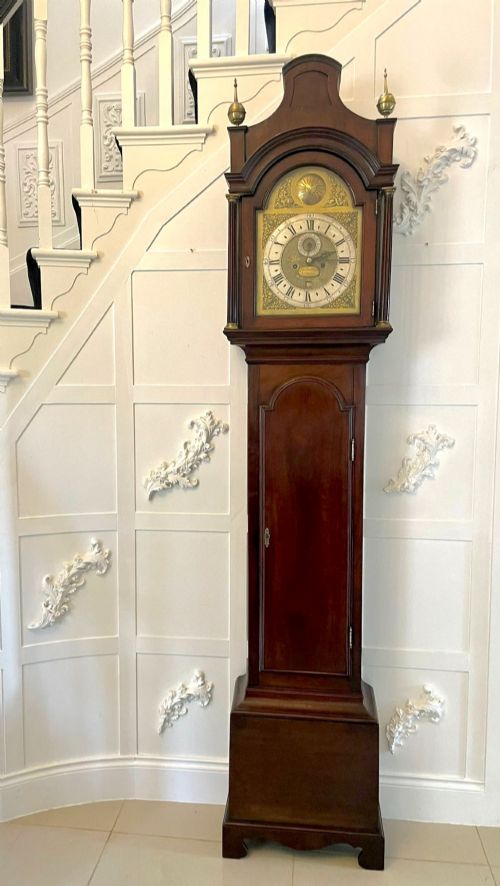
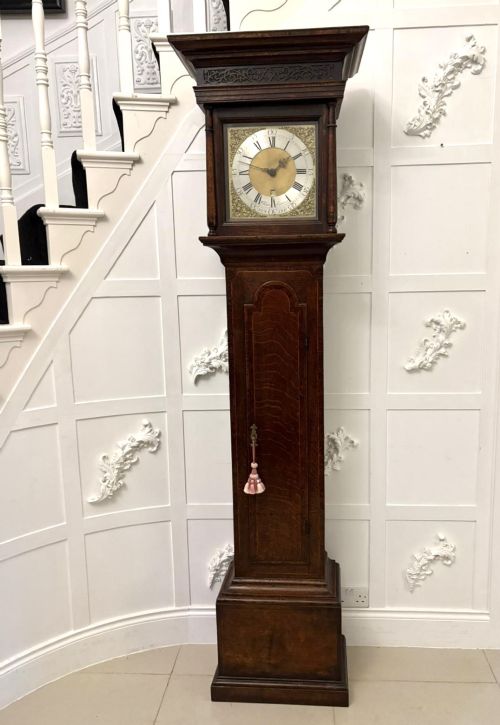
The version met most often on this page is constructed from mahogany or oak, frequently displaying an arched dial made of brass or painted iron. Provincial makers from Scotland to southern England sit alongside London makers in these records, offering regional variations in cabinet work and dial decoration.
Materials and construction
Cabinet makers utilised solid timber veneers, selecting mahogany, oak, burr oak, walnut and occasionally lacquered chinoiserie decoration to build the trunk and hood. Brass and painted iron formed the clock faces, while glass protected the dial behind the hinged door of the hood.
Movements relied on iron and brass wheel trains driven by hanging weights, often designed for eight day runs or thirty hour durations. Dials incorporated enamel details and moon phase mechanisms, paired with timber cases joined by traditional cabinet-making methods.
The listings span the Georgian period, 1750, 1800, 1815, and the nineteenth century, utilising mahogany, oak, burr oak, brass, iron, and glass.
Judging quality
The refinement of the cabinet timber and the crispness of any inlay or carved detail separate standard provincial pieces from fine London work. Dense grain selection in the mahogany or burr oak and balanced proportions in the trunk establish the baseline for superior examples.
The signature on the dial and the complexity of the movement, such as an eight day mechanism with a moon phase, distinguish advanced workshop output. The integration of the hood architecture with the waist door reveals the maker's underlying competence.
Charles Shuckburgh·William McEwan·Charles Dowsett·John Denbigh·Edward White·James Tregent·Dwerrihouse and Carter·John Pollard·Wm Stanford·Dan Williams·Matthew and Thomas Dutton·Williams·Joseph Lum·Thomas Mudge·G Brown·Thomas Hutchison
The George III Tall Case Clock Glossary
- Longcase clock
- A tall pendulum clock enclosed in a wooden case standing directly on the floor. This term is synonymous with grandfather clock in traditional horology.
- Arch dial
- A clock face featuring a rounded upper section above the main circular chapter ring. This space often houses a painted moon phase or makers' signatures.
- Moon phase
- A mechanical display on the dial showing the lunar cycle through a rotating painted disc. It tracks the phases of the moon alongside the standard time.
- Chinoiserie
- European decorative style imitating Chinese artistic motifs, applied here in lacquered finishes on the clock case. This technique involves raised patterns and metallic leaf.
- Chapter ring
- The circular ring on the clock face bearing the numerals for hours and minutes. Brass and painted iron serve as the primary substrates for these rings.
George III Tall Case Clock: Frequently Asked Questions
What is a grandfather clock?
A grandfather clock is a tall floor standing pendulum clock enclosed in a wooden trunk, also known as a longcase clock. These tall pieces house weights and movements inside protective cases.
Cabinets generally reach heights over six feet to allow the pendulum adequate swing room. The term grandfather clock became popular long after these Georgian pieces were originally built.
How do I wind an eight day clock?
Winding an eight day clock requires using a crank or key to pull the weights back up via the winding holes on the dial face. Doing this once a week maintains the movement tension.
Care must be taken not to overwind the movement when the weights reach their upper limit. Pendulum clocks rely on this gravitational pull to keep steady time.
What is a moon phase dial?
A moon phase dial is a mechanical display located in the arch of the clock face that tracks the lunar cycle. Two painted moons rotate behind a shaped cutout.
This complication required intricate gearing inside the movement alongside the standard hour and minute train. It served both a practical purpose for tides and a decorative function.
Where were these clocks made?
These clocks were produced across London, various English counties, and Scottish burghs by local clockmakers and cabinet makers. Makers signed their dials to record their workshop locations.
Regional hubs developed distinct cabinetry styles using local timbers like oak alongside imported mahogany. Provincial towns often featured simpler oak cases compared to London workshops.