





Scottish Mahogany Floor Clock
These pieces are a scottish mahogany floor clock, built to measure time with steady precision and anchor a hallway.
Scottish Mahogany Floor Clock
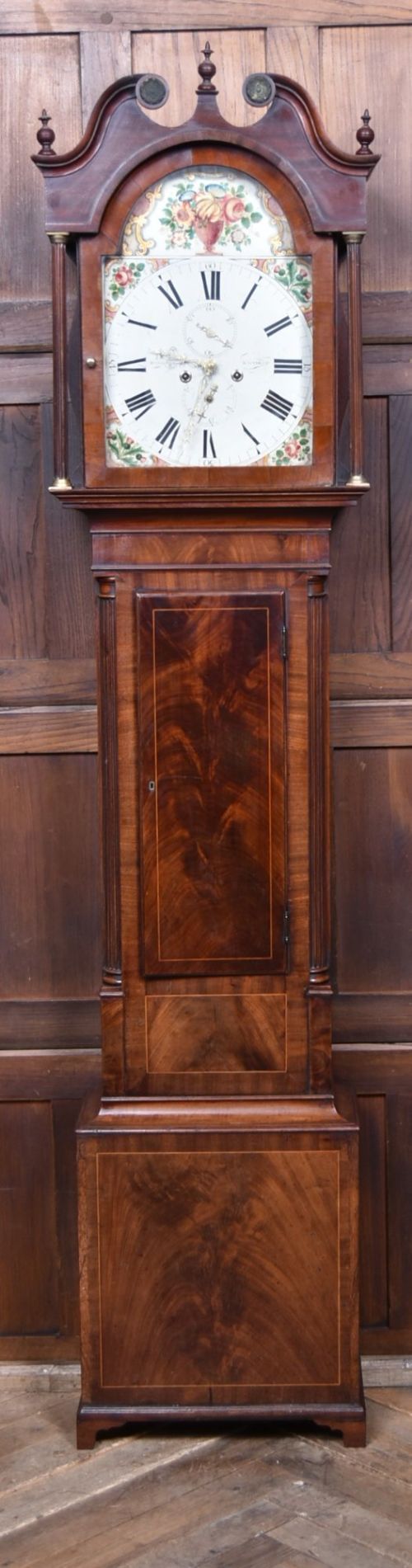
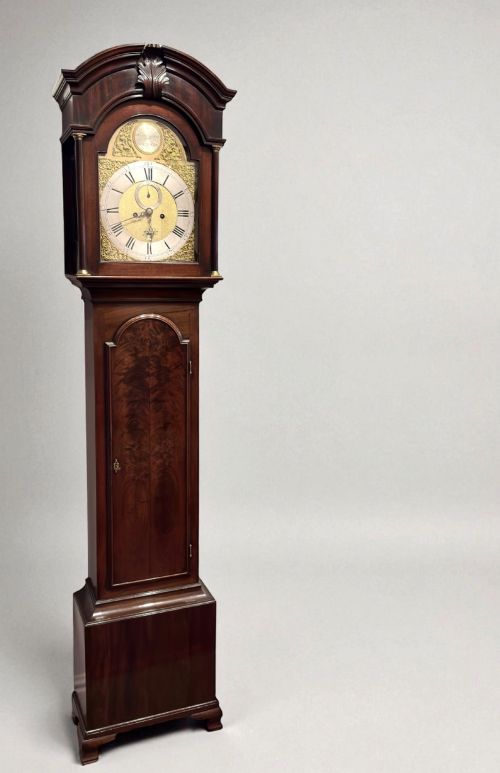
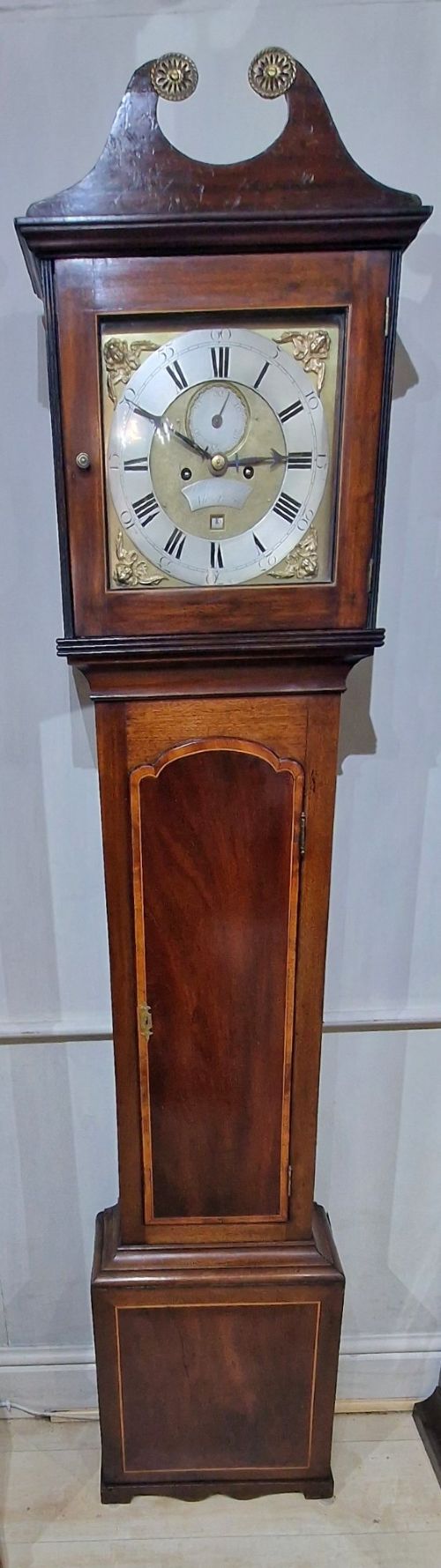
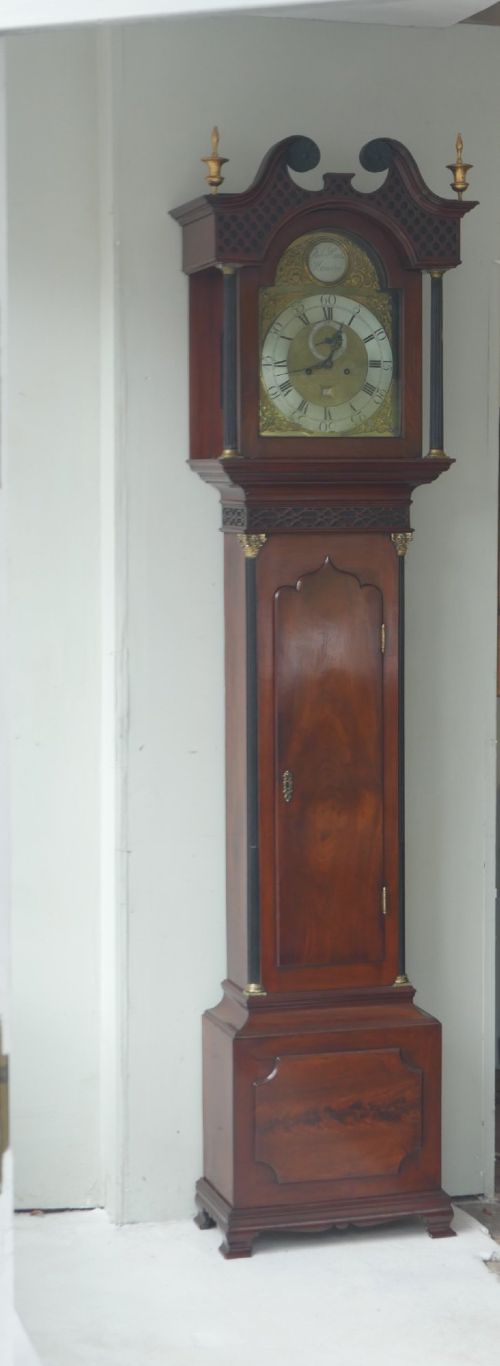
A scottish mahogany floor clock stands tall in a hallway or principal room, housing a pendulum and weights within a wooden case. Buyers searching for a scottish mahogany floor clock encounter tall floor-standing timepieces from the Georgian, Regency, and Victorian periods.
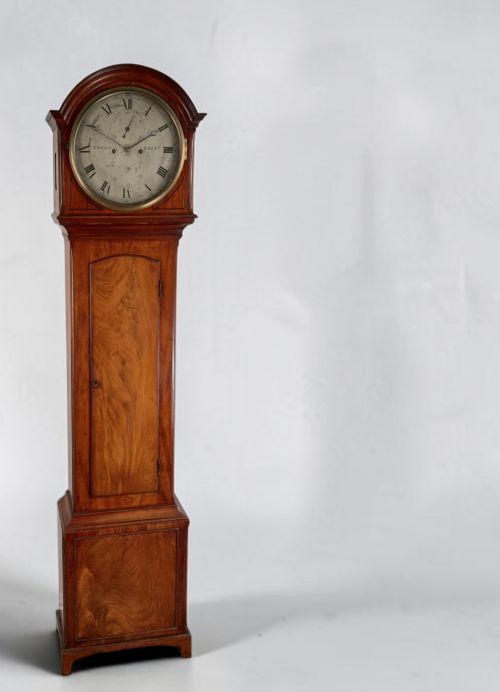
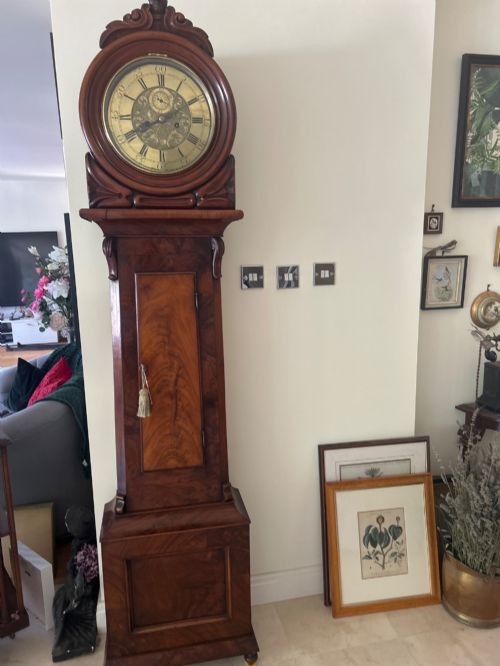
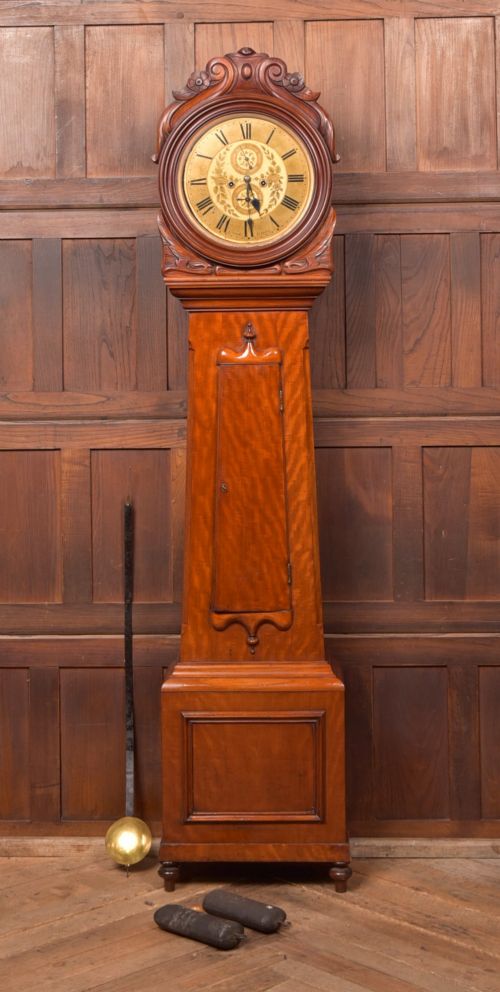
The form appears most frequently as a traditional longcase or grandfather clock, alongside distinctive regional variants such as drumhead clocks. Dial faces constructed from painted iron or enamel often display regional signatures from towns across Scotland.
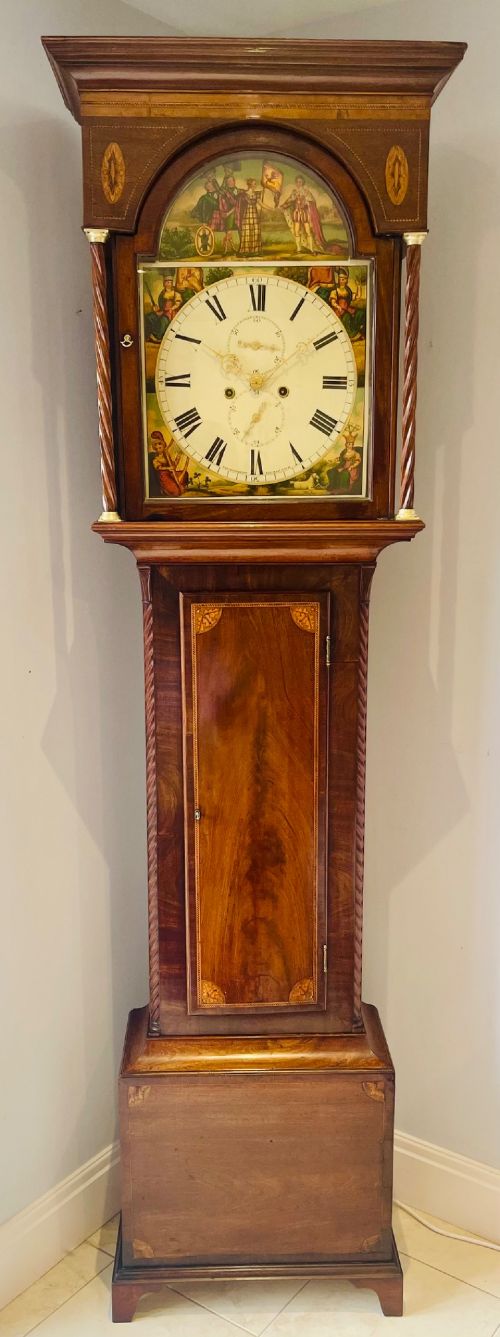
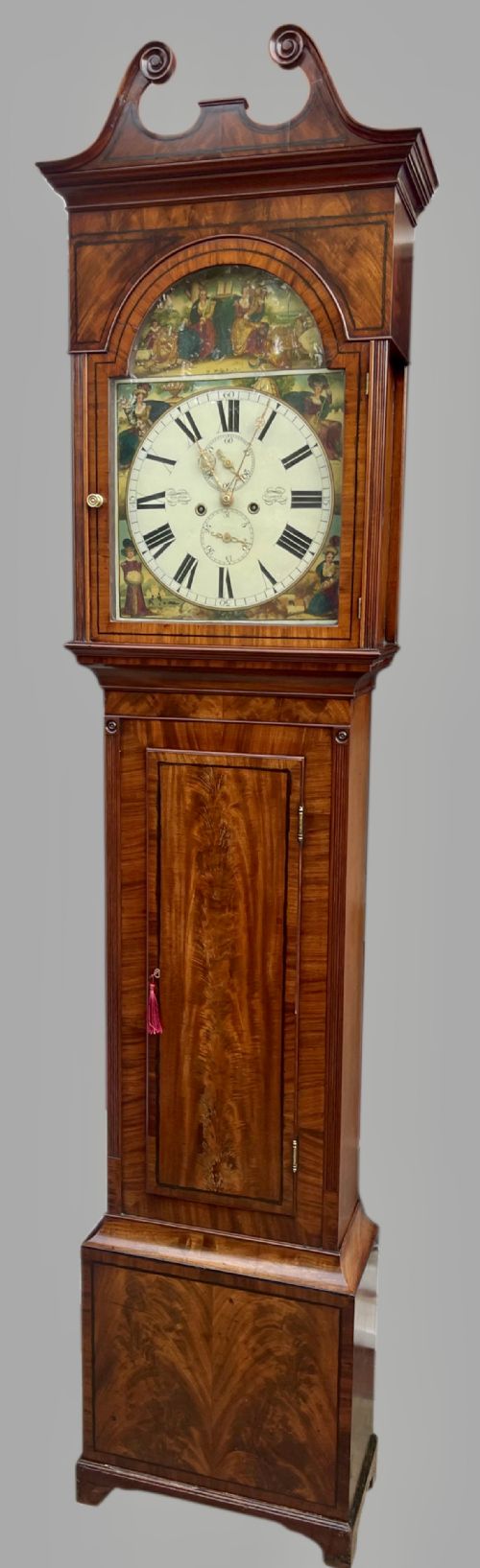
Cases combine mahogany with secondary timbers like oak, frequently utilising flame mahogany veneers or subtle inlay work. Examples originate from various Scottish centres, bearing the names of provincial makers and city horologists alike.
How they were made
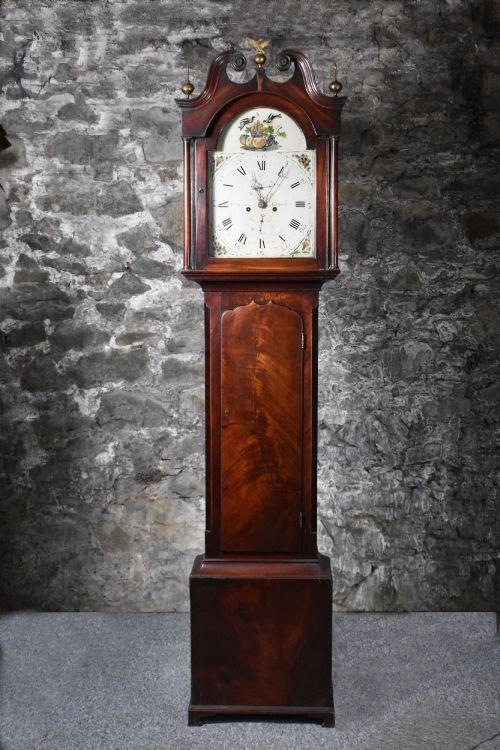
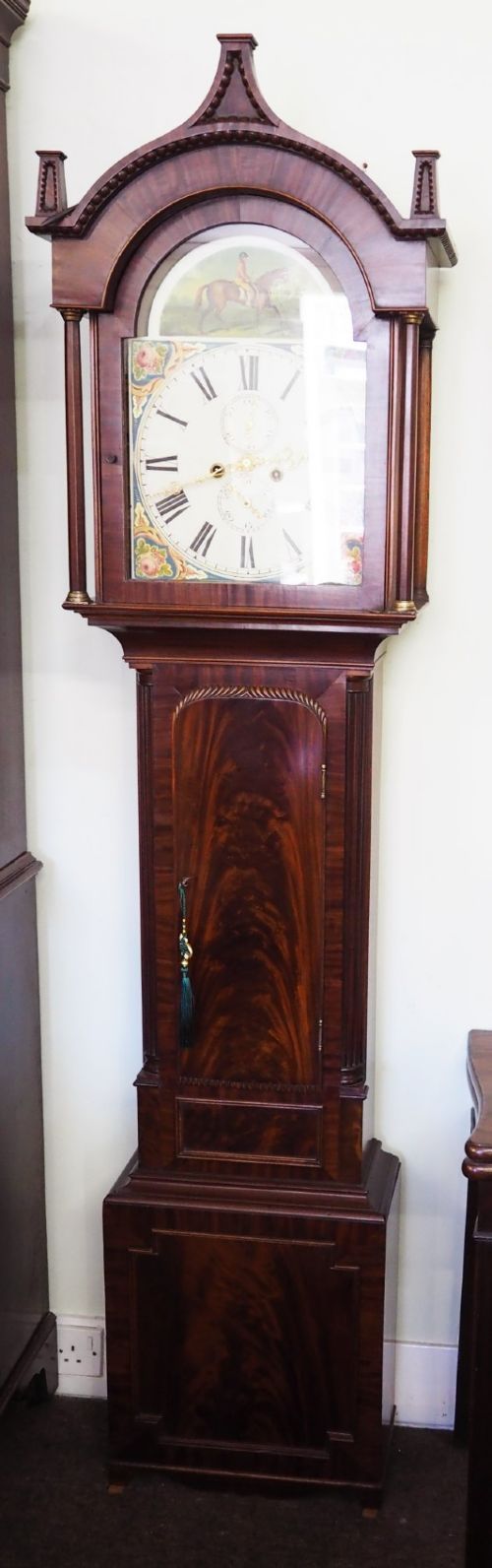
Cabinetmakers constructed the tall cases using solid mahogany and figured veneers over structural timbers such as oak, employing traditional joinery to house the heavy mechanical movements. Flame mahogany veneers were selected for their striking grain patterns on door panels and bases.
Dial faces were formed from iron and finished with painted white grounds, numerals, and subsidiary seconds or calendar dials, frequently detailed with hand-painted moon phases or maritime scenes. Brass components within the eight-day or thirty-hour movements required precise hand-cutting and assembly by skilled clockmakers.
Examples span the Georgian, Regency, and Victorian periods, alongside specific dated pieces from seventeen-eighty onward.
What varies in quality
The refinement of the cabinetwork dictates the standing of the piece, with well-proportioned hood mouldings, engaged columns, and carefully matched flame mahogany veneers marking out superior examples. Plainer constructions or heavily altered cases sit lower in the scale.
The integrity and legibility of the dial signet, alongside the crispness of the movement engraving, distinguish the work of prominent regional makers from standard provincial output. Original surface patina and untouched mechanical components carry significant weight.
Hendrie Ogg·Gordon of Aberdeen·Green of Edinburgh·Tait Peebles·Robb Montrose·William McEwan·Matt Wylie·Joseph Gibson·David Morice·Whitelaw of Edinburgh·John Breakenrig·Ninian Davidson·James Wood·Robert Thomson·G Brown Edinburgh·J Melrose Edinburgh
The Scottish Mahogany Floor Clock Glossary
- Drumhead clock
- A longcase variant featuring a circular dial housing mounted directly upon a tapering trunk, popular during the Regency and Victorian eras. This form contrasts with the traditional architectural hood.
- Longcase clock
- A tall pendulum clock housed in a wooden case designed to rest directly upon the floor. These pieces are commonly known as grandfather clocks.
- Flame mahogany
- Timber cut from the fork of the mahogany tree to produce a distinctive, flickering flame pattern. Cabinetmakers utilised this veneer on prominent exterior surfaces.
- Moon dial
- A secondary mechanism displayed on the clock face that tracks the phases of the lunar cycle. Painted depictions of moons and shipping scenes often accompany this feature.
- Regulator
- A precision timekeeper designed for high accuracy, frequently housed in a longcase and fitted with a deadbeat escapement. These instruments served as time standards in workshops and public buildings.
Scottish Mahogany Floor Clock: Frequently Asked Questions
How do I wind an eight day clock?
Insert the winding key into the holes on the dial face and turn clockwise until the weights reach the top of the case. Take care not to overwind the movement.
Ensure you support the weight cord if necessary and allow the pendulum to settle into an even beat after setting the time.
Where should I place a floor clock?
Position the piece against an interior wall away from direct sunlight, heating vents, and exterior doors where temperature swings might affect the wood and movement. A stable floor prevents vibrations that disturb the pendulum.
Ensure the case stands completely vertical by adjusting the feet so the pendulum swings with an even tick and tock.
How do I identify the period?
Examine the architectural details of the hood, the shape of the dial, and the grain of the mahogany case. Georgian examples often feature swan neck pediments and brass dial spandrels.
Later Victorian versions tend to show drumhead dial configurations or plainer flat-topped hoods reflecting changing domestic tastes.