

English Grandfather Clock
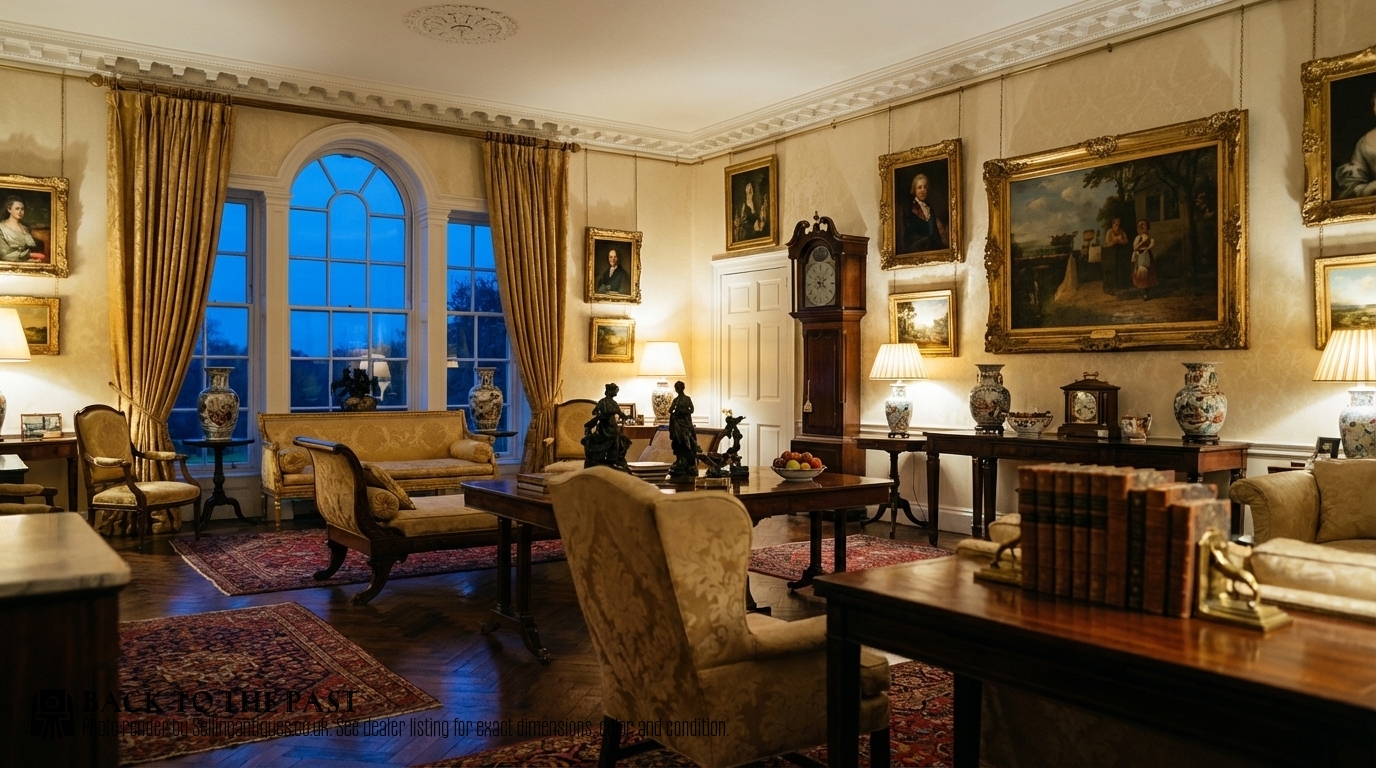
An english grandfather clock brings floor-standing mechanical timekeeping and traditional cabinet-making into domestic rooms.
Defining the English Grandfather Clock
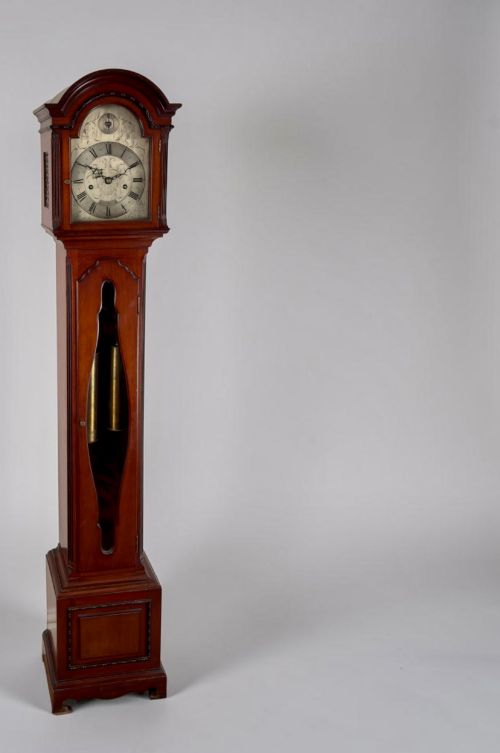
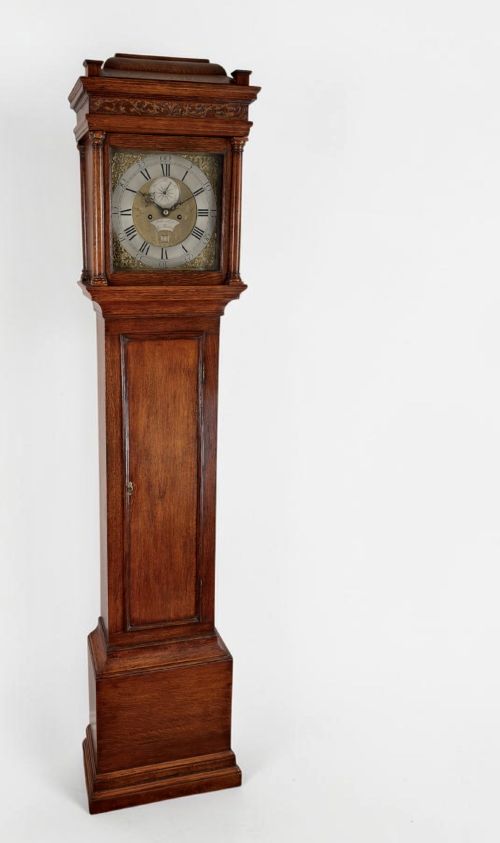
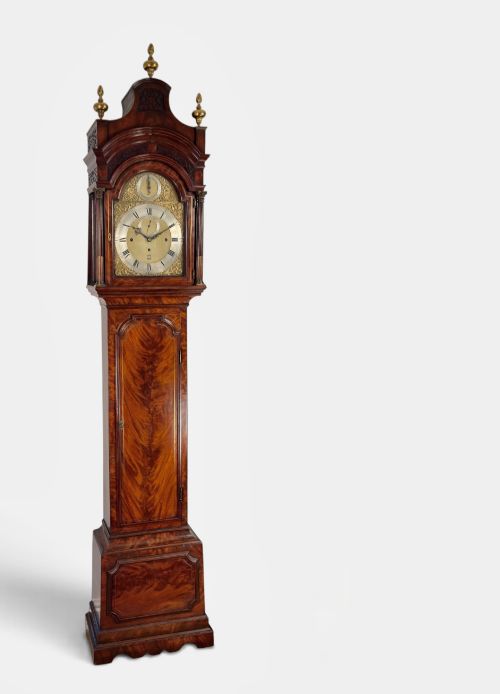
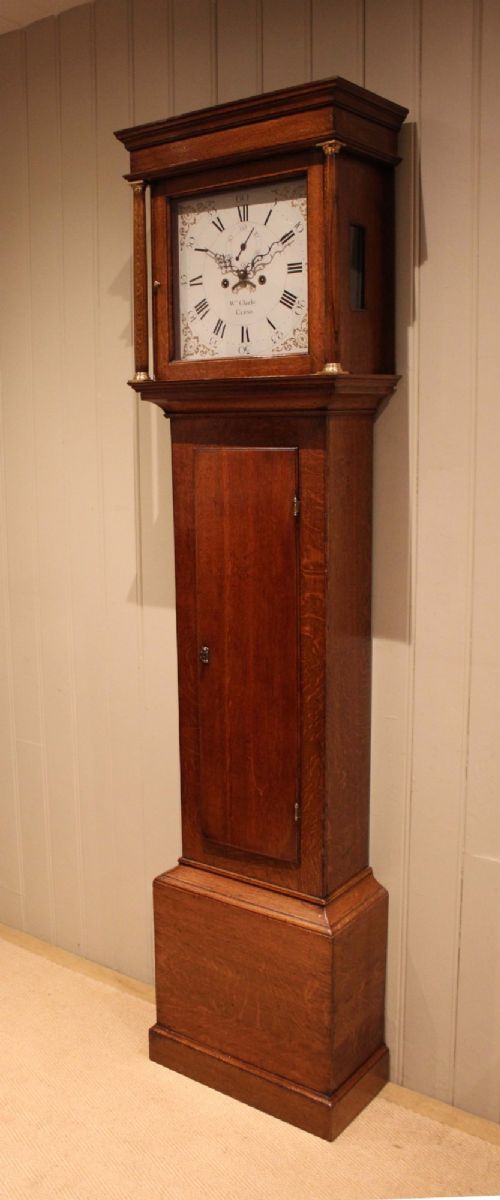
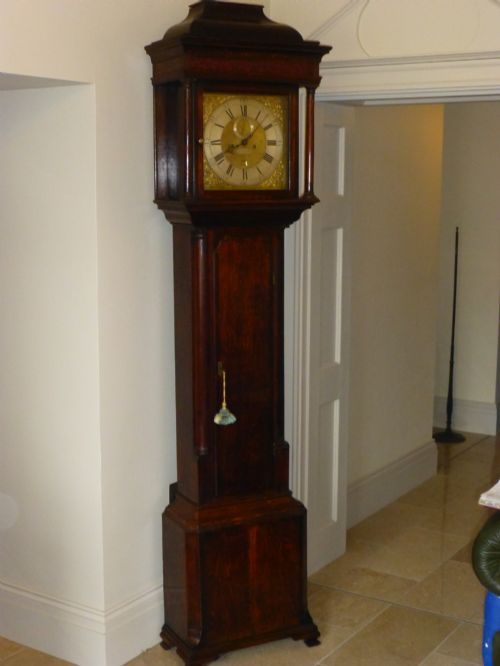
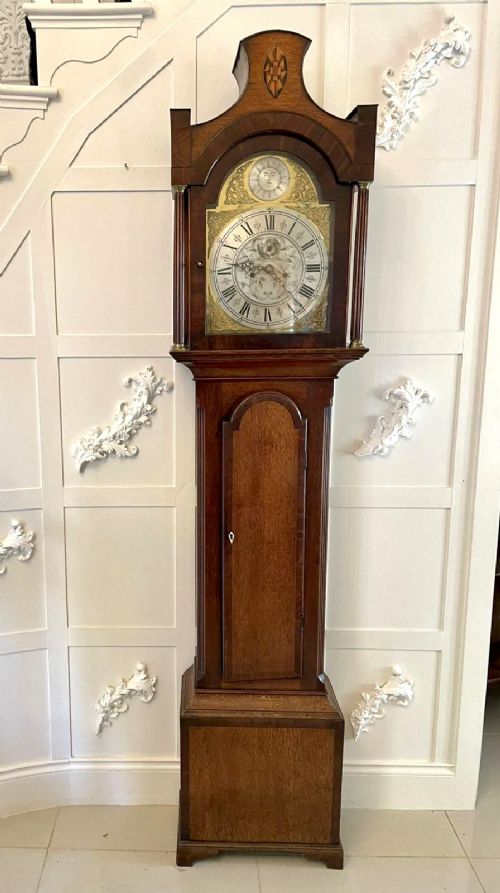
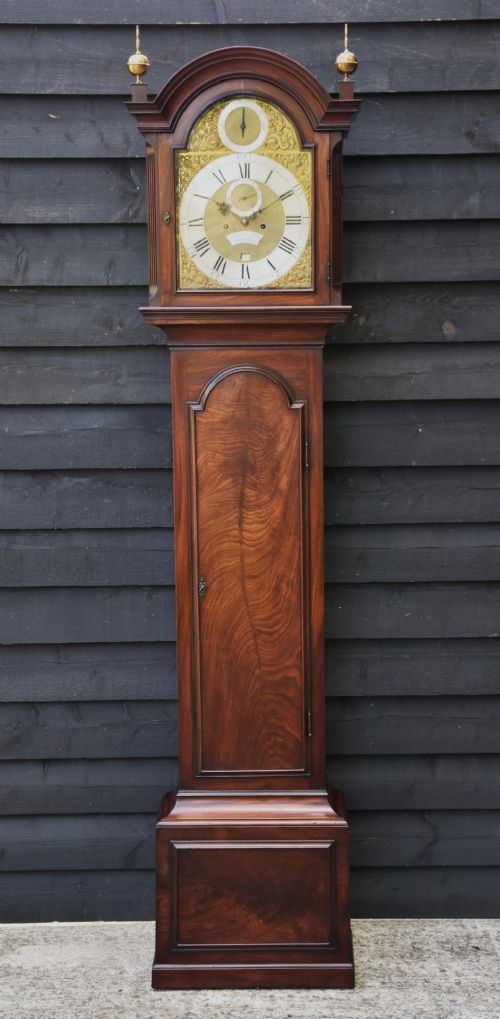
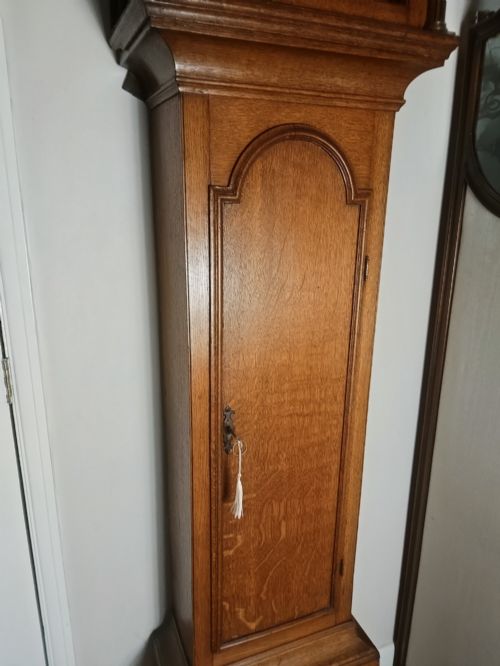
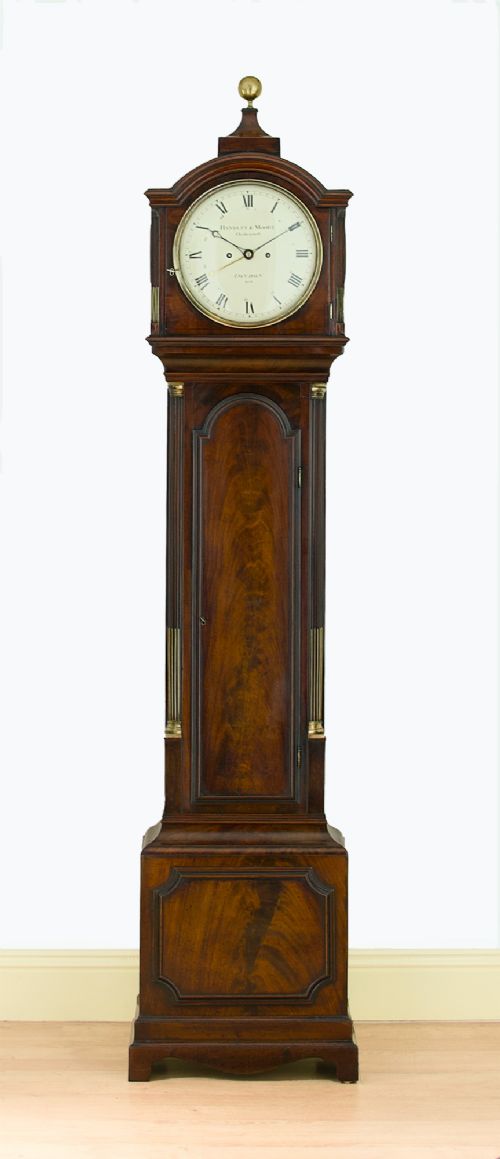
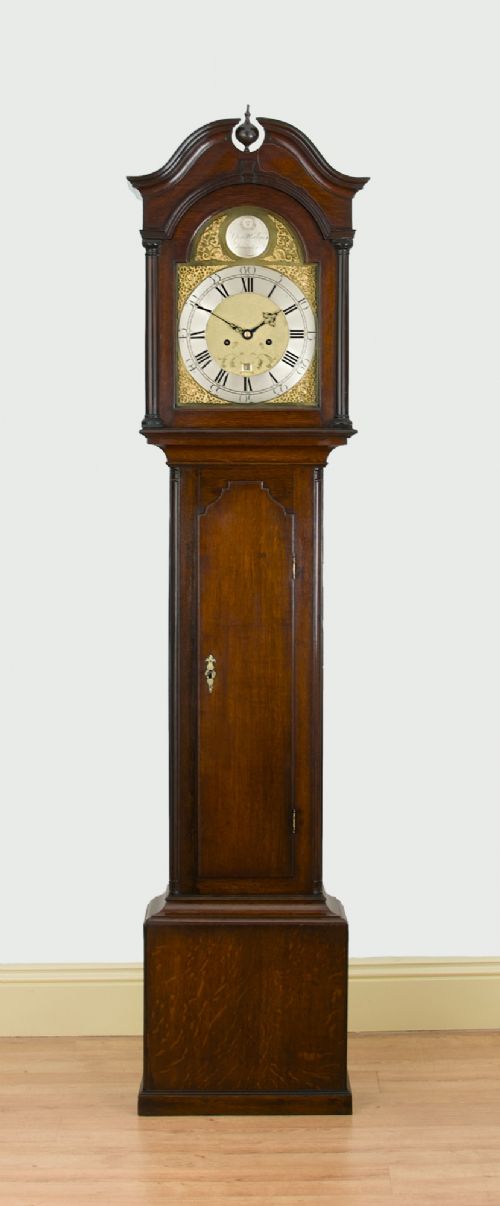
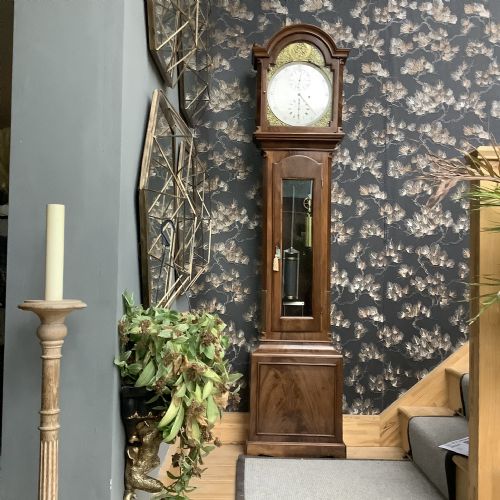
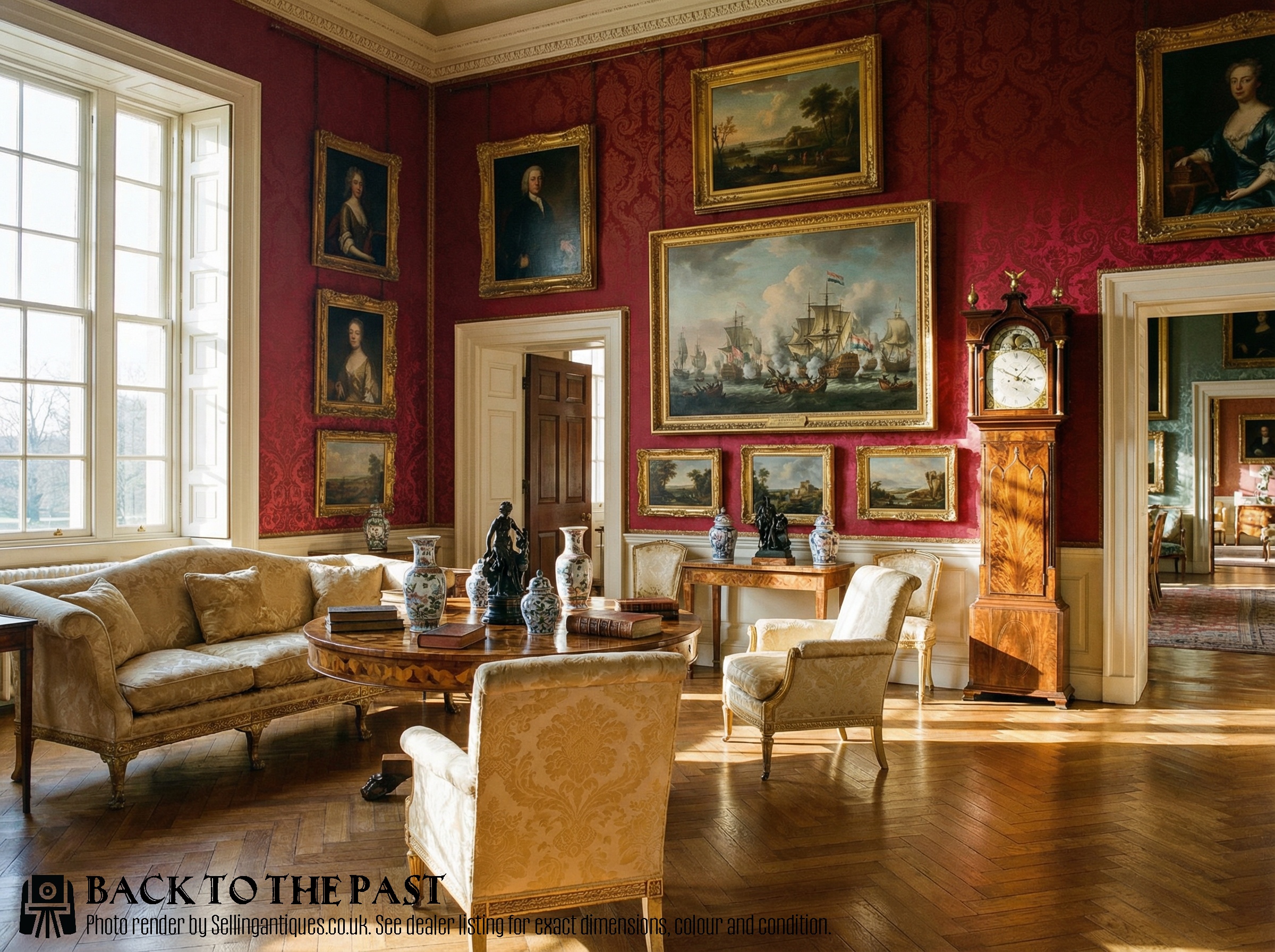
An english grandfather clock, also recorded in records as a longcase clock, stands upright with a tall wooden trunk protecting the weights and pendulum, topped by a hood enclosing the dial.
The examples found here span the eighteenth and nineteenth centuries, including Georgian and Victorian periods, alongside later twentieth-century forms.
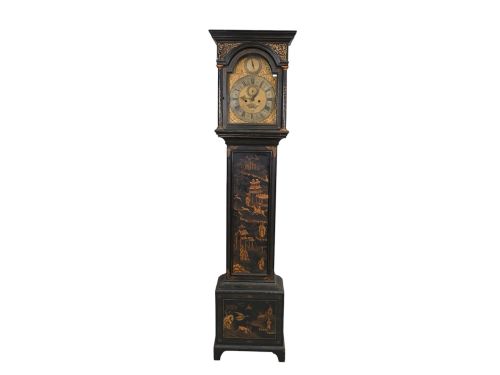
Cabinets appear in various timbers such as mahogany, oak, walnut, and japanned finishes, housing either brass or painted iron dials.
Materials and Construction
Clockmakers housed mechanical movements inside wooden cases constructed from native and imported timbers, utilising oak, mahogany, walnut, and occasionally lacquer work.
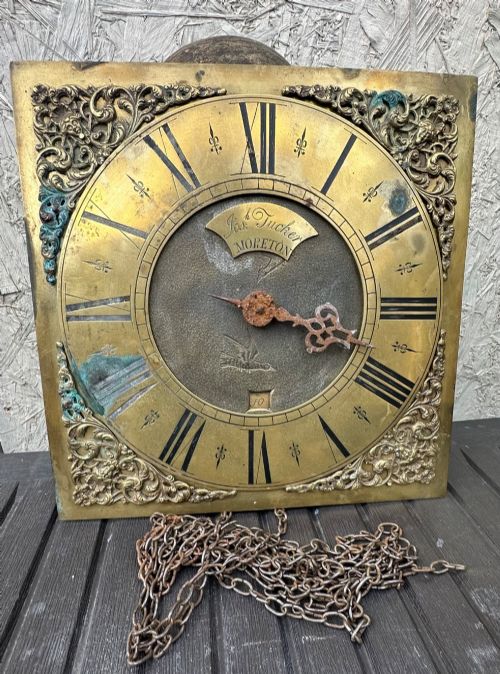
Dials combine brass or painted iron plates with applied numerals, chapter rings, and subsidiary indicators for seconds or moon phases, viewed through glass panels.
Retail Price Guide 2026
Typical UK retail prices for english grandfather clock, calculated from the Sellingantiques database of over a million retail prices indexed since 2003. This retail price guide relies exclusively on Sellingantiques data; no external sources or auction records are used, so the figures do not describe the wider market.
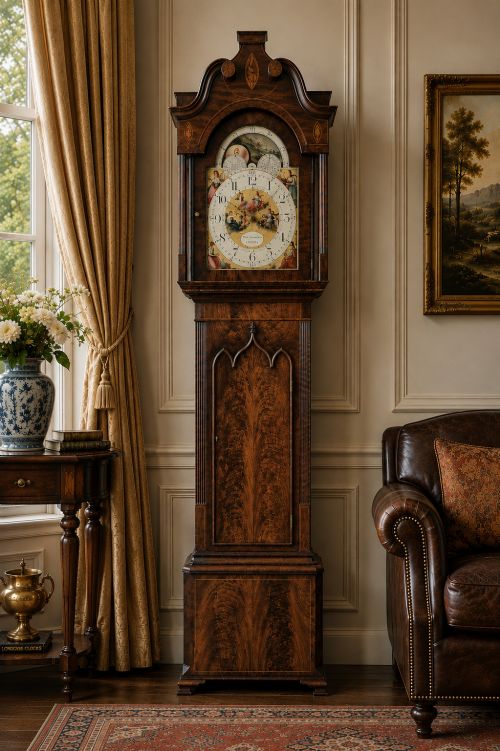
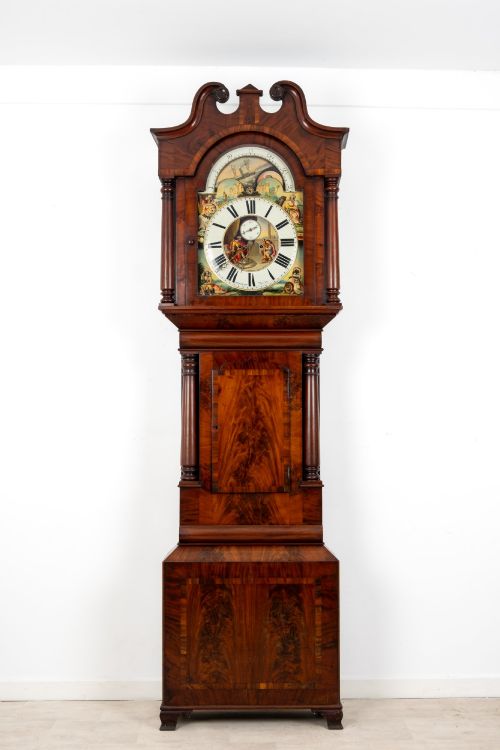
Some dials feature rolling moons that track lunar phases, occasionally paired with painted pastoral scenes that shift across the arch.
Assessing Quality and Execution
Superior examples demonstrate refined cabinet proportions, sophisticated dial engraving, and movements featuring high pillar counts or complex mechanical complications like musical chimes.
The integration of the hood and trunk, the crispness of timber mouldings, and the legibility of the dial separate standard regional timepieces from more ambitious metropolitan work.
Parkinson Bros Batley·Thomas Vernon London·Stanyer Nantwich·Raine of Durham·Weston Gilmore·Thomas King Alnwick·John Hancock Yeovil·Robt Jackson Gainsborough·George Stubbs
The English Grandfather Clock Glossary
- Longcase clock
- The formal trade term for a tall floor-standing clock. It describes the architectural housing rather than the movement inside.
- Chapter ring
- The metal ring bearing the hour numerals on the dial. These can be silvered brass or painted directly onto the dial plate.
- Moon phase
- A mechanical display tracking the lunar cycle on the dial face. It uses a rotating disc beneath an arched aperture.
- Japanned
- A European imitation of Asian lacquerwork. It involves layered varnishes and raised decorations on wooden cases.
Frequently Asked Questions
How do I wind an english grandfather clock?
Winding requires pulling the chains or turning the key to raise the internal weights back up toward the top of the case.
Care must be taken not to pull the wrong chain or overwind the movement, as this can damage the internal gear train.
What is the difference between a grandfather and a grandmother clock?
Grandfather clocks are full-height floor clocks, whereas grandmother clocks are scaled-down, shorter versions produced in the twentieth century.
Both share similar longcase architecture, but the smaller variants fit lower ceiling heights and more compact domestic spaces.
Why do some clocks have painted iron dials?
Painted iron dials became common during the late eighteenth century as an alternative to traditional engraved brass faces.
They allowed makers to introduce colourful floral decorations, moon phases, and regional scenes alongside the numerals.