
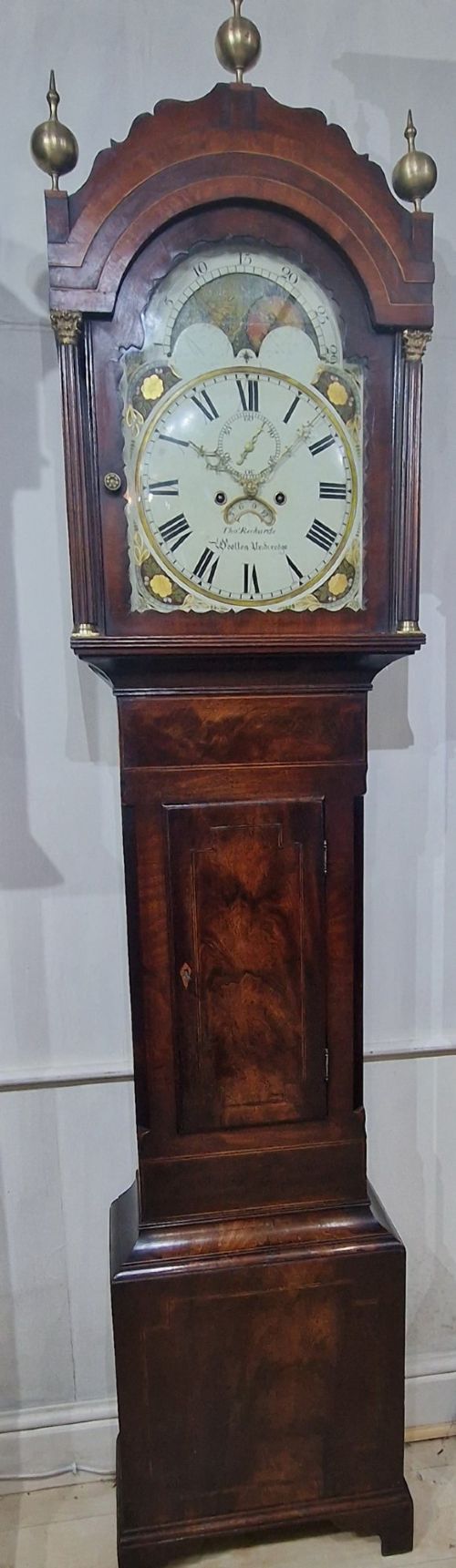
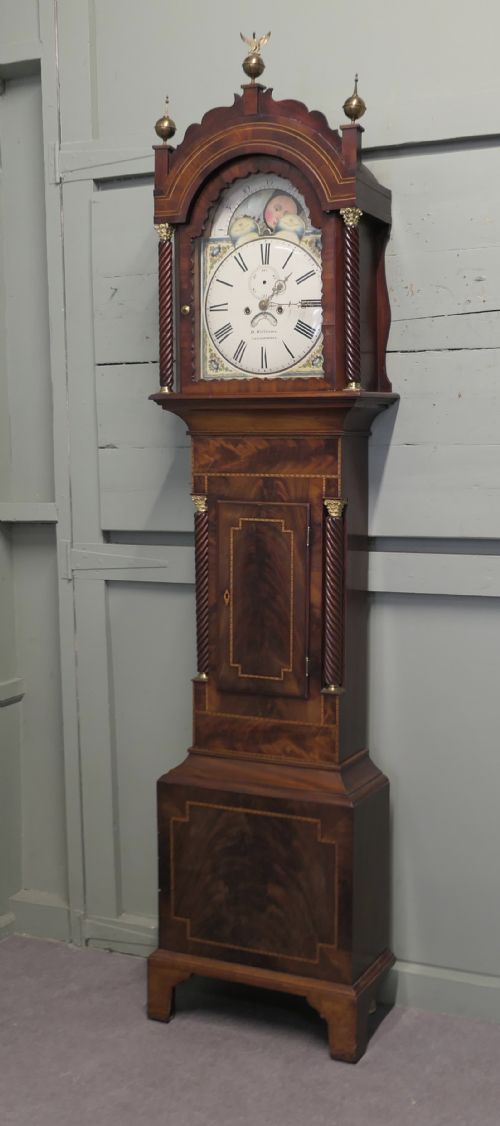


Moonphase Grandfather Clock
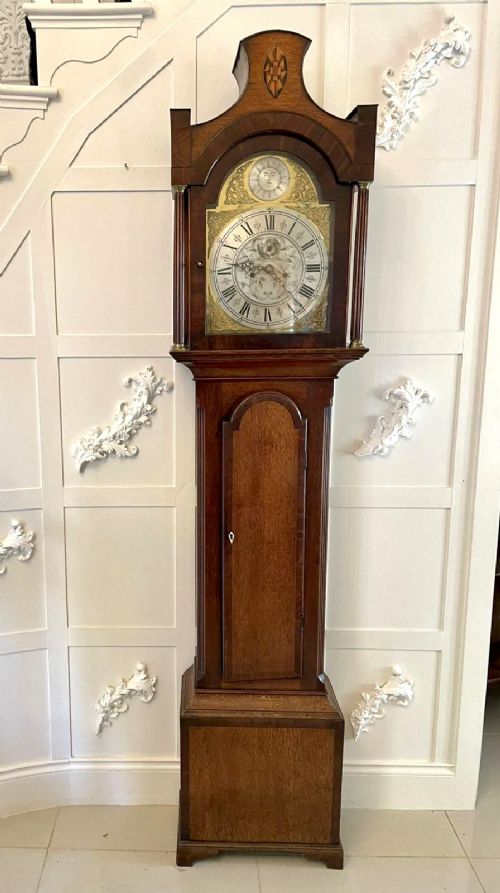
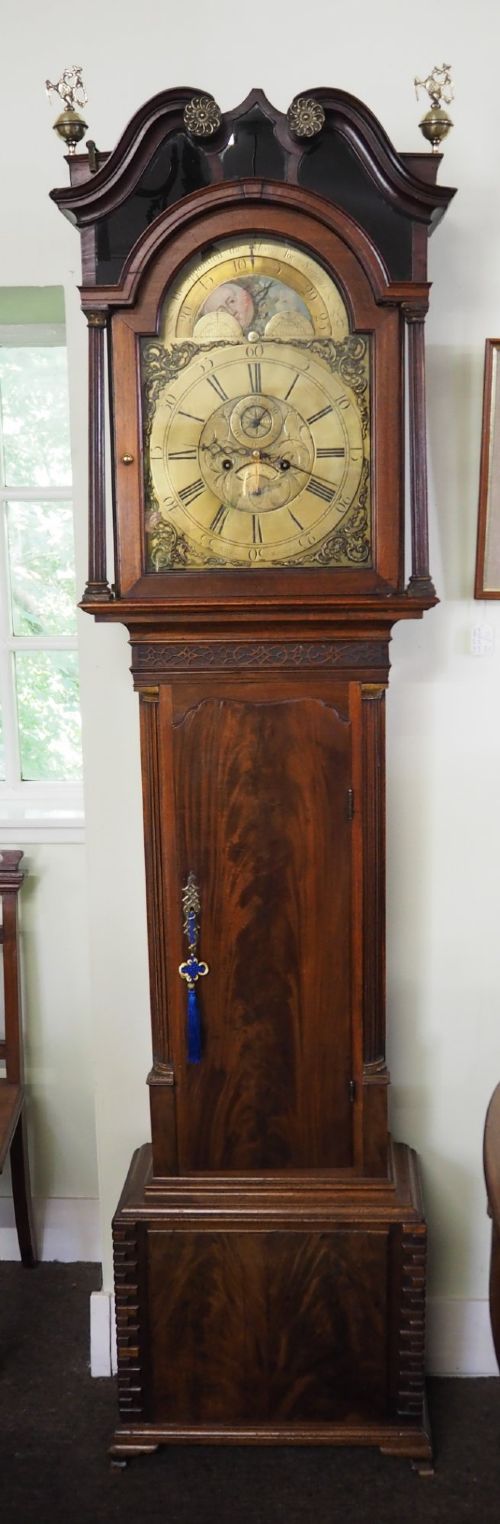
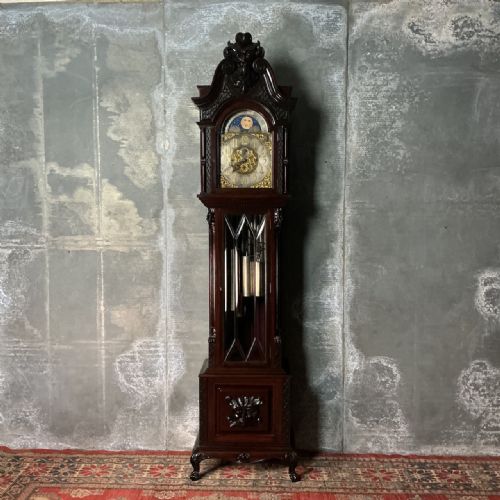
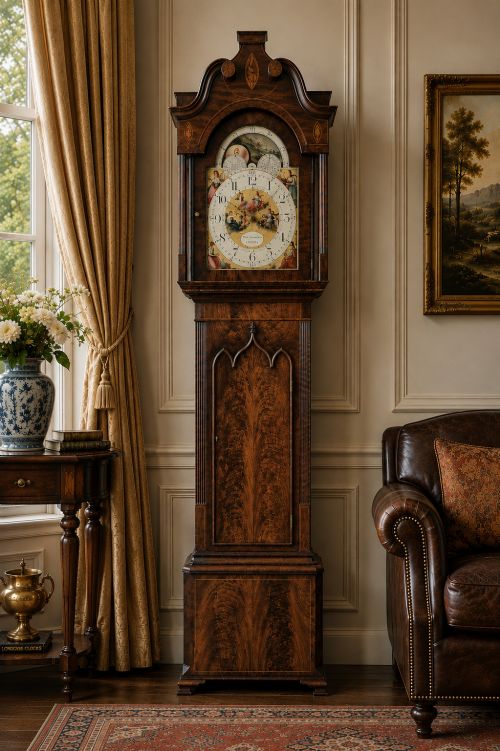
A moonphase grandfather clock tracks the lunar cycle alongside the hours, bringing mechanical artistry and historical presence into a room.
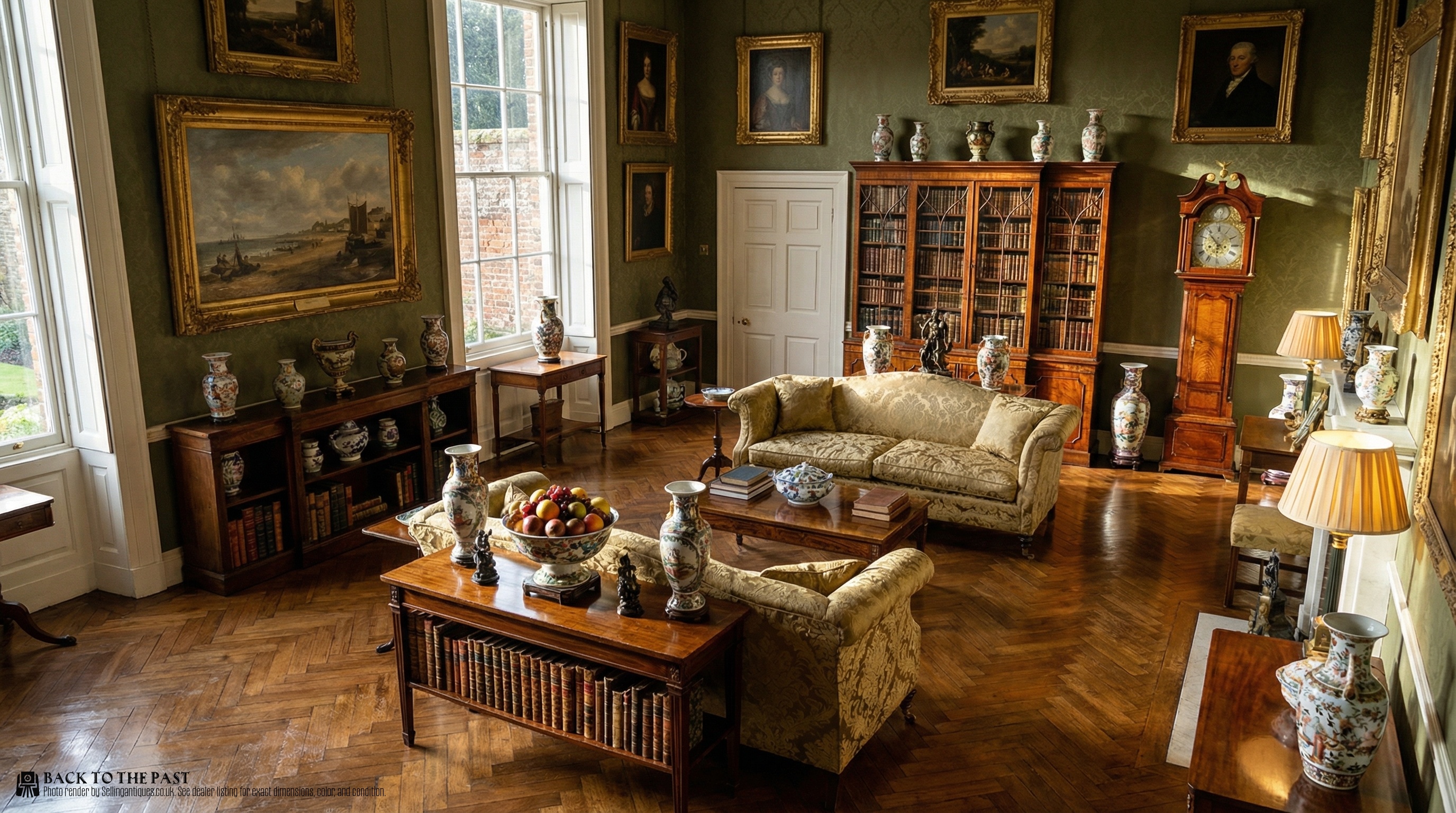
Moonphase Grandfather Clock
When you search for a moonphase grandfather clock, you are looking at tall case timepieces housing intricate mechanisms designed to display the phases of the moon on a painted or brass dial. These pieces span periods from the early eighteenth century through the nineteenth century, encompassing Georgian, Regency, and Edwardian eras.
The versions you will most commonly encounter on this page are housed in mahogany, oak, or walnut cases, often featuring regional provincial movements alongside works by known makers. Longcase clocks, also recorded as long case clocks or grandfather clocks, combine dense hardwood cabinetry with brass or painted iron dials.
Regional diversity remains a defining characteristic of these pieces, with makers from London, Bristol, Liverpool, and smaller market towns contributing distinct dial artwork and cabinet proportions. The integration of rolling moon displays turns a standard timekeeper into an animated calendar of the night sky.
How they were made
Cabinetmakers built these tall cases primarily using solid and veneered timbers such as mahogany, flame mahogany, oak, and walnut, often applying inlay and polished finishes to accentuate the grain. Glass doors protected the delicate dialwork while allowing an uninterrupted view of the swinging pendulum and weighted lines.
Clockmakers constructed the movements from brass and steel, pairing eight-day or multi-train gear trains with lead or cast iron weights that drove the escapement and strike systems. Painted iron and engraved brass formed the dial faces, where artisans hand-painted lunar hemispheres and tidal indicators.
Moonphase Grandfather Clock Retail Price Guide 2026
Typical asking prices for moonphase grandfather clock among the pieces listed under this phrase on Sellingantiques today, from the lower quarter to the upper quarter. They describe what is for sale here now, not the wider market.
Several clocks hide tidal indicators alongside the moonphase, reminding inland owners of distant coastal schedules.
What varies in quality
The sophistication of the movement separates standard timekeeping from superior engineering, particularly when extra trains drive musical chimes, alarm mechanisms, or Ferguson tidal dials. Heavier, more substantial brass plates and finely cut wheel teeth indicate a higher grade of workshop production.
Cabinet execution dictates overall visual impact, distinguishing straightforward provincial joinery from highly figured flame mahogany cases with refined proportions and complex inlay. The artistic merit of the painted or brass moon dial, including the intricacy of the lunar painting and the crispness of the engraving, determines the visual distinction of the piece.
Samuel Kellett of Bredbury·Charles Dowsett Of Canterbury·Thomas Vernon London·John Banks Oldham·Thomas Dean of Leigh·James Rayner of Hull·Thos Burchall of Nantwich·Robert Darling Melrose·Thomas Hutchison of Leeds·Iames Richards Liverpool
The Moonphase Grandfather Clock Glossary
- Moonphase
- A dial mechanism utilising a rotating disc with twin painted moons to track the twenty-nine-and-a-half-day lunar cycle. This feature required clever gear ratios to advance the moon smoothly behind shaped arch apertures.
- Longcase clock
- A tall freestanding pendulum clock enclosed in a wooden case, historically termed a grandfather clock. The trunk protected the suspended weights and pendulum from air currents that might disrupt timekeeping accuracy.
- Eight day
- A clock movement requiring winding once a week via holes in the dial face. This duration represented a practical improvement over thirty-day or daily wound variants.
- Dial
- The visible face of the clock displaying hours, minutes, and subsidiary indicators. These surfaces combined brass chapter rings with engraved spandrels or hand-painted iron panels.
- Three train
- A movement incorporating three separate gear trains to drive timekeeping, striking the hours, and playing musical tunes or quarters. Such complexity demands superior mechanical coordination.
Moonphase Grandfather Clock: Frequently Asked Questions
How do I wind an eight day clock?
Use the winding key to raise the weights inside the trunk, turning carefully until resistance meets you.
Avoid over-winding the movement, as this strains the internal lines and click springs.
Why does the moon dial lag behind?
The mechanical gear ratio approximates the lunar cycle over fifty-nine teeth, requiring occasional manual adjustment.
Owners typically correct the phase using fingers on the disc or an independent arbour behind the dial.
Where should I place a longcase clock?
Choose a dry interior wall away from direct sunlight, heating vents, and heavy foot traffic.
Stability is essential, so secure the case to the wall using the internal bracket to prevent swaying.
How do I keep the pendulum swinging?
Ensure the clock case stands entirely vertical by adjusting the feet or shimming the base on uneven floors.
Listen to the tick; an even 'beat' indicates the pendulum hangs centrally and the escapement functions correctly.