
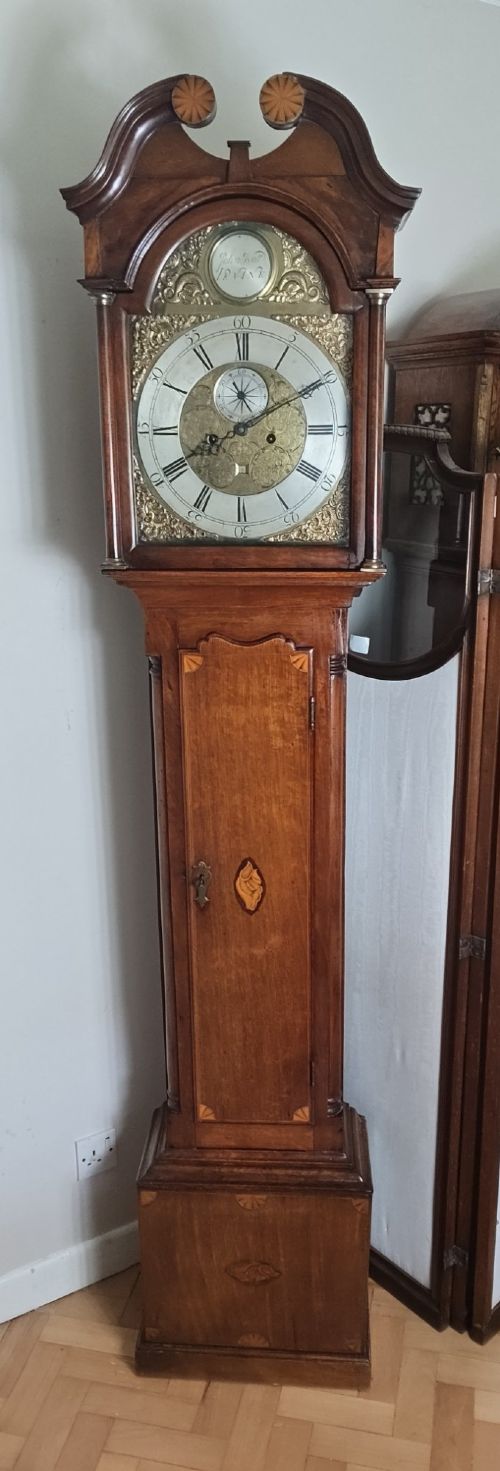
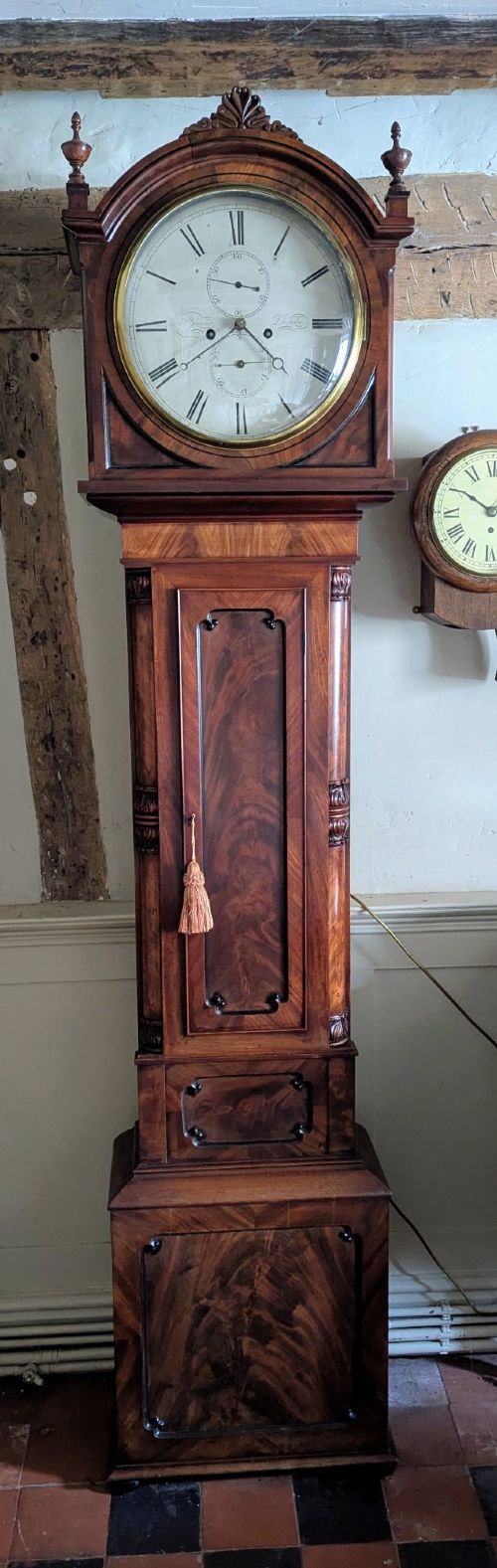
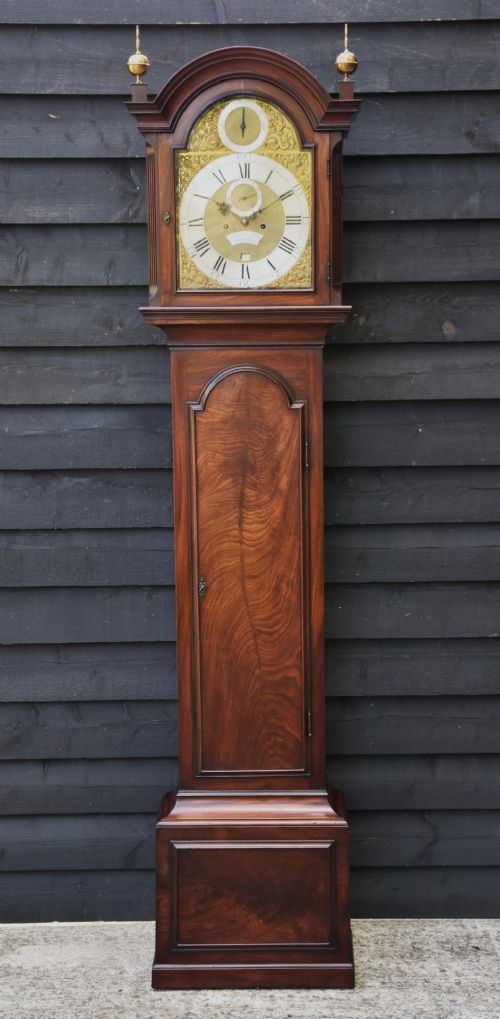
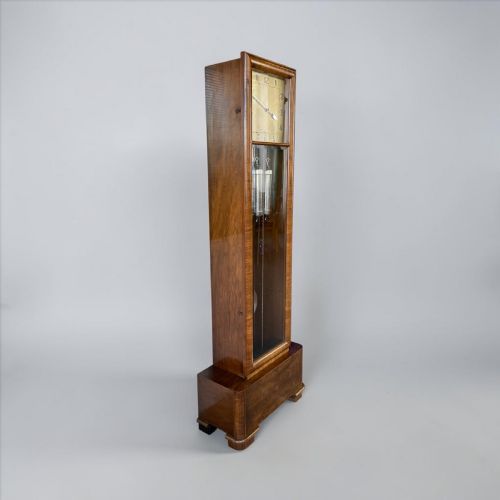
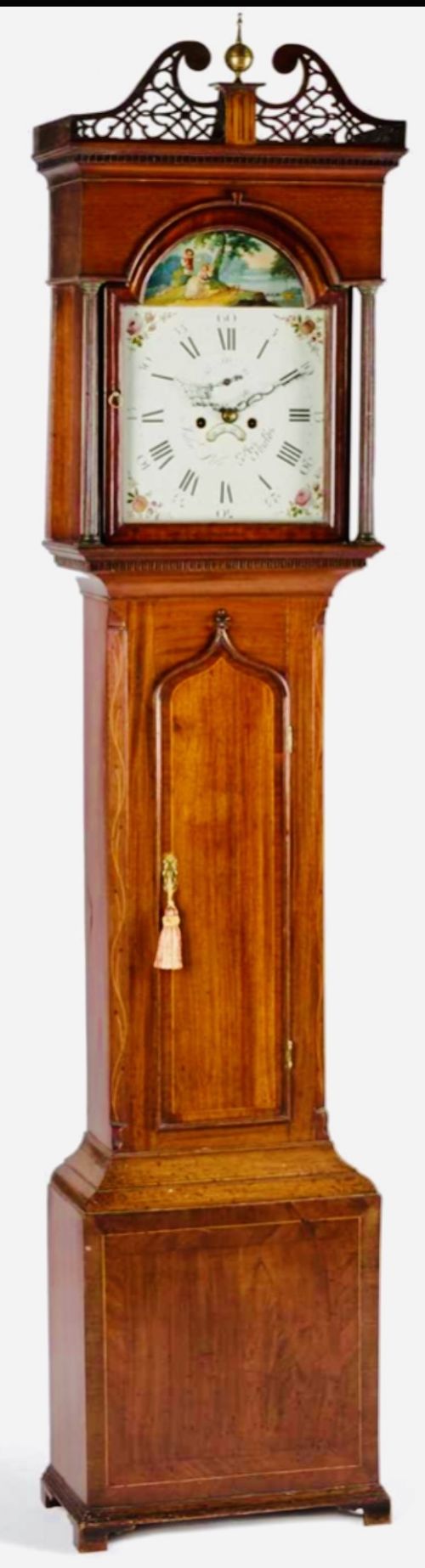
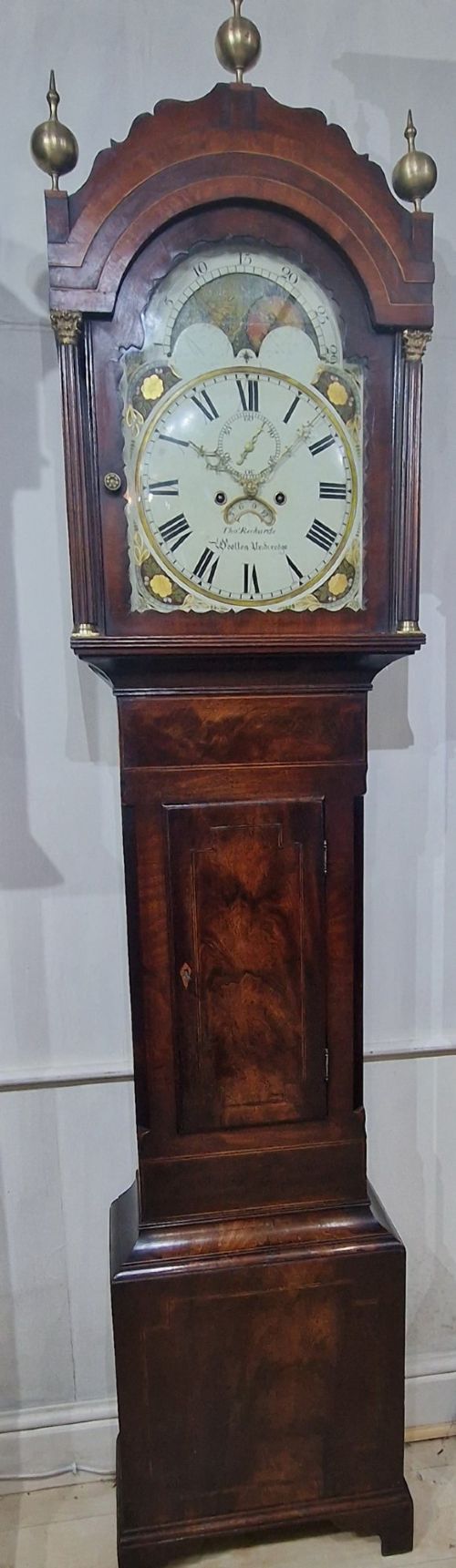


Brown Wood Grandfather Clock
These brown wood grandfather clock examples bring mechanical tradition into a room through tall wooden cases and brass dials.
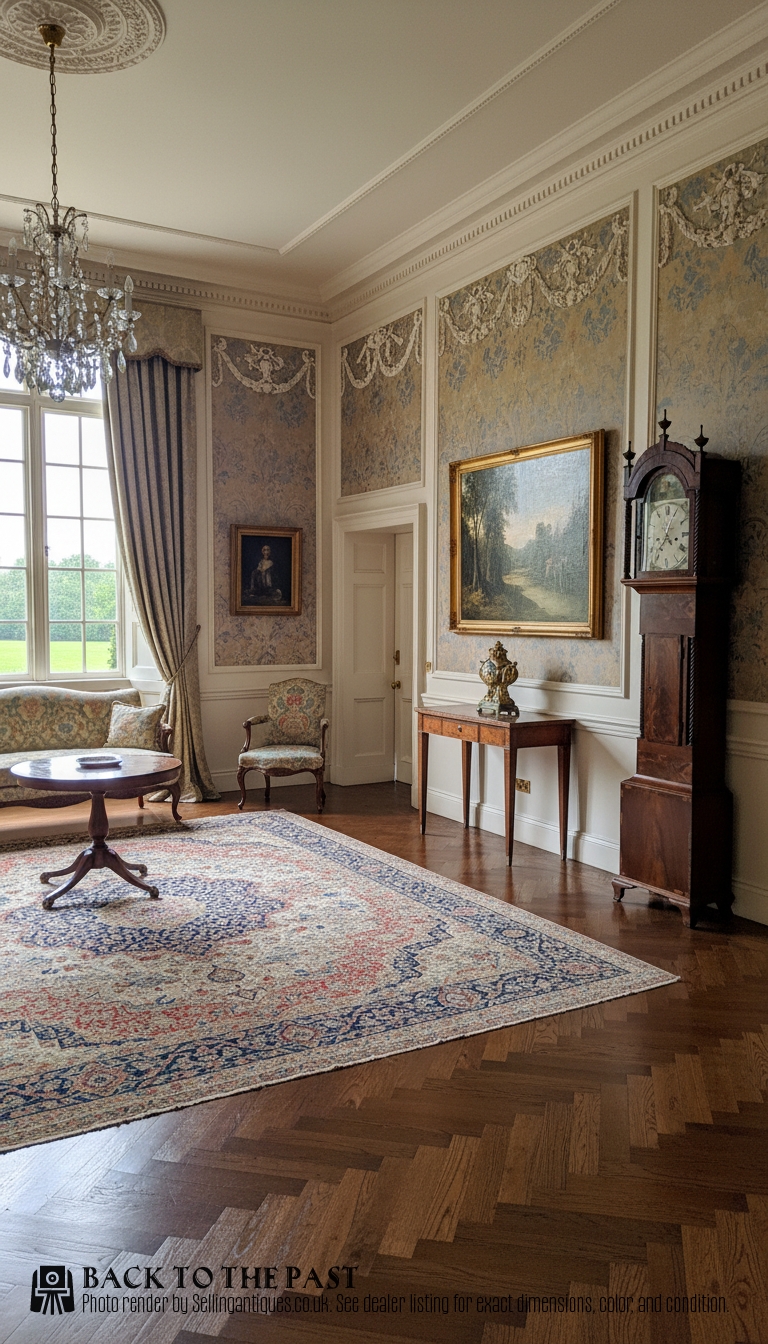
Understanding brown wood grandfather clocks
A brown wood grandfather clock sits tall on the floor, housing an internal movement and a swinging pendulum beneath a visible dial. These pieces range from grand eighteenth-century examples to later twentieth-century interpretations, with regional variations appearing across Britain.
The specimens on this page primarily comprise mahogany and oak longcase clocks from the eighteenth and nineteenth centuries, alongside a smaller nineteenth-century automaton clock and a compact 1920s model often termed a grandmother clock.
Buyers encounter diverse regional cabinetwork, such as Welsh regional Georgian designs, alongside refined George III pieces and revival styles like Jacobean work. Each longcase clock combines cabinet carpentry with horology, functioning simultaneously as furniture and a timekeeper.
Materials and construction
Cabinetmakers constructed these tall cases using dense timbers like mahogany and oak, building tall wooden trunks designed to protect the suspended weights and pendulums. Glazed doors or hoods protect the clock face, allowing a clear view of the dial.
The visible faces integrate materials such as polished brass and painted iron, inscribed with chapter rings and maker details. Mechanical movements inside rely on brass gear trains, often configured to run for eight days between windings.
Retail Price Guide 2026
Typical UK retail prices for brown wood grandfather clock, calculated from the Sellingantiques database of over a million retail prices indexed since 2003. This retail price guide relies exclusively on Sellingantiques data; no external sources or auction records are used, so the figures do not describe the wider market.
Materials recorded across the current selections include brass, glass, mahogany, oak, and painted iron.
Judging quality and craftsmanship
Quality rests in the harmony between the cabinetmaker's carpentry and the clockmaker's mechanical precision. Finer examples display carefully figured mahogany or substantial oak grain matched seamlessly across the tall door and trunk.
Engraved brass dials and sophisticated movements, such as those featuring rocking ship automatons or eight-day durations, separate standard utilitarian timepieces from exceptional workshop productions signed by named makers.
James Coster Of Henley·Dan Williams Crickhowell
The Brown Wood Grandfather Clock Glossary
- Longcase clock
- The formal term for a grandfather clock, describing a tall floor-standing timekeeper with a pendulum.
- Automaton clock
- A timekeeper featuring moving mechanical figures, such as a rocking ship that animates as the clock operates.
- Grandmother clock
- A smaller, more compact version of the traditional longcase clock, typically dating to the twentieth century.
- Chapter ring
- The circular ring on the clock face that displays the hour numerals.
Frequently Asked Questions
What is a brown wood grandfather clock?
A brown wood grandfather clock is a tall floor-standing timekeeper housed in a wooden case made of materials like mahogany or oak.
These pieces use a hanging pendulum and internal weights to drive the mechanical movement, displaying the time on a brass or painted iron dial.
How do I date an old clock?
Dating involves examining the timber choice, cabinet style, and dial construction, comparing regional characteristics against known historical periods.
Signed dials often name the original clockmaker, which helps narrow the window of production.
What is an eight day clock?
An eight day clock is a timepiece whose mechanical movement requires winding only once every eight days rather than daily or weekly.
This system uses heavier weights and longer drops accommodated within the tall wooden trunk of the longcase.
Where should I place a longcase clock?
Longcase clocks require a stable, level floor and secure wall fastening to ensure the pendulum swings evenly without interference.
Placing them away from direct heat sources and dampness helps protect the wooden cabinet and delicate internal brass mechanics.