
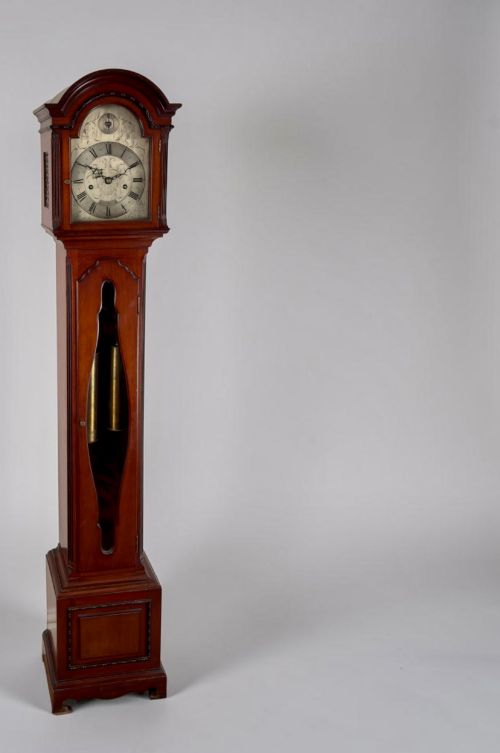
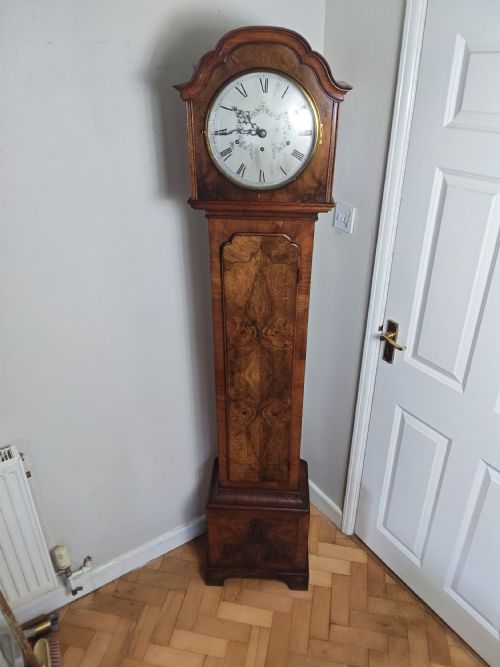


Arched Top Floor Clock
These arched top floor clocks combine towering wooden proportions with precise mechanical timekeeping, offering a striking focal point for any traditional interior.
Arched Top Floor Clock
When you search for an arched top floor clock, you encounter tall domestic timepieces spanning multiple centuries and various regional cabinet-making traditions. The inventory ranges from modest Edwardian and 1930s grandmother clocks to substantial Georgian and 18th-century longcase examples housed in rich timber enclosures.
The architectural hood featuring an arched pediment defines the visual character of these pieces, echoing classical design motifs adapted for domestic interiors. Many examples incorporate brass dials, visible pendulum movement windows, and specialised strike or chime mechanisms housed in proportioned wooden trunks.
Buyers frequently meet both full-size grandfather clocks and smaller proportions such as grandmother clocks within this selection. Timbers vary from figured mahogany and burr walnut to traditional oak, reflecting the prevailing taste of periods from the mid-18th century through the Edwardian era.
Materials and construction
Cabinet makers constructed the tall cases primarily using dense hardwoods like mahogany, oak, and walnut, often applying decorative burr walnut or mahogany veneers to prominent surfaces. Glass panels fitted into the hood doors protected the delicate dial and hands while allowing a clear view of the face.
Internal movements combine brass wheels, steel pinions, and intricate gear trains driven by suspended weights. Dial faces feature engraved brass, silvered chapter rings, and cast brass spandrels, sometimes incorporating secondary mechanisms like moonphase indicators or quarter-chiming functions.
Assessing quality and execution
The refinement of the cabinet work dictates much of the visual distinction, particularly the selection of figured timbers and the crispness of the arched hood mouldings. Superior examples display harmonious proportions where the height of the trunk balances the width of the dial and the curve of the top.
Mechanical complexity and the reputation of the original clockmaker influence the standing of an individual piece. Clocks featuring specialised movements, such as musical chimes or complex regulator gear trains by notable makers, demonstrate a higher degree of horological ambition.
Gillett & Johnston of Croydon·Thomas Goddard London·JAMES COSTER OF HENLEY·French Royal Exchange·THOMAS HALL - ROMSEY
The Arched Top Floor Clock Glossary
- Longcase clock
- A tall freestanding pendulum clock enclosed in a wooden case, commonly known as a grandfather clock. These timepieces typically stand over six feet tall and utilise heavy weights suspended by cords or chains.
- Grandmother clock
- A smaller, more slender version of the traditional longcase clock, usually produced during the 20th century. They occupy less floor space while retaining the mechanical movement and arched hood of their larger counterparts.
- Regulator
- A precision pendulum clock designed for exceptional accuracy in timekeeping. They often feature simplified, highly legible dials and were traditionally used as reference clocks to set other timepieces.
- Moonphase
- A specialised dial mechanism that tracks the lunar cycle through a rotating painted disc visible through an aperture in the clock face. This complication required sophisticated gear ratios to mirror the phases of the moon accurately.
Arched Top Floor Clock: Frequently Asked Questions
What is a grandmother clock?
A grandmother clock is a scaled-down version of the traditional longcase clock, generally measuring shorter in height and narrower in proportions. Makers produced many of these slender timepieces during the early twentieth century to fit modern domestic spaces.
Despite their reduced size, they house functioning weight-driven mechanical movements and share the same arched hood styling as larger grandfather clocks.
How do I wind a floor clock?
Winding a weight-driven floor clock involves using a specialised crank key inserted into winding holes on the dial face. Turning the key carefully raises the internal weights back toward the top of the trunk.
Care must be taken not to overwind the mechanism, stopping as soon as resistance is felt to prevent damage to the internal springs or gut lines.
Where should I place my clock?
Floor clocks require a stable, level surface on a solid floor to ensure the pendulum swings evenly and keeps accurate time. Placing the heavy wooden case away from direct sunlight and fluctuating heat sources protects the timber and veneer.
Securing the tall case to a wall using appropriate brackets adds stability, particularly in homes with children or pets.
How do I date a longcase clock?
Dating a longcase clock involves examining the style of the wooden case, the materials used, and the signature of the maker inscribed on the brass dial. Eighteenth-century examples often feature different architectural proportions and dial decorations compared to Edwardian or 1930s revivals.
Historical records of clockmakers and changes in cabinet-making fashions help narrow down the period of manufacture.