
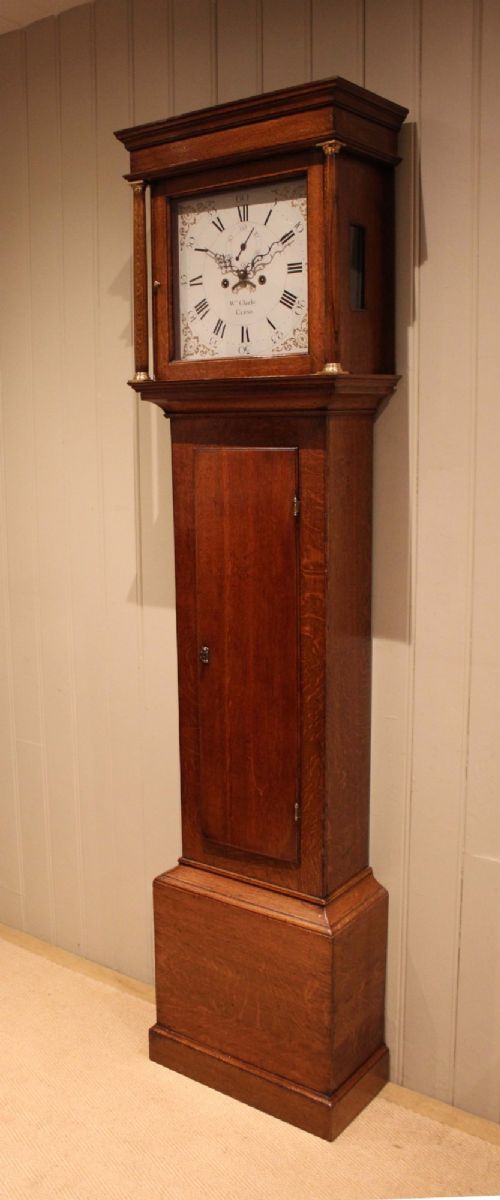
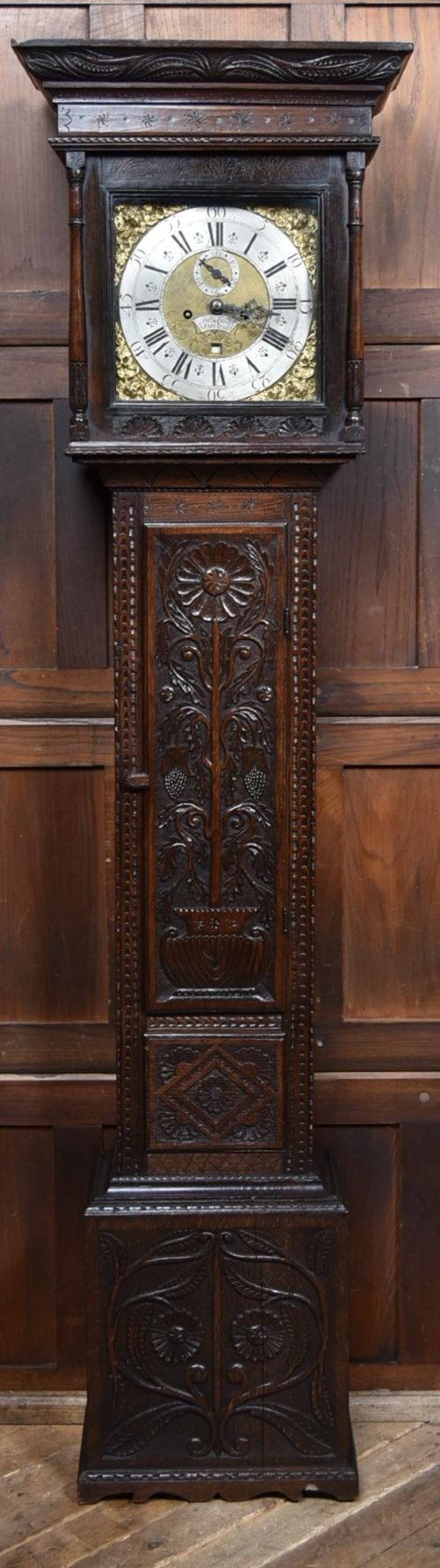
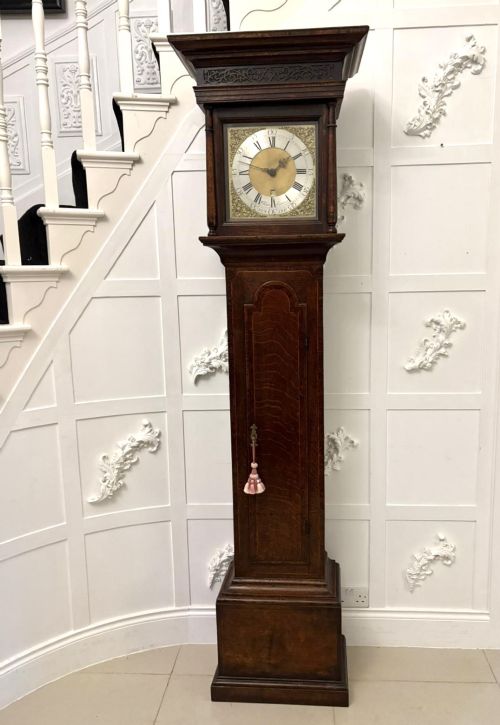
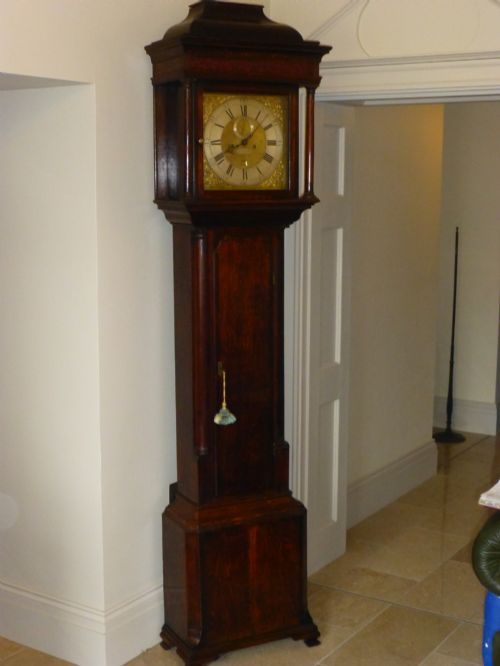
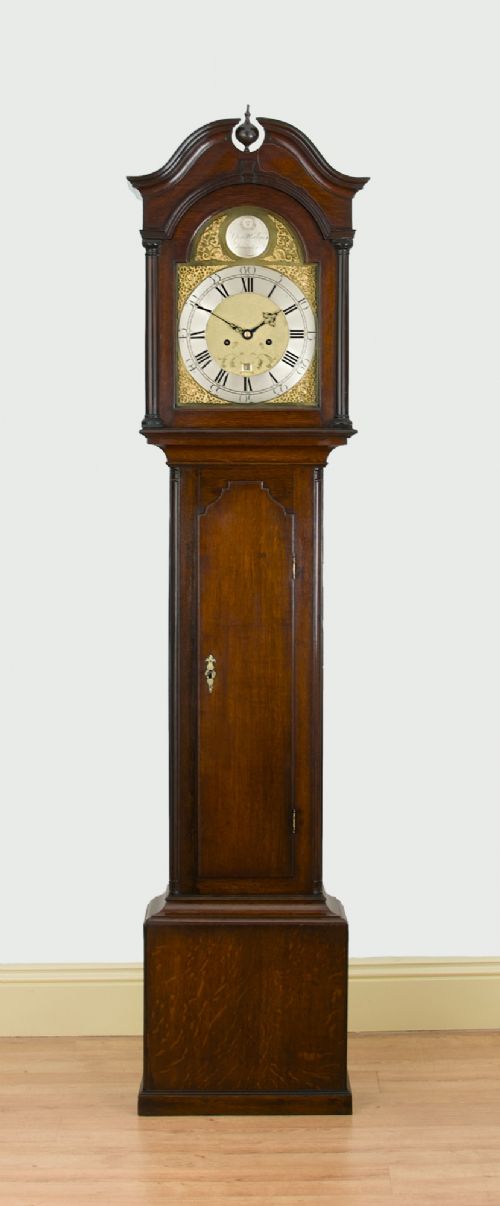


Dark Oak Tall Clock
A dark oak tall clock anchors a room with steady rhythm and deep grain, standing as a practical timepiece through centuries of domestic life.
Dark Oak Tall Clock
A dark oak tall clock, also known as a longcase or grandfather clock, brings vertical presence and mechanical timekeeping to a hallway or living space. These floor-standing instruments house pendulum movements inside fitted wooden cases designed to protect the weights and dial.
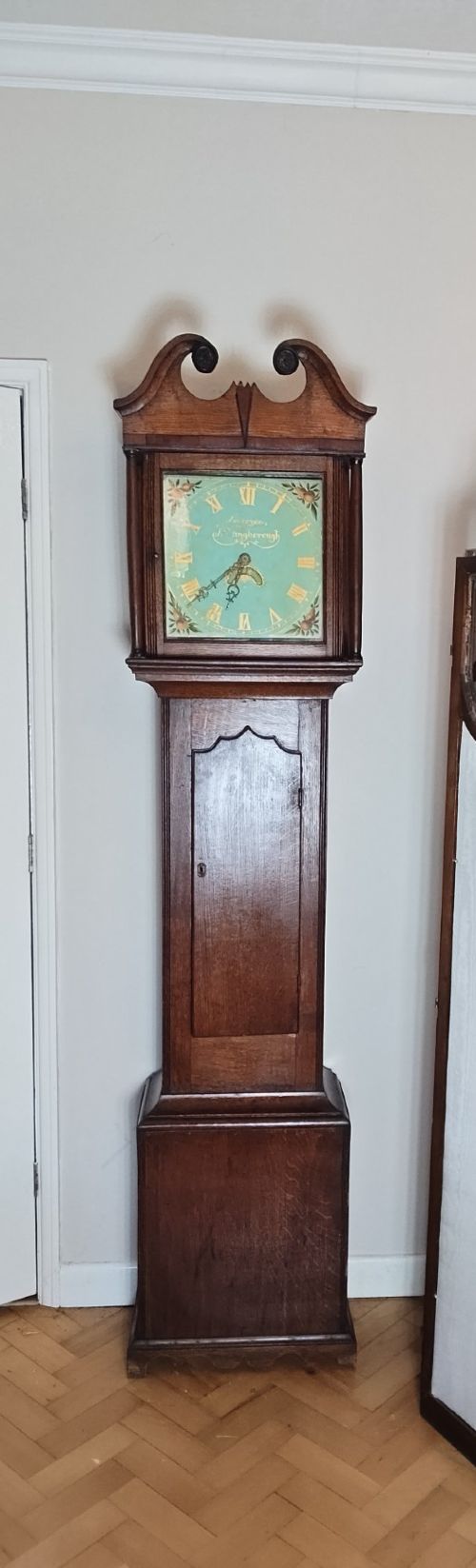
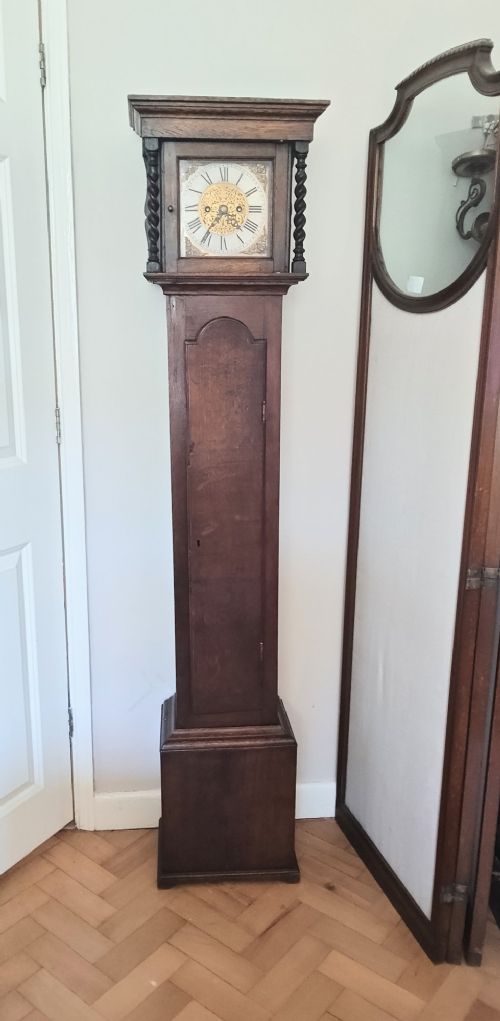
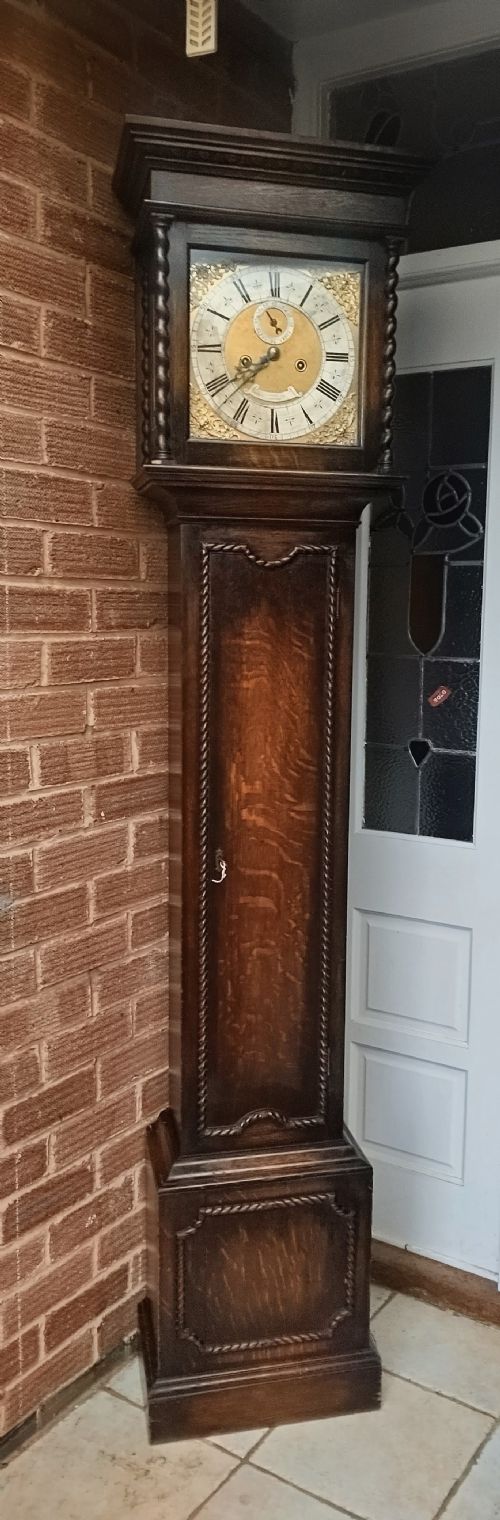
The examples found here range from robust 18th-century pieces with brass faces to later Edwardian and 1920s chiming variations. Buyers regularly encounter Georgian and George III formats alongside smaller grandmother clock editions suited to tighter spaces.
Regional makers signed many of these dials, connecting provincial workshops to domestic interiors across Britain. Alongside plain oak housings, some variants incorporate mahogany or walnut secondary timbers to frame the primary wood.
Materials and construction
Cabinetmakers built these tall cases primarily from solid oak, sometimes adding burr oak, walnut, or mahogany veneers to accent panels and hoods. Iron and brass formed the complex gear trains, springs, and weights that drove the internal mechanics.
Glass protected the painted or engraved brass dials, which featured single hands or twin hands depending on the period. Iron components supported the swinging pendulums while brass bushings reduced friction inside the gear assemblies.
Listings include both standard Georgian oak tall clocks and later Edwardian grandmother editions, spanning timber surfaces from plain oak to burr oak and walnut.
Judging quality and proportion
Proportion and cabinet definition separate standard examples from finer works, particularly where hood mouldings and waist doors meet flush. Crisp engraving on brass dials and detailed maker signatures indicate higher workshop standards.
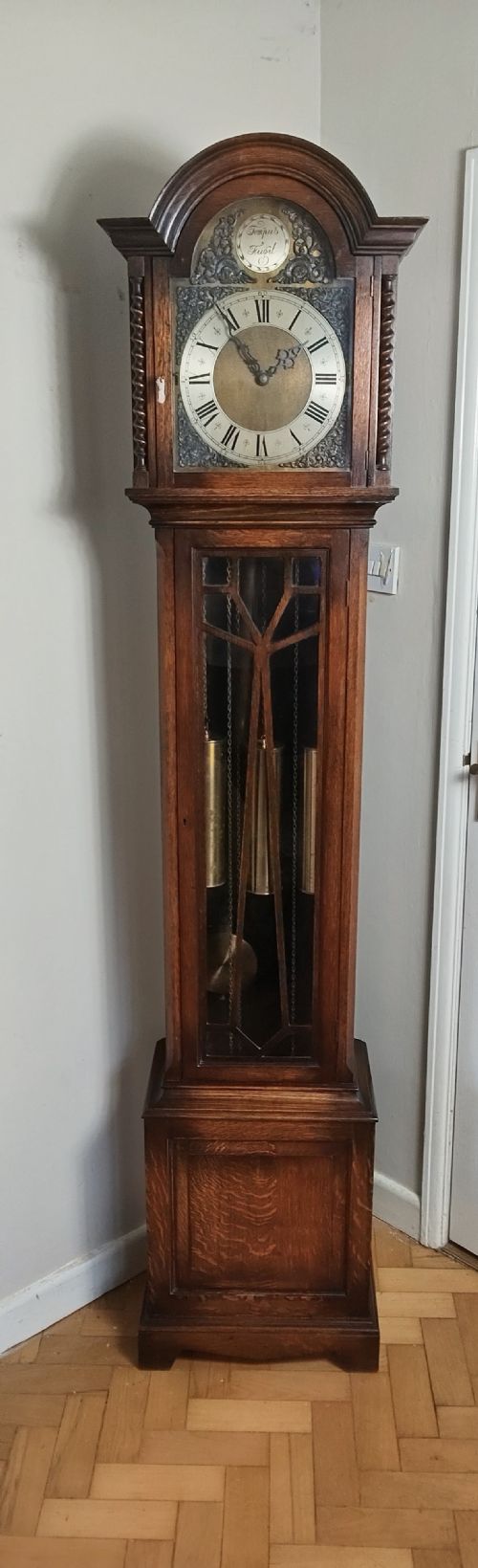
Movement complexity also divides the range, moving from simple thirty-hour weights to eight-day mechanisms and triple-weight musical chiming systems. The retention of original brass hardware and untouched timber patination preserves historical integrity.
Jn° Smith Macclesfd·Richard Corless of Stockport·George Hallifax Of Doncaster·Edward White Birmingham·Thomas May Of Witney·Thomas Utting of Yarmouth·John Wylde Nottingham·JOHN SALMON NANTWICH·SAMUEL YOUNG NANTWICH·Nicholas of Birmingham
The Dark Oak Tall Clock Glossary
- Longcase clock
- A tall pendulum clock enclosed in a wooden case that rests directly on the floor. This term is often interchanged with grandfather clock.
- Dial
- The face of the clock where hours and minutes are displayed. Dials on these pieces are frequently made of brass or painted iron.
- Grandmother clock
- A smaller, more slender version of the traditional longcase clock. These usually date from the Edwardian period or later.
- Movement
- The internal mechanism of gears, weights, and springs that drives the clock hands and strike train. Eight-day movements require weekly winding.
- Hood
- The upper removable section of a tall clock case that encloses the dial and motion work. Glass panels typically allow view of the face.
Dark Oak Tall Clock: Frequently Asked Questions
How often do these clocks need winding?
Most standard models operate on an eight-day weight-driven system that requires attention once a week. Simpler thirty-hour versions need winding daily.
Keeping a regular schedule preserves the tension on the gut lines or brass chains inside the trunk.
Where should a tall clock be placed?
These floor-standing pieces require a stable, dry wall and a level floor to maintain an even beat from the pendulum. Hallways and stair landings historically housed them to catch ambient foot traffic.
Avoid positioning them near direct heat sources that might dry the timber case.
How do I tell an 18th-century clock from a later one?
Earlier examples from the Georgian era typically feature square brass dials and simpler oak trunk doors without heavy ornamentation. Edwardian and 1920s editions often display chiming mechanisms and smaller proportions.
Examining the hinges, locks, and interior timber cut helps confirm the period of construction.
What is a musical grandfather clock?
These specialised timepieces include extra gear trains designed to play tunes or carillons on bells or gongs before the hour strikes. They frequently feature multiple weights to power the extra chime functions.
Such mechanisms became popular during the Edwardian era and the 1920s.