
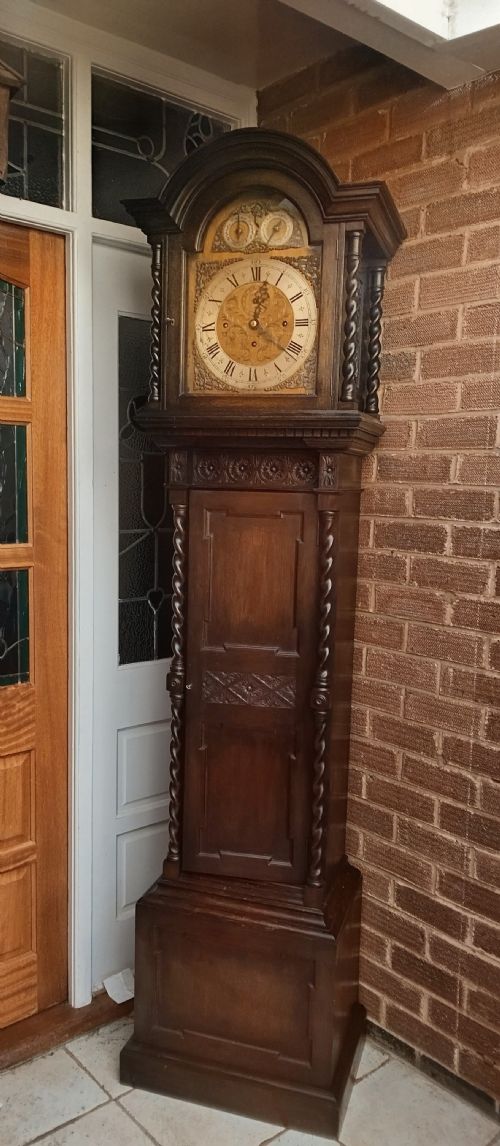


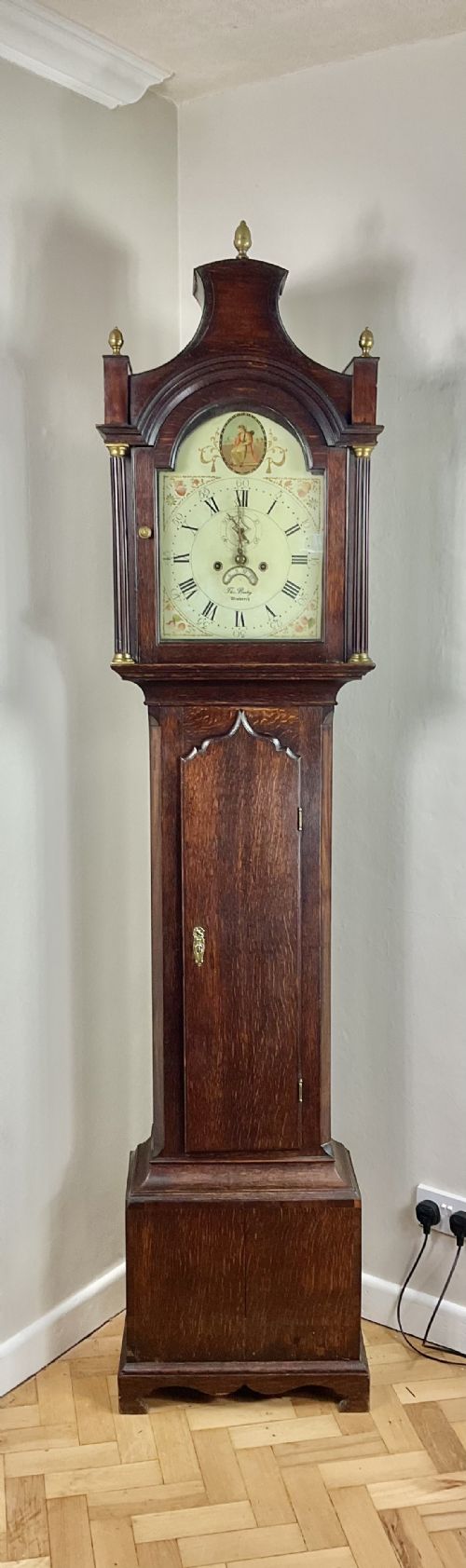


Antique Oak Hall Clock
An antique oak hall clock brings monumental presence and measured time to a space, anchored by the warm grain of timber.
Antique Oak Hall Clock
When you search for an antique oak hall clock, you are looking at substantial upright timepieces that stand tall in domestic interiors. These floor-standing instruments serve both a practical timekeeping purpose and act as major items of furniture. You will encounter various forms here, ranging from towering eight-day movements to more compact proportions.
The pieces listed on this page span several distinct periods, with Georgian and eighteenth-century examples appearing alongside later Victorian, Edwardian, and twentieth-century interpretations. Many of these taller iterations are traditionally known as grandfather clocks, whilst smaller variants are often described as grandmother clocks. Oak remains the unifying material, frequently displaying rich patination developed over centuries.
Stylistic influences vary considerably across the selection, moving from early Georgian austerity through to Jacobean revival carving, Victorian mass, and occasional Art Nouveau details. Architectural hoods, brass dial faces, and glazed trunk doors recur frequently among the forms. Buyers will find both regional British makers and continental movements housed in these heavy timber cases.
How they were made
Movements are driven by weights suspended on lines or chains, sometimes regulated by spring-driven fusee mechanisms in more compact models. Dial work involves meticulous engraving, silvering, or brass casting, occasionally incorporating chime barrels and multiple bells. Glass panels are fitted into the trunk doors to allow a view of the swinging pendulum within.
Some models feature up to nine tubular bells to chime the quarter hours.
What varies in quality
Quality in these floor-standing timepieces is largely determined by the crispness of the oak case carving and the original integrity of the brass dial. Finer examples display harmonious proportions, unblemished timber patination, and sophisticated dial engraving by recorded makers. Less refined pieces may show heavy alterations, replacement movements, or mismatched hoods and trunks from later repairs.
The mechanical complexity of the movement also separates the categories, from simple time-only setups to quarter-chiming mechanisms operating across multiple bells or gongs. The quality of the casting work on the brass spandrels and the legibility of the dial signature point directly to the original workshop standard.
John Wylde·Richard Northen·Herbert of Haversham·Thomas Baker of Malling·Richard Marshall Wolsingham
The Antique Oak Hall Clock Glossary
- Longcase clock
- A tall, floor-standing pendulum clock enclosed in a wooden case with a weighted movement. These pieces typically measure over six feet in height and require steady placement against a wall.
- Grandmother clock
- A smaller, more slender variant of the traditional longcase clock, usually standing under six feet tall. They were produced in various periods to fit rooms with lower ceiling heights.
- Fusee
- A conical pulley used in clock movements to maintain an even pull on the gear train as the driving spring unwinds. This device helps improve timekeeping accuracy across the power cycle.
- Spandrel
- The ornamental corner piece on a clock dial, typically cast in brass and mounted around the chapter ring. These decorations often indicate the stylistic period of the movement.
- Chapter ring
- The circular metal ring on a clock face that bears the hour and minute numerals. It is frequently silvered and engraved to stand out against the matted or engraved dial centre.
Antique Oak Hall Clock: Frequently Asked Questions
Where should I place a tall clock at home?
Position these tall timepieces against a solid interior wall away from direct sunlight, central heating vents, and damp exterior surfaces. Stability is crucial for proper pendulum function.
Ensure the floor is level so the case stands plumb, which keeps the tick even and prevents excessive wear on the pallet escapement.
How can I tell a Georgian clock from a later revival piece?
Examine the construction of the oak case, the timber patination, and the style of the brass dial engraving. Georgian pieces generally exhibit simpler, more functional construction methods.
Revival pieces from the Victorian or Edwardian eras often feature heavier, machine-cut mouldings, highly stylised carving, and modern movement components.
What is the difference between a grandfather and a grandmother clock?
The primary distinction lies in their overall height and proportions, with grandmother clocks being significantly smaller and more slender. They were designed for domestic spaces with lower ceilings.
Grandfather clocks maintain a commanding presence with taller cases, heavier weights, and frequently more complex chiming or musical gear trains.