
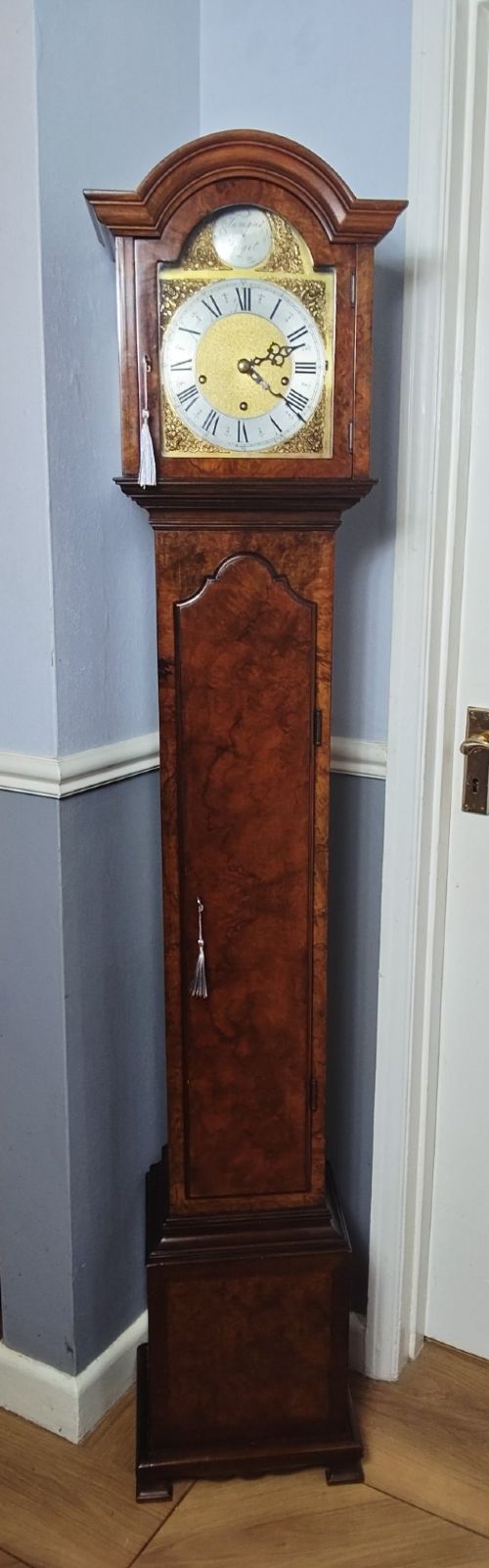
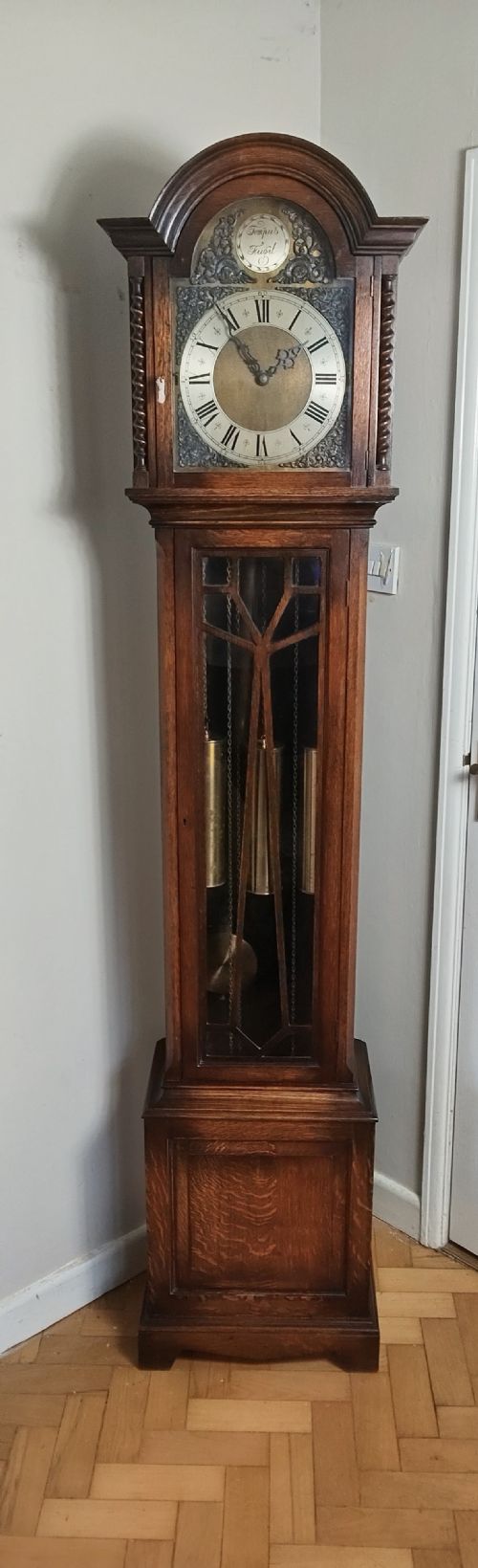
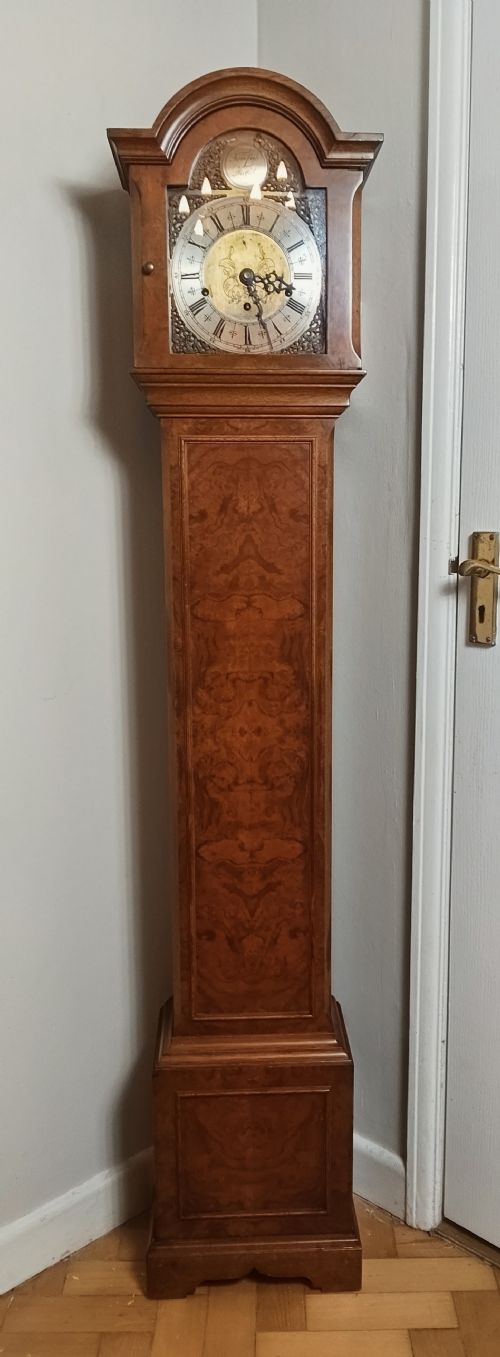
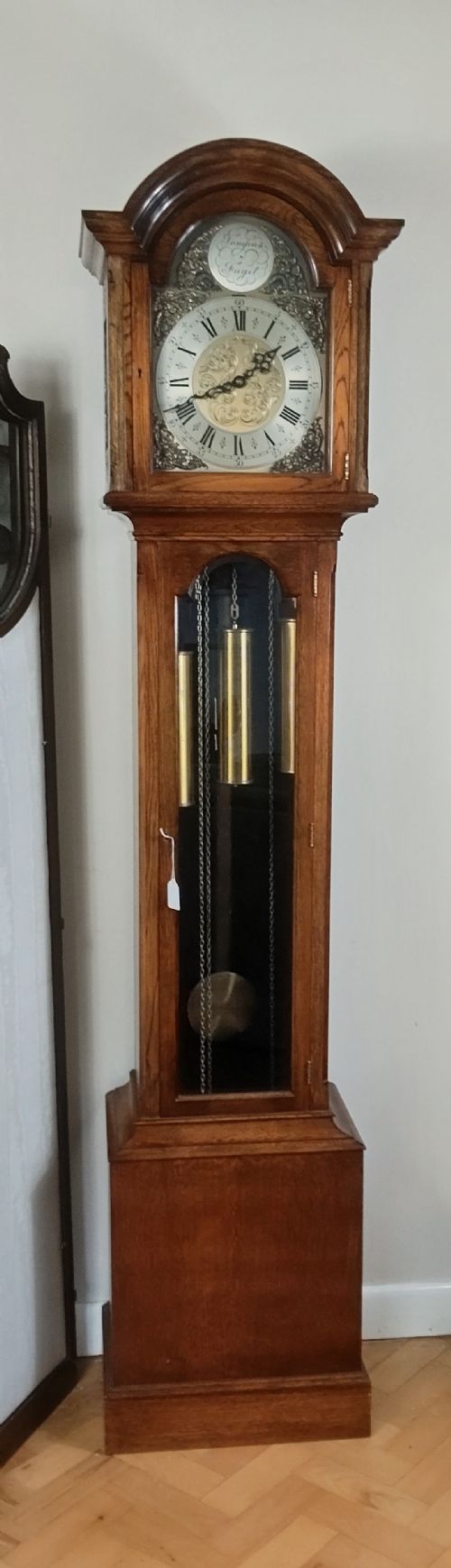


Tempus Fugit Longcase Clock
These tempus fugit longcase clock examples bring traditional movement and presence into a room, offering the classic mechanical timepieces collectors value.
Tempus Fugit Longcase Clock
A tempus fugit longcase clock combines traditional floor-standing timekeeping with specific dial inscriptions, appearing in various sizes from grandfathers to smaller grandmother clocks.
Most pieces encountered here date from the early twentieth century, alongside Victorian examples and earlier Georgian foundations, showing styles like Queen Anne Revival and Jacobean Revival.
The selection ranges from oak and mahogany floor clocks to figured walnut and burr walnut miniature longcases, often featuring musical chiming mechanisms.
What varies in quality
The refinement of the cabinetwork separates standard production from superior examples, particularly in the selection of figured burr walnut and quarter veneered surfaces.
Movement complexity dictates standard classification, distinguishing straightforward timepieces from intricate triple weight or quarter chiming musical mechanisms.
The inventory records pieces originating from the Georgian era through to the mid-twentieth century.
ELLIOTT·Enfield·Geo Tarratt of Leicester
The Tempus Fugit Longcase Clock Glossary
- Longcase clock
- A tall pendulum clock enclosed in a wooden case standing directly on the floor. These are frequently referred to as grandfather clocks.
- Grandmother clock
- A smaller, more compact version of the traditional longcase clock, popular during the early twentieth century. They fit well in rooms with lower ceilings.
- Tempus fugit
- Latin for time flees, a common inscription found on clock dials. It serves as a traditional memento mori reminding observers of the passage of time.
- Chime
- The acoustic musical signal a clock makes on the quarter hour or hour. Common variations include Westminster chimes and multiple melody barrels.
- Japanned wood
- European furniture finished in imitation of East Asian lacquerwork, often featuring raised decoration. This technique appears on decorative period clock cases.
Tempus Fugit Longcase Clock: Frequently Asked Questions
What does tempus fugit mean on a clock?
The phrase translates from Latin as time flies, serving as a philosophical reminder inscribed upon the dial face.
Clockmakers used this motif widely across various periods to decorate the metal chapter rings.
How do I tell a grandfather from a grandmother clock?
Grandfather clocks stand tall and command a large floor presence, whereas grandmother clocks are significantly smaller.
Both share the same longcase mechanical layout but differ entirely in height proportions.
Where should I place a longcase clock?
These tall floor clocks require stable, level flooring to ensure the pendulum swings evenly without stopping.
Keep them away from direct sunlight and damp areas to protect the wooden veneers and internal brass movements.
What is a quarter chiming movement?
A quarter chiming mechanism plays a musical sequence every fifteen minutes using multiple hammers and gongs.
More advanced versions include triple weight setups to drive the additional chime trains separately from the timekeeping.