

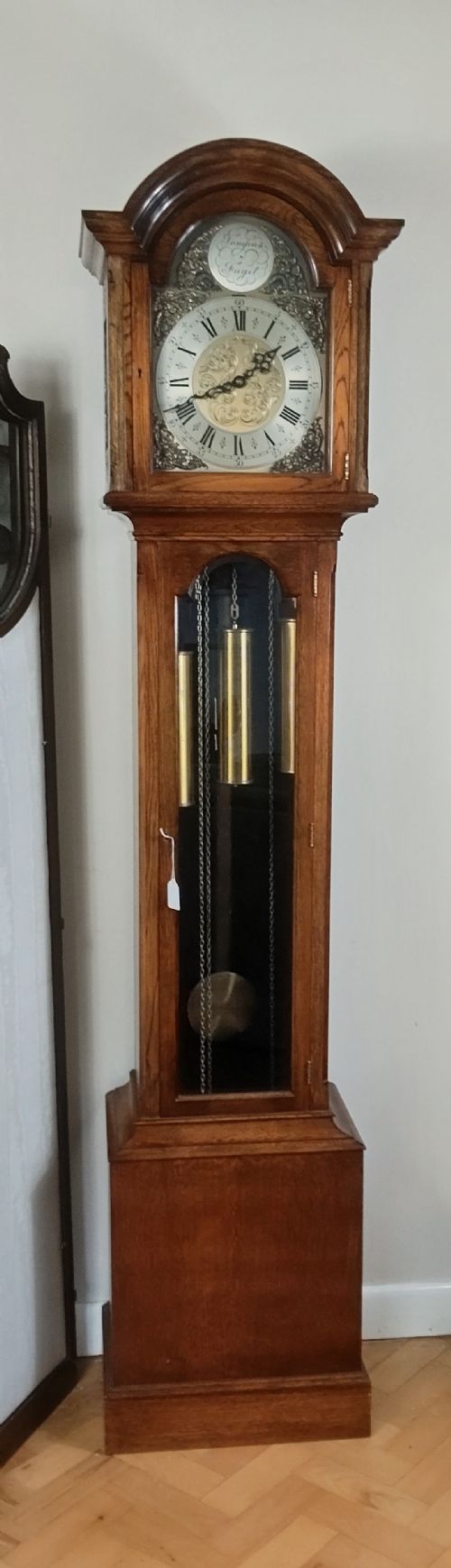
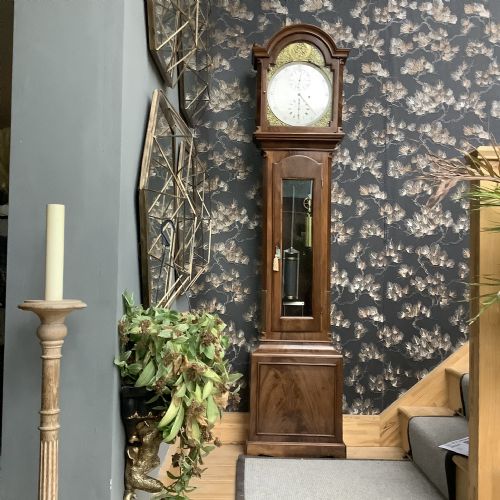


Arched Hood Longcase Clock
An arched hood longcase clock brings the steady rhythm of traditional timekeeping into a room, combining fine cabinetry with intricate mechanical movement.
Arched Hood Longcase Clock
An arched hood longcase clock stands as a tall floor-standing timepiece featuring a curved upper glass door that frames the dial. The selection spans robust oak, rich mahogany, and figured walnut cases housing precision mechanical movements.
Makers from the eighteenth century onward developed these tall designs to protect pendulum mechanisms while displaying status in a hallway or principal room. Examples range from early Georgian pieces by regional makers to Victorian and later revival interpretations.
The layout typically unites a bonnet top with a trunk door and a weighted base, accommodating brass dials, enamel faces, and striking trains. Shorter grandmother and grandfather proportions appear alongside standard full-height tall clocks.
How they were made
Cabinetmakers constructed these tall enclosures using solid timbers and decorative veneers such as flame mahogany or quarter-veneered walnut over robust secondary woods. Glass panels protected the dial within the arched bonnet, while brass hinges and iron hardware secured the movement.
Horologists built brass and iron movements with intricate gear trains, pinions, and striking mechanisms to drive chimes or musical tunes. Dials featured engraved brass work, silvered chapter rings, and painted enamel details depending on the period.
Several examples play multiple tunes to mark the passing hours.
What varies in quality
Proportion and timber selection dictate the visual strength of the piece, with well-figured veneers and balanced case dimensions distinguishing superior examples. The crispness of brass dial engraving and the complexity of the internal movement, such as quarter chiming or musical trains, set finer work apart.
Originality of components and the integration between dial, movement, and case define the integrity of the clock. Finer makers signed their brass dials and backplates, leaving a clear record of workshop origin.
Priory of Dundee Scotland·Bravingtons·LISTER & SONS·Dwerrihouse & Carter·Richard Gibbs London·Ganthony Of London·ROWNING OF NEWMARKET·JOHN HARVEY OF WEYMOUTH
The Arched Hood Longcase Clock Glossary
- Hood
- The upper section of the case that encloses the dial and movement, often featuring an arched glass door in these clocks.
- Trunk
- The long central body of the case that protects the suspended weights and swinging pendulum.
- Chapter ring
- The metal ring on the dial face that displays the hour numerals.
- Quarter chiming
- A mechanical train that sounds the quarters of the hour on bells or gongs in addition to striking the full hour.
- Pillar
- One of the vertical brass columns supporting the plates of the clock movement.
Arched Hood Longcase Clock: Frequently Asked Questions
What is an arched hood longcase clock?
An arched hood longcase clock is a tall floor-standing timepiece featuring a curved glass bonnet over the dial.
These pieces combine fitted wooden cabinetry with weight-driven mechanical movements developed over centuries of horology.
How do I wind the clock?
Winding involves drawing up the heavy weights inside the trunk using a key or pulling the cords depending on the movement.
Careful handling ensures the train remains undamaged and the pendulum keeps an even beat.
Where should I place a tall clock?
These tall pieces require a stable, level floor against a sturdy wall to maintain the correct plumb and steady beat of the pendulum.
Hallways and principal rooms traditionally housed them where the chime could resonate through the space.
How do I identify the period?
The style of the timber case, the shape of the dial, and the construction of the brass movement offer clear clues to the date of manufacture.
Georgian examples display different proportions and dial work compared to later Victorian or twentieth-century interpretations.