




Antique Welsh Clock
An antique welsh clock brings rural craftsmanship into a room, recording hours through brass dials and local oak cases.
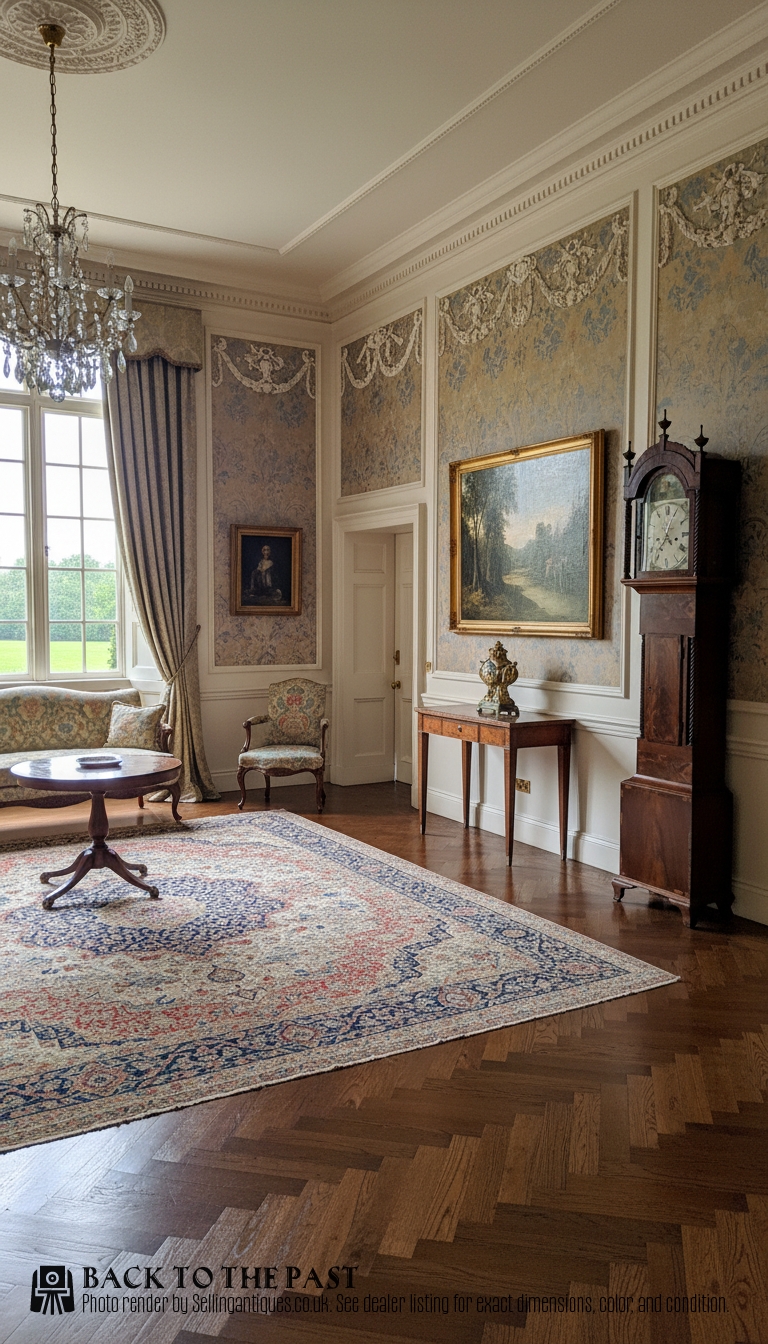
Antique Welsh Clock
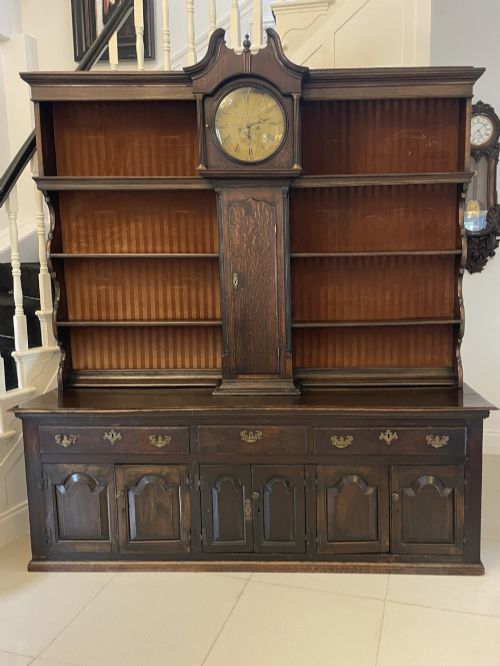
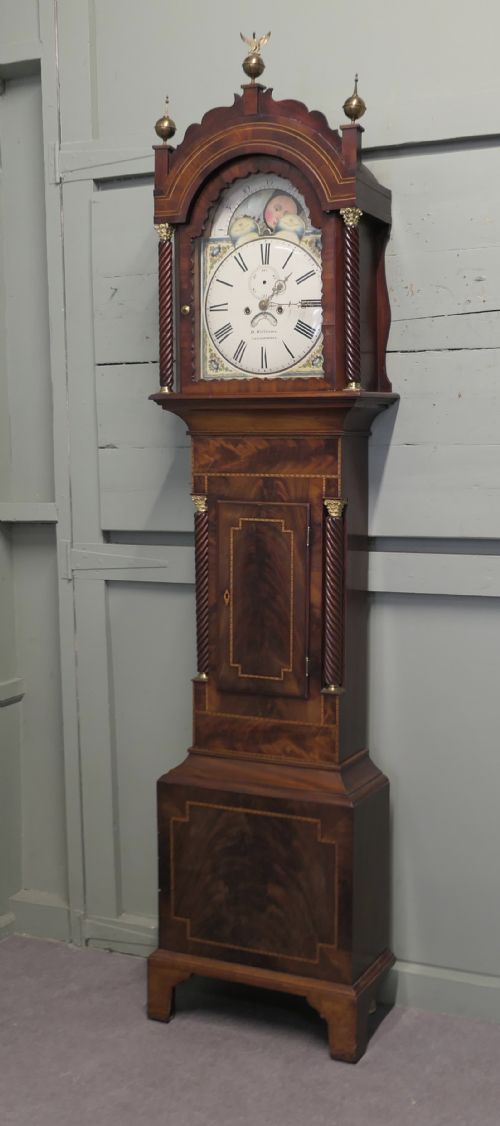
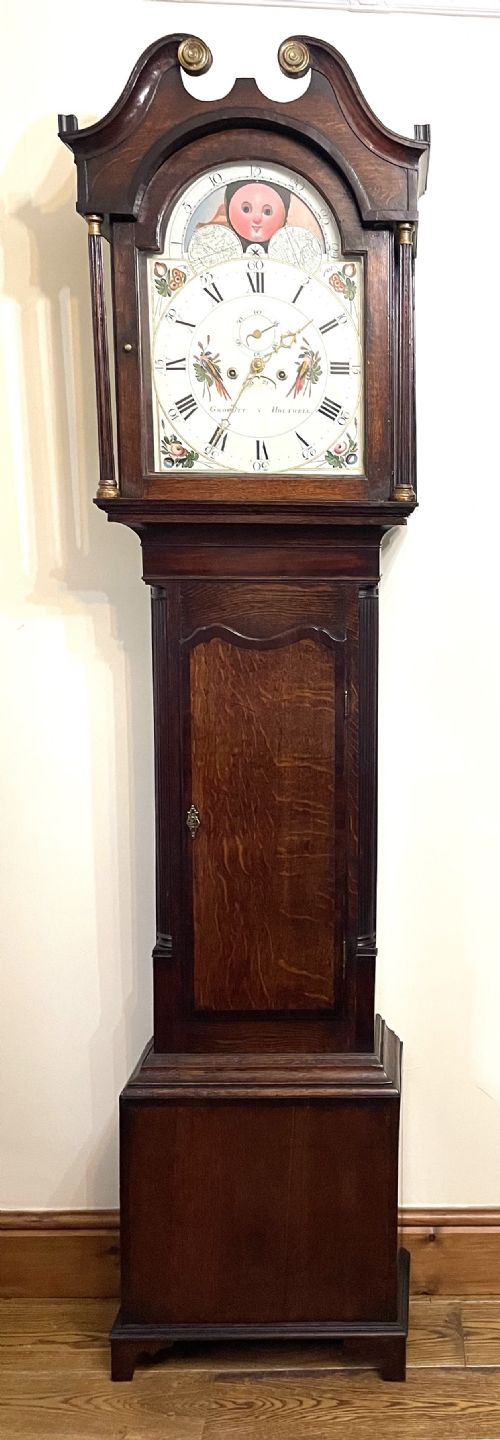
An antique welsh clock is primarily represented by tall longcase and grandfather clocks housed in regional timber cases. These pieces span the eighteenth and nineteenth centuries, carrying the names of makers from towns across the principality on their brass or painted iron dials.
The versions most commonly met on this page combine eight-day movements with arch dials, occasionally featuring rolling moon phases. Cases are built from local hardwoods like oak and mahogany, often displaying regional details such as star-burst inlays in the door.
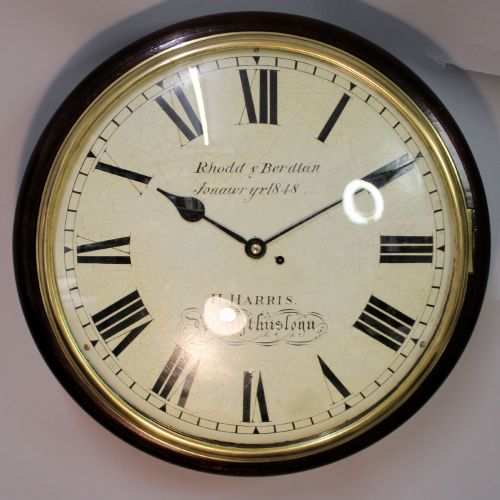
Alongside tall clocks, the selection includes fusee wall dial clocks and smaller bracket clocks originating from Welsh localities. These timepieces reflect the work of provincial clockmakers operating during the Georgian and Victorian eras.
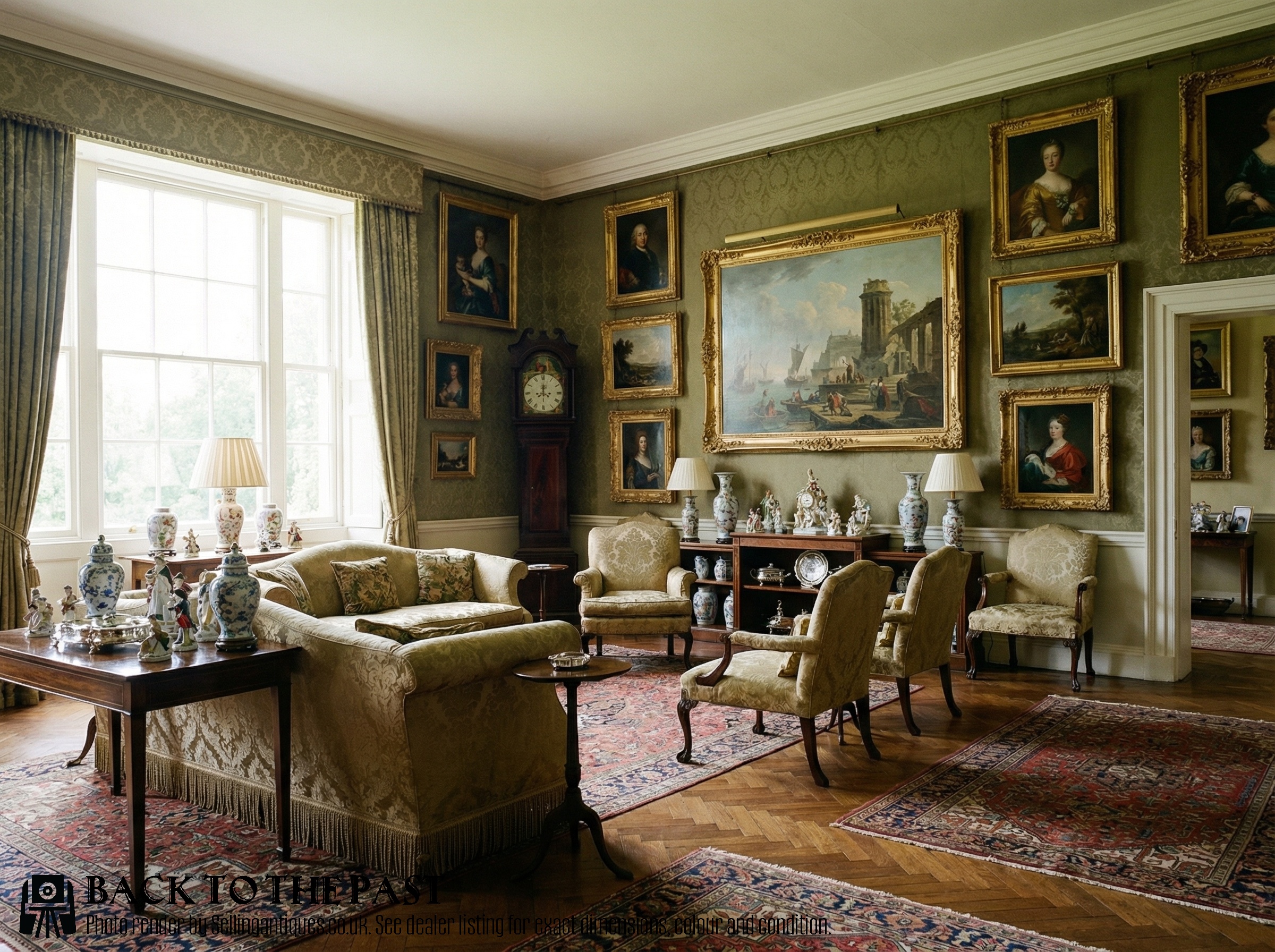
What varies in quality
The distinction between ordinary and superior pieces rests in the execution of the dial and the cabinetwork. Finer examples display crisp engraving on brass arches or detailed painting on iron faces, paired with well-proportioned timber cases possessing original surfaces.
Regional movements signed by recorded makers carry greater interest than unsigned vernacular equivalents. The integrity of the case construction and the retention of original brass and glass components define the upper tier of these timepieces.
Several clocks hide a painted moon behind the dial arch, tracking the tides for inland farming communities who still kept an eye on the sea.
Henry Harris of Monythusloyn·D Williams of Crickhowell·Thomas Webbe of New Quay·James Harvey of Abergavenny·Grocott Holywell·Rob Parry Pwllheli·Watkin Owen Llanrwst·M Thomas Caernarfon·John Jones Pwllheli·David Griffith Carnarvon·Joyce Ruthin·Owen of Llanrwst·M. Harris of Swansea
The Antique Welsh Clock Glossary
- Longcase clock
- A tall pendulum clock enclosed in a wooden case designed to stand directly on the floor. These pieces are also frequently called grandfather clocks.
- Arch dial
- A clock face featuring a semicircular upper section above the main dial ring. This space often houses a moonphase mechanism or maker signature.
- Fusee
- A conical pulley used in clock and watch movements to equalize the declining power of a mainspring as it unwinds. This mechanism ensures more accurate timekeeping.
- Rolling moonphase
- A mechanical display behind an arch dial that tracks the phases of the lunar cycle using a rotating painted disc. It requires precise gear ratios to mirror the moon's orbit.
Antique Welsh Clock: Frequently Asked Questions
What is an antique welsh clock?
An antique welsh clock is a timepiece made or retailed in Wales during the eighteenth or nineteenth century. They are predominantly longcase clocks housed in oak or mahogany cases.
These pieces combine mechanical movements with regional dial decoration. Makers signed their work directly onto the brass or painted iron faces.
How do you wind an 8 day clock?
An eight-day clock requires winding approximately once a week using a matching crank key. Weights inside the trunk pull the lines downward as the gear train operates.
Care must be taken to raise each weight gently without over-winding the movement. The pendulum should remain undisturbed during the process.
Where were these clocks made?
Clocks were produced in workshops located throughout Welsh towns and rural districts. Makers operated in places such as Llanrwst, Pwllheli, and Abergavenny.
Local cabinetmakers supplied the tall wooden housings to fit the movements produced by the resident horologist.
What is a rolling moon dial?
A rolling moon dial is a mechanical display located in the arch of a clock face. It tracks the lunar month through a painted rotating disc.
This feature adds visual complexity to the dial layout. It indicates whether the moon is waxing or waning behind painted cloud formations.