
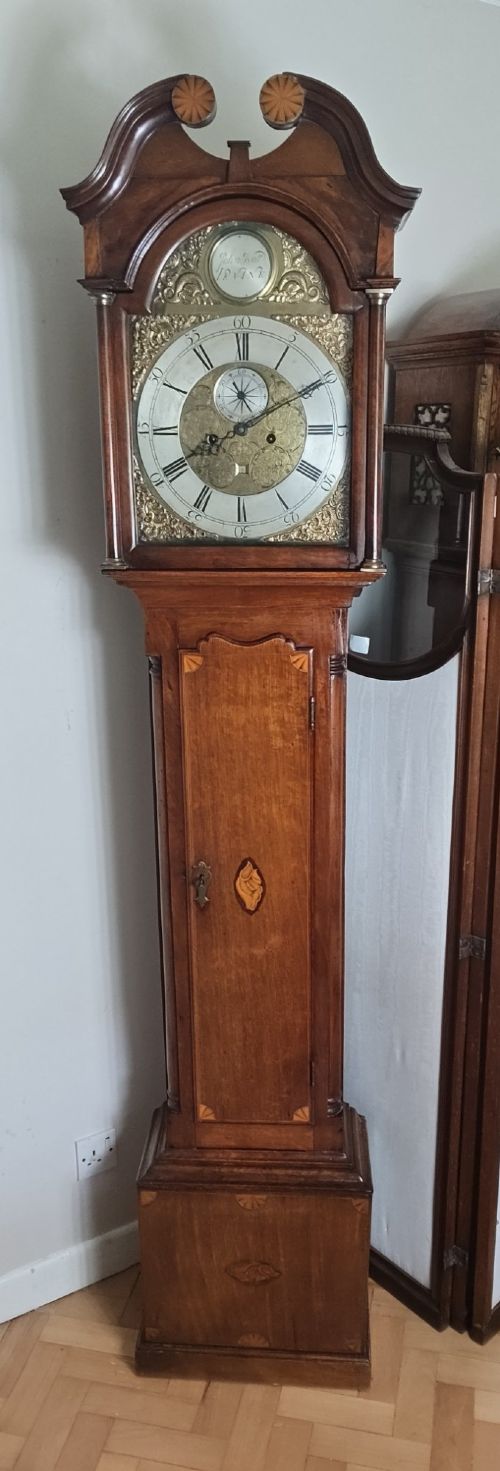
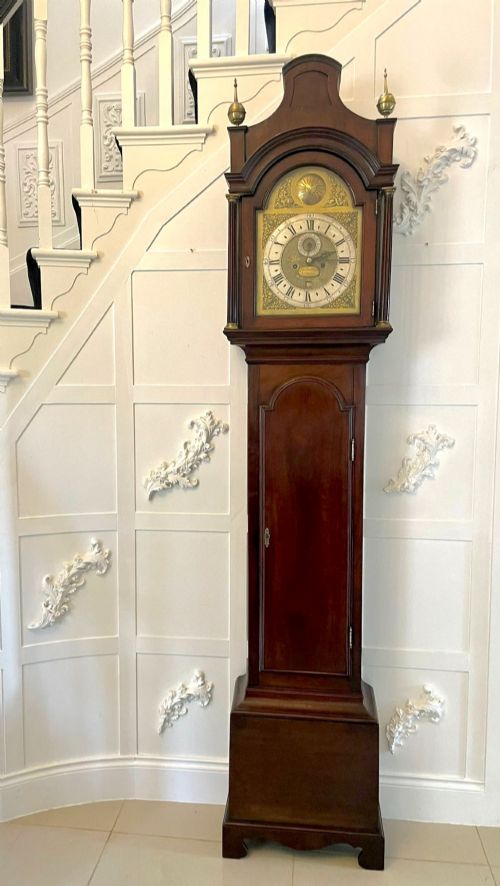
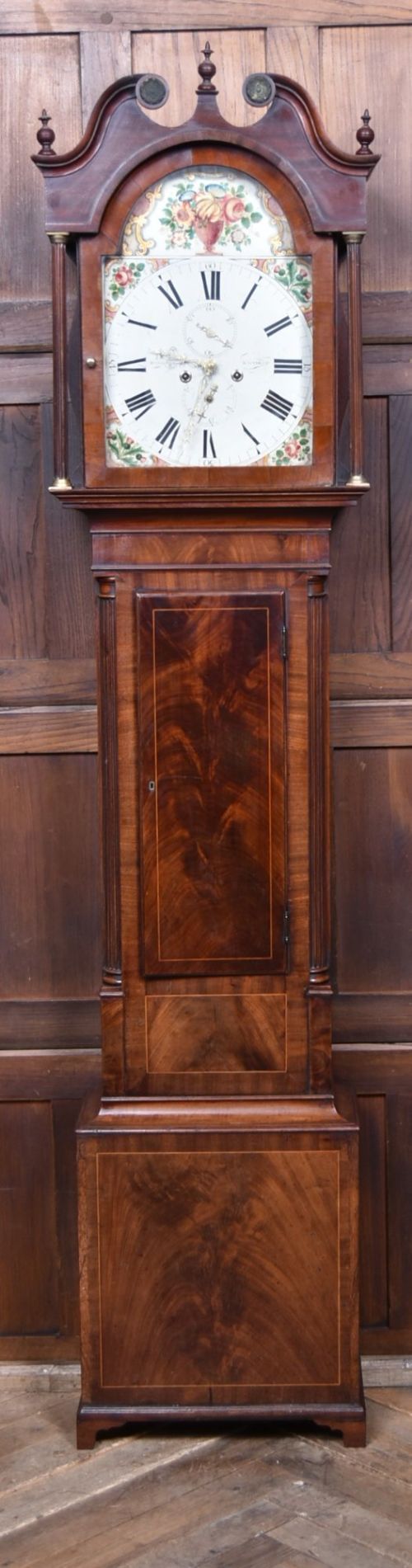
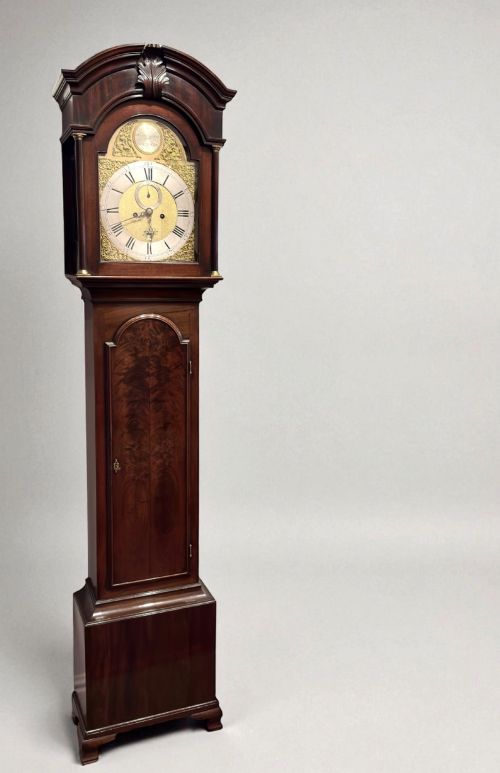
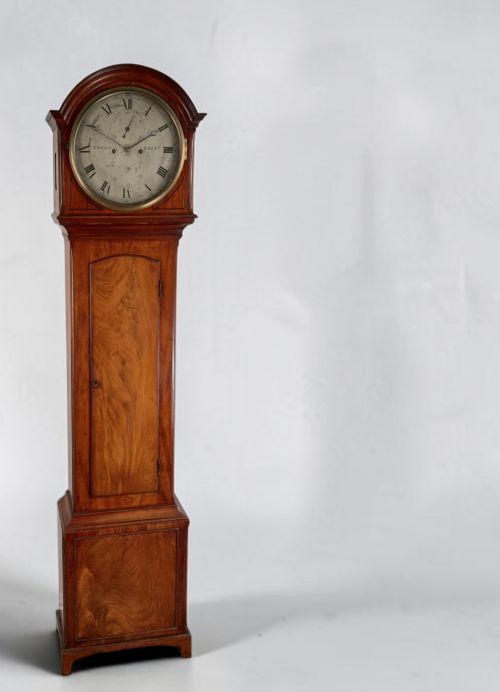
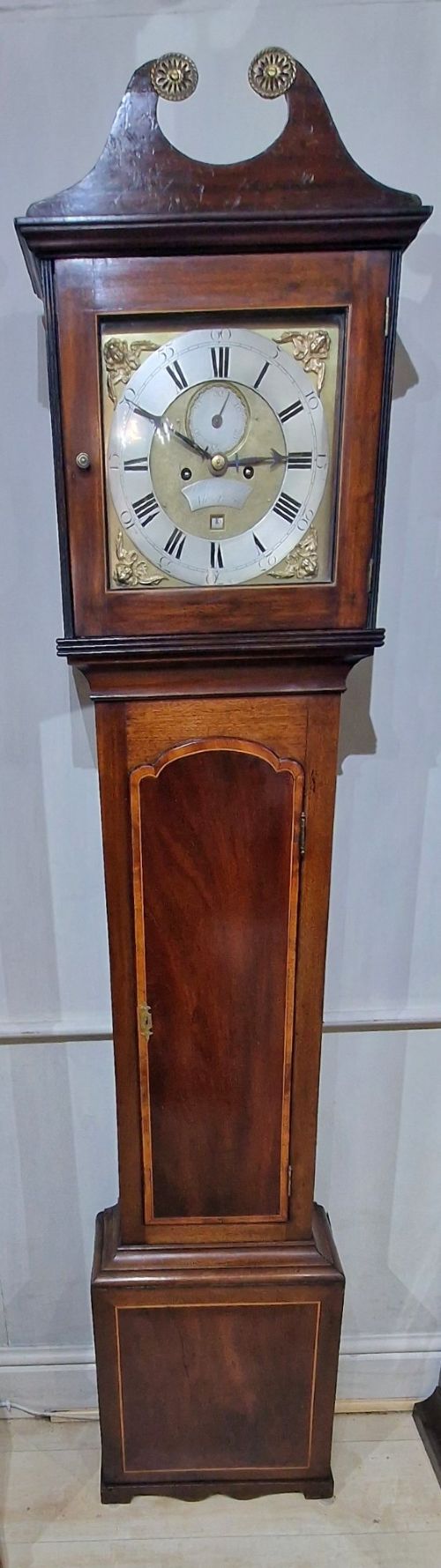
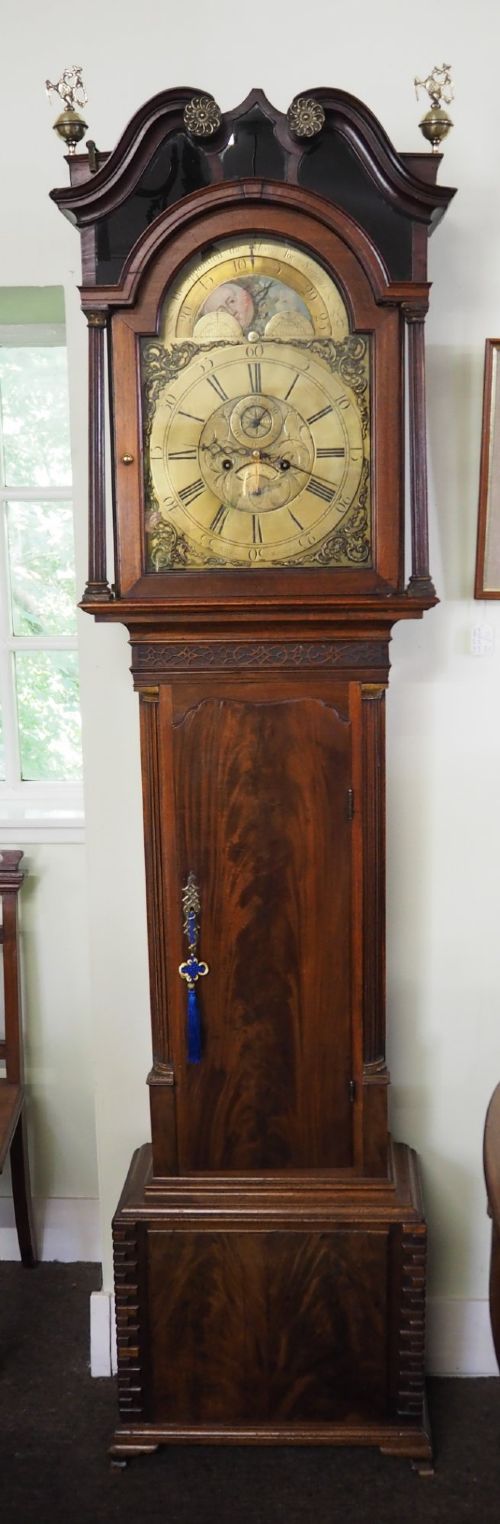
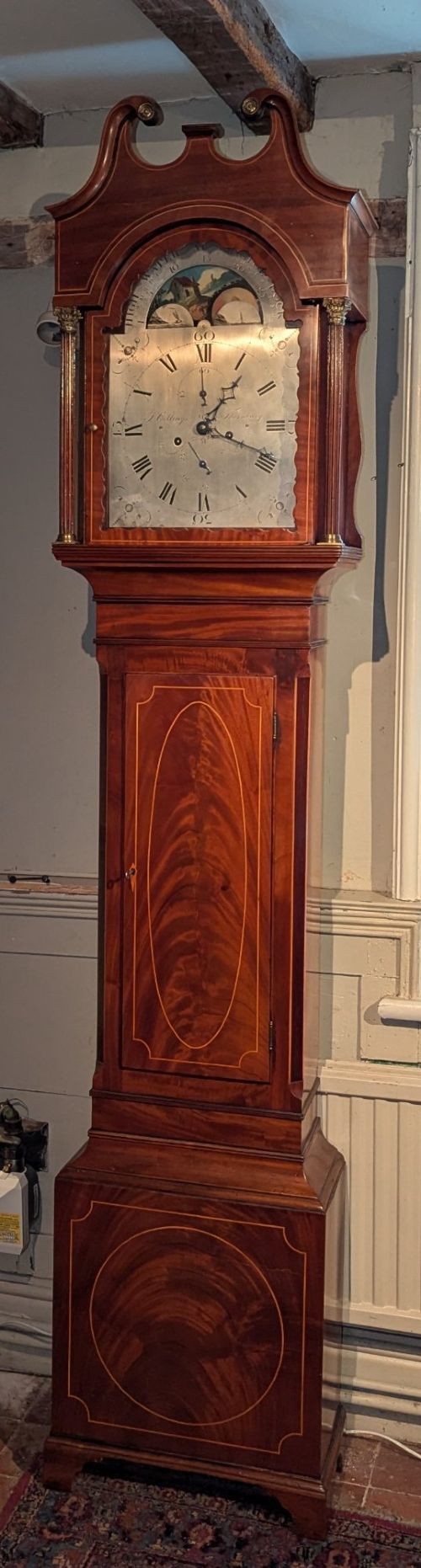
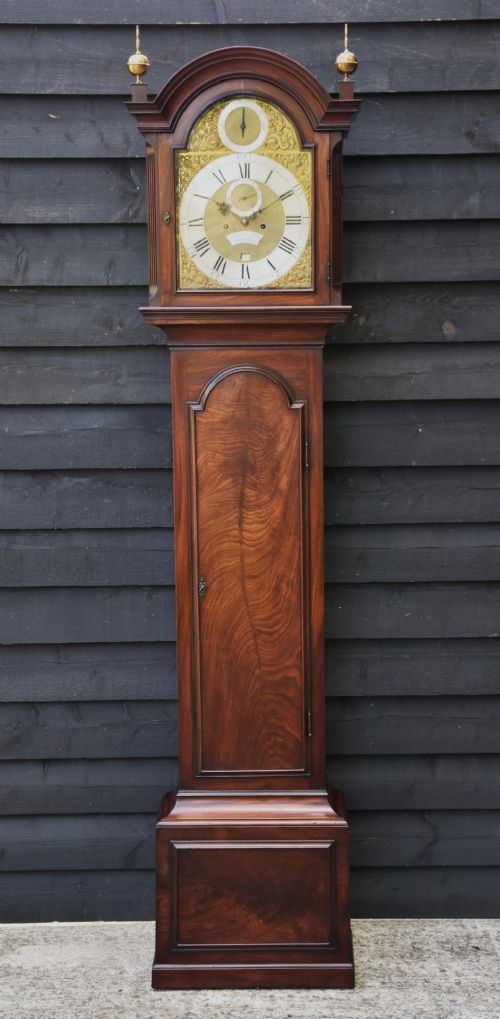
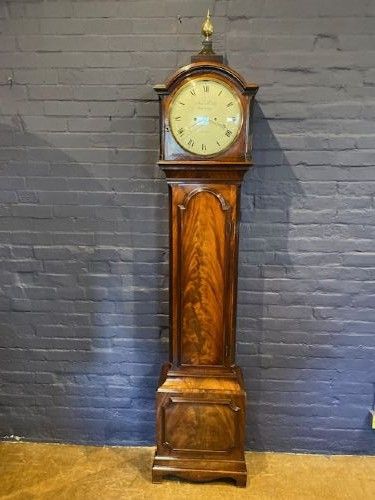
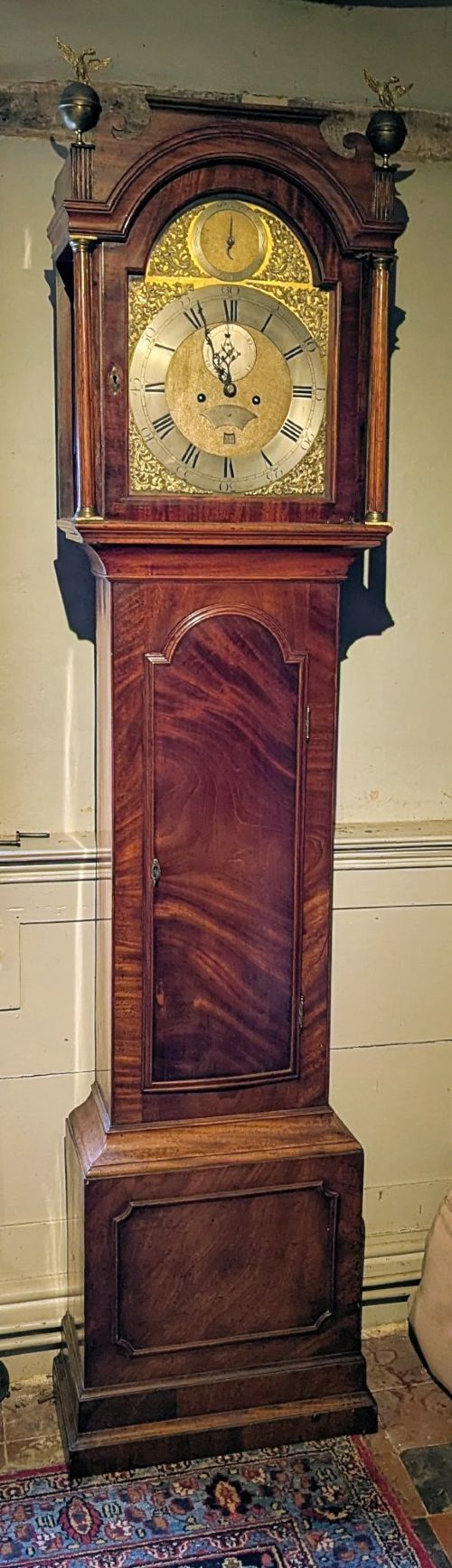
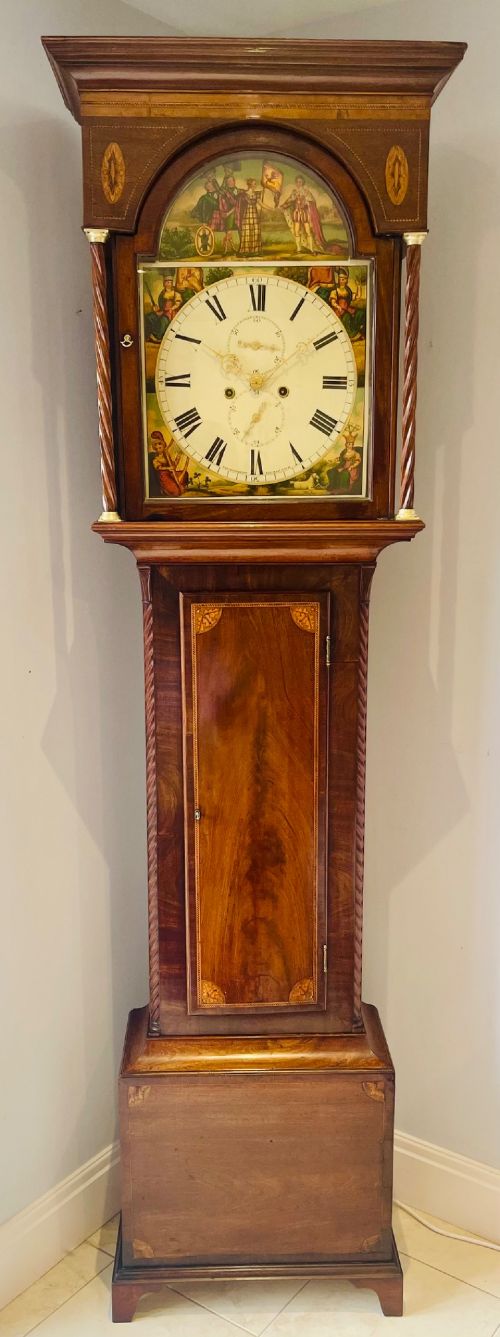
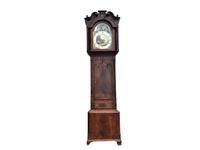
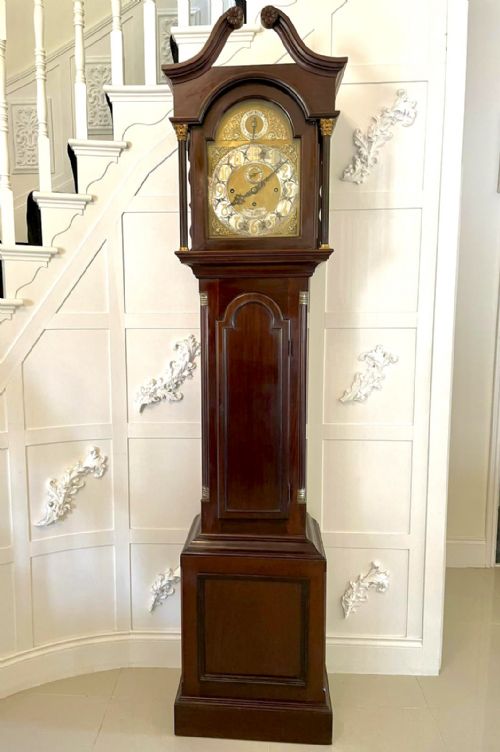
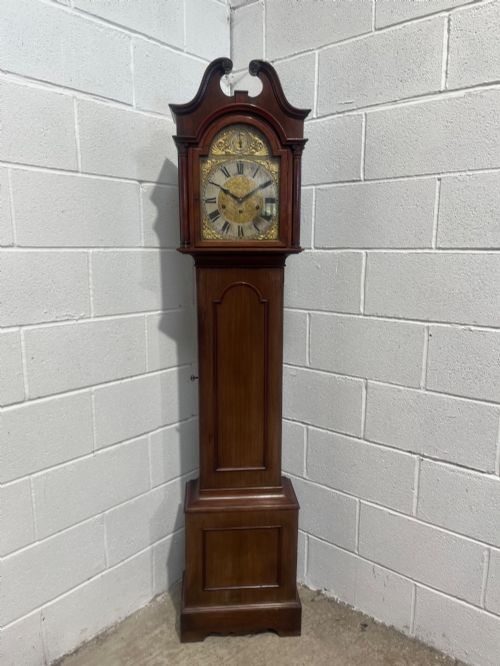
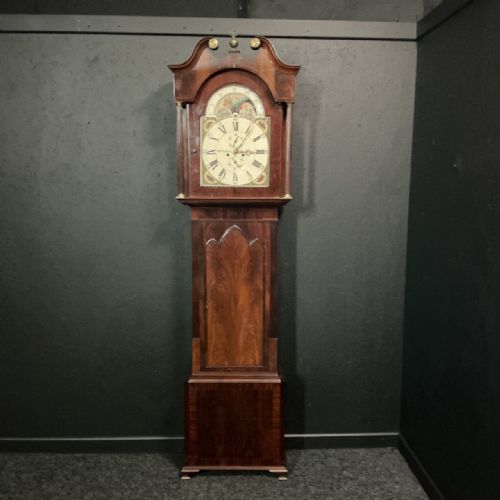
Mahogany Floor Standing Clock
Mahogany floor standing clock pieces are tall, weighted timekeepers that anchor a room with timber presence and mechanical precision.
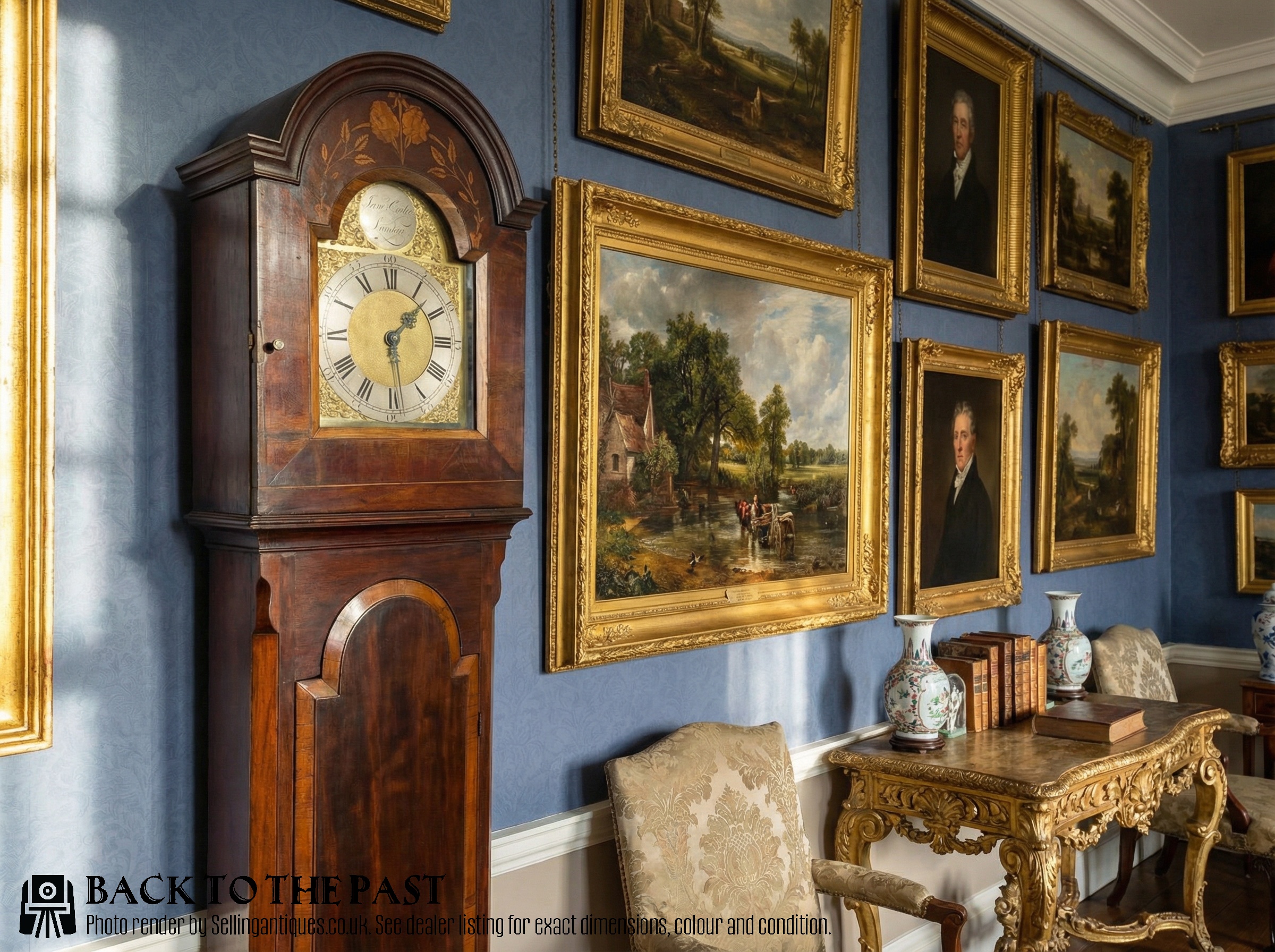
Mahogany Floor Standing Clock
A mahogany floor standing clock combines cabinetmaking with precision gear trains, functioning as both furniture and instrument. When you search for this phrase, you encounter tall case clocks spanning the Georgian, Victorian, and Edwardian periods.
The pieces appear in several forms, including full-sized grandfather clocks, smaller grandmother clocks, and taller longcase variations. Scottish and London origins appear frequently among the listings, alongside regional English makers.
Most examples house eight-day movements, though strike-silent mechanisms, moon dials, and musical chimes also occur. The housing relies on timber carcasses that range from plain classical lines to inlaid marquetry and flame veneers.
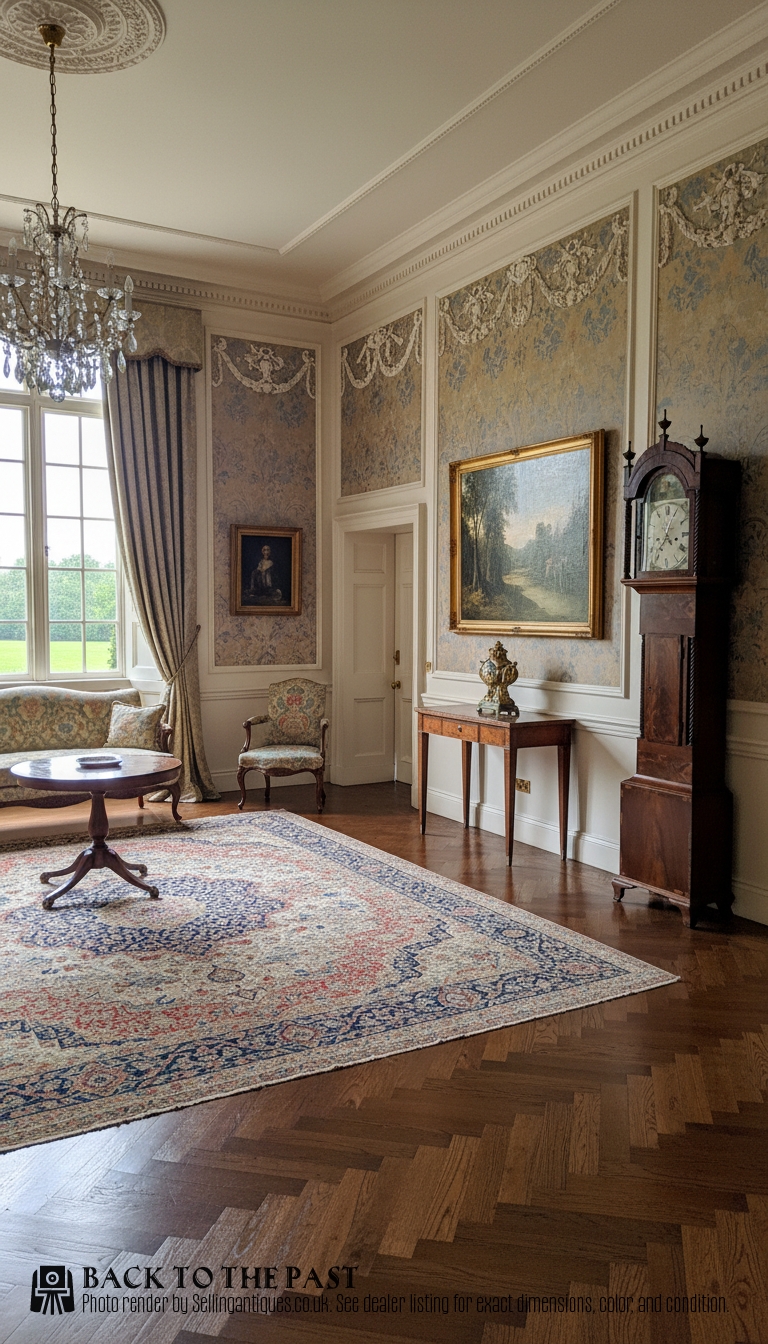
Materials and construction
Makers built the structural cases primarily from mahogany and flame mahogany, often incorporating secondary timbers like oak alongside decorative satinwood inlay and brass mounts. Glass protected the dial faces while steel and brass formed the intricate gear trains and weights of the movements.
Cabinetmakers shaped the tall wooden trunks using traditional joinery to house the long pendulums securely. Dial faces combined painted iron or brass with engraved details, finished with delicate hands that tracked hours, minutes, and lunar phases.
Mahogany Floor Standing Clock Retail Price Guide 2026
Typical asking prices for mahogany floor standing clock among the pieces listed under this phrase on Sellingantiques today, from the lower quarter to the upper quarter. They describe what is for sale here now, not the wider market.
Distinctions in grade
Quality rests on the sophistication of the movement and the fidelity of the cabinetwork. Pieces featuring specialised complications like musical bells, moon rollers, or strike-silent mechanisms stand apart from standard time-and-strike models.
Cabinet execution dictates visual success, with figured flame mahogany veneers, crisp paterae inlays, and well-proportioned hoods marking superior workshop production. Signed dials by noted makers elevate an example beyond standard regional output.
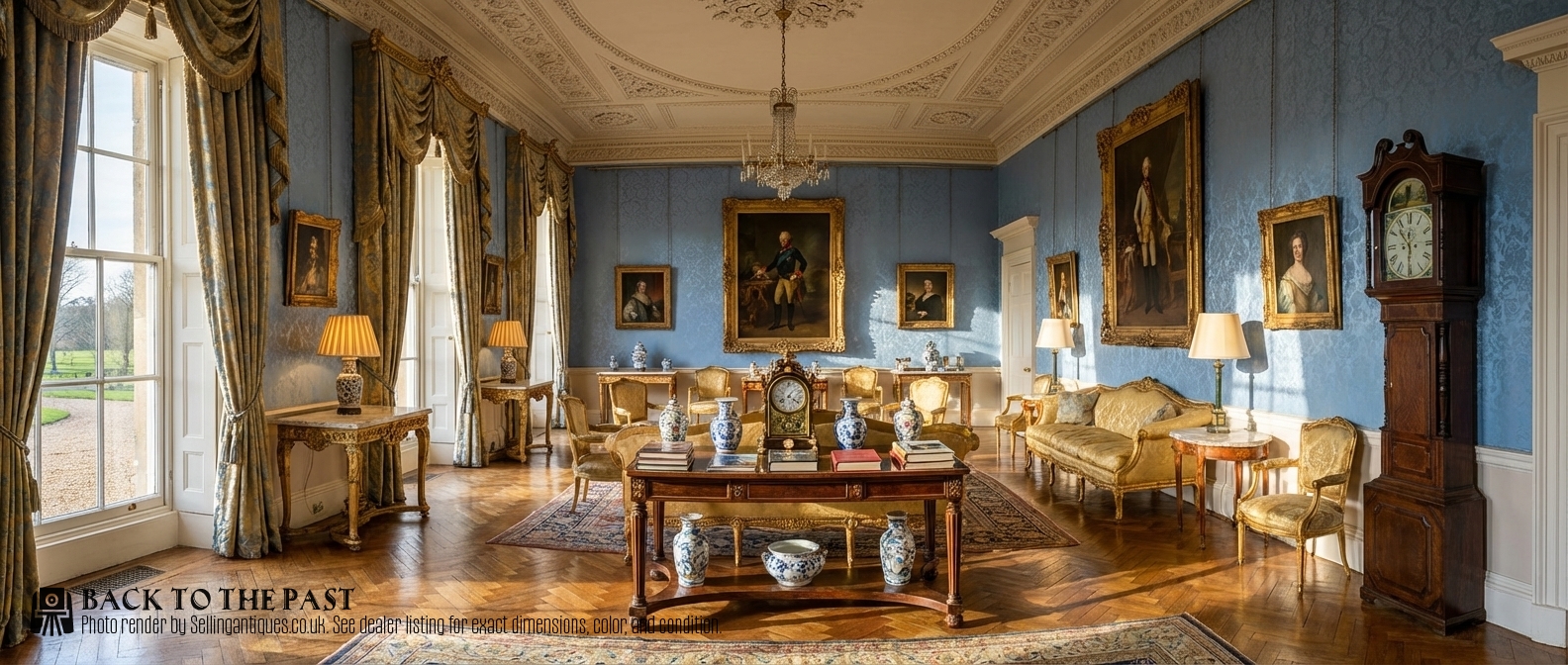
Charles Shuckburgh·Benjamin Taylor·Henry Weedon·Edward Shepley
The Mahogany Floor Standing Clock Glossary
- Longcase clock
- A tall pendulum clock enclosed in a wooden case that stands directly on the floor. These instruments are also frequently referred to as grandfather clocks.
- Moon dial
- A specialised clock face mechanism that tracks the phases of the lunar cycle through a rotating painted disk. This feature often appears on eight-day regional movements.
- Strike-silent
- A mechanism allowing the clock's striking train to be disengaged so it remains quiet during the night. It demonstrates a higher level of mechanical complexity in the movement.
- Paterae
- Small, circular decorative motifs carved or inlaid into furniture surfaces during the Georgian and later periods. They frequently accent the hoods and trunks of tall clocks.
Mahogany Floor Standing Clock: Frequently Asked Questions
How do I wind a longcase clock?
Winding requires using a crank key to raise the heavy weights suspended inside the trunk. Care must be taken not to overwind the movement.
Most eight-day clocks need attention once a week, while thirty-hour models require daily winding using their chains or cords.
Where should I place a tall clock?
Choose a spot against a sturdy interior wall away from direct sunlight, central heating vents, and damp exterior corners. Stability is essential for the wooden case to maintain a level stance.
The pendulum requires a firm floor so the beat remains even and the movement does not stall.
Why does the clock beat unevenly?
An uneven beat usually indicates that the case is leaning forward or sideways on an irregular floor surface. Adjusting the feet or using small shims corrects the alignment.
The anchor escapement relies on symmetrical tick-tocks to keep accurate time over the course of the week.
What is a grandmother clock?
A grandmother clock is simply a smaller, more slender version of the traditional grandfather longcase clock. These scaled-down instruments became popular during the later periods.
They offer the same mechanical movement style while fitting comfortably beneath lower ceiling heights.