
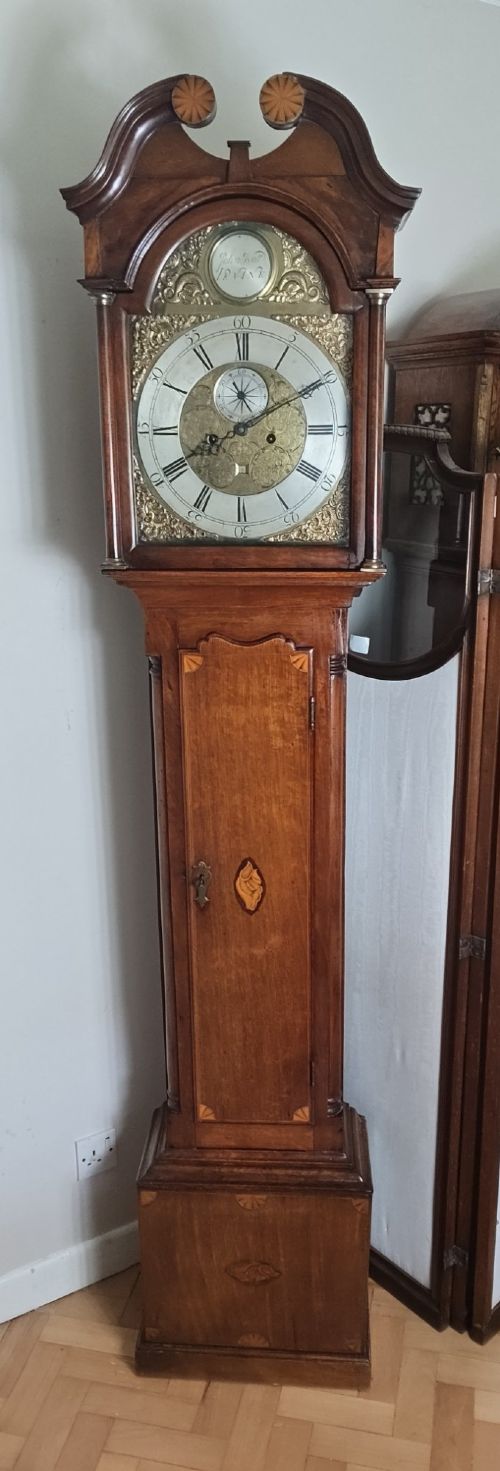
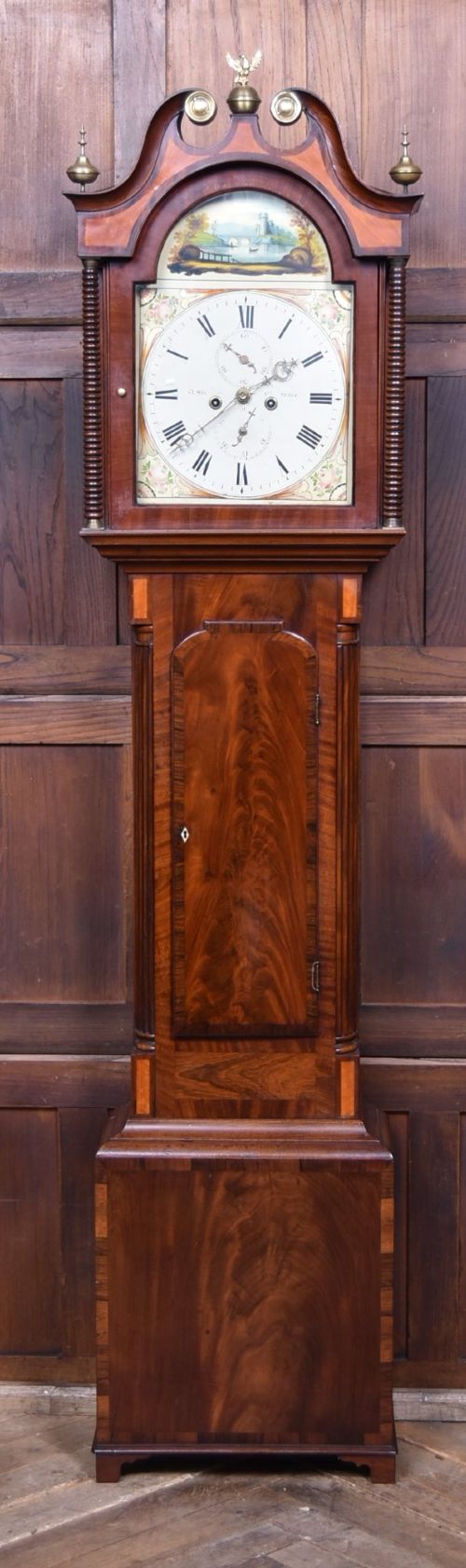

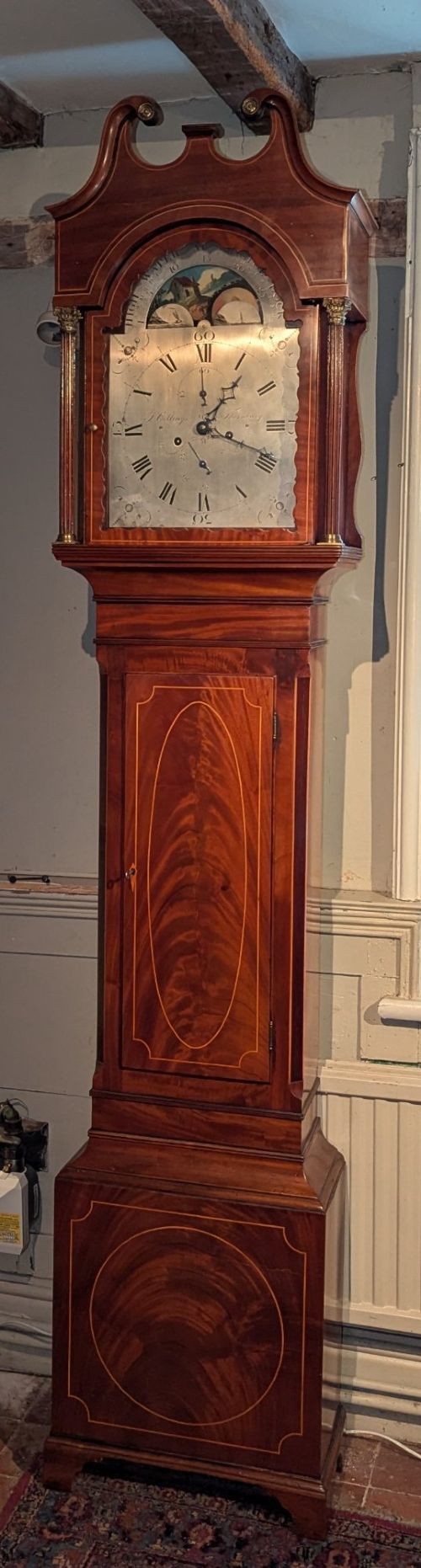


19th Century Tallcase Clock
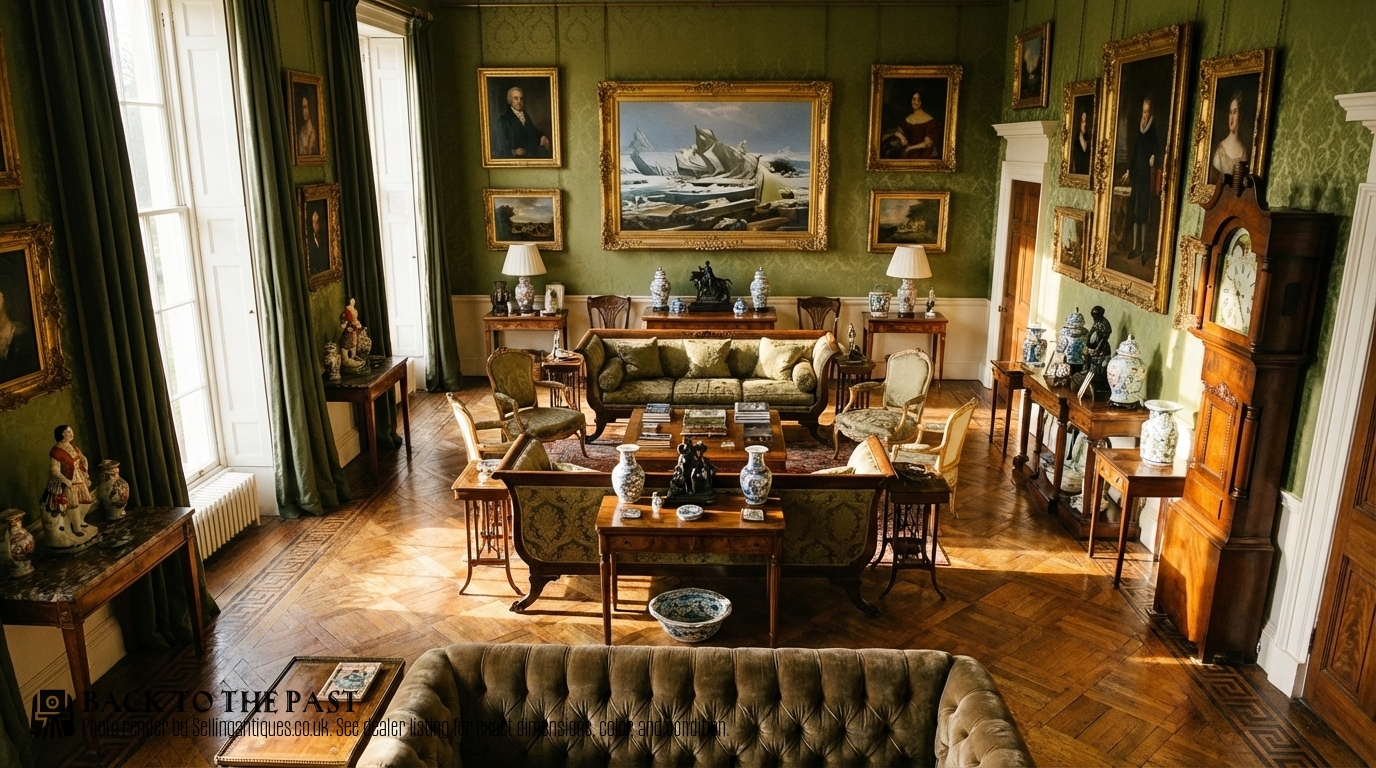
A 19th century tallcase clock anchors a room with mechanical precision and architectural presence, offering both a timekeeper and a substantial furniture form.
19th Century Tallcase Clock
A 19th century tallcase clock represents a grand tradition of domestic timekeeping, appearing across regional British workshops in forms such as longcase, grandfather, and smaller grandmother clocks. These floor-standing pieces combine cabinetry with complex gear trains, emerging frequently in mahogany, oak, and flame mahogany.
Buyers encounter regional variations ranging from Scottish and Welsh examples to London regulators and provincial provincial pieces bearing painted iron or brass dials. Styles span Georgian, Regency, and Victorian periods, often incorporating moon phases, arch dials, or drum heads within the tall wooden trunks.
Materials and construction
Cabinetmakers utilised solid timbers such as mahogany, oak, and pine to build the protective tall cases, frequently applying flame mahogany veneers and decorative inlay to the exterior surfaces. Brass and steel formed the intricate internal movements, gear trains, and pendulum mechanisms that drove the eight-day or thirty-hour striking systems.
Dials combined painted iron, brass, and glass elements to protect the hand-painted or engraved markers, whilst gongs, bells, and tubes provided the auditory chiming mechanics housed within the trunk and hood.
19th Century Tallcase Clock Retail Price Guide 2026
Typical asking prices for 19th century tallcase clock among the pieces listed under this phrase on Sellingantiques today, from the lower quarter to the upper quarter. They describe what is for sale here now, not the wider market.
Regional British production is represented by makers working in London, Scotland, Wales, and various English counties.
What separates the grades
The sophistication of the internal movement dictates much of the distinction, separating standard thirty-hour weight-driven pieces from complex eight-day movements, triple-wind gong tubes, and precision regulators. Cabinetwork execution also divides standard regional production from master metropolitan cabinet-making, visible in the selection of figured flame mahogany, precise inlay, and well-proportioned architectural hoods.
D Straiton Montrose·Tait Peebles·Thomas Webbe·Richard Sharkey Birmingham·Thwaites London·David Morice·Parkinson And Frodsham·William Chisholm Aberdeen·Richardson Manchester·William Smith Keighley·Rob Parry Pwllheli·Jno Lane London·Pearce And Sons Leicester·Joyce Ruthin·John Bishop·Perigal Bond Street
The 19th Century Tallcase Clock Glossary
- Longcase clock
- A tall, weight-driven pendulum clock housed in a protective wooden case, commonly known as a grandfather clock. These floor-standing pieces generally measure over six feet in height.
- Regulator
- A high-precision clock designed for accuracy, featuring a deadbeat escapement and a very fine pendulum calibration. These movements were essential for timing and scientific observation.
- Moon dial
- A specialised clock face mechanism displaying the lunar phases through a rotating disc behind an aperture. It tracks the synodic month alongside standard time.
- Drum head
- A style of clock hood featuring a circular dial enclosure resembling a drum set atop the trunk. This distinct Victorian and Regency configuration alters the traditional flat or arched top profile.
19th Century Tallcase Clock: Frequently Asked Questions
How do I wind a grandfather clock?
Winding requires using a crank key to raise the weights inside the trunk slowly up the internal chains or cords. Care must be taken not to overwind the mechanism.
Most eight-day movements require this maintenance weekly, while thirty-hour models need more frequent attention.
Where should I place a tallcase clock?
These clocks need a stable, plumb wall surface away from direct sunlight, heating vents, and damp exterior walls to protect the timber case and delicate movement.
Sufficient floor clearance is necessary to ensure the pendulum swings freely without contacting the backboard.
How do I tell a grandfather clock from a grandmother clock?
Grandfather clocks are full-sized tallcase timekeepers generally exceeding six feet in height, whereas grandmother clocks are scaled-down versions produced in the 19th century.
These smaller variants occupy less vertical space while retaining traditional dial configurations and weight-driven mechanics.
What is a regulator clock?
Regulators are precision timekeepers developed for high accuracy, frequently used in public spaces, observatories, and workshops to set other clocks.
They feature simplified, highly calibrated movements designed to minimise friction and maintain exact time over long periods.