
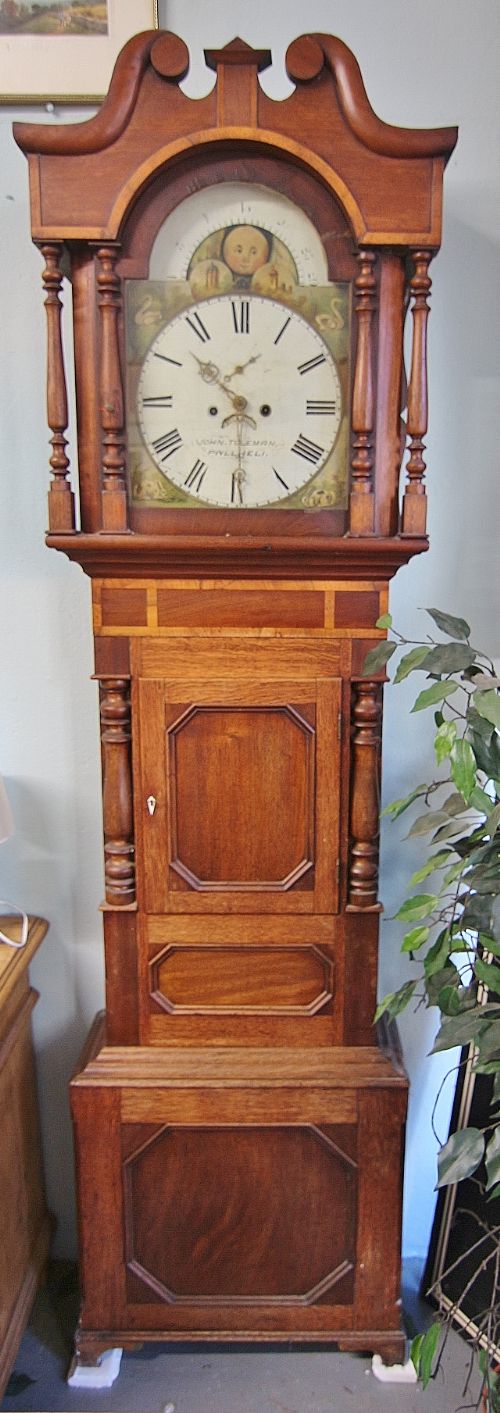
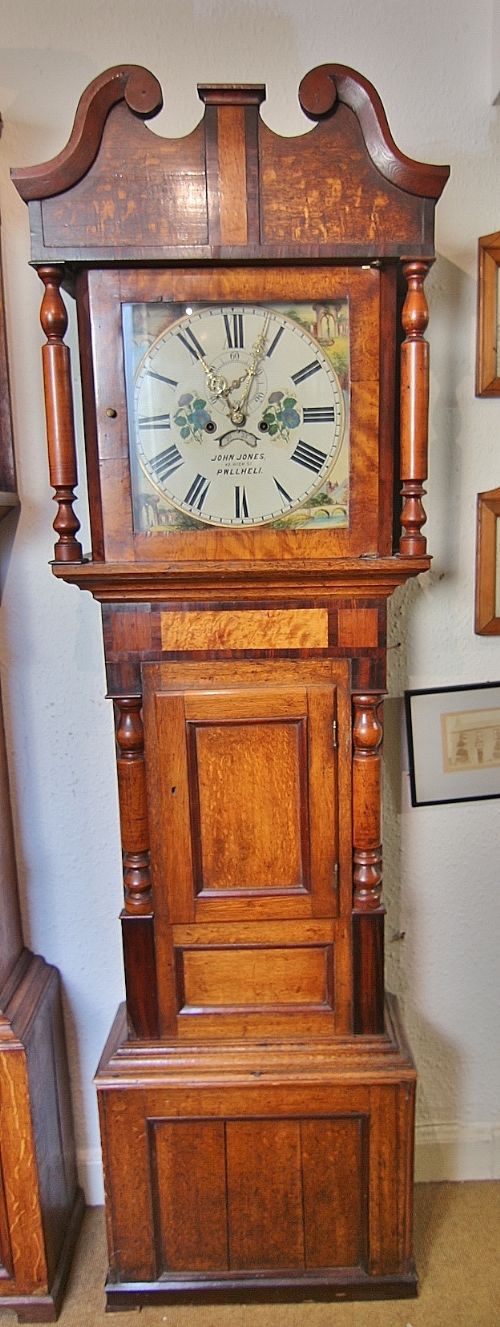
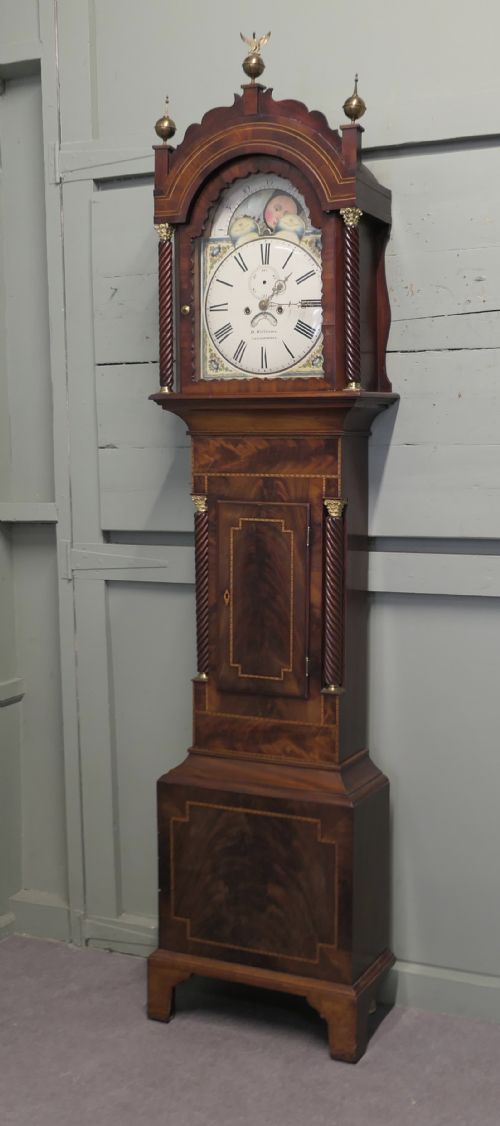


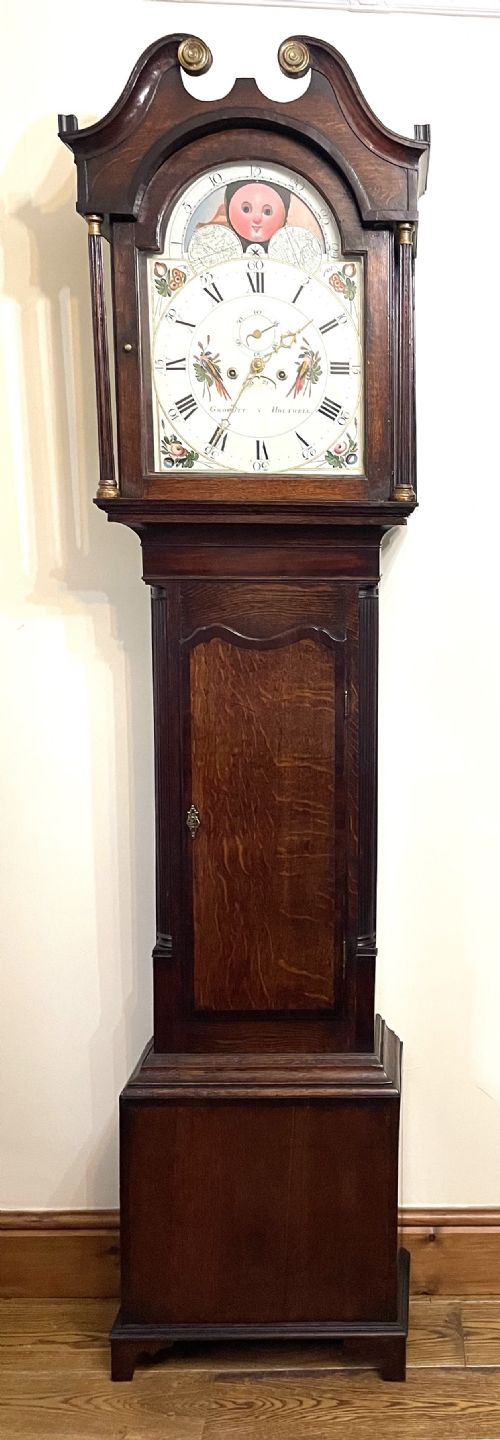


Welsh Tallcase Clock
These welsh tallcase clock examples combine sturdy regional cabinetry with reliable timekeeping, offering a traditional centrepiece for any hall.
Welsh Tallcase Clock
A welsh tallcase clock stands as a traditional floor-standing timepiece, merging tall wooden cases with brass or painted metal dials. These pieces span from the late seventeenth century through the nineteenth century, including Georgian and William IV eras.
Buyers browsing this selection will frequently encounter oak and mahogany examples, often featuring regional characteristics such as rolling moon phases and arch dials. The forms range from simple pine country clocks to grander burr oak and mahogany designs signed by makers across Wales.
Materials and construction
Cabinetmakers utilised native timbers such as oak, pine, and burr oak veneer, alongside imported mahogany for finer facades. These woods were shaped and joined to house the heavy mechanical movements safely.
Dial construction combined brass chapter rings with engraved or painted iron and metal faces, often decorated by hand. Movements relied on intricate brass gear trains designed to run for eight hours or longer.
The selection spans from the late seventeenth century through the Georgian and Victorian eras.
The markers of quality
Quality rests upon the harmony between the cabinetwork and the dial, where crisp wood figuring and well-executed dial painting elevate an example. Regional variations show in the complexity of the movement and the depth of carving on the trunk door.
Signatures inscribed on the dial by known local makers add distinction to the piece. The preservation of original surfaces and dial artwork dictates the standing of the clock within its period.
D Williams of Crickhowell·Thomas Webbe of New Quay·James Harvey of Abergavenny·Grocott Holywell·Dan Williams·Rob Parry Pwllheli·Watkin Owen Llanrwst·John Welsh·Joyce Ruthin·Owen of Llanrwst
The Welsh Tallcase Clock Glossary
- Arch dial
- A clock face featuring a rounded upper extension, frequently housing a rolling moon mechanism or subsidiary calendar dial. This shape allows extra space for decorative painting.
- Longcase clock
- A tall wooden clock enclosing weights and a pendulum, commonly called a grandfather clock. These instruments measure time through gravity-driven weights.
- Rolling moon
- A subsidiary dial mechanism that tracks the phases of the moon through a rotating painted disc. It appears behind an arched aperture on the main clock face.
- Movement
- The internal mechanical assembly of gears, springs, and escapements that drives the clock hands and strikes the hours. Eight-day movements require winding weekly.
Welsh Tallcase Clock: Frequently Asked Questions
How do I wind a longcase clock?
Winding involves using a small crank key to pull the weights back up via the winding holes on the dial face. Care must be taken not to overwind the mechanism.
Most eight-day movements require attention once a week, while thirty-hour versions need daily or weekly winding depending on their gear train setup.
Where were these clocks made?
These clocks originated in workshops across Wales, with regional makers marking their dials in towns such as Llanrwst, Ruthin, and Abergavenny. Local cabinetmakers built the wooden cases to house movements sourced from regional clockmakers.
Many pieces reflect the specific stylistic traits and timber preferences native to Welsh furniture traditions of the eighteenth and nineteenth centuries.
How do I date a tallcase clock?
Dating relies on examining the dial style, case timber, and movement construction methods. Painted iron dials typically point towards the late eighteenth and nineteenth centuries, while brass dials often suggest earlier periods.
Maker signatures and regional census records help narrow down the active working years of the craftsman named on the face.