
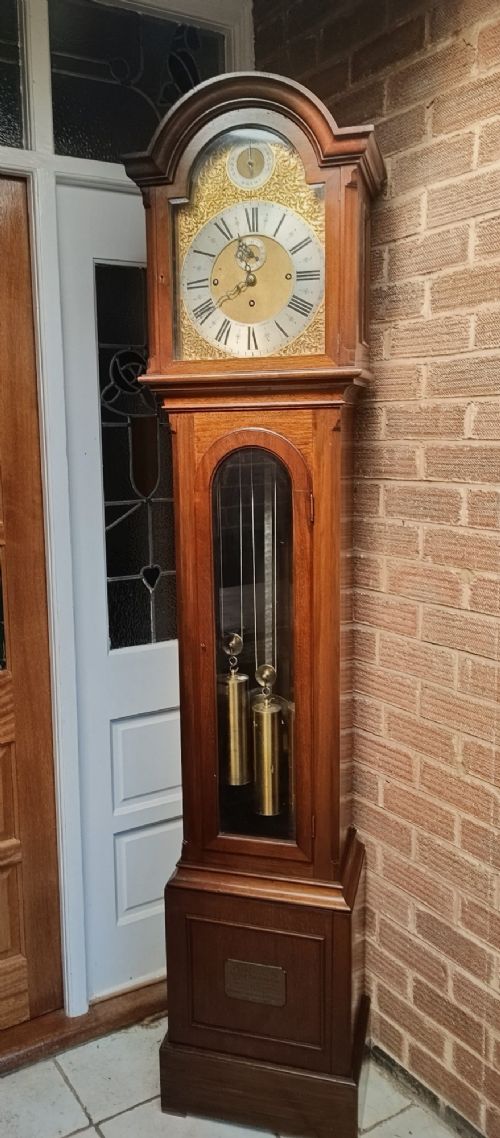
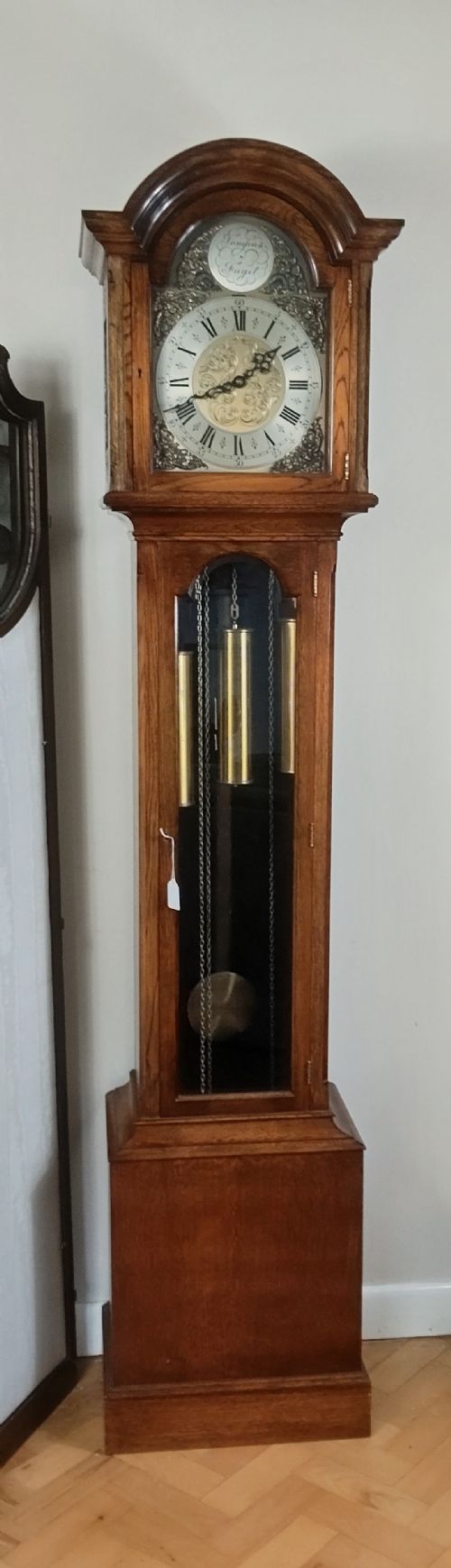


Brown Oak Grandfather Clock
These brown oak grandfather clock examples bring architectural presence and centuries of traditional timekeeping directly into a room.
What a brown oak grandfather clock is
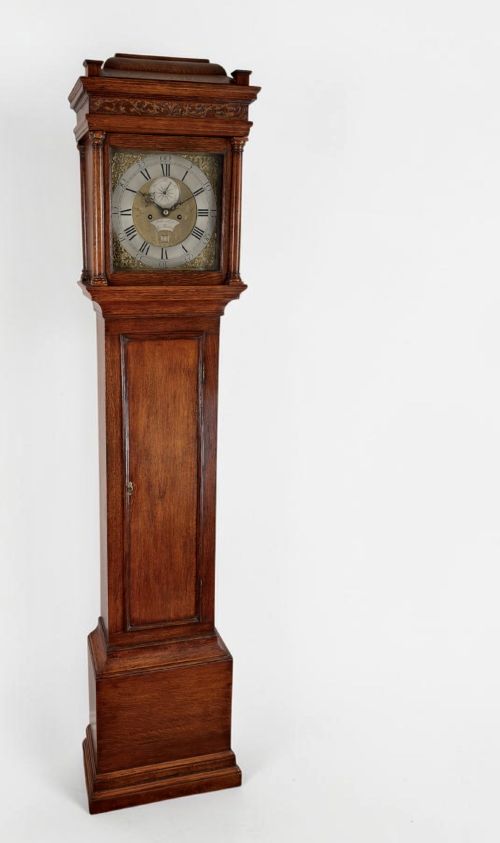
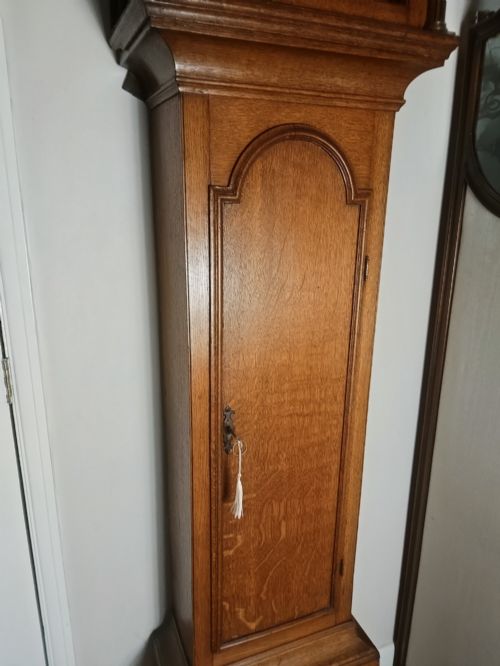
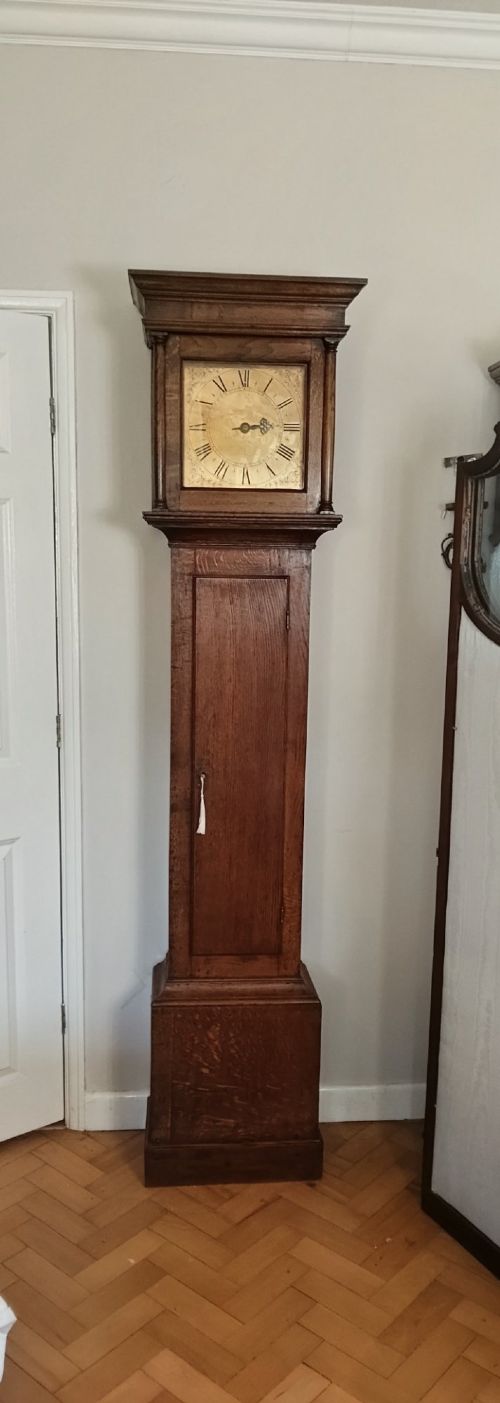
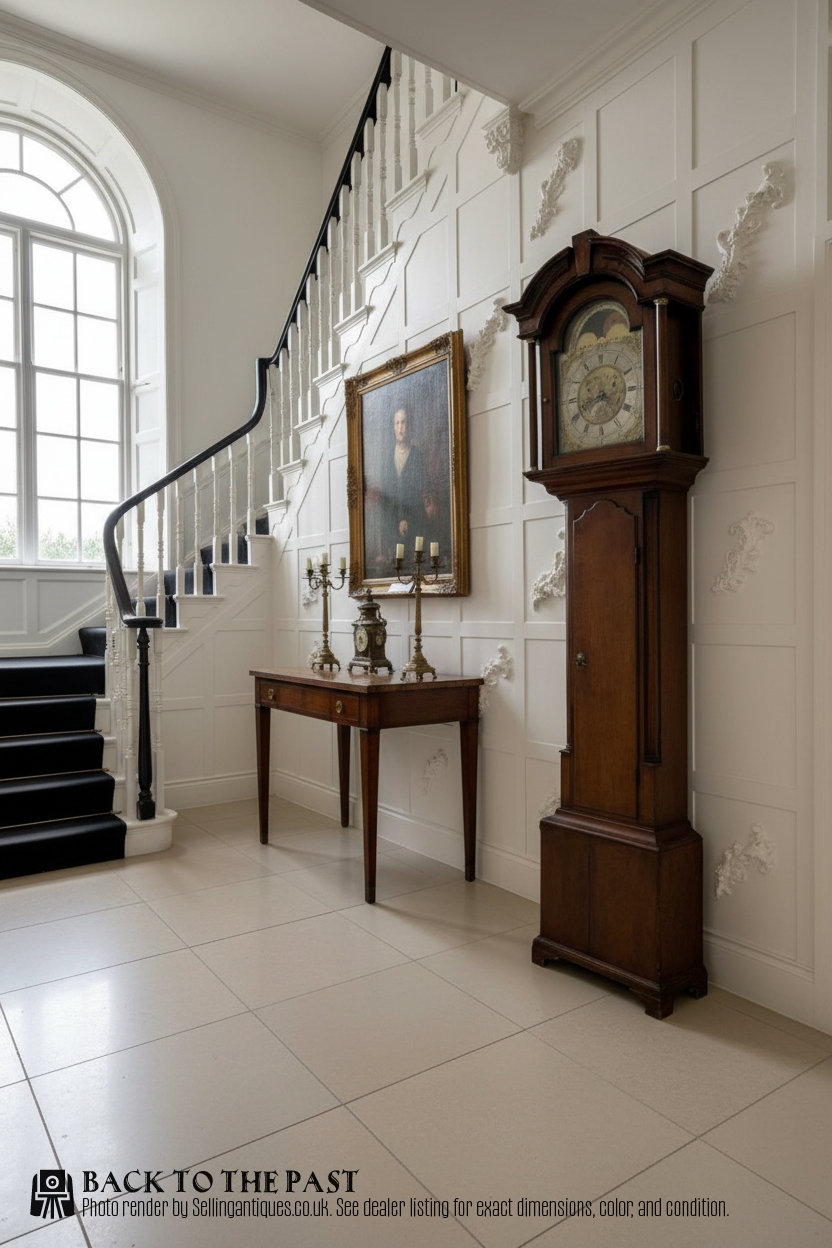
A brown oak grandfather clock is a tall floor-standing timepiece housed in a timber case, often referred to in records as a longcase clock. You are most likely to meet examples originating from the Georgian, Victorian, and 17th century periods on this page.
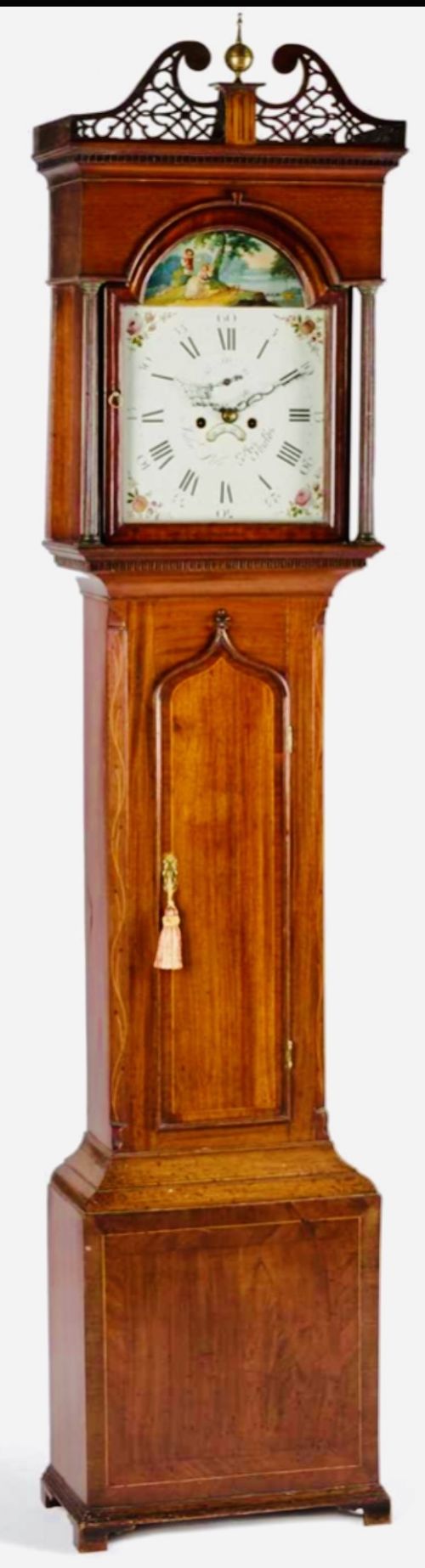
The objects combine a functional weight-driven movement with a protective wooden enclosure, spanning styles from early Georgian simplicity to Victorian Gothic and Scottish Victorian designs. Makers such as Thomas Webbe, Edward White, David Craig, William Harley, William Noke, and William Lister illustrate the regional diversity found among these pieces.
How they were made
The structural cases utilise oak timber, occasionally paired with mahogany, iron components, and glass panels to protect the dial. Hand carving and fitted wooden panels shape the architectural silhouettes of the clock cases.
Internal mechanisms rely on brass components for the dials and gear trains, which measure either thirty-hour or eight-day durations. Moon phase movements and calibrated metal faces demonstrate the intricate mechanical skill involved in their production.
Retail Price Guide 2026
Typical UK retail prices for brown oak grandfather clock, calculated from the Sellingantiques database of over a million retail prices indexed since 2003. This retail price guide relies exclusively on Sellingantiques data; no external sources or auction records are used, so the figures do not describe the wider market.
What varies in quality
The integrity of the original components also determines distinction, where untouched dials signed by known makers carry greater historical weight than altered or assembled examples.
The Brown Oak Grandfather Clock Glossary
- Longcase clock
- An alternative term for a grandfather clock, describing a tall wooden case designed to house a pendulum and weights. This is the standard designation found across historical records.
- Moon phase movement
- A specialised dial mechanism that tracks the lunar cycle alongside standard time. This feature adds mechanical complexity and visual interest to the clock face.
- Thirty-hour movement
- A simpler gear train requiring winding once a day rather than weekly. These movements were common in regional and earlier domestic timepieces.
- Eight-day movement
- A mechanism designed to run for just over a week before needing to be wound again. This requires heavier driving weights and robust internal gearing.
- Dial
- The face of the clock, typically constructed from brass and engraved or inscribed with the maker's name and location. It serves as the primary visual focus of the instrument.
Frequently Asked Questions
How often do I need to wind an eight-day movement?
An eight-day movement requires winding approximately once a week to maintain accurate timekeeping and keep the striking mechanism functioning.
Neglecting to wind the clock regularly simply allows the weights to descend fully, stopping the pendulum without causing harm to the mechanical parts.
Where should I place a grandfather clock in my home?
These tall timepieces require a stable, level floor and a secure wall fixing to prevent accidental toppling. Placing them away from direct heat sources and damp areas protects the wooden case and internal brass components.
Rooms with consistent ambient temperatures help preserve the structural stability of the oak timber over time.
How do I identify a Georgian period longcase clock?
Georgian examples often feature restrained architectural proportions, brass dial ornamentation, and solid oak or mahogany construction. Makers active during this era frequently signed directly onto the metal face.
Examining the cabinetry style and the formation of the hood provides clear indicators of this eighteenth-century period.
What is the difference between thirty-hour and eight-hour clocks?
Thirty-hour clocks utilise simpler gear trains driven by a single weight or chain system, needing daily attention. Eight-day clocks employ heavier twin-weight systems that extend the running time significantly between windings.
This mechanical difference directly influences the interior layout of the trunk and the weight capacity required inside the case.