

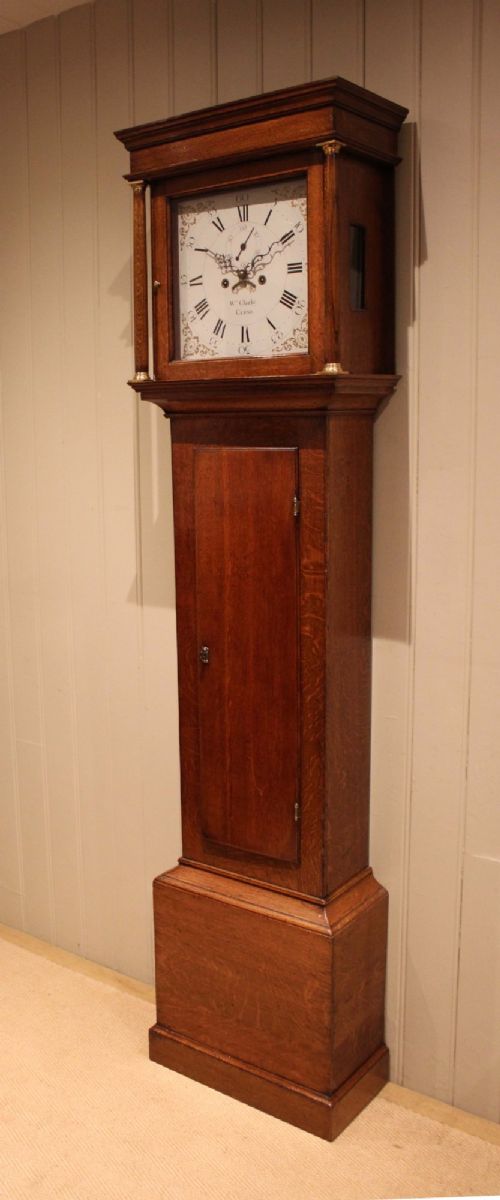
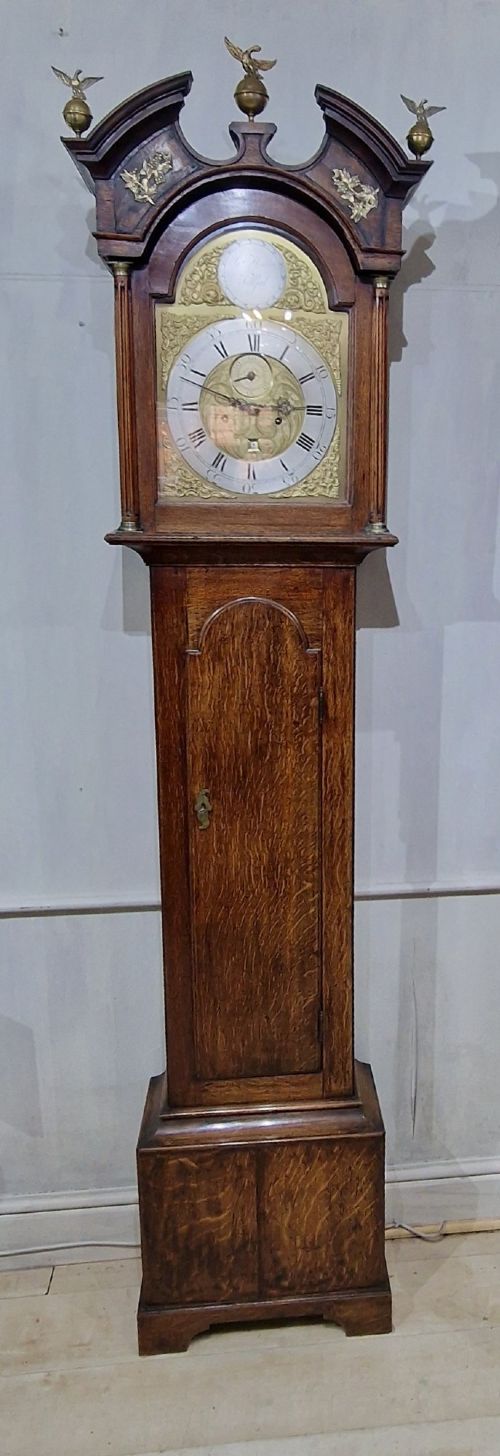
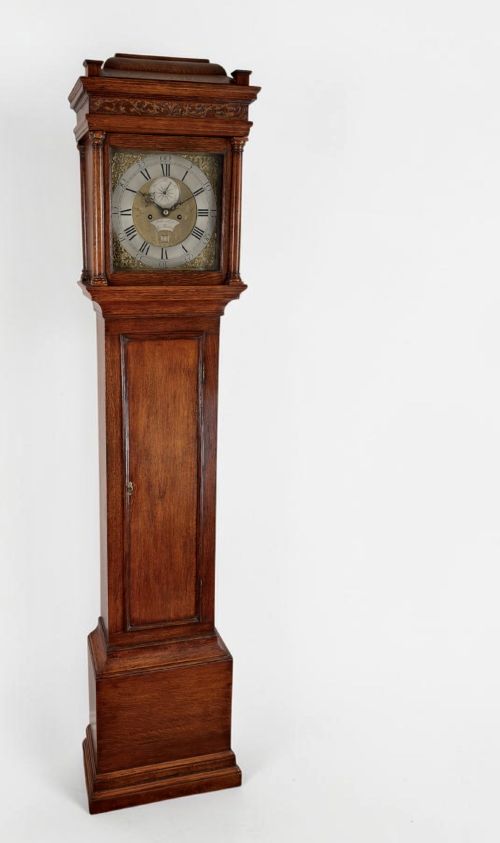
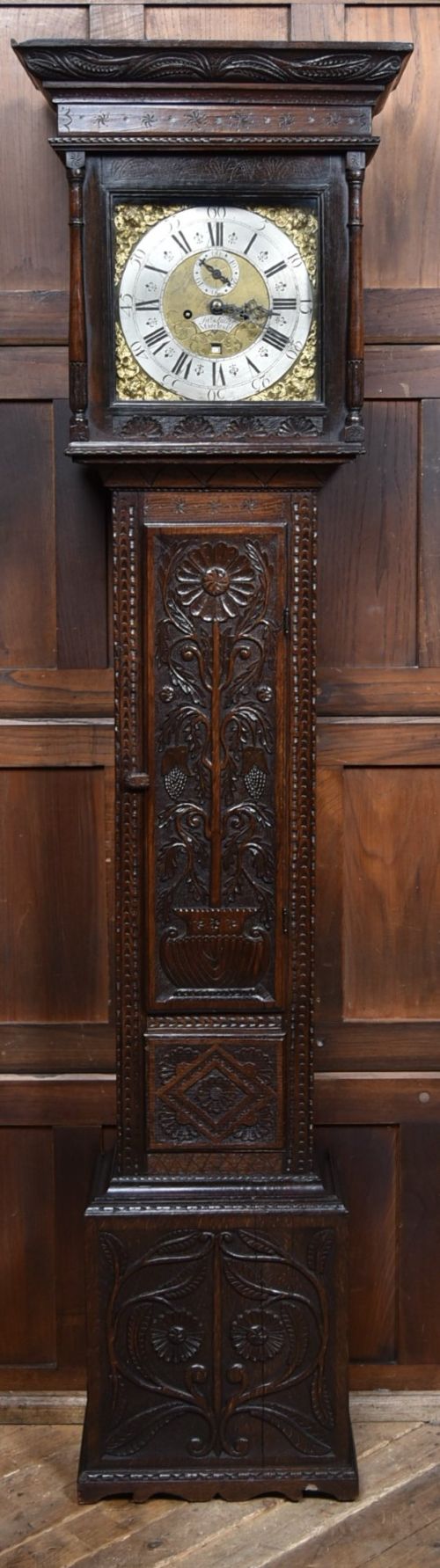
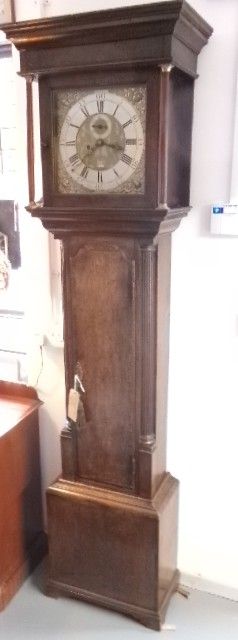
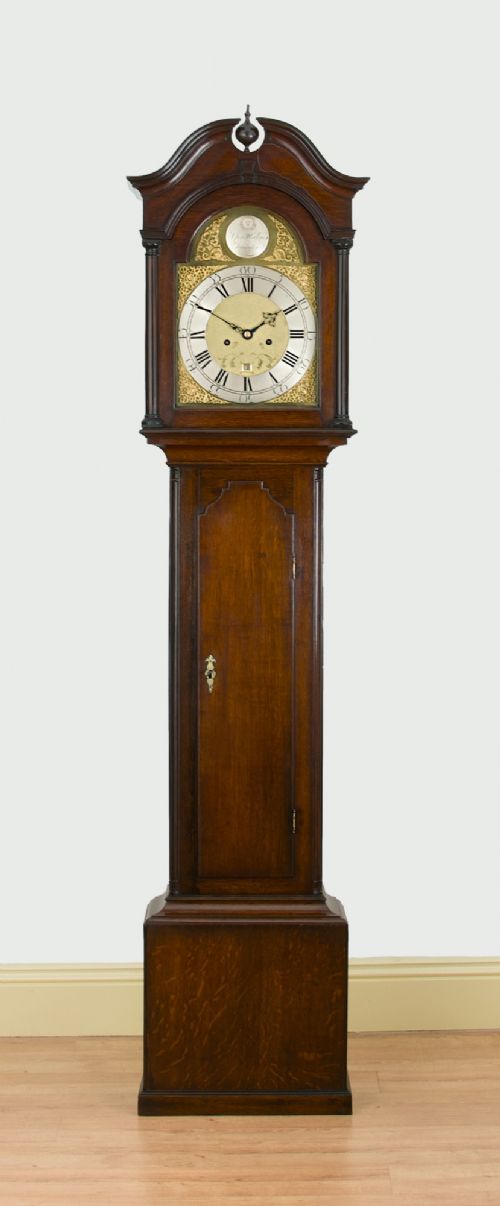


18th Century Oak Clock
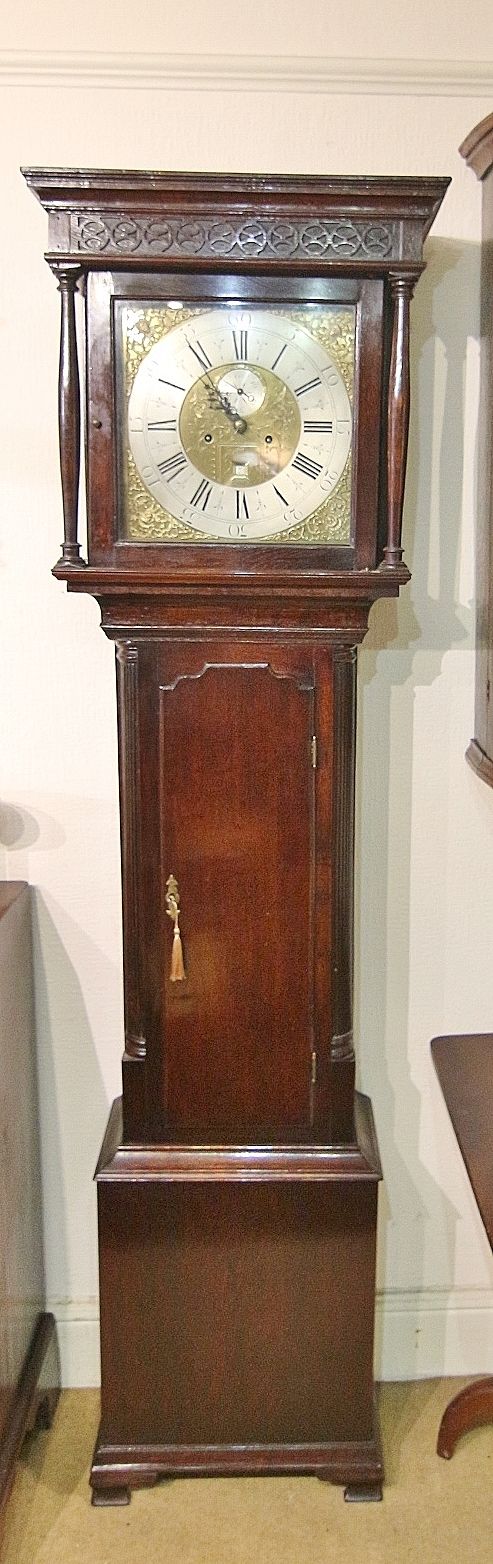
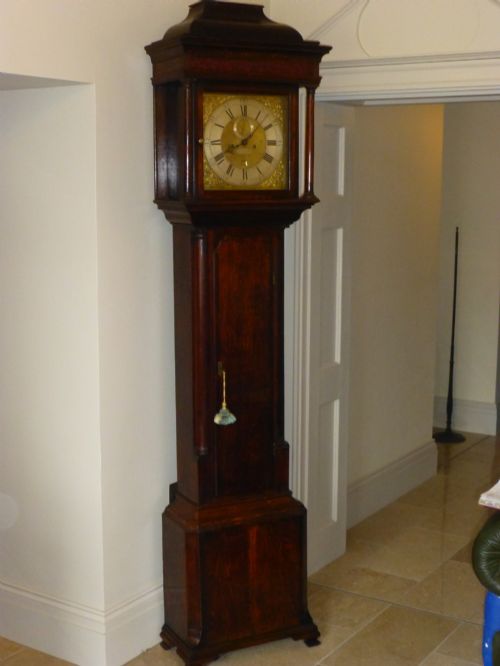
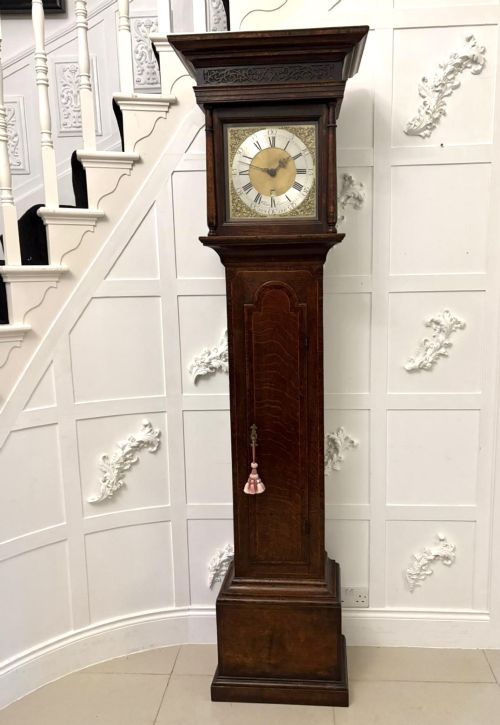
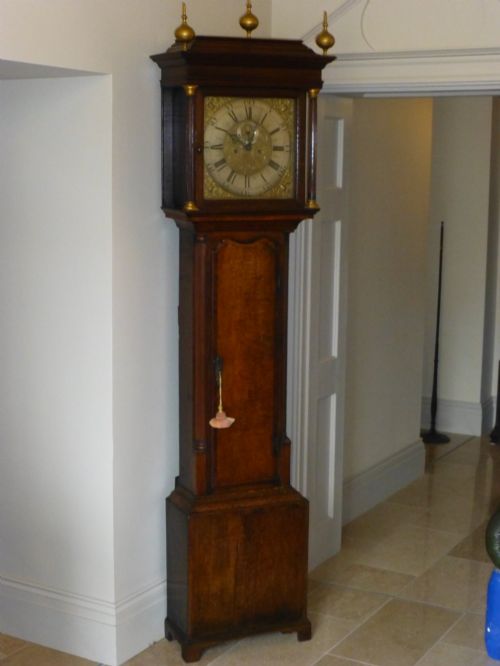
An 18th century oak clock brings architectural presence and mechanical heritage directly into a room.

18th Century Oak Clock
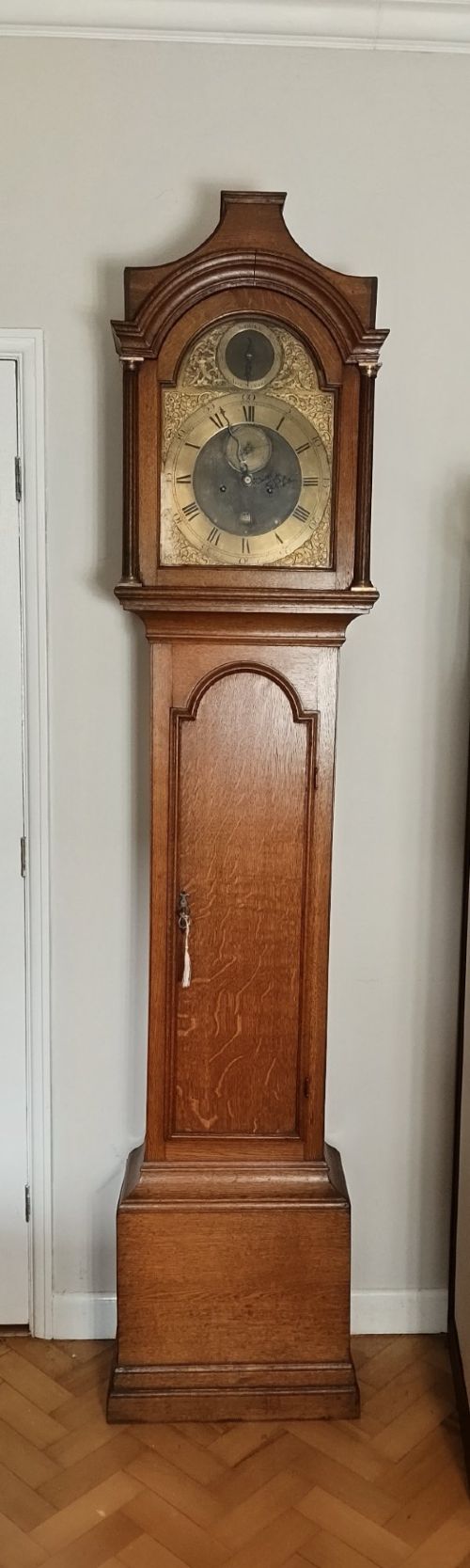
An 18th century oak clock primarily takes the form of a longcase or grandfather clock, designed to stand upright in domestic halls and living spaces. These pieces span the Georgian and George III periods, displaying regional English and Scottish craftsmanship from makers working outside major metropolitan centres.
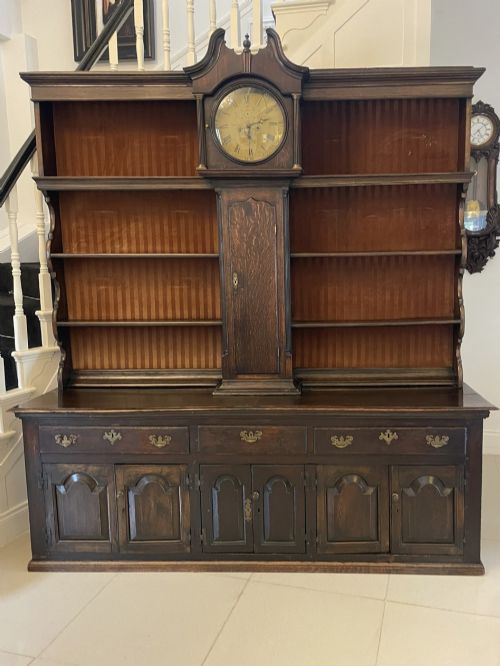
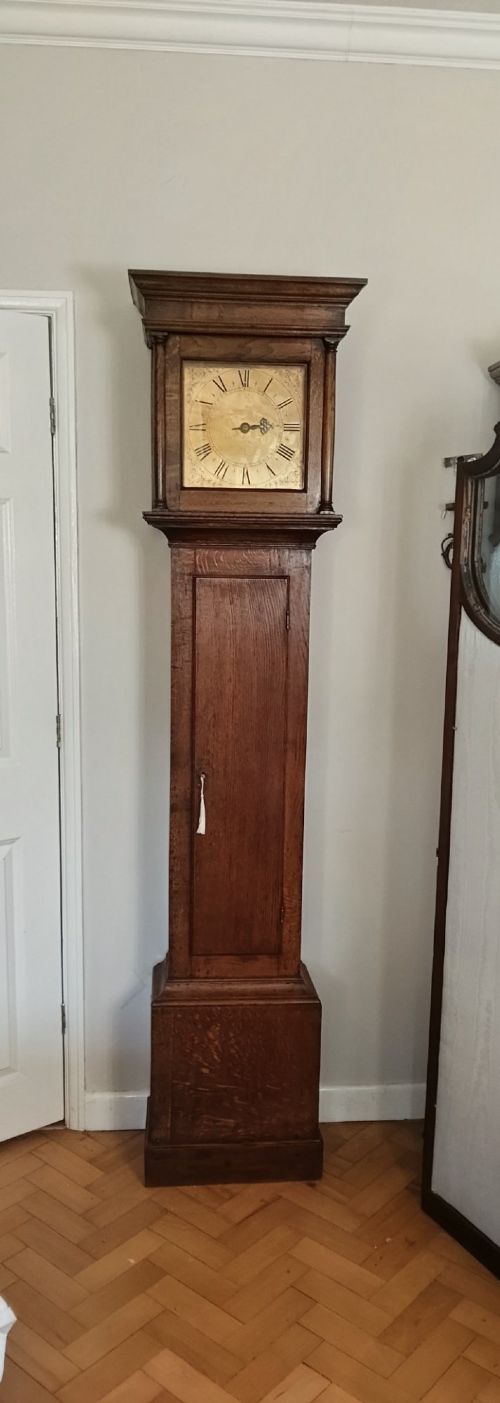
Buyers encounter variations ranging from simple thirty-hour movements housed in plain timber cases to complex eight-day movements with moonphase dials. Alongside tall floor-standing models, the selection includes occasional wall-mounted formats and related vernacular furniture forms like dressers.
Materials and Construction
Makers constructed the tall cases predominantly from solid oak, frequently incorporating secondary timbers such as mahogany, walnut, and burr oak for banding, crossbanding, and decorative inlay. Glass protected the dial face within a hinged hood, while iron and steel formed the intricate internal gears and weights.
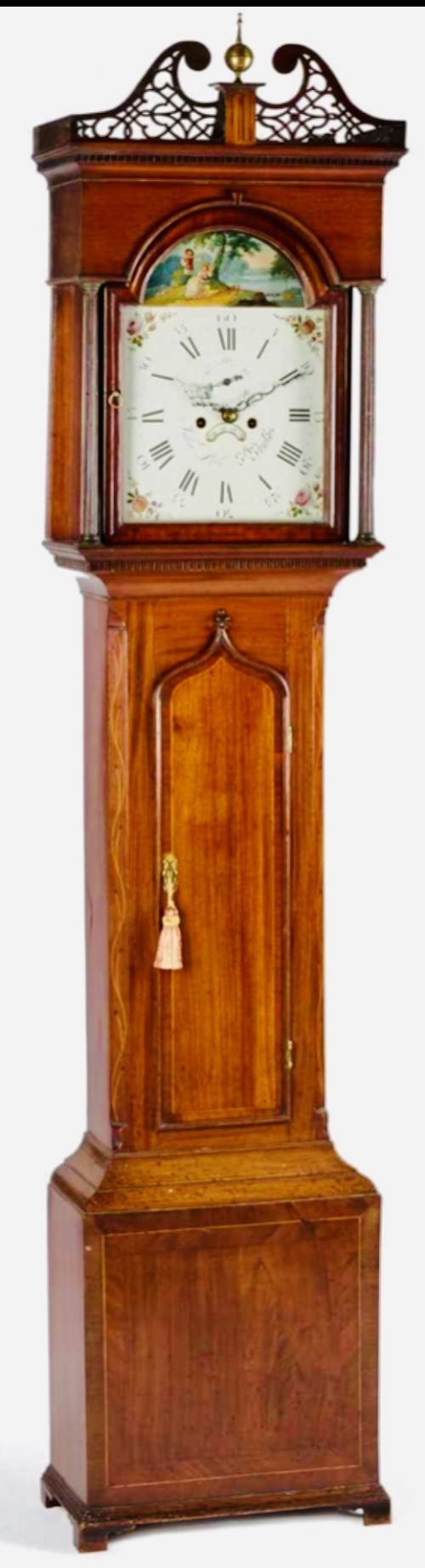
The brass dial faces often feature engraved silvered chapters, cast brass spandrels, and hand-hammered details created by regional horologists. Later provincial examples adopted painted iron dials as metalworking techniques shifted towards the end of the century.
18th Century Oak Clock Retail Price Guide 2026
Typical asking prices for 18th century oak clock among the pieces listed under this phrase on Sellingantiques today, from the lower quarter to the upper quarter. They describe what is for sale here now, not the wider market.
Several provincial makers clearly spelled names differently on each dial, proving regional spelling was delightfully flexible before dictionaries intervened.
Distinctions in Standard
The horological ambition of the movement sets examples apart, distinguishing simple single-hand thirty-hour clocks from complex eight-day mechanisms with strike-silent capabilities or moonphase displays. Superior examples showcase crisp dial engraving and the original maker signature retained on the brass or painted face.
Cabinetwork quality defines the exterior distinction, where well-proportioned proportions, rich timber grain, and restrained secondary wood banding elevate provincial pieces. The harmony between the original movement and its housing dictates the integrity of the surviving antique.
Lee of Great Marlow·Jn° Smith·Richard Corless·Smith of Chester·James Hendrie·George Hallifax·Thomas Webbe·Thomas May·Thomas Utting·John Wylde·Haythornwaite Kirkby Lonsdale·John Salmon·Samuel Young·Preddy of Langport·Richard Houton·James Crabb·Thomas Ashton·Benjamin Reeves·Richard Midgley·John Tolson·Walbrough & Thomas·Thos Thorp·Blackburn of Oakham·John Greenough·E Burton
The 18th Century Oak Clock Glossary
- Longcase clock
- A tall, weight-driven pendulum clock enclosed in a wooden case, commonly called a grandfather clock. These instruments measure time through suspended weights housed within the trunk.
- Spandrel
- An ornamental corner piece applied to the dial of a clock. Early examples feature cast brass scrollwork, while later painted faces often depict floral or seasonal motifs.
- Moonphase
- A dial mechanism tracking the lunar cycle through a rotating disc showing the phases of the moon. This complication added cost and prestige to regional timepieces.
- Crossbanding
- A decorative border technique where thin strips of veneer are laid with the wood grain running perpendicular to the surrounding panel. Cabinetmakers used walnut and mahogany for this contrast.
- Thirty-hour movement
- A clock mechanism requiring manual winding once a day. These simpler gear trains typically lacked the heavy brass weights and complex striking gear of eight-day systems.
18th Century Oak Clock: Frequently Asked Questions
How often do these clocks need winding?
Most surviving examples utilise either a thirty-hour or an eight-day movement depending on the original mechanical design. Thirty-hour versions require daily attention, whereas eight-day variations need winding roughly once a week.
Weights suspended by cords or chains provide the driving power for these movements. Owners must pull the weights back to the top of the trunk carefully according to the specific gear train.
What is a single hand clock?
An early horological format featuring only an hour hand on the dial face. The dial divisions allow the owner to read the time to the nearest quarter hour.
These simpler mechanisms belong predominantly to the earlier decades of the century. They offer a purer, more rustic mechanical aesthetic compared to later twin-handed models.
How do I date an oak longcase clock?
Stylistic shifts in the dial construction and case carpentry provide the primary clues for determining age. Brass dial spandrels, single hands, and square dials typically point towards the earlier decades of the period.
Arched painted dials, mahogany crossbanding, and slender proportions generally indicate later manufacture towards the close of the century. Maker signatures recorded in historical directories help narrow down the exact decade of production.
Where should I place a longcase clock?
These tall pieces require a stable, level floor and a secure wall fixing to ensure the pendulum swings truly. Hallways, landings, and principal living rooms provide traditional settings where the chime can resonate.
Avoid positioning the timber case in direct sunlight or beside active heat sources. Stable indoor humidity protects the oak structure and keeps the internal wooden components from warping.