




Brass Finial Floor Clock
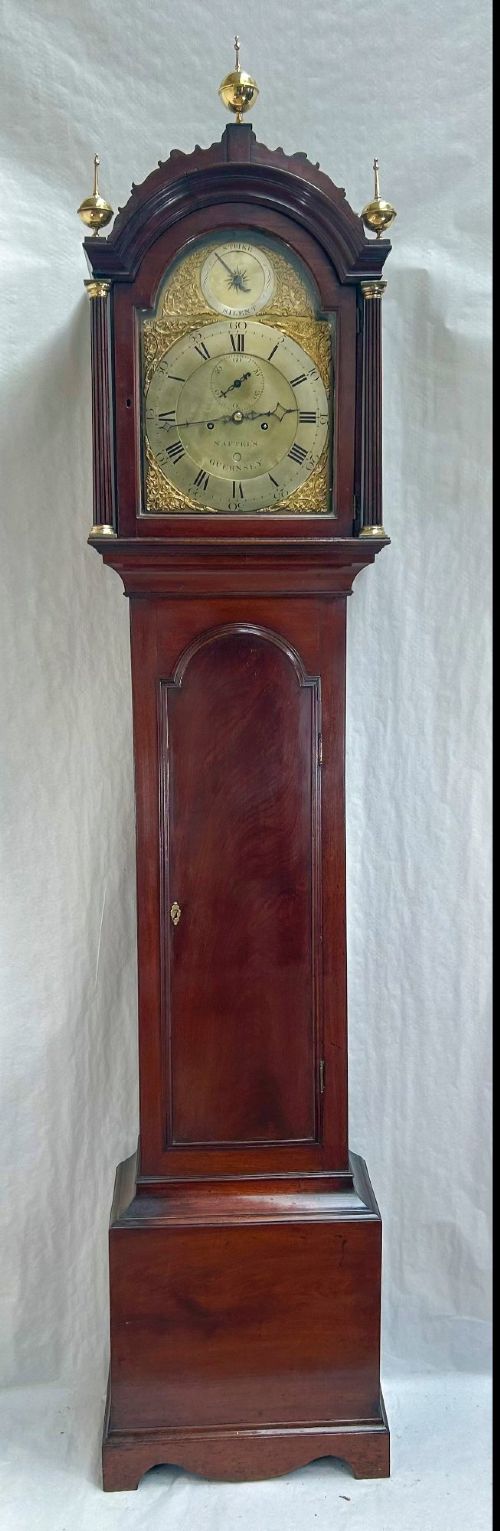
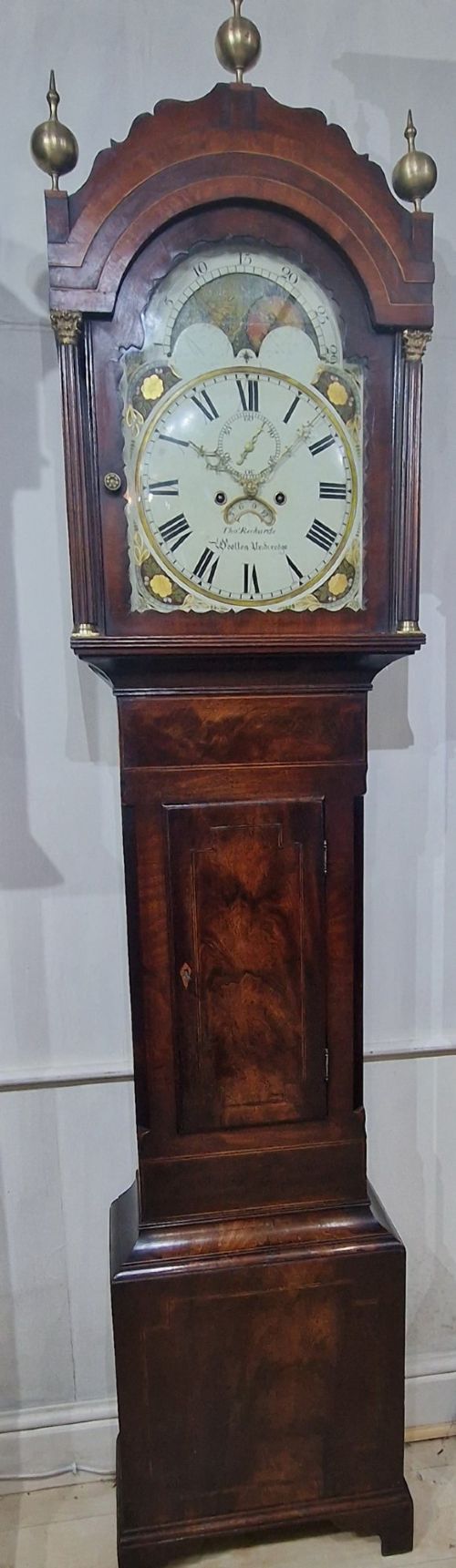
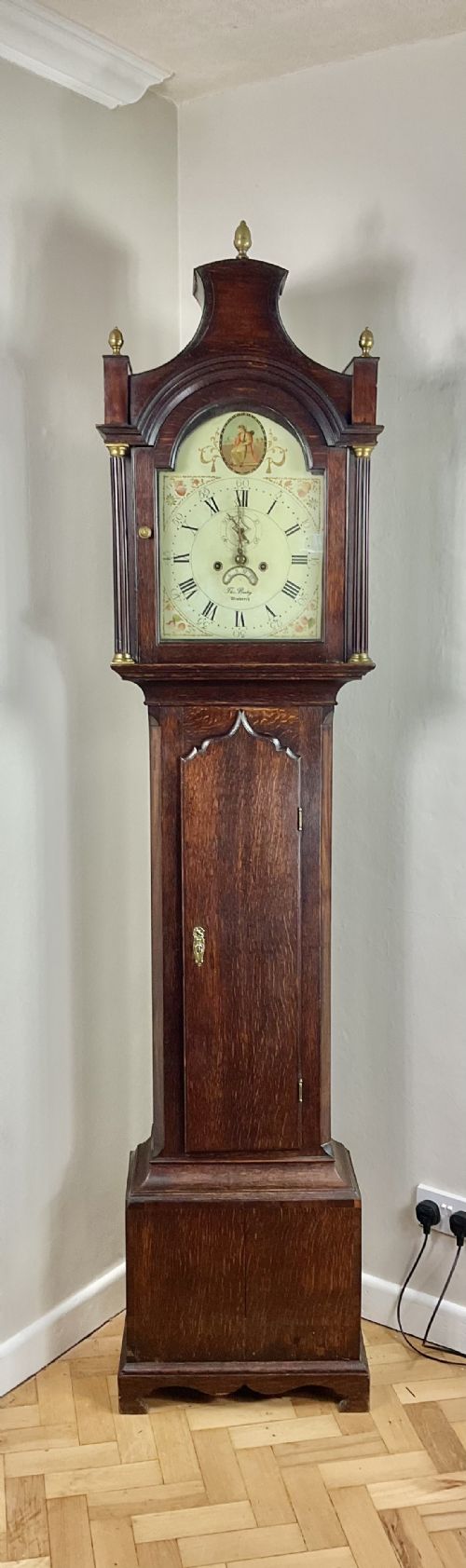
These brass finial floor clock examples are tall timepieces featuring brass finials, bringing traditional mechanics and rich wood cases into domestic interiors.

What brass finial floor clock pieces are
A brass finial floor clock represents tall case timekeeping from the Georgian and 18th century periods. These traditional longcase clocks combine significant height with mechanical timekeeping movements housed in architectural wooden bodies.
The pieces listed on this page appear primarily in oak and mahogany woods. Formats include standard longcase grandfather clocks alongside specialised moon dial and five-pillar variants.
Origins span regional English makers and general Georgian workshops. Buyers encounter both light oak finishes and rich mahogany tones reflecting late eighteenth-century cabinet making.
How they were made
Cases combine solid timbers like oak and mahogany with protective glass panels over the dial face. Internal mechanisms utilise metal components including early inside count wheel eight-day movements.
Dials feature painted iron or painted enamel surfaces alongside detailed metalwork. Brass finials sit atop the hood structure as decorative crowning elements.
Retail Price Guide 2026
Typical UK retail prices for brass finial floor clock, calculated from the Sellingantiques database of over a million retail prices indexed since 2003. This retail price guide relies exclusively on Sellingantiques data; no external sources or auction records are used, so the figures do not describe the wider market.
What varies in quality
The standard of craftsmanship separates standard regional timepieces from exceptional maker-signed works. Superior examples display sophisticated dial painting, such as lunar complications, and complex internal gearing like five-pillar movements.
Cabinet timber selection dictates visual presence, with finely figured mahogany contrasting against simpler local oak cases. The crispness of brass hardware and the architectural proportions of the hood and trunk define the upper tier.
Richard Northen·James Rayner
The Brass Finial Floor Clock Glossary
- Longcase clock
- A tall freestanding pendulum clock enclosed in a wooden case with a weighted movement. These are frequently known colloquially as grandfather clocks.
- Moon dial
- A specialised clock face mechanism displaying the phases of the lunar cycle through a rotating painted disc. This complication appears on more elaborate eighteenth-century examples.
- Count wheel
- An internal mechanical component regulating the striking train of a clock. Early versions indicate traditional preceding horological methods.
- Finial
- A decorative ornamental crowning element positioned at the top of the clock hood. Brass versions provide a bright metallic accent to the timber case.
Frequently Asked Questions
What is a brass finial floor clock?
A brass finial floor clock is a tall antique timekeeper housed in a wooden trunk, topped with decorative metal finials. These pieces combine mechanical horology with period cabinetry.
Most examples date from the Georgian era and stand over six feet tall, utilising weights and a pendulum to keep time.
How do I wind an eight day clock?
Eight day movements require winding via the dial face using a specialised key every week. This draws the internal weights back up to power the going and striking trains.
Careful handling ensures the gut lines or cables remain correctly seated on their drums during the winding process.
Where should I place a grandfather clock?
Floor clocks require a stable, level surface against a solid wall to ensure the pendulum swings evenly. Avoid positioning them in damp areas or in direct sunlight.
Placing them away from heavy foot traffic prevents vibrations that might interfere with the delicate beat of the escapement.
How do I identify a Georgian longcase clock?
Georgian longcase clocks display stylistic traits from the eighteenth and early nineteenth centuries, including proportions dictated by classical architecture. Case woods typically include native oak or imported mahogany.
Dial construction often shifts from brass plates to painted iron or enamel during this extended period of British clockmaking.