


Georgian Painted Face Clock
A georgian painted face clock brings mechanical precision and hand-rendered art together inside an architectural oak or mahogany case.
Georgian Painted Face Clock
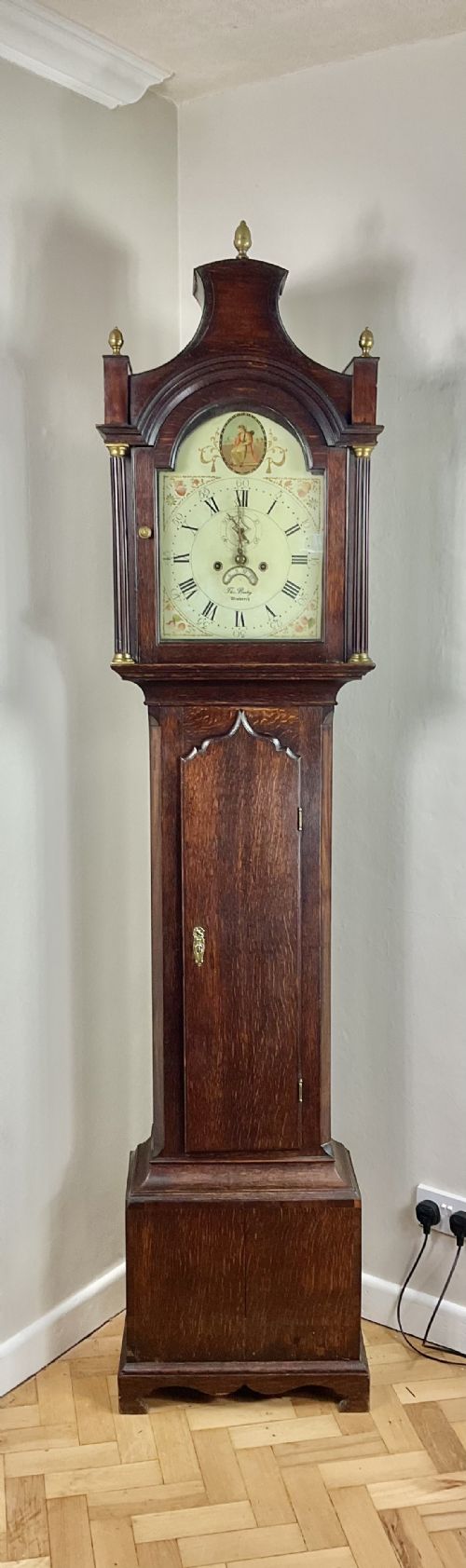
When you search for a georgian painted face clock, you are looking at tall floor-standing timepieces that combine iron dial plates decorated with paint and tall wooden cases. These items date from the eighteenth and nineteenth centuries, spanning the Georgian and Regency periods.
You will most frequently meet grandfather clocks and longcase clocks housed in cases made of oak or mahogany. Some listings feature the dial face and movement alone without the tall wooden housing.
Origins include named provincial makers such as Richard Northen and Yaxley West of Docking, placing regional British clockmaking front and centre on this page.
Materials and construction
The cases rely on timber construction, predominantly using oak and flame mahogany for the main trunk and hood. Iron and painted iron form the dial plates, while brass and steel make up the internal gear movements.
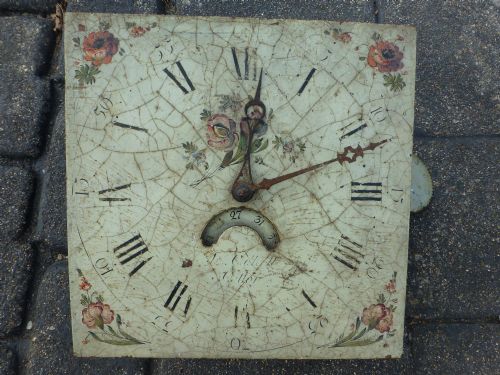
Dials receive hand-applied paintwork to render numerals and decorative scenes. Glass protects the dial face within the hood, and brass fittings secure the mechanical components.
Georgian Painted Face Clock Retail Price Guide 2026
Typical asking prices for georgian painted face clock among the pieces listed under this phrase on Sellingantiques today, from the lower quarter to the upper quarter. They describe what is for sale here now, not the wider market.
Listings combine oak and mahogany timbers with painted iron dials across the Georgian and Regency periods.
Judging quality
Quality rests in the grain and figure of the timber used for the case, alongside the execution of the painted dial. Finer examples display figured flame mahogany, while simpler utilitarian pieces utilise plain oak.
The crispness of the hand-painted details on the dial plate and the complexity of the eight-day movement distinguish finer works from standard regional timepieces.
Richard Northen·Yaxley West Docking
The Georgian Painted Face Clock Glossary
- Longcase clock
- A tall freestanding pendulum clock enclosed in a wooden case. These are frequently called grandfather clocks.
- Painted iron
- The metal sheet material used for the dial plate, coated with a ground layer and decorated with pigment. This surface provides the canvas for the clock face numbers and artwork.
- Flame mahogany
- A decorative cut of mahogany timber showing a distinctive flame-like grain pattern. Cabinet makers reserved this veneer for the most prominent surfaces of the case.
- Movement
- The mechanical inner workings of the clock powered by weights and regulated by a pendulum. Eight-day movements require winding approximately once a week.
Georgian Painted Face Clock: Frequently Asked Questions
What is a georgian painted face clock?
A tall floor-standing timepiece featuring a painted iron dial housed in a wooden case of oak or mahogany. These items were produced during the Georgian and Regency eras.
They combine mechanical timekeeping movements with hand-rendered dial artistry, serving as both practical timepieces and prominent household furniture.
How do I wind an eight day clock?
Eight-day movements require the weights to be pulled up using a winding key every week. You insert the key into the winding holes on the painted dial face and turn gently.
Care must be taken not to overwind the mechanism, ensuring the weights reach the correct height without straining the internal cord or chain.
Where were these longcase clocks placed?
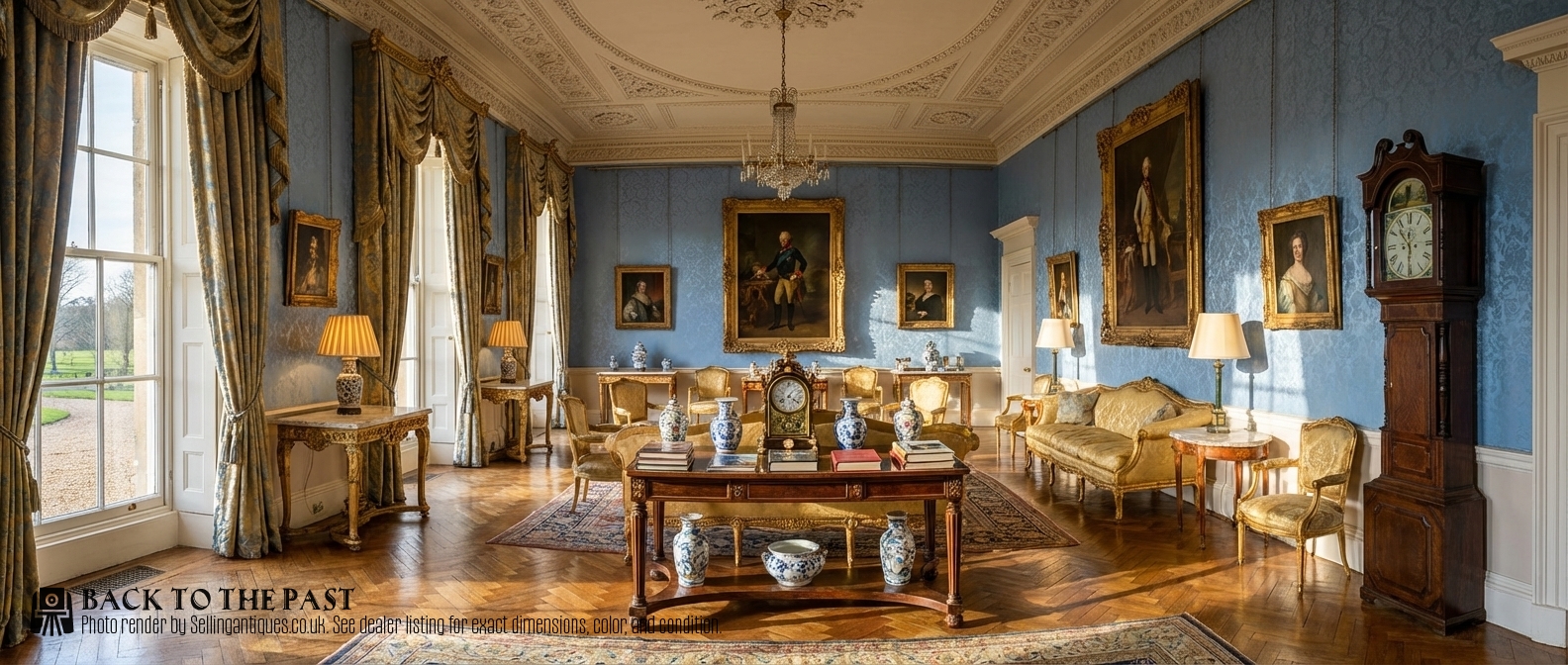
These tall timepieces stood in the principal hallways, living rooms, or stairwells of homes where their striking mechanism could be heard throughout the house. Their height required ceilings tall enough to accommodate the full case.
Placement depended on finding a stable floor and a plumb wall to ensure the pendulum swung evenly.