
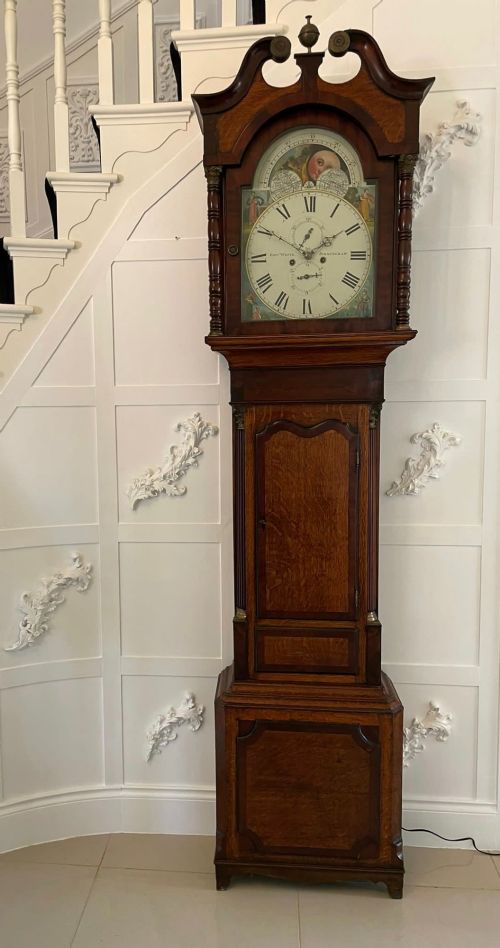
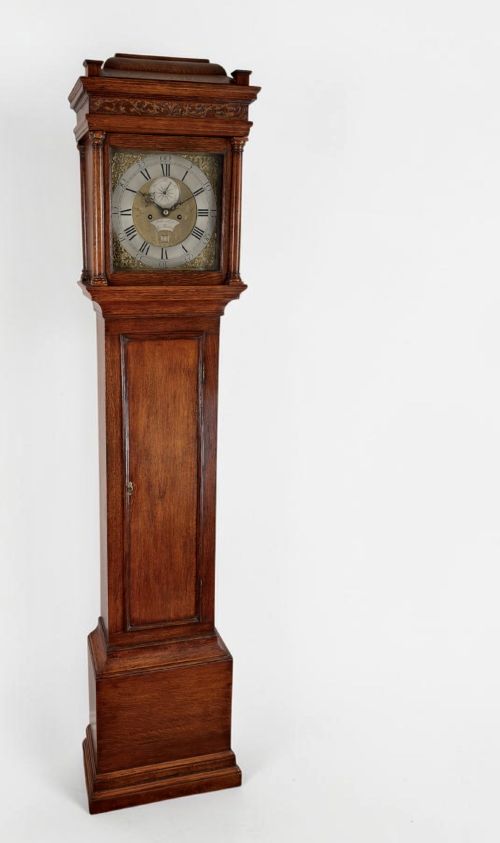
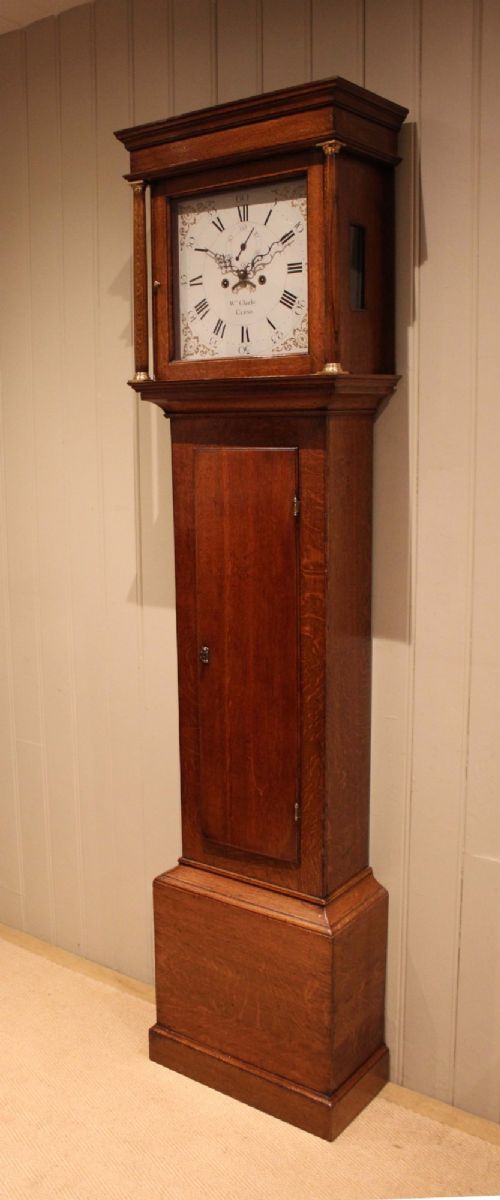
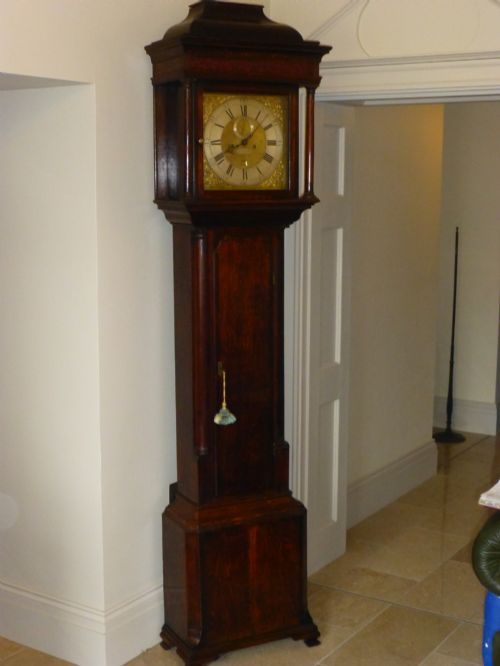
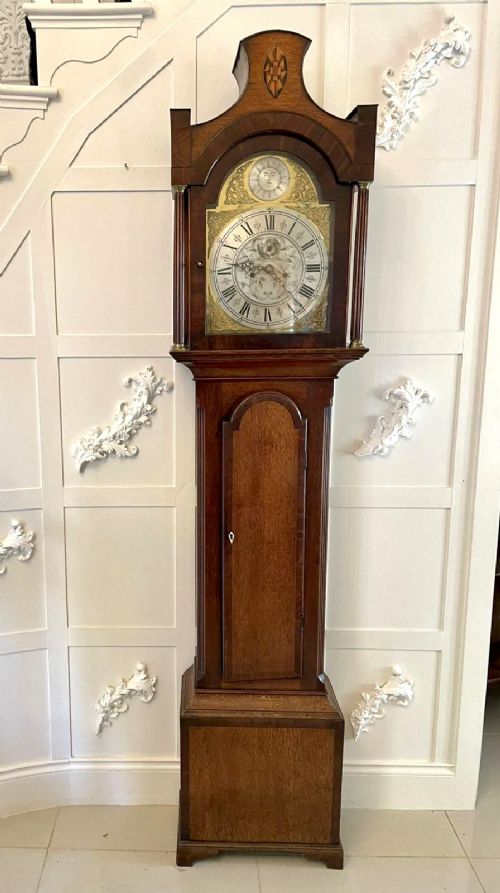
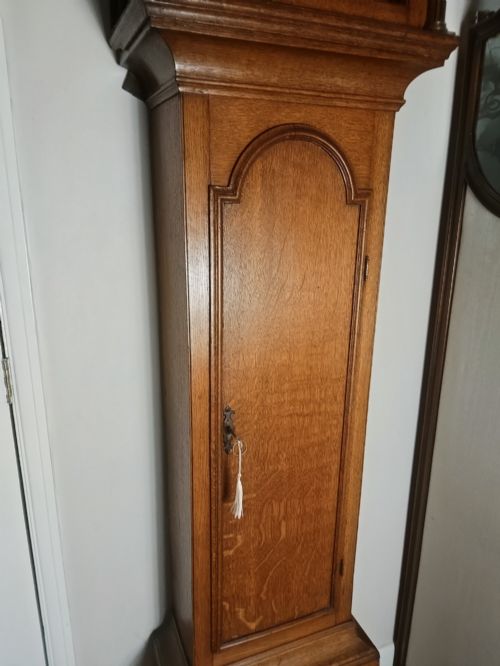
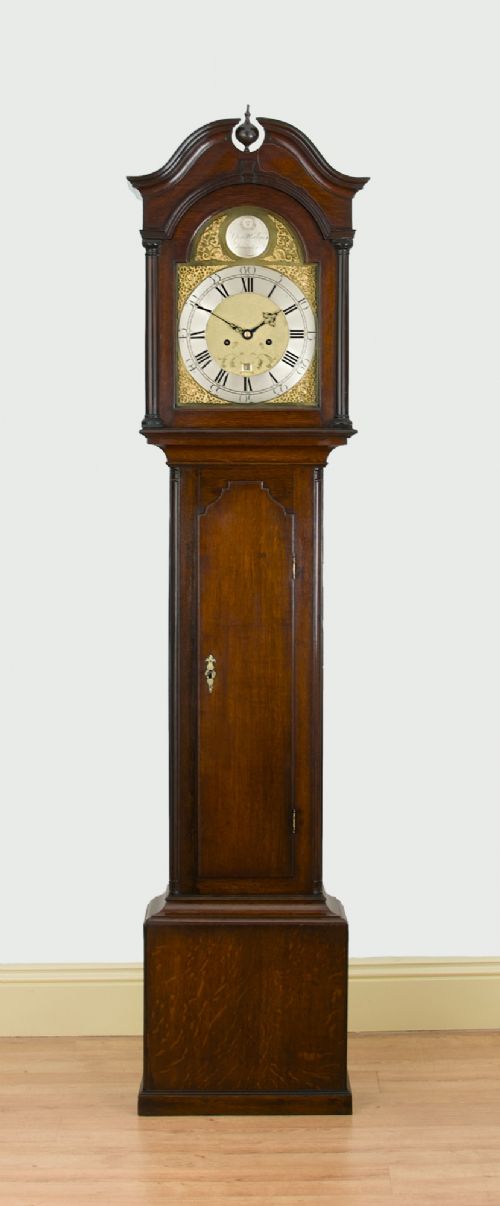


English Oak Longcase Clock
When you search for an english oak longcase clock, you meet tall floor-standing timepieces built to anchor a room.
English Oak Longcase Clock
An english oak longcase clock combines utility and presence, standing tall in hallways and living rooms to mark the hours. The search phrase covers pieces spanning the Georgian era and the eighteenth century through to early twentieth-century interpretations.
Most examples you encounter on this page date from the Georgian period or the eighteenth century, constructed primarily from solid timber with brass or painted metal dials. Later nineteenth and early twentieth-century pieces introduce musical chimes and updated movements while retaining the traditional tall wooden trunk.
How They Were Made
Cabinetmakers built the tall wooden cases using native oak, occasionally incorporating mahogany crossbanding, walnut accents, or glass doors to showcase the interior weights and pendulum. Dial faces combined brass plates with silvered chapter rings or utilised painted metal surfaces.
Internal mechanisms ranged from simple single-handed thirty-hour movements to complex eight-day brass movements, spring drives, and multi-tune chiming apparatuses driven by suspended iron or steel weights.
Listings feature oak, mahogany, walnut, brass, and glass across Georgian, eighteenth century, and early twentieth century periods.
What Varies in Quality
The sophistication of the movement largely determines the tier of a piece, moving from single-handed time-only mechanisms up to striking eight-day gear trains and complex musical chime systems. Cabinet work also separates examples, with restrained eighteenth-century proportions and fine timber figuring standing apart from standard later production.
Dial execution similarly divides the range, where engraved brass work and signed maker plates carry distinct visual weight compared to simpler painted metal faces.
Lee of Great Marlow·Richard Corless of Stockport·George Hallifax Of Doncaster·Thomas May Of Witney·Thomas Utting of Yarmouth·John Wylde·James Coster Of Henley·John Salmon Nantwich·Richard Northen·William Harley·James Draycot Wells·John Bishop of Sherborne Dorset·Vurley of Wisbech
The English Oak Longcase Clock Glossary
- Longcase clock
- A tall, weight-driven pendulum clock housed in a wooden floor-standing case, frequently called a grandfather clock.
- Chapter ring
- The outer ring on a clock dial that bears the numerals marking the hours.
- Single handed
- A movement utilising only one hand to indicate the time, typical of earlier eighteenth-century construction.
- Movement
- The internal mechanical mechanism that drives the clock hands and operates the striking or chiming functions.
English Oak Longcase Clock: Frequently Asked Questions
What is an english oak longcase clock?
An english oak longcase clock is a tall floor-standing timepiece enclosed in a wooden housing, designed to track hours using weights and a pendulum.
These pieces function as both reliable timekeepers and substantial architectural furniture for the home.
How do I tell an 18th century clock from a 20th century one?
Eighteenth-century examples typically feature brass dials, single or double hands, and solid oak trunks built by regional clockmakers. Twentieth-century versions often incorporate quarter-chiming movements, glass-fronted doors, and lighter oak tones.
Examining the dial construction and the complexity of the internal movement reveals the period of manufacture.
Where should I place a longcase clock?
These tall timepieces suit hallways, landings, or principal rooms where adequate vertical clearance allows the case to stand level against a wall.
Positioning the clock away from direct heat sources helps protect the wooden case and keeps the internal movement stable.
What is the difference between eight day and thirty hour movements?
Thirty-hour movements require winding daily or nearly daily, whereas eight-day movements run for over a week before needing attention from the owner.
Eight-day mechanisms generally utilise two or three weights suspended inside the trunk rather than a single weight.