


Traditional Oak Tall Clock
A traditional oak tall clock stands as a formidable timekeeper, anchoring a room with its rhythmic pulse and substantial presence.
Traditional Oak Tall Clock
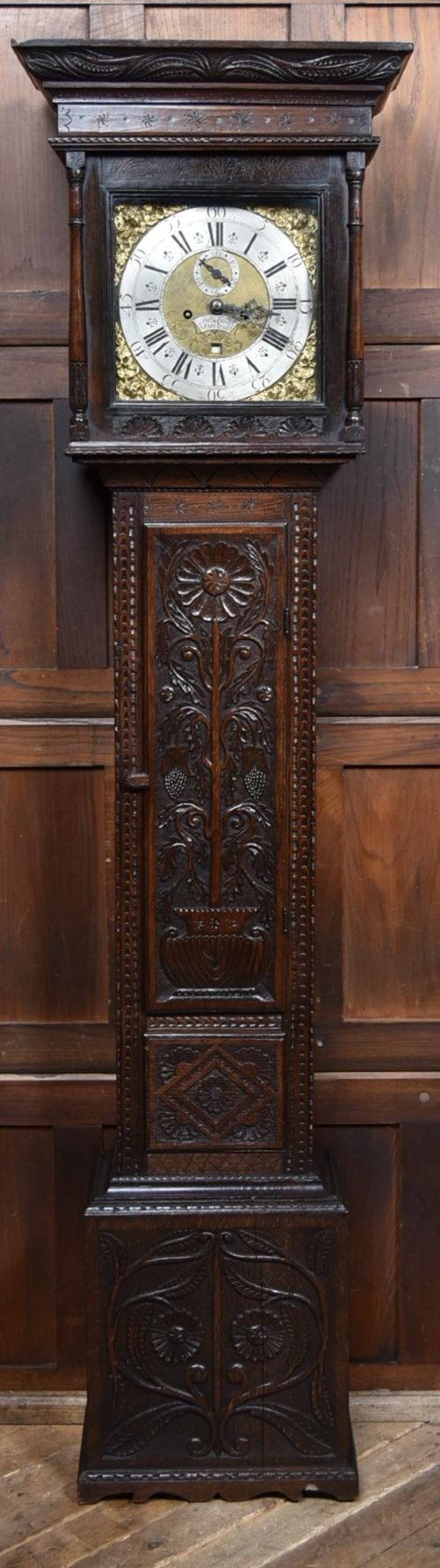
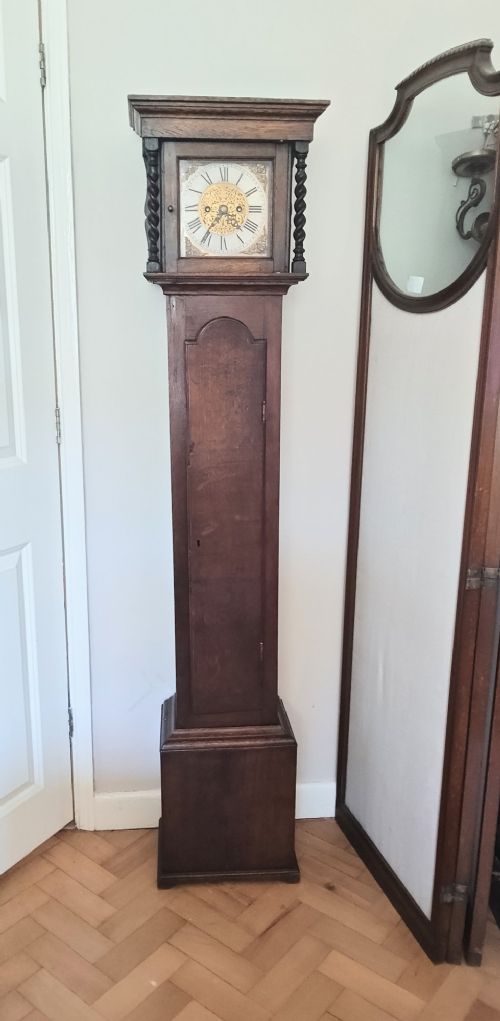
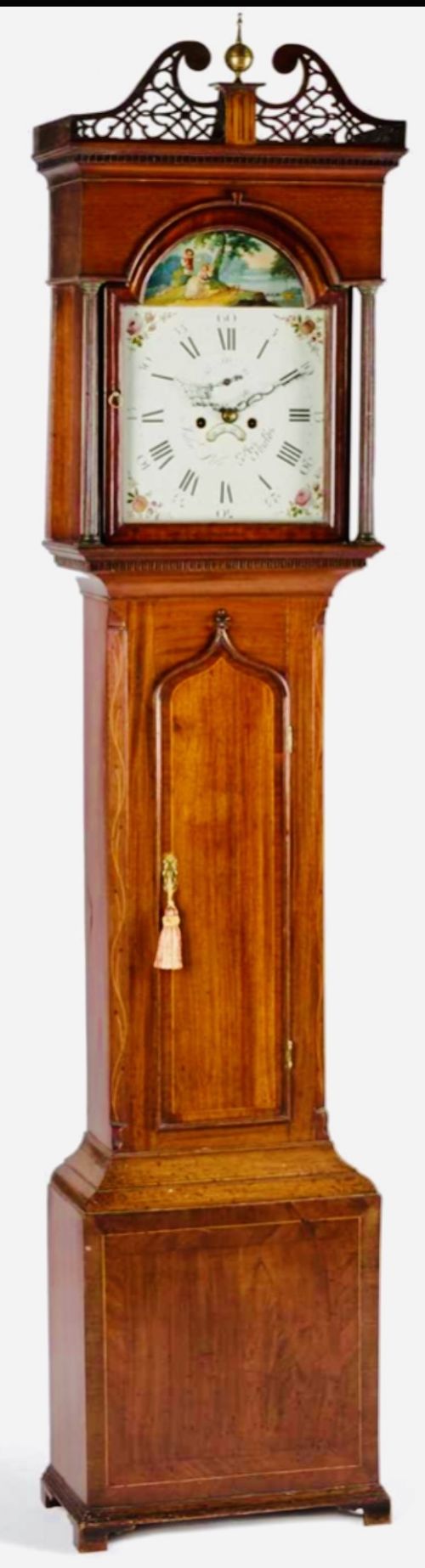
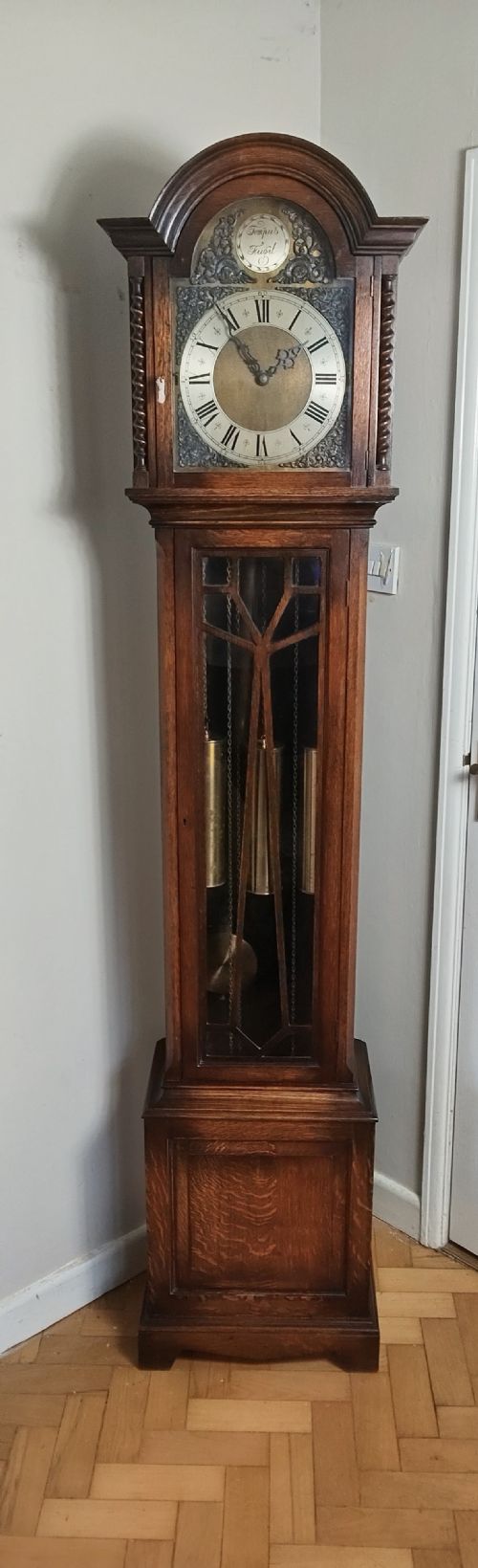
When you search for a traditional oak tall clock, you encounter floor-standing timepieces that span periods from the Georgian era through to the Edwardian period and the 1920s. The most common examples met on this page are grandfathers and smaller grandmother clocks housed in upright cases.
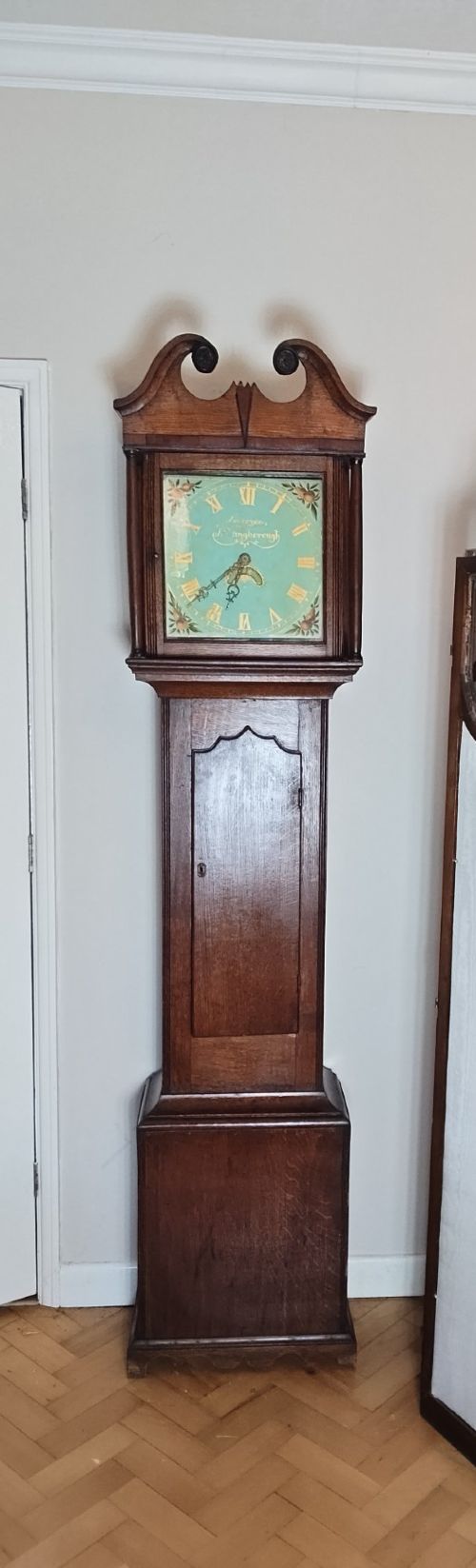
These clocks appear in various forms, including longcase clocks with striking mechanisms, musical movements, and dials in brass, enamel, or painted finishes. Stylistic influences range from early Georgian and George III to Jacobean Revival and Scottish Victorian.
Makers and retailers from locations such as Macclesfield, Chester, Nottingham, and London signed their works on dials or movements, while others bear retailer names like Harrods, Bravingtons, and Mappin & Webb.
How they were made
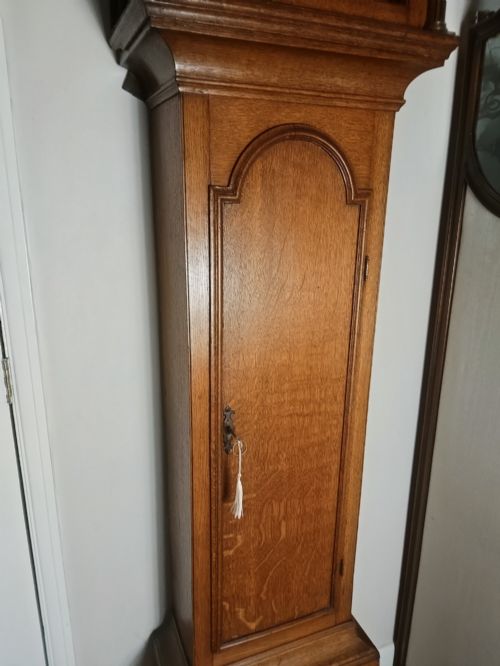
Makers built these clock cases primarily from oak, occasionally incorporating mahogany crossbanding, walnut, or metal details to accentuate the timber grain. Glass protected the dial face, while iron and steel formed the internal weights, gears, and striking components.
Dial faces combined brass, enamel, and painted elements to display the time, often featuring engraved maker signatures or specialised strike/silent functions. Cabinetmakers shaped the tall wooden trunks to house the long hanging weights and swinging pendulums safely inside.
Listings feature oak tall clocks spanning the Georgian era, Victorian period, Regency, and 1920s, utilising materials like brass, enamel, mahogany, and glass.
What varies in quality
The sophistication of the movement dictates much of the distinction between pieces, moving from standard time-only dials to complex musical chiming mechanisms with triple weights. Dial execution also varies, separating simple painted faces from finely engraved brass works signed by notable regional clockmakers.
Cabinetwork quality shows in the choice of timber preparation, such as clean oak matched with contrasting mahogany crossbanding rather than plain secondary woods. Proportion and scale define the finer examples, particularly smaller grandfather or grandmother clocks that maintain balanced architectural lines.
Jn° Smith Macclesfd·David Craig Ford Path head·John Wylde Nottingham·James Coster of Henley·Samuel Young Nantwich & Bunbury·Jn Wright Linton·Mappin & Webb London·Harrods·Bravingtons
The Traditional Oak Tall Clock Glossary
- Longcase clock
- A tall, floor-standing pendulum clock enclosed in a wooden case, commonly referred to as a grandfather clock.
- Grandmother clock
- A smaller, more slender version of the traditional tall clock, typically dating from the Edwardian era or the 1920s.
- Crossbanding
- A decorative technique where veneer strips are laid running perpendicular to the surrounding grain, often seen in mahogany on oak cases.
- Strike/silent
- A mechanism feature allowing the owner to silence the hourly striking train without stopping the clock's movement.
- Dial
- The face of the clock where hours and minutes are displayed, constructed from brass, enamel, or painted metal.
Traditional Oak Tall Clock: Frequently Asked Questions
What is the difference between a grandfather and a grandmother clock?
Grandfather clocks are the standard full-size tall clocks designed with substantial floor-standing oak cases to house long pendulums and heavy weights.
Grandmother clocks are scaled-down versions of these tall clocks, generally shorter in height and produced in later periods like the Edwardian era and the 1920s.
How do eight day movements work compared to other clocks?
An eight day movement requires winding only once a week, utilising two or three suspended weights that power both the timekeeping and the striking or chiming trains.
These movements are driven by gravity as the internal weights slowly descend inside the oak trunk over the course of the week.
How can I identify a Georgian tall clock?
Georgian tall clocks typically date from the 18th century or early 19th century, showcasing traditional oak construction, often with square or arched brass dials.
Many feature regional signatures on the face and simple architectural lines, though some George III examples incorporate mahogany crossbanding.
Where were these traditional oak clocks made?
These timepieces originated across various British workshops and urban centres, with makers signing dials in locations such as Nottingham, Chester, Henley, and Macclesfield.
Later Victorian and 20th-century examples were frequently retailed through major London establishments like Harrods, Mappin & Webb, and Bravingtons.