





Georgian Period Grandfather Clock
A Georgian period grandfather clock anchors a room with steady mechanical rhythm, bringing warm timber and historic brass face dials into daily domestic life.
Georgian Period Grandfather Clock
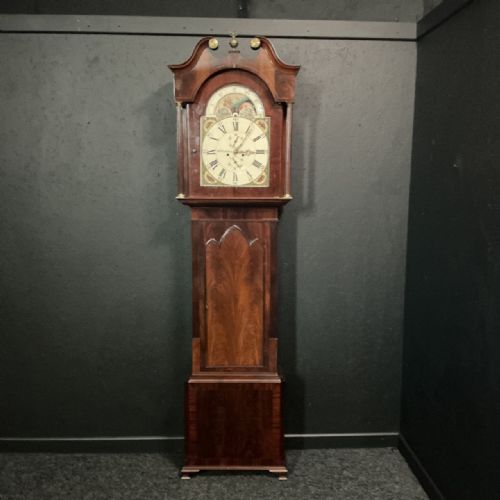
A georgian period grandfather clock is a tall floor-standing timepiece enclosing weight-driven movements within a timber case. These pieces date from the eighteenth and early nineteenth centuries, spanning eras from Queen Anne through George III.
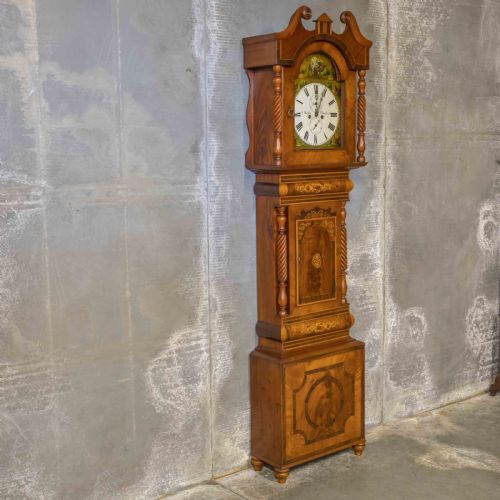
Most examples found here appear in sturdy oak or rich mahogany, while walnut and ebonised finishes also surface. They alternate between substantial proportions and smaller, more compact formats suited to modest rooms.
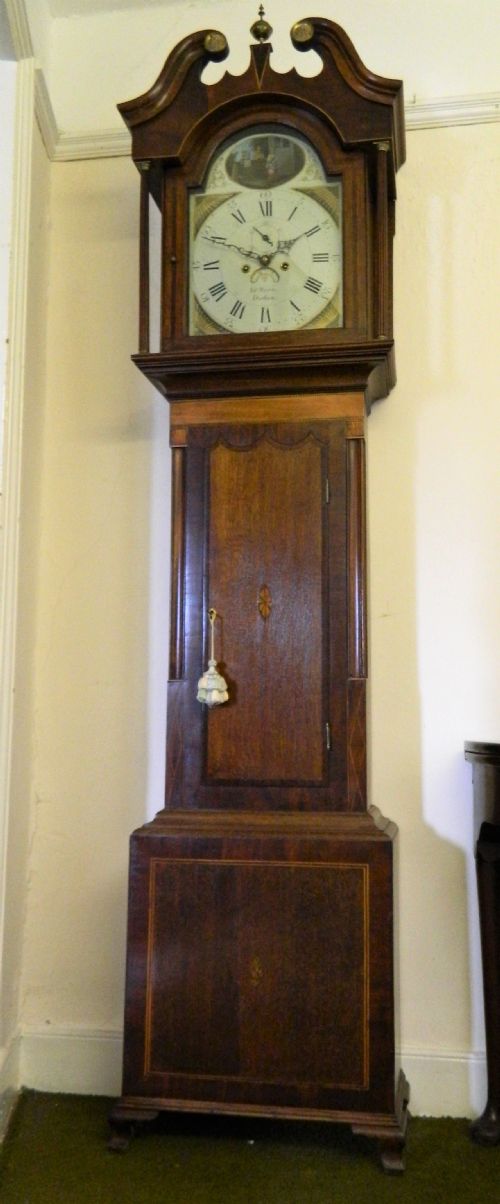
Dial designs range from traditional brass faces to painted iron interfaces. Some examples display chequered inlaid decoration or distinctive lancet tops that indicate regional British cabinet-making traditions.
Construction and Materials
Cabinet makers built these tall cases primarily from solid timbers like mahogany, oak, and walnut, employing frame and panel construction to accommodate seasonal wood movement. Selected pieces feature burr veneers and precise chequered inlaid decoration to enrich the primary surfaces.
Horologists fitted brass movements and dials, later incorporating painted iron faces as regional manufacturing shifted. Protective glass hoods shielded the delicate hands and circular dials from dust while permitting a clear view of the passing hours.
Georgian Period Grandfather Clock Retail Price Guide 2026
Typical asking prices for georgian period grandfather clock among the pieces listed under this phrase on Sellingantiques today, from the lower quarter to the upper quarter. They describe what is for sale here now, not the wider market.
Tall enough to rival the tallest family member, these clocks have quietly counted off centuries of domestic life while hiding weights behind polished wooden doors.
Measures of Quality
Quality rests in the harmony of proportion between the hood, trunk, and base, alongside the crispness of timber figure. Finer examples display carefully matched grain patterns and restrained inlay rather than heavy, unbalanced ornamentation.
The sophistication of the movement and the legibility of the dial separate standard domestic timekeepers from exceptional commissions. Maker signatures associated with established regional centres add notable historic interest to the physical object.
Williams·Raine of Durham
The Georgian Period Grandfather Clock Glossary
- Longcase clock
- The formal horological term for a grandfather clock, describing any tall pendulum-driven timekeeper housed in a protective wooden enclosure. These towering enclosures protect the weights and pendulum from accidental disruption.
- Lancet top
- An architectural hood design featuring a pointed, arched crown resembling a gothic lancet window. This curved silhouette lifts the visual weight of the upper case.
- Ebonised wood
- Timber treated with a dark stain or finish to imitate expensive ebony. Makers utilised this technique to create sharp visual contrast against polished brass dial furniture.
- Chequered inlay
- A decorative banding pattern composed of alternating light and dark wooden squares set into the primary timber. This meticulous detail punctuates the long vertical lines of the oak cases.
Georgian Period Grandfather Clock: Frequently Asked Questions
How do I wind a grandfather clock?
Winding requires using a small crank key to raise the internal weights via winding apertures on the dial face. Care must be taken not to overwind the mechanism.
Most eight-day movements need attention once a week, while thirty-hour versions require daily winding. Establishing a regular routine keeps the timekeeping consistent.
Where should I place a longcase clock?
Position the clock against an interior wall away from direct sunlight, heating vents, and exterior doors. Fluctuating temperatures and humidity affect the stability of antique timbers and internal wooden components.
Ensure the floor is entirely level so the pendulum swings symmetrically. A stable foundation prevents the tick from becoming uneven.
How do I tell different Georgian decades apart?
Early examples from the Queen Anne and early Georgian eras often utilise walnut timber and square brass dials with separate spandrels. Proportions tend to be more compact during these decades.
Later George III pieces frequently employ mahogany, painted iron dials, and refined architectural hoods like lancet arches. Regional variations also shape the decorative detailing across the eighteenth and early nineteenth centuries.
Why do some clocks have painted iron faces?
Painted iron dials emerged as a fashionable and legible alternative to traditional brass from the latter part of the eighteenth century onwards. They permitted greater use of floral decoration and Roman numerals.
Regional clockmakers adopted these interfaces to update their output. They offer a distinct visual contrast to earlier brass dial plates.