
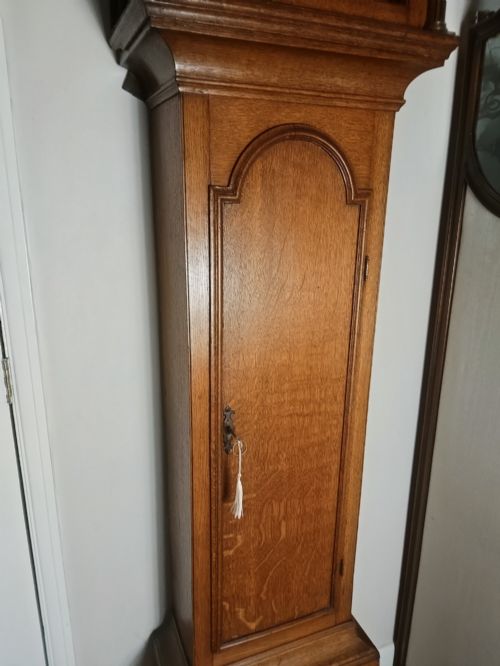
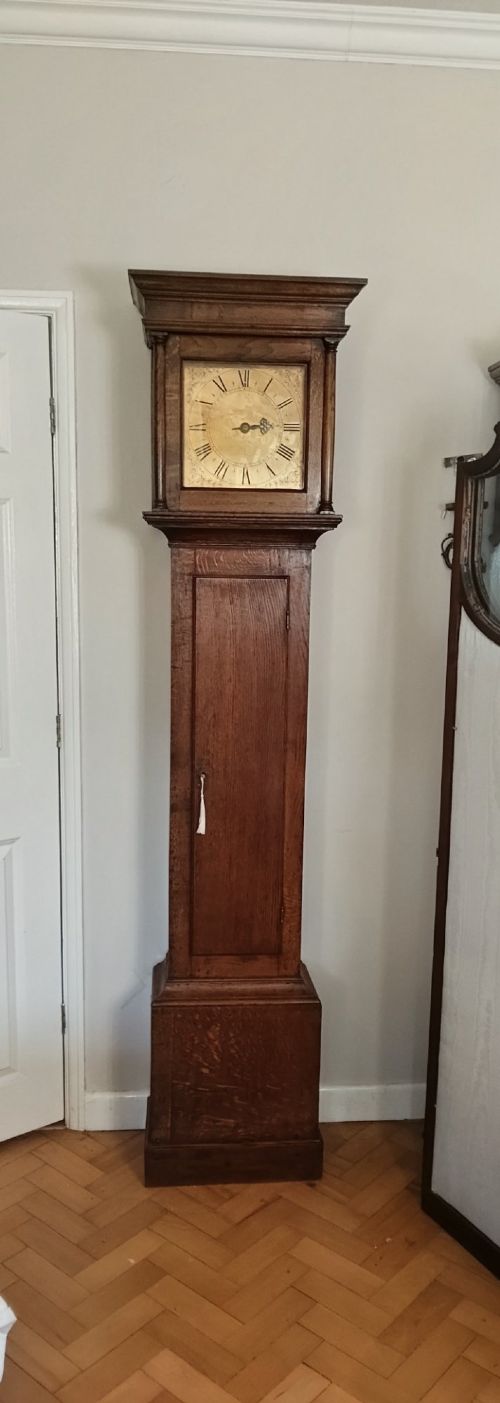
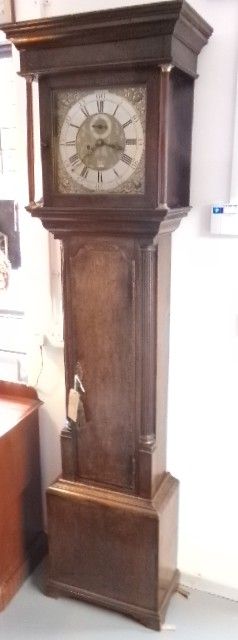


Georgian Oak Standing Clock
A georgian oak standing clock anchors a room with steady mechanical rhythm and honest eighteenth-century timber.
Georgian Oak Standing Clock
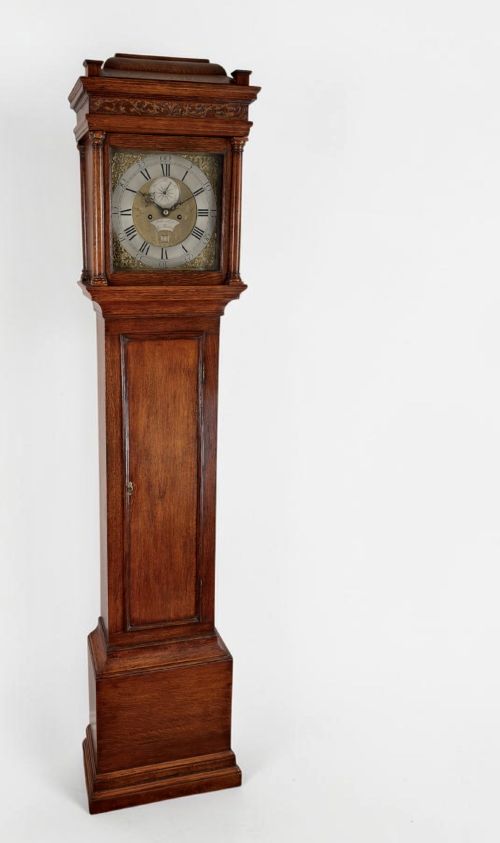
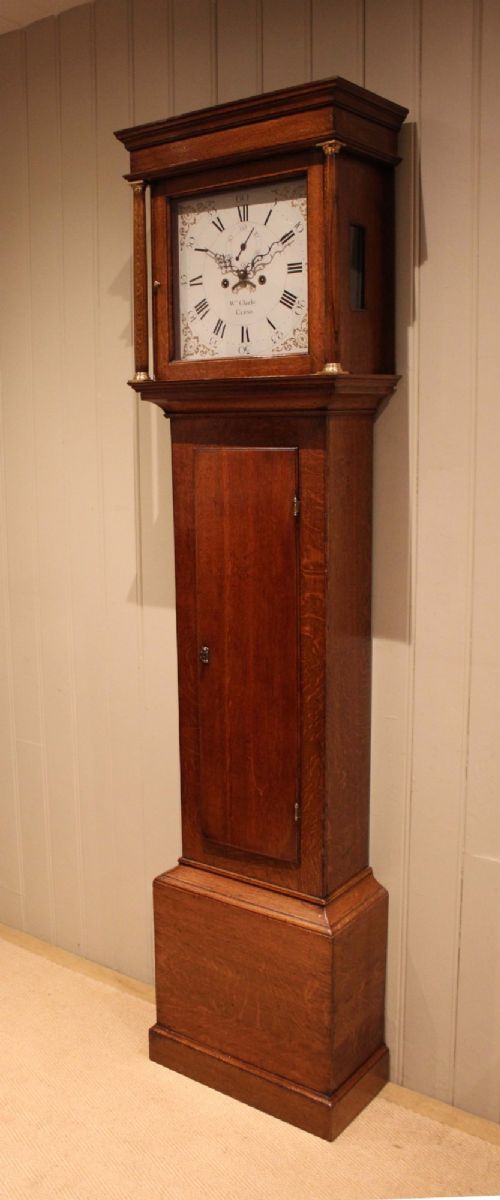
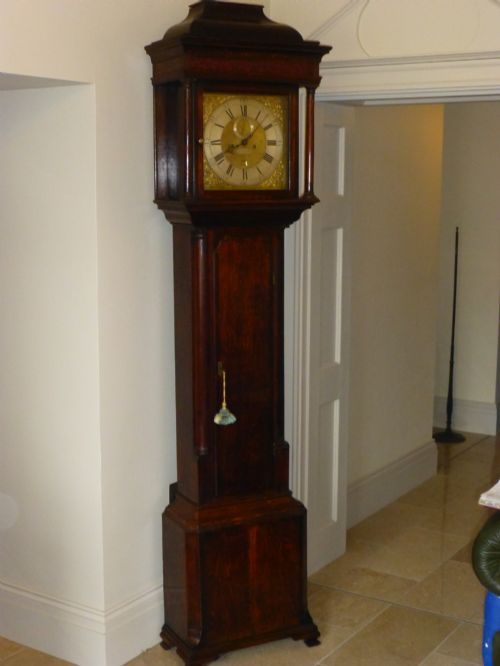
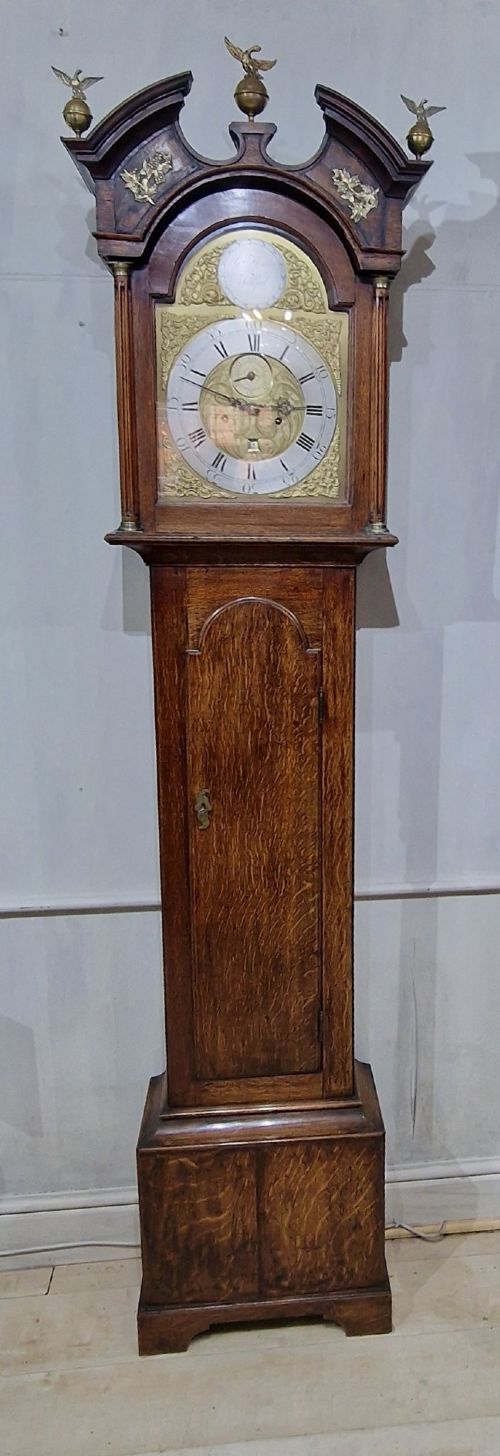
A georgian oak standing clock is a tall floor-standing timekeeper housing a brass or painted dial and a pendulum movement inside a fitted wooden trunk. These pieces emerged from a period spanning the eighteenth century and the early nineteenth century, designed to measure hours reliably in domestic parlance. Most examples on this page belong to the Georgian and George III eras, constructed with straightforward proportions and practical housing.
Makers housed these movements in longcase or grandfather formats, sometimes incorporating walnut or mahogany banding alongside the primary oak timber. Dial sizes vary from smaller ten-inch faces up to eleven-inch plates, occasionally featuring rolling moon mechanisms or strike-silent functions. Regional clockmakers across England and Wales signed the brass or painted iron dials, linking specific provincial towns to individual instruments.
Materials and Construction
Cabinetmakers built the tall cases primarily from native oak, occasionally pairing the timber with mahogany or walnut veneers and banding to accent the door panels and hoods. Glass protected the dial face within the bonnet, while brass and steel formed the intricate gear trains and weights that powered the pendulum movements. Painted iron dials appeared alongside traditional engraved brass faces as regional preferences evolved through the eighteenth century.
Movements required precise metalworking by local smiths and horologists, who mounted the brass gear assemblies inside robust wooden trunks designed to keep dust from the works. Dial plates received engraved signatures or painted numerals, identifying the maker and the town of origin. Cases relied on panel-and-frame joinery to accommodate the seasonal movement of solid oak without warping the trunk.
Several provincial makers based their workshops in Nantwich, turning out tall clocks that still bear their names on the dial.
Evaluating the Range
The distinction between standard domestic timepieces and finer examples rests on the crispness of the dial engraving, the complexity of the movement, and the integration of secondary woods. Clocks featuring rolling moon phases, walnut detailing, or eight-day movements sit higher in the range than simpler thirty-hour variants with plain painted iron faces. The proportion of the case and the preservation of original brass fittings also determine the standing of an individual piece.
Regional variations in cabinetwork reveal the skill of the local maker, with certain provincial workshops producing cleaner lines and more balanced hood columns. Better examples retain their original weights, pendulum, and brass dial work without excessive replacement parts or modern alterations to the trunk. The clarity of the maker signature on the dial plate offers a direct measure of the provenance and workshop standard.
Lee of Great Marlow·Richard Corless of Stockport·James Hendrie Falkirk·Fisher Of Preston·Thomas Webbe of New Quay·Thomas Utting of Yarmouth·Richard Prew Of Tewksbury·John Wylde Nottingham·Haythornwaite Kirkby Lonsdale·Richard Alexander Devizes·James Coster Of Henley·John Salmon Nantwich·Grocott Holywell·Stanyer Nantwich·Samuel Young Nantwich·Nicholas of Birmingham·Walker of Nantwich·Benjamin Rogers·W Prior Skipton
The Georgian Oak Standing Clock Glossary
- Longcase clock
- A tall pendulum timekeeper housed in a wooden floor-standing case, commonly called a grandfather clock.
- Dial
- The visible face of the clock displaying the hours and minutes, typically formed from brass or painted iron.
- Moonphase
- A specialised mechanism on the dial that tracks the lunar cycle through a rotating painted disk.
- Strike-silent
- A mechanical function allowing the clock chiming to be disengaged while the movement continues to keep time.
- Hood
- The upper portion of the case enclosing the dial and movement, often featuring glazed side panels and decorative pillars.
Georgian Oak Standing Clock: Frequently Asked Questions
Where should I place a standing clock?
Position the piece against a sturdy interior wall away from direct sunlight and strong drafts that might affect the wood or timber movement.
Ensure the floor surface is level so the pendulum swings evenly and the brass gear train maintains a steady beat.
How do I wind an eight day clock?
Insert the winding key into the small holes on the dial face and turn gently until the internal weights reach the top.
Avoid over-winding the mechanism, stopping as soon as resistance indicates the springs or weights are fully drawn.
What is the difference between thirty hour and eight day movements?
Thirty-hour movements require winding daily and typically utilise simpler gear trains driven by single cords or chains.
Eight-day movements require attention only once a week and feature more complex dual-weight systems housed within taller oak trunks.
How do I read a painted iron dial?
Painted iron dials feature hand-painted numerals and floral corner decorations that replaced engraved brass plates in many regional workshops.
These faces require careful dusting with a dry cloth to preserve the fragile painted surface from moisture and abrasion.