



Antique English Hall Clock
These antique English hall clocks mark the passing hours in oak, mahogany and burr walnut, offering the commanding presence every traditional hallway needs.
Antique English Hall Clock
When you search for an antique English hall clock, you are looking at tall case timepieces designed to stand in domestic hallways and living spaces. The examples on this page span several centuries, with particular strength in Georgian oak and mahogany longcase clocks.
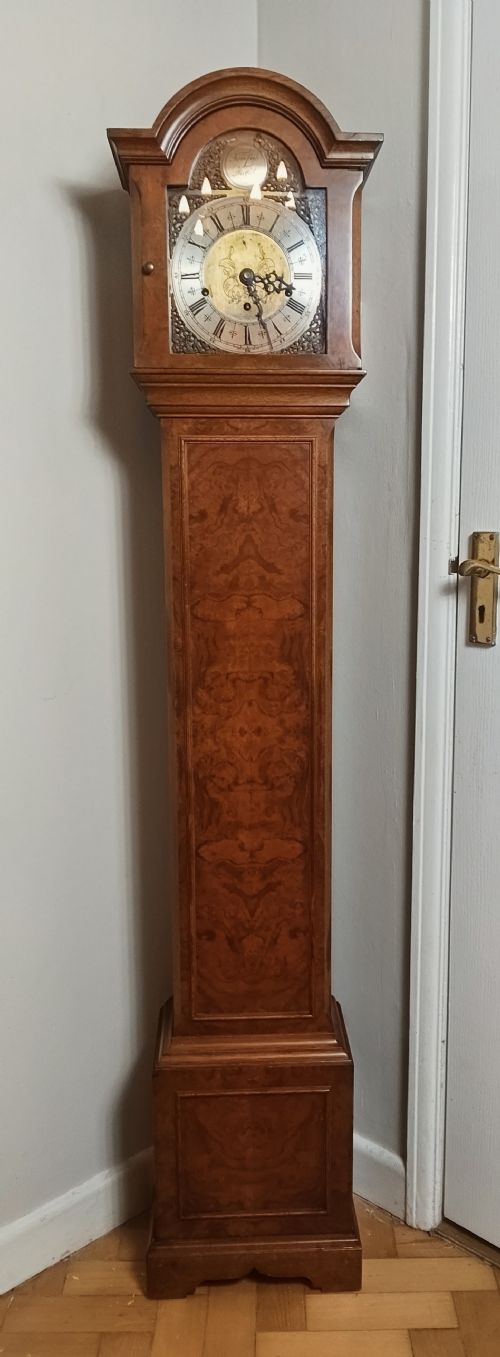
You will encounter grand architectural proportions alongside more compact grandmother clocks from later decades such as nineteen thirty and nineteen sixty. Regional makers from Nottingham, Bridgnorth and London sign movements housed in traditional timber cases.
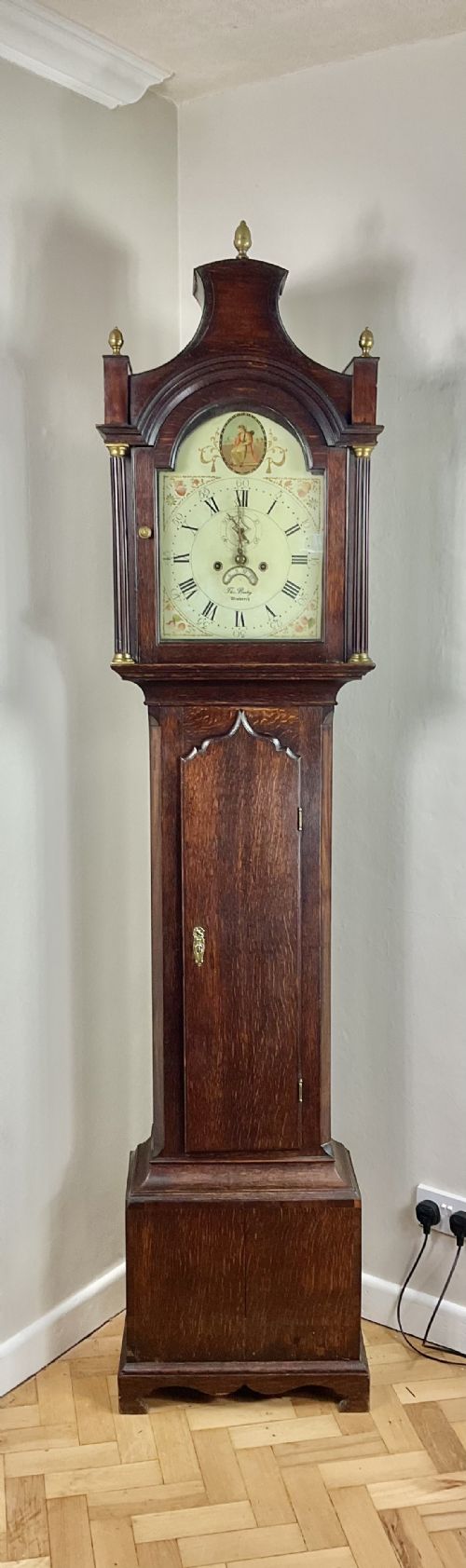
The form encompasses classic long-case clocks as well as painted iron dials and moon phase mechanisms. These tall timekeepers anchor a room with their traditional height and mechanical movement.
How they were made
Painted iron and glass protect the clock faces, while iron and brass drive the internal mechanical workings. Certain pieces incorporate detailed painted wood and specialised finishes like chinoiserie.
Regional craftsmen joined the tall trunk sections to house the swinging pendulums and falling weights safely. Inlaid details and fine cabinet joinery elevate the structural woodwork.
Listings feature oak, mahogany and burr walnut alongside painted iron dials across Georgian, Regency and twentieth-century periods.
What varies in quality
The refinement of the cabinetwork and the standing of the dial signature separate standard timepieces from superior examples. London makers and noted regional clockmakers often imparted greater finish to the movement and case.
The choice of timber grain, such as figured burr walnut or rich mahogany, dictates the visual impact of the case. Original painted dials and uncompromised proportions hold higher regard than later alterations.
John Wylde Nottingham·Dwerrihouse and Carter·Edward Glase of Bridgnorth·Herbert of Haversham·Elliott
The Antique English Hall Clock Glossary
- Longcase clock
- A tall freestanding pendulum clock enclosed in a wooden case, commonly known as a grandfather clock.
- Grandmother clock
- A smaller, more slender version of the traditional longcase clock, produced in twentieth-century periods.
- Moon phase
- A dial mechanism that tracks the lunar cycle visually behind a shaped aperture on the clock face.
- Chinoiserie
- Decorative European lacquerwork imitating traditional Chinese and East Asian designs, seen on specific clock cases.
Antique English Hall Clock: Frequently Asked Questions
How do I wind an antique hall clock?
Most mechanical longcase clocks require a key or crank to pull the weights back up the trunk at regular intervals. Care must be taken not to overwind the mechanism.
Consult the specific movement type to determine whether it runs for eight hours or eight days between windings.
Where should I place a grandfather clock?
Position your tall clock against a solid interior wall away from direct sunlight, dampness and heavy foot traffic. A stable floor ensures the pendulum swings evenly.
Floorboards that vibrate heavily can disrupt the beat of the escapement and stop the movement.
What is the difference between a grandfather and grandmother clock?
Grandfather clocks are the standard full-height longcase timepieces developed in the seventeenth and eighteenth centuries. Grandmother clocks are significantly shorter versions built during later periods like nineteen thirty and nineteen sixty.
Both share the same basic tall case architecture but scale differently for interior spaces.
How do I identify the period of an oak longcase clock?
Examine the construction methods of the oak case, the style of the brass or painted dial, and any signature left by the maker. Georgian and eighteenth-century examples feature distinct joinery and dial proportions compared to later twentieth-century interpretations.
Signatures on the face often connect the clock to recorded makers working in specific towns.