


Brass Spandrel Longcase Clock
A brass spandrel longcase clock brings the measured rhythm of the eighteenth century into a room through cast metal ornamentation and tall timber housing.

Brass Spandrel Longcase Clock
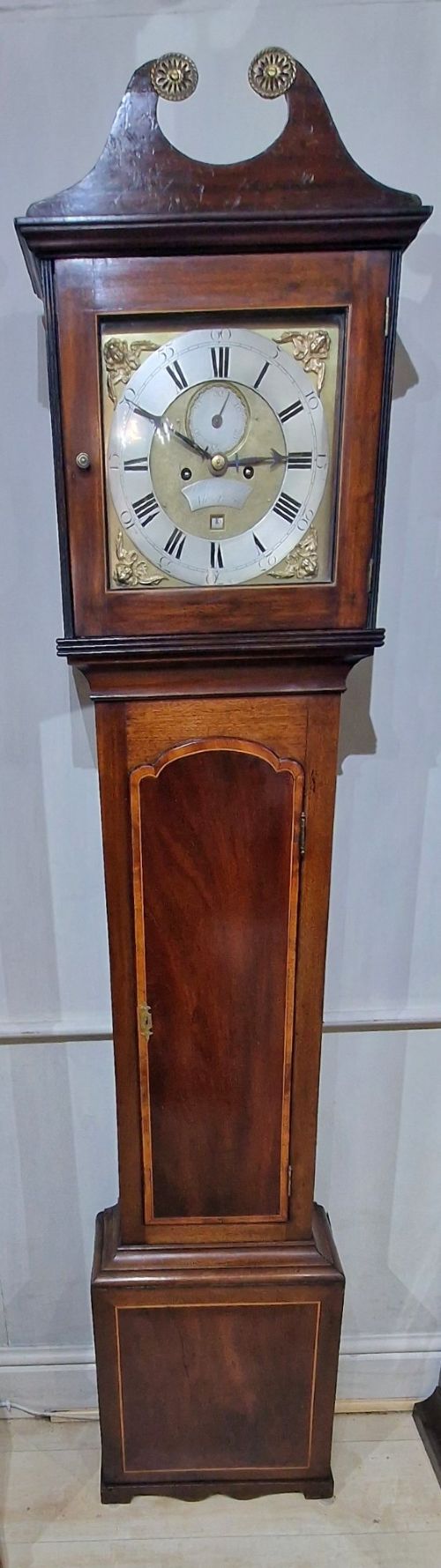
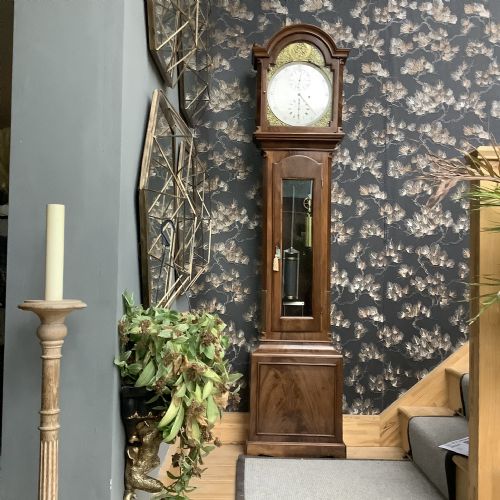
A brass spandrel longcase clock is a tall floor-standing timepiece featuring decorative corner pieces on the dial, most frequently encountered in Georgian oak and mahogany cases from the eighteenth century. These pieces combine long wooden trunks designed to protect the hanging weights and pendulum with visible brass dials that frame the central time display.
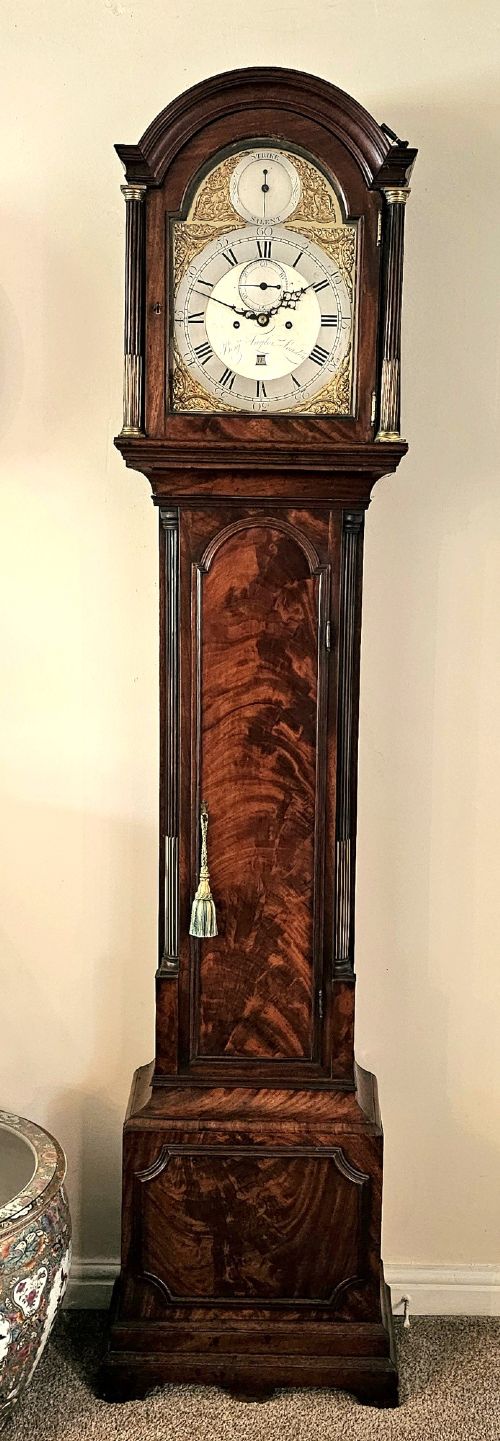
The selection ranges from robust provincial thirty-hour oak models made in places like Bolton, Bath, and Yarmouth to refined eight-day London examples housed in flame mahogany or walnut. Alongside complete clocks, collectors encounter separate clock dials and movements that reveal the internal mechanical artistry of the period.
Proportion and regional timber choice define the appearance of these pieces, reflecting the workshop traditions of makers working during the Georgian and George III eras. The inclusion of Gothic Revival elements and smaller grandmother clock formats demonstrates how the form evolved into the Victorian and Edwardian periods.

How they were made
The construction relies on solid oak, mahogany, and walnut timbers joined to form the tall case, housing iron and steel gear trains driven by hanging weights. Cabinetmakers shaped flame mahogany veneers and polished the wood to highlight natural grain patterns.
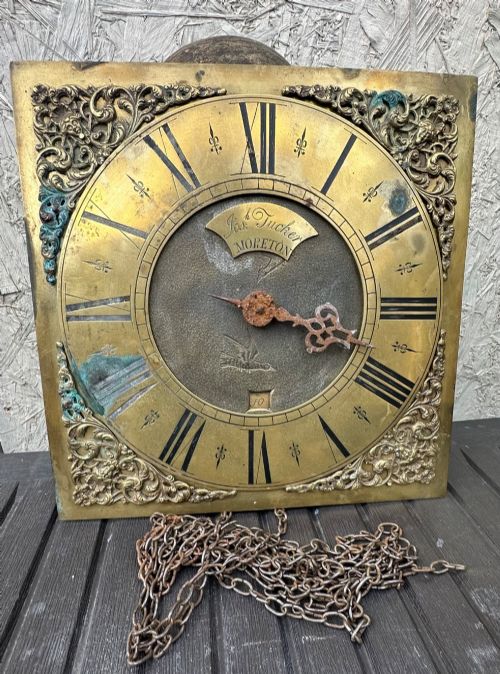
The dials combine cast brass corner spandrels fixed around a silvered or engraved brass face, protected behind a glass door. Makers cast the spandrels in metal moulds before hand-chasing the surface details to achieve crisp relief.
Clockmakers fitted brass movements with either thirty-hour or eight-day durations, connecting the going train to single or dual hands. Movements required precise wheel-cutting and tooth-shaping to ensure reliable timekeeping over centuries.
Brass Spandrel Longcase Clock Retail Price Guide 2026
Typical asking prices for brass spandrel longcase clock among the pieces listed under this phrase on Sellingantiques today, from the lower quarter to the upper quarter. They describe what is for sale here now, not the wider market.
Listings feature Georgian, Victorian, and Edwardian periods alongside materials including oak, mahogany, flame mahogany, brass, steel, and glass.
What varies in quality
Quality reveals itself in the crispness of the brass spandrel casting and the depth of engraving on the dial centre, where skilled hands achieved sharper definition than provincial jobbing shops. The integration of the movement with the dial plate shows the confidence of the maker.
Case timber selection distinguishes standard regional pieces from high-end London commissions, particularly where figured flame mahogany or pollard oak was chosen by the cabinetmaker. The proportions of the hood columns and the joinery of the trunk door demonstrate the standard of the workshop.
Benjamin Taylor·Thomas Utting·Joseph Lum·William Lister·Thomas Rogers
The Brass Spandrel Longcase Clock Glossary
- Spandrel
- The triangular corner space on a clock dial between the circular chapter ring and the square frame. These spaces were traditionally filled with cast brass ornaments.
- Longcase clock
- A tall freestanding weight-driven timepiece with a pendulum enclosed in a wooden trunk, commonly known as a grandfather clock.
- Chapter ring
- The circular ring on a clock face that bears the hour and minute numerals. It is typically fashioned from silvered brass to contrast against the dial plate.
- Movement
- The internal mechanical assembly of wheels, gears, and weights that drives the clock hands and strikes the hour. Eight-day and thirty-hour versions represent the primary mechanical types.
Brass Spandrel Longcase Clock: Frequently Asked Questions
How do I wind an eight-day longcase clock?
Wind the clock by inserting the key into the winding holes on the dial face and turning it clockwise until the weight rises near the top.
Take care not to overwind the mechanism, stopping as soon as resistance increases to protect the internal line or chain.
Where should I place a longcase clock at home?
Position the clock against an interior wall away from direct sunlight, heating vents, and dampness to protect the timber case and movement.
Ensure the floor is level so the pendulum swings evenly and the clock keeps accurate time.
What is the difference between thirty-hour and eight-day clocks?
A thirty-hour clock requires winding once a day and typically uses a single chain or rope with one main weight.
An eight-day movement requires winding once a week and uses two weights to power the going and striking trains.
How can I tell an eighteenth-century dial from a later one?
Eighteenth-century dials feature heavy cast brass spandrels, hand-engraved chapter rings, and signature placement tied to recorded makers.
Later Victorian and Edwardian reproductions often show machine stamping and different mounting techniques behind the dial plate.