
Antique Chime Floor Clock
An antique chime floor clock combines tall timber cabinetry with intricate mechanical bells, offering a commanding presence and rich acoustic depth for the home.
Antique Chime Floor Clock
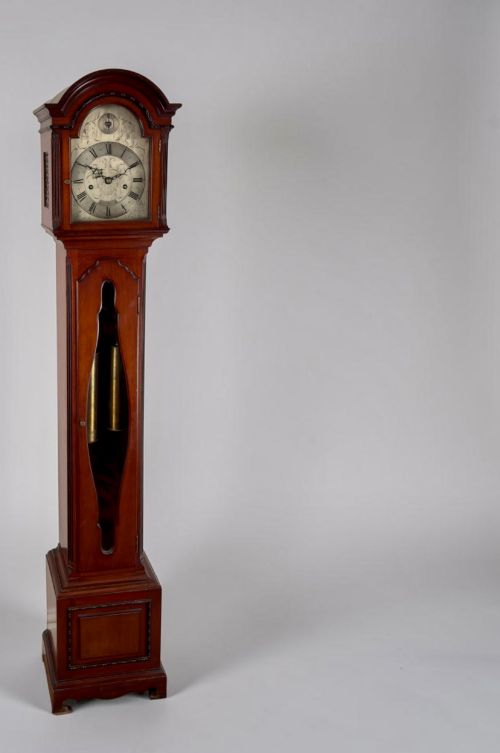
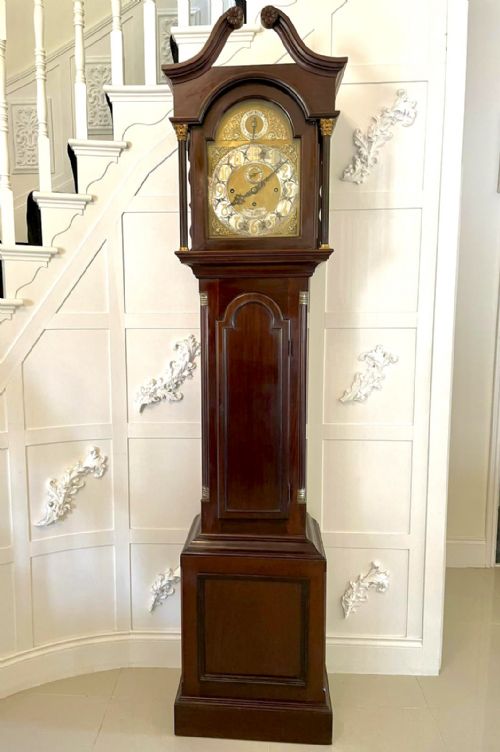
When searching for an antique chime floor clock, buyers encounter tall case timepieces housing complex movements that sound quarters, hours, or specific musical tunes. These vertical clocks span grandfathers, smaller grandmother variants, and slender regulators designed to fit domestic spaces with impressive height.
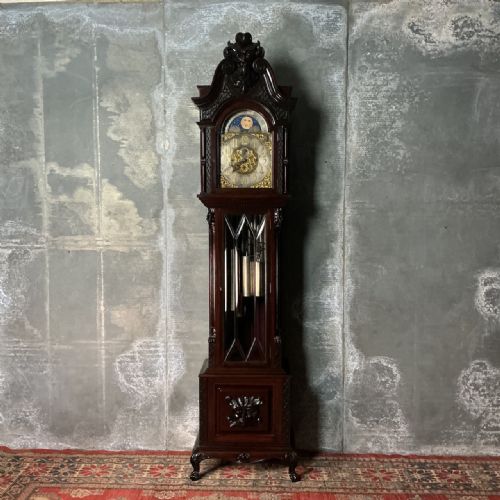
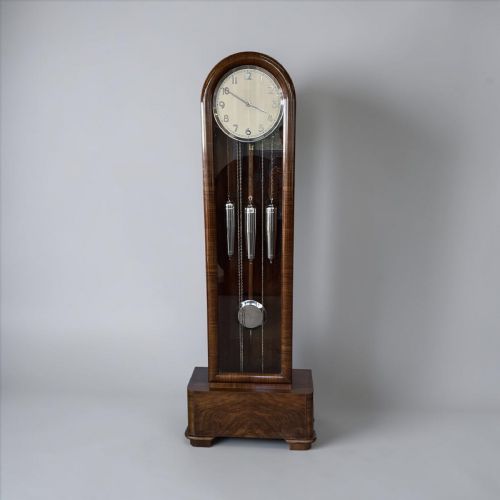
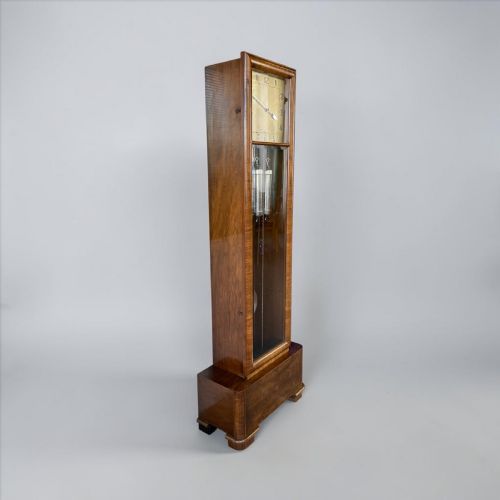
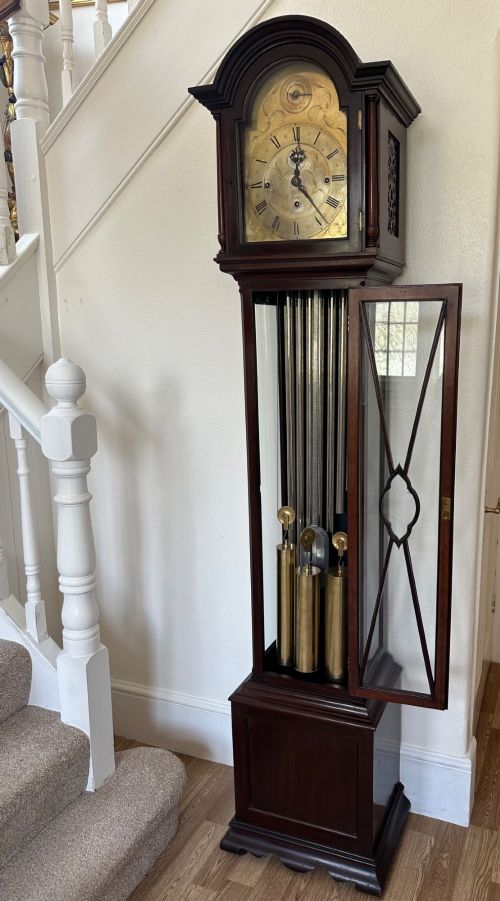
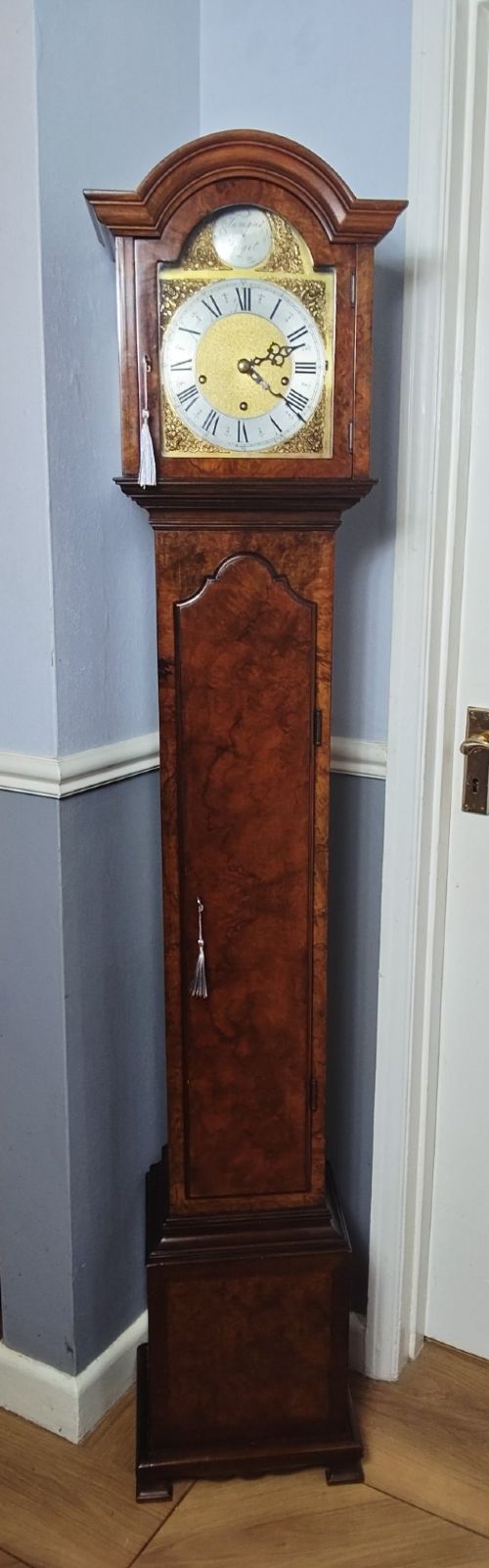
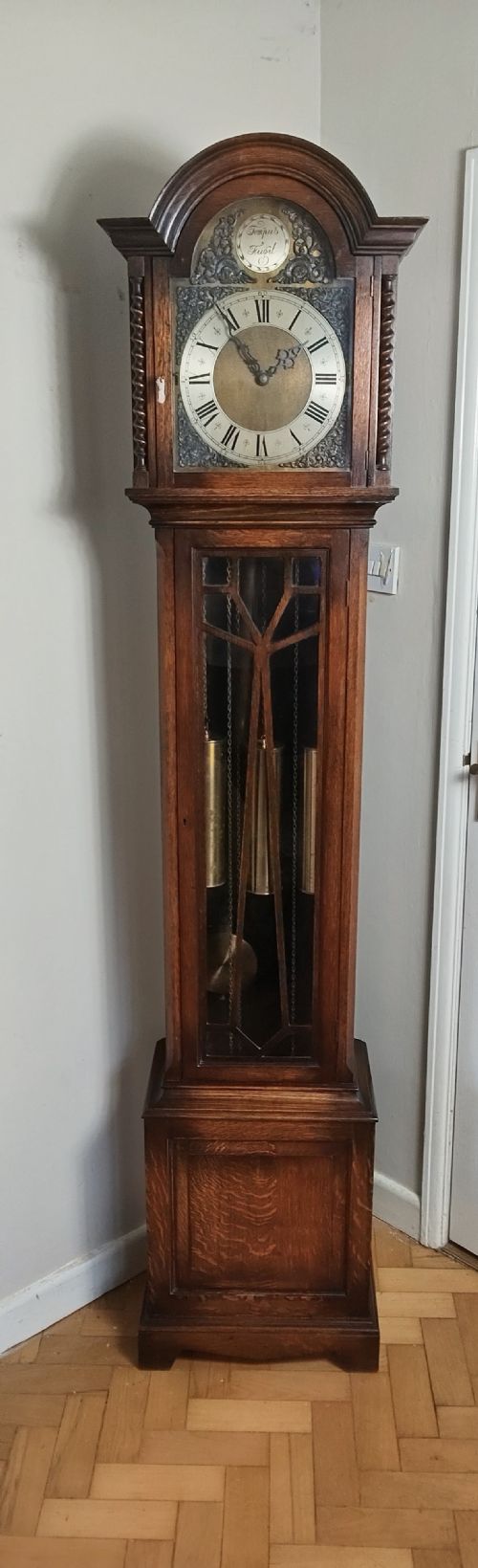
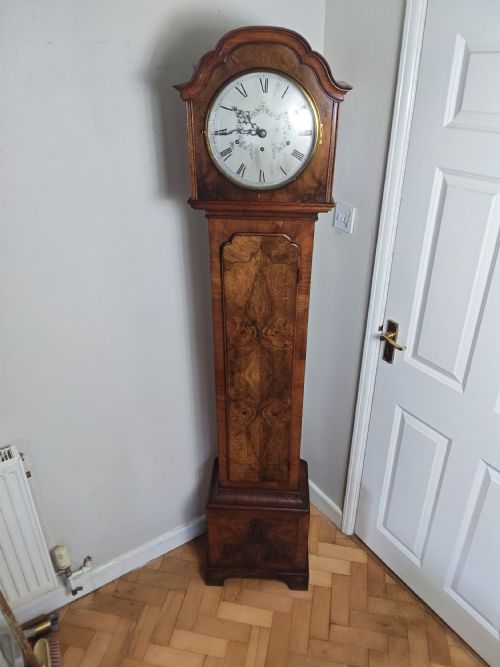
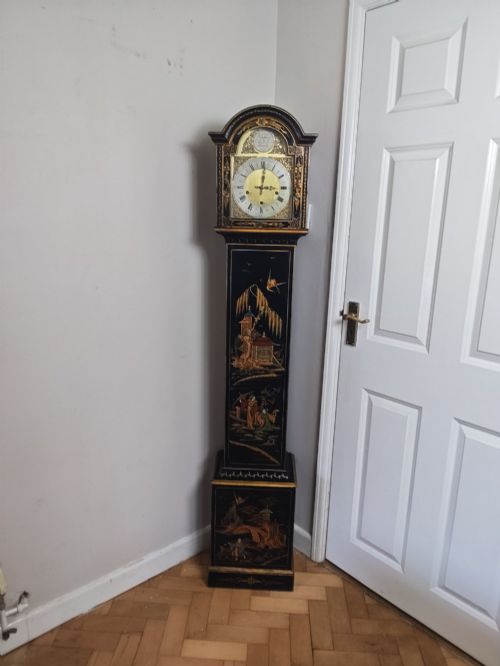
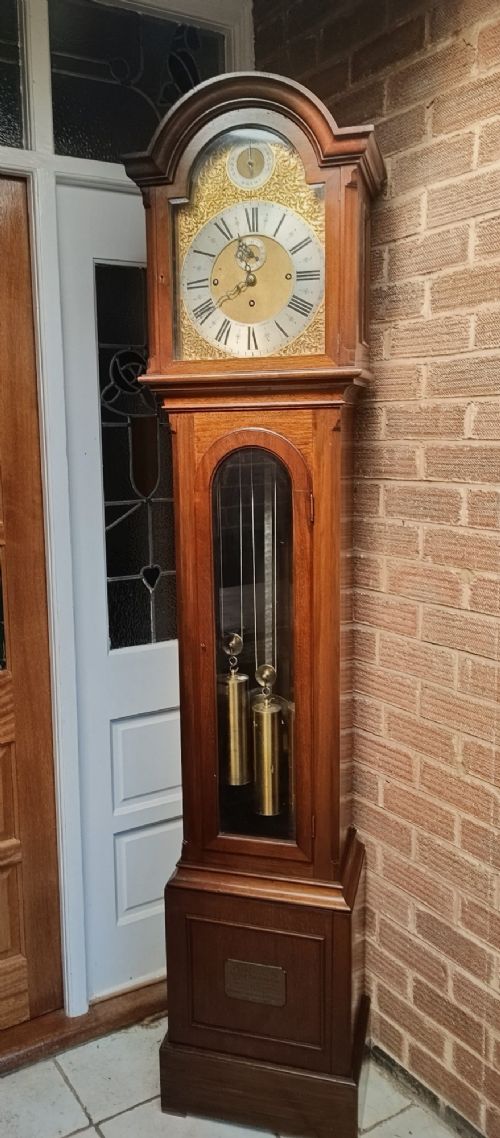
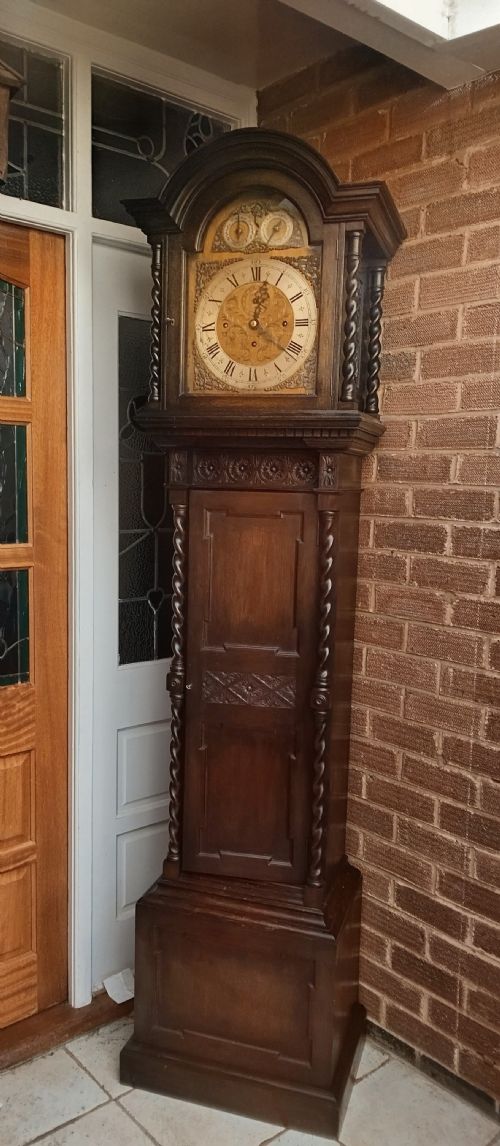
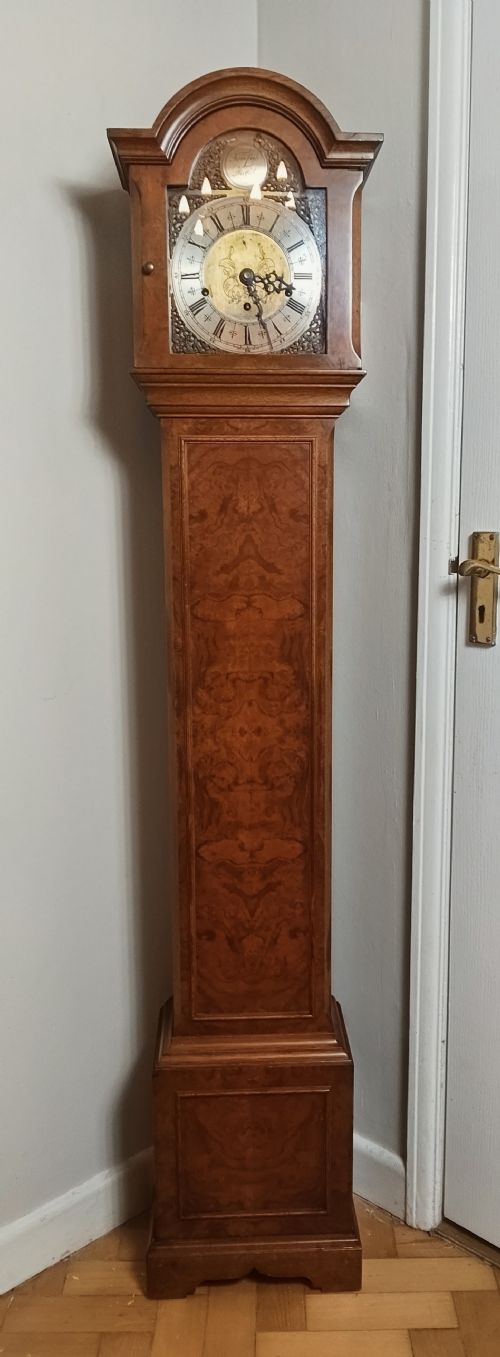
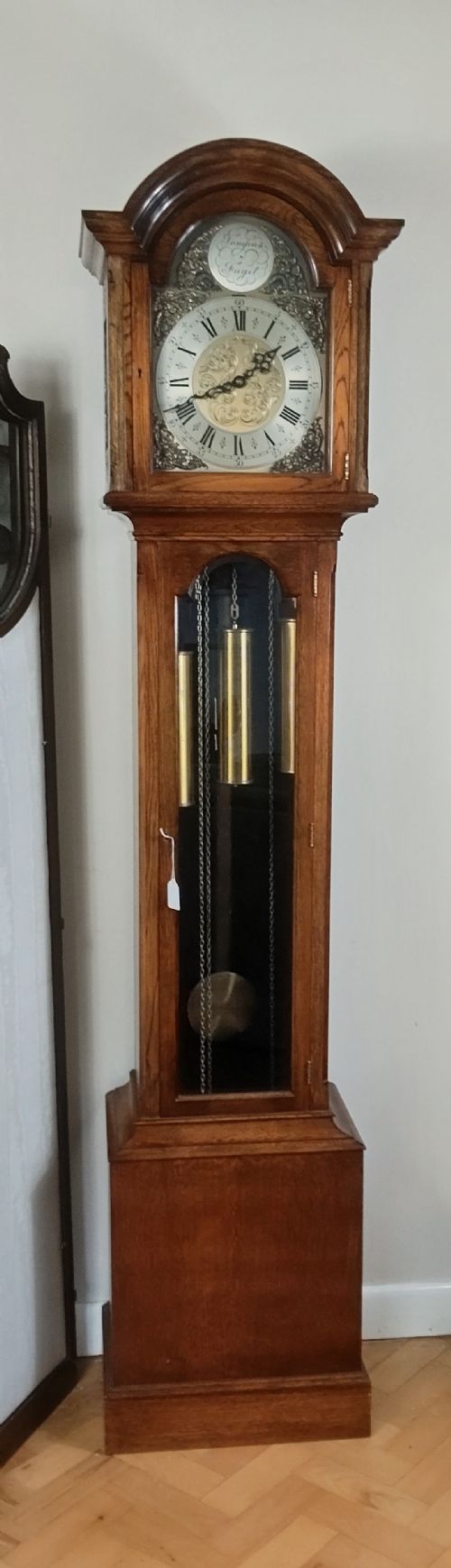
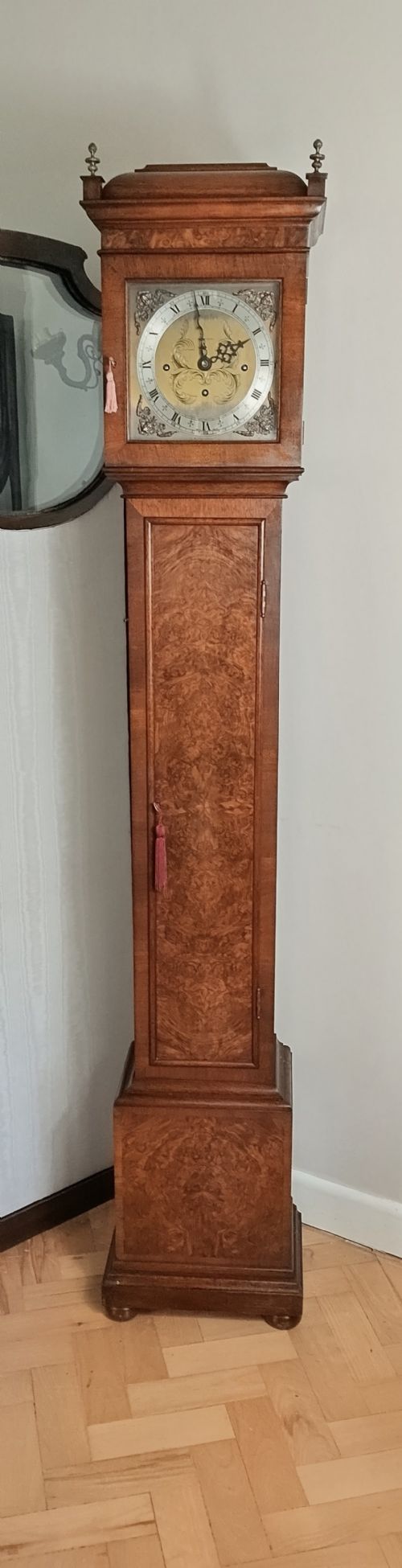
The selections available here range from robust Victorian and Edwardian oak or mahogany cases to lighter 1930s burr walnut editions and geometric Art Deco designs. Makers incorporated brass dials, glass panel doors, and specialised tubular bell or multi-hammer gong assemblies to produce resonant acoustic sequences.
Origins stretch from English workshops in Norwich and Croydon to German Black Forest production, reflecting shifting domestic tastes across the nineteenth and twentieth centuries. Buyers most frequently meet Edwardian and 1930s examples utilising quarter-chiming mechanisms and rich veneered casework.
Materials and construction methods
Cabinetmakers built the tall housings using solid timbers like oak and mahogany alongside decorative veneers such as burr walnut, occasionally incorporating intricate marquetry inlay or carved detailing. These wooden cases protect the delicate brass and steel gear trains while providing the acoustic resonance required for chiming movements.
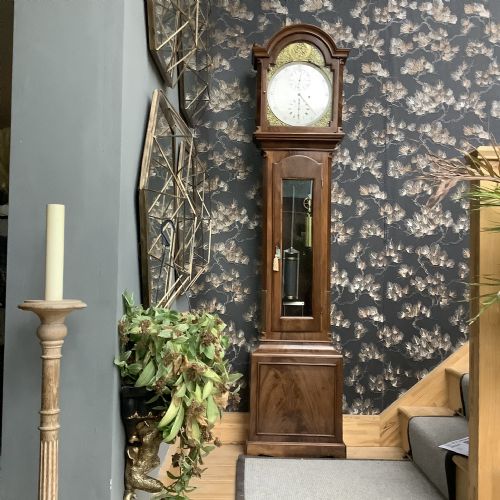
Horologists fitted intricate weight-driven or spring-driven mechanisms featuring multiple trains to power the going, striking, and musical or tubular bell sections. Glass doors allowed visibility of swinging pendulums while protecting the brass dials and graduated chapter rings from dust.
Periods represented span the nineteenth century, Victorian era, Edwardian years, and the 1920s to 1930s.
What separates the finest examples
Quality in these floor clocks rests upon the complexity and musical capability of the movement, moving from standard hour strikes up to nine tubular bells or multi-tune carillons. Elaborate mechanisms by specialist makers command attention through precise engineering and sustained acoustic clarity.
Cabinet work similarly dictates distinction, separating standard production cases from exhibition pieces featuring figured burr walnut veneers, quarter-veneering, or hand-carved mahogany details. The harmony between crisp dial engraving, well-proportioned woodwork, and rich chime tone defines the upper tier of the range.
Gillett & Johnston of Croydon·Winsor Bishop Norwich·Elliott·Bravingtons·Enfield·Lister & Sons
The Antique Chime Floor Clock Glossary
- Grandmother clock
- A smaller, more slender version of the traditional grandfather clock, usually produced during the Edwardian period and the early twentieth century. These shorter floor clocks suit domestic interiors with lower ceilings.
- Tubular bell movement
- A mechanical chime system utilising hanging metal tubes struck by hammers to produce deep, resonant notes. This configuration offers a richer acoustic output than standard wire gongs.
- Quarter chiming
- A movement function that sounds a melodic sequence every fifteen minutes followed by the full hour strike. Common sequences include Westminster and multiple tune variations.
- Burr walnut
- A highly decorative wood veneer harvested from walnut tree growths, displaying swirling, organic grain patterns. It was frequently utilised on high-grade twentieth-century clock cases.
- Regulator clock
- A precision timekeeper designed for high accuracy, often featuring a simplified dial and refined weight-driven movement. These pieces prioritize exact timekeeping over decorative complexity.
Antique Chime Floor Clock: Frequently Asked Questions
How do I wind an antique chime floor clock?
Winding requires using a specialised key to slowly raise the internal weights or tension the spring barrels according to the specific train layout. Care must be taken not to overwind the mechanism.
Most eight-day movements require weekly attention, while three-train setups control the timekeeping, striking, and chiming functions independently through separate winding holes on the dial.
Where should I place a floor clock at home?
Position the clock against a solid interior wall away from direct sunlight, central heating vents, and damp exterior walls to protect the timber and delicate movement. A stable floor ensures the pendulum swings evenly.
Allow sufficient clearance around the case to let the musical chimes project cleanly into the room without acoustic muffling from heavy surrounding furniture.
How do I tell an Edwardian floor clock apart from a 1930s piece?
Edwardian models frequently feature rich mahogany or solid oak framing with inlaid marquetry, brass dial spandrels, and traditional proportions influenced by earlier revival styles. Their aesthetic leans towards classic Edwardian craftsmanship.
Thirty pieces from the 1930s commonly showcase burr walnut veneers, streamlined Art Deco geometry, or minimalist modernist cases with simplified silvered dials and fewer exterior ornaments.
What is the difference between a grandfather and a grandmother clock?
Grandfather clocks are tall, substantial longcase timekeepers scaling heights of six feet or more, designed to dominate a grand hallway or principal reception room. Their scale accommodates heavy weights and large pendulums.
Grandmother clocks are significantly shorter and narrower proportions built to fit modest twentieth-century domestic spaces while retaining the mechanical complexity of quarter-chiming movements.