



Carved Wood Tall Clock
These carved wood tall clock pieces stand as monumental timepieces in any room, bringing mechanical precision and architectural presence together.
Carved Wood Tall Clock
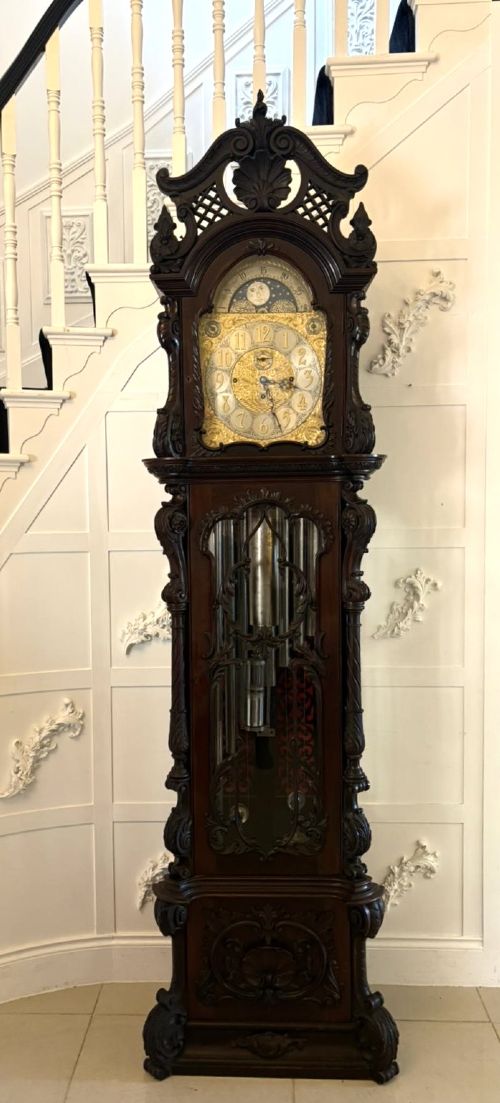
When you search for a carved wood tall clock, you encounter substantial floor-standing timepieces that dominate a room with their vertical proportions and timber construction. These floor clocks appear in forms such as longcase clocks, grandfather clocks, and clock cases.
The versions you are most likely to meet on this page span several distinct periods, including Georgian, 18th Century, Victorian, 19th Century, 1880, and 1920. Makers housed these movements in tall cases of oak, mahogany, walnut, rosewood, and occasionally mother-of-pearl.
Stylistic influences range widely across traditional English, Jacobean Revival, Victorian Gothic, and Qing Dynasty aesthetics. Some examples feature specific regional provenance, such as Chester or Scottish origins, while others showcase carved details depicting figures like a king.
How carved wood tall clock pieces were made
Cabinetmakers constructed the tall cases using solid timbers like oak and mahogany, often incorporating walnut and rosewood veneers or decorative mother-of-pearl inlays. The woodwork frequently includes hand-carved elements, ranging from Jacobean revival motifs to figurative carvings depicting historical figures.
Internal mechanisms combined brass and steel components to drive the striking trains and timekeeping gear trains. Glazed access doors protected the delicate dials while allowing visibility of the pendulum and weights within the trunk.
Listings feature oak, mahogany, walnut, and rosewood timbers across Georgian, Victorian, and 19th-century periods.
What varies in quality
The sophistication of the cabinetwork and the intricacy of the carving set exceptional examples apart from standard production. Master carvers executed detailed figurative work, such as representations of a king, whereas lesser pieces rely on repetitive machine routing or simpler applied mouldings.
The integration of the movement within the wooden housing also dictates overall merit. Comprehensive chime systems, such as nine-tube configurations, demand superior case acoustics and robust internal framing compared to standard eight-day movements.
Mappin & Webb London
The Carved Wood Tall Clock Glossary
- Longcase clock
- A tall, freestanding pendulum clock enclosed in a wooden case consisting of a hood, trunk, and base. These are frequently known colloquially as grandfather clocks.
- Drum head
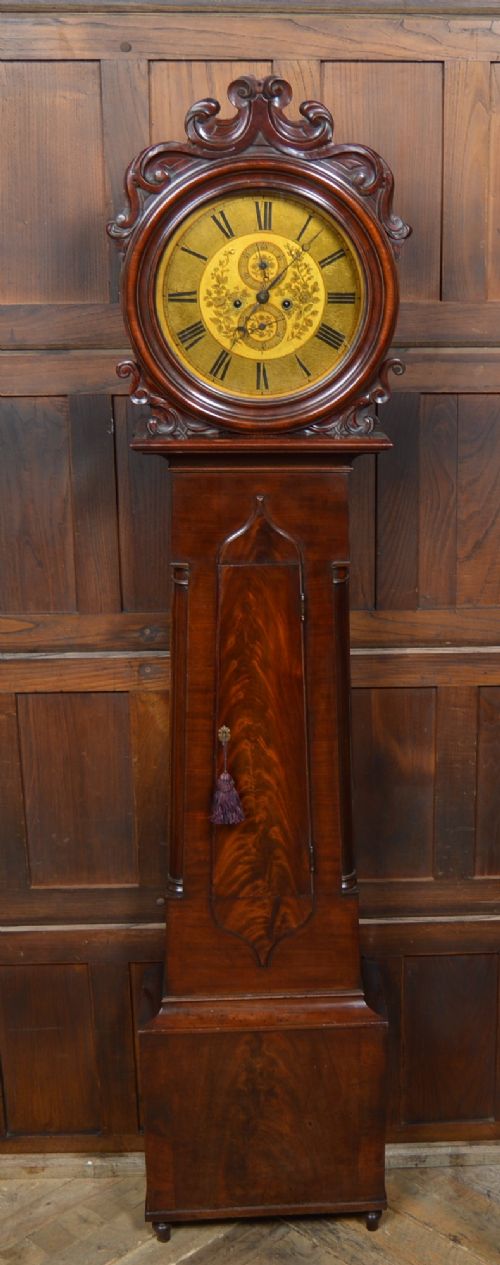
- A circular clock head design resembling a drum, seen on certain Scottish longcase examples. This form places the dial directly above the trunk without a traditional swan-neck pediment.
- Chiming movement
- A mechanical clock movement capable of playing musical tunes or quarter-hour melodies on bells, gongs, or metal tubes. Nine-tube variants represent the more complex end of this spectrum.
- Hood
- The upper glazed section of a tall clock that encloses and protects the dial and movement. It usually lifts off or swings open on hinges to allow access to the hands and motion work.
- Trunk
- The central vertical shaft of a tall clock case that houses the hanging weights and swinging pendulum. The timber grain and carved decoration on this section define much of the visual character.
Carved Wood Tall Clock: Frequently Asked Questions
What is a carved wood tall clock?
A carved wood tall clock is a floor-standing timepiece housed within a tall wooden case, designed to protect a weight-driven pendulum movement.
These pieces combine functional horology with architectural cabinetry, serving as both timekeepers and major furniture items in domestic interiors.
How do I identify a Georgian tall clock?
Georgian tall clocks typically exhibit proportions and timber selections characteristic of the eighteenth century, frequently utilising oak or mahogany.
Examining the construction methods inside the trunk and the style of the dial helps distinguish these earlier pieces from later nineteenth-century revivals.
Where were these clocks placed?
These tall clocks stood in hallways, stairwells, or principal reception rooms where their height and striking chimes could resonate through the house.
Their vertical format made them suitable for spaces with high ceilings where standard wall or mantel clocks lacked presence.
How do Scottish tall clocks differ?
Scottish tall clocks often feature regional design variations, such as the distinctive drum head formation seen on certain nineteenth-century mahogany examples.
Local cabinetmakers in centres like Edinburgh or regional towns applied specific regional aesthetic preferences to the proportions and hood designs.
What materials make up the cases?
Makers constructed the cases primarily using native and imported hardwoods, with oak and mahogany appearing most frequently across the surviving examples.
Some pieces incorporate walnut, rosewood, or decorative mother-of-pearl accents alongside brass and steel components within the dial and movement.