



Victorian Carved Tall Clock
These Victorian carved tall clock pieces combine grand scale with intricate woodwork, offering a commanding presence and time-honoured mechanics for any interior.
Victorian Carved Tall Clock
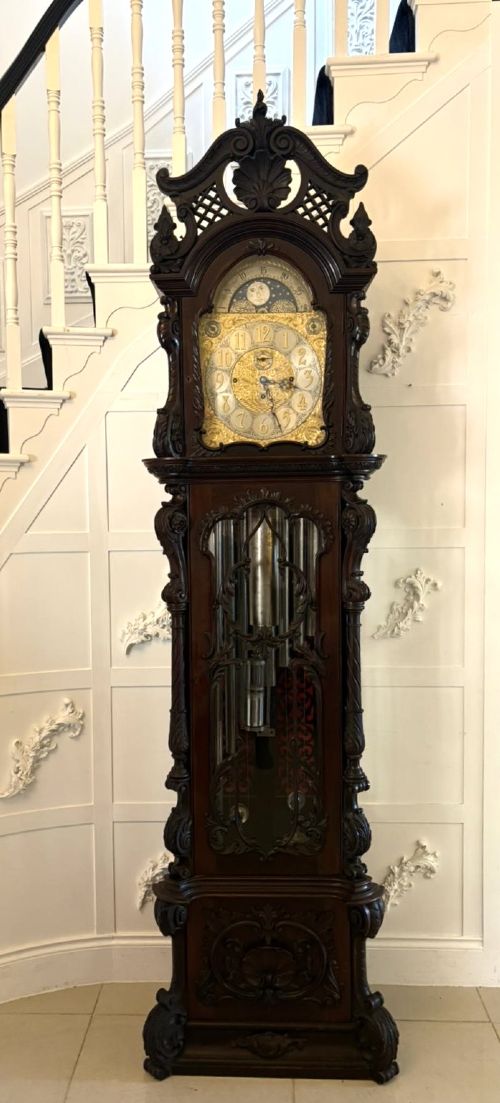
A victorian carved tall clock is a substantial floor-standing timepiece designed to house complex weight-driven movements within a fitted timber case. These pieces typically take the form of longcase or grandfather clocks, standing upright to display both the dial and the swinging pendulum.
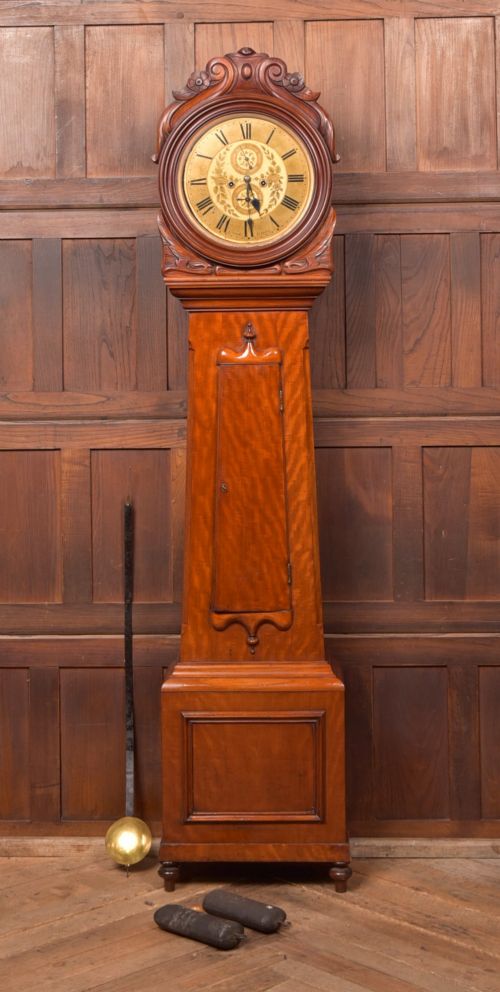
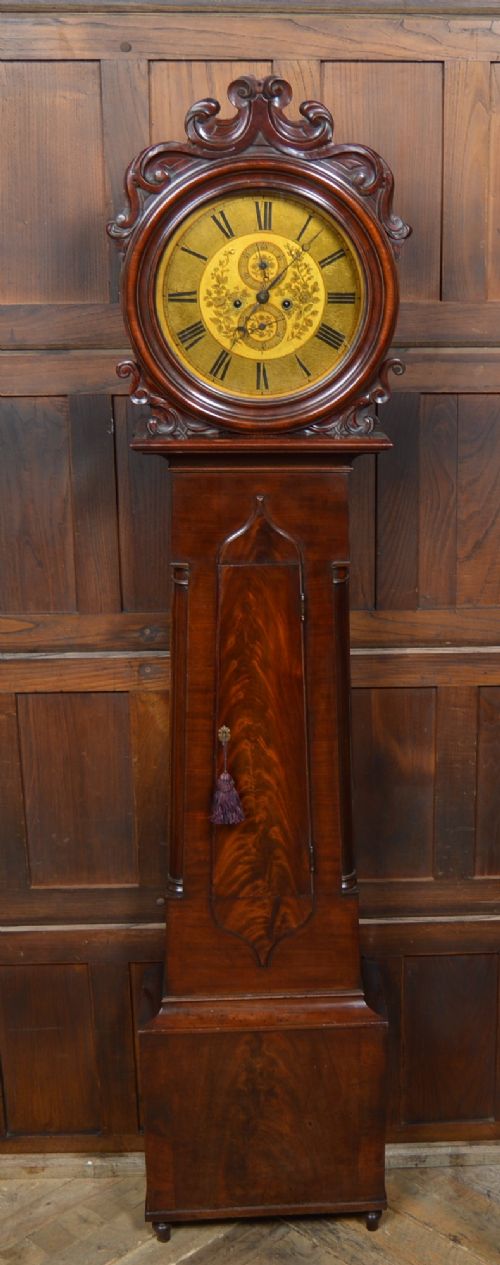
The versions most commonly met on this page span the nineteenth century and the Edwardian era, featuring regional British variations notably from Scottish workshops. Mahogany and oak serve as the primary woods, often enriched with carved details and inlay work.
How they were made
Cabinetmakers constructed the tall cases using solid timbers such as mahogany and oak, joining the wood to withstand the tension of heavy weights and swinging pendulums. Skilled artisans then applied hand-carved ornamentation and inlay work directly to the wood surfaces.
Clockmakers fitted brass, steel, and iron internal components, incorporating chime mechanisms, musical cylinders, or fusee movements behind glass-fronted dials. Cases often integrated distinct regional traits, from Scottish drumhead designs to Gothic-influenced woodwork.
What varies in quality
The refinement of the hand carving and the crispness of the timber joinery set the finest examples apart from standard production. Superior pieces display deeply articulated woodwork and carefully proportioned cases that harmonize with the scale of the dial.
Complexity of movement also dictates distinction, as nine-tube chiming systems and three-train musical trains demand greater mechanical skill than simpler eight-day setups. The integration of quality brass fittings and well-preserved glass doors further elevates the standard.
Andrew Thom·David Craig Ford Path head
The Victorian Carved Tall Clock Glossary
- Longcase clock
- A tall pendulum clock enclosed in a wooden case that stands directly on the floor. This term is often interchanged with grandfather clock.
- Fusee
- A conical pulley used in clock movements to maintain an even pull as the mainspring unwinds. This mechanism ensures more accurate timekeeping.
- Drumhead clock
- A style featuring a circular dial housing set atop a tall wooden trunk. This regional form appears frequently in Scottish examples.
- Chiming movement
- A mechanical system that sounds the hours and quarters using gongs, bells, or tubes. Nine-tube variations represent more elaborate configurations.
Victorian Carved Tall Clock: Frequently Asked Questions
How do I wind a tall clock?
Winding requires raising the weights inside the waist door using a specialised key inserted into holes on the dial face. Care must be taken not to overwind the mechanism.
Different movements require different intervals, ranging from daily to weekly winding routines depending on the train configuration.
Where should I place a tall clock?
Position the piece against a sturdy interior wall away from direct sunlight, heating vents, and damp areas to protect the timber and internal mechanics. A level floor ensures the pendulum swings evenly and the clock keeps accurate time.
Allow sufficient clearance above and around the case for pendulum movement and routine maintenance access.
What is the difference between a grandfather and grandmother clock?
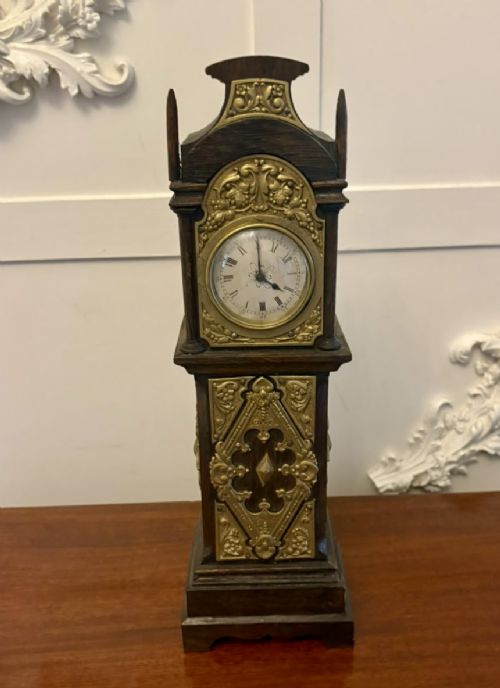
Grandfather clocks are full-sized tall case timepieces typically standing over six feet high, while grandmother clocks are scaled-down versions usually measuring under six feet.
Both share similar mechanical principles and timber construction methods but differ significantly in height and floor footprint.
How do I identify a Scottish tall clock?
Scottish examples frequently feature distinct case proportions, specific wood choices like native oak or locally finished mahogany, and characteristic dial configurations such as the drumhead shape.
Regional cabinetmaking traits and recorded maker signatures on the dial often provide clear attribution to Scottish origins.