


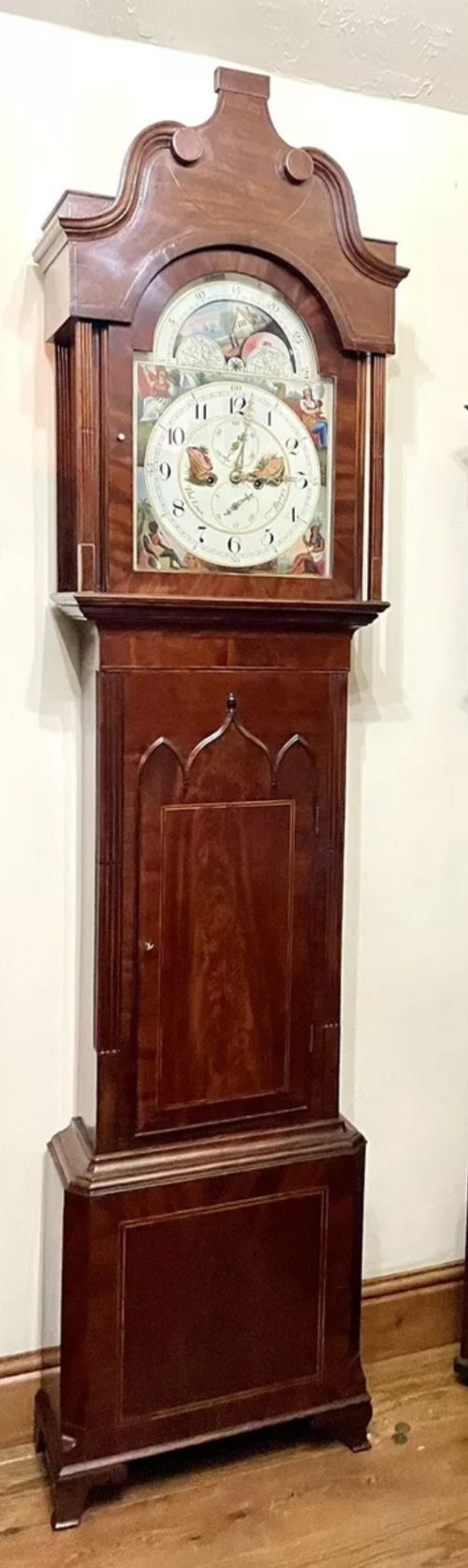


Traditional English Horology
Traditional English horology brings mechanical timekeeping into the room through brass movements and timber cases spanning several centuries.
Traditional English Horology
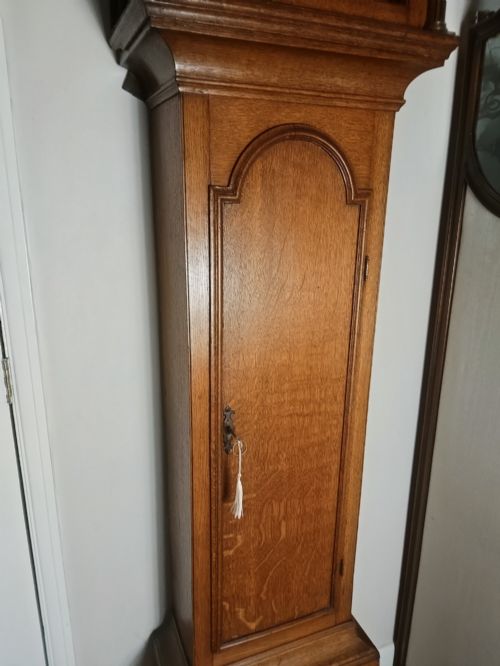
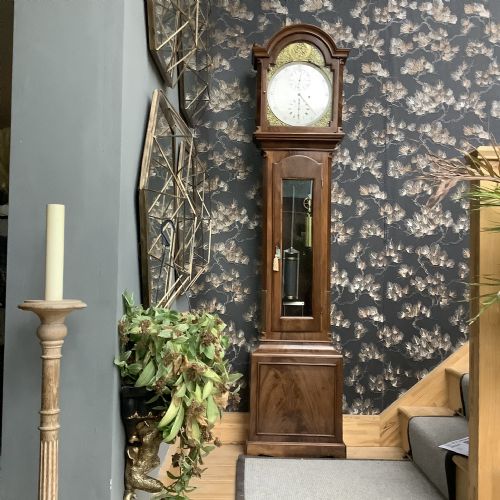
Traditional English horology encompasses clocks produced across the seventeenth, eighteenth, nineteenth, and early twentieth centuries. These timepieces take forms such as longcase grandfather clocks, bracket clocks, lantern clocks, and wall dials. Buyers seeking this phrase look for functional mechanical pieces that reflect specific periods of British craftsmanship.
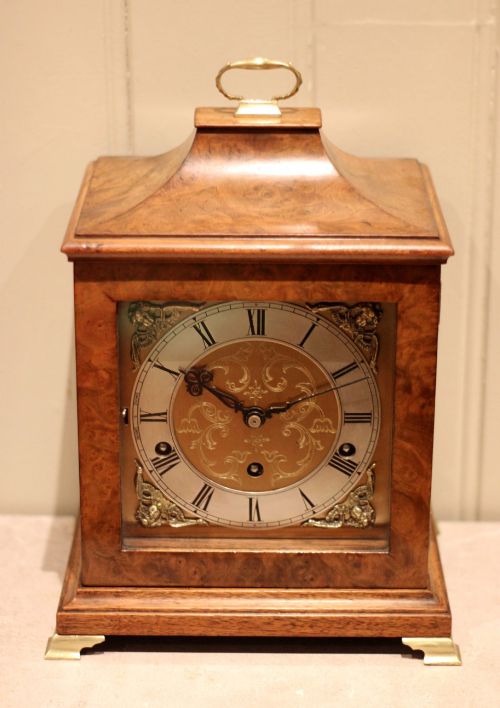
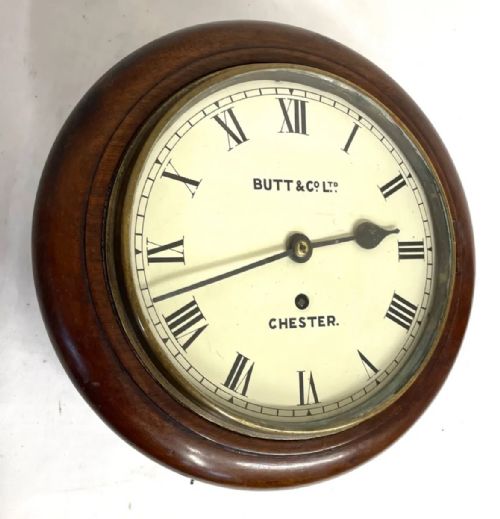
The items found here range from early provincial lantern clocks to refined Victorian fusee wall dials and George IV bracket clocks. Oak and mahogany predominate among the timber cases, housing brass movements designed to mark the hours, quarters, or minutes. Each piece ties mechanical utility directly to historical cabinet-making traditions.
How they were made
Horologists utilised brass for gears, dials, and movement plates, pairing these metallic components with robust timber cases. Cabinet makers constructed these housings using mahogany, oak, and walnut, frequently applying burr walnut veneer to decorative surfaces. Glass protected the delicate dials of bracket and wall clocks.
Movements relied on fusee mechanisms, weight drives, or springs to regulate the release of energy through the gear train. Makers incorporated steel for springs and arbors, ensuring the precision of the strike or chime. Dial faces featured engraved brass, painted wood, or porcelain chapters.
Listings feature longcase, bracket, lantern, and wall clocks spanning the seventeenth to the twentieth centuries in oak, mahogany, and walnut.
What varies in quality
Quality in traditional English horology rests on the precision of the mechanical movement and the integrity of the cabinet work. Finer examples display meticulous hand-engraving on brass dial plates and robust fusee movements designed to maintain consistent tension. The selection of timber veneers and the crispness of mouldings distinguish superior cases.
Makers known for exceptional work integrated quarter-striking complications, moon phases, or strike-silent functions into their movements. The reputation of the horologist recorded on the dial often correlates with the sophistication of the internal mechanism. Lesser pieces rely on simpler time-only trains and standard commercial production methods.
Mappin & Webb·John Spershott·L Vick·John Witherston·Henry Massy·Connell·Henry Deykin·Thomas Lees·Herbert of Haversham·Osborn of Bognor Regis·Barraud and Lunds·Wenham and Son·Webster
The Traditional English Horology Glossary
- Fusee
- A conical pulley used in clock movements to maintain even force on the gear train as the mainspring unwinds. This device ensures more consistent timekeeping throughout the running period.
- Lantern clock
- An early brass chamber clock driven by weights, featuring an open bell at the top and hanging feet. These small domestic clocks date back to the seventeenth century.
- Bracket clock
- A portable spring-driven clock originally designed to sit on a wall bracket or table. They frequently feature carrying handles on their wooden cases.
- Longcase clock
- A tall weight-driven clock housed in a wooden case designed to protect the pendulum and weights. Often called a grandfather clock.
- Moon phase
- A dial mechanism tracking the lunar cycle through a rotating disc showing the phases of the moon. This complication appears on select eighteenth and nineteenth-century longcase dials.
Traditional English Horology: Frequently Asked Questions
What is a fusee movement?
A fusee movement uses a conical drum and cord to equalise the power of the mainspring as it unwinds. This mechanical arrangement delivers steady force to the escapement for greater accuracy.
Such movements appear frequently in better quality bracket and wall clocks from the eighteenth and nineteenth centuries.
How do I wind a longcase clock?
Longcase clocks are typically wound by pulling the chains or using a crank key to raise the internal weights. Care must be taken not to overwind the mechanism when the weights reach the top.
Consulting the specific requirements of the movement prevents damage to the gutlines and internal gears.
Where were lantern clocks placed?
Lantern clocks originated as domestic timepieces placed on wall brackets to allow the weight cords to drop freely. Later examples sometimes utilised spring drives that permitted placement on tables.
Their open brass frames and top-mounted bells made them prominent functional objects in early homes.
How do I identify a Georgian clock?
Georgian clocks feature timber cases in oak, mahogany, or walnut reflecting the furniture styles of the eighteenth century. Dials often combine brass chapter rings with engraved spandrels or painted white faces.
Inscriptions on the dial face commonly record the maker and town of origin from this era.