


Antique Electric Clock
These antique electric clock designs bridge the gap between early electrical engineering and striking twentieth-century domestic style, offering collectors mechanical ingenuity housed in handsome period cases.
Antique Electric Clock
When searching for an antique electric clock, you encounter early electrical timepieces spanning from the Edwardian era through the Art Deco period and into the mid-century. These range from domestic mantel clocks and wall clocks to large factory and station timepieces designed for public spaces.
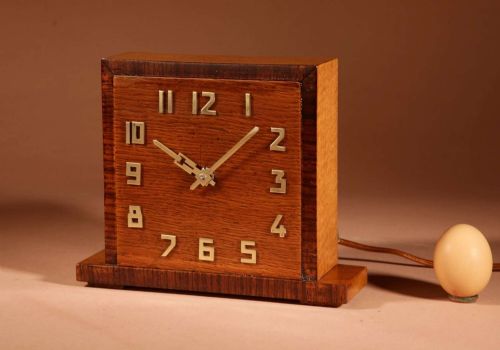
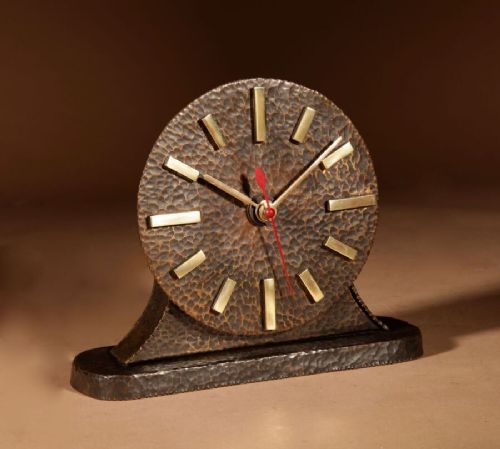
The version you are most likely to meet on this page is an Art Deco mantel clock or an industrial wall clock produced during the 1920s or 1930s. Such pieces frequently combine electrical movements with traditional cabinetry or contemporary metalwork.
Makers and designers of the period experimented with forms including octagonal wall dials, glass domes protecting delicate skeleton movements, and distinctive architectural timber cases. Each format reflects the transition from weight-driven and spring-driven mechanisms to early battery and mains-powered systems.
Materials and construction
Makers housed these early electrical movements inside cases constructed from oak, mahogany, walnut, and rosewood, often pairing timber with glass domes or brass bezels. Industrial models utilise steel, chrome, and hammered patinated brass alongside blue glass and Bakelite.
Craftsmen applied distinct regional styles, ranging from Amsterdam School woodwork to French industrial brasswork and English factory utilitarian design. The integration of early electrical wiring and magnetic pendulums required precise housing to protect the sensitive internal components from dust and damage.
Certain glass dome models let you watch the electric heartbeat pulse away in plain sight.
Distinctions in quality
Quality in these timepieces rests upon the originality of the movement and the sophistication of the case design. Finer examples retain their original glass domes, signed dials, and untouched cabinetry, whereas lesser pieces may have suffered unsympathetic modern replacements.
Maurice & Marcel Moulin Favre-Bulle·Smiths Clocks·Rene Lalique·Gents of Leicester
The Antique Electric Clock Glossary
- Bulle clock
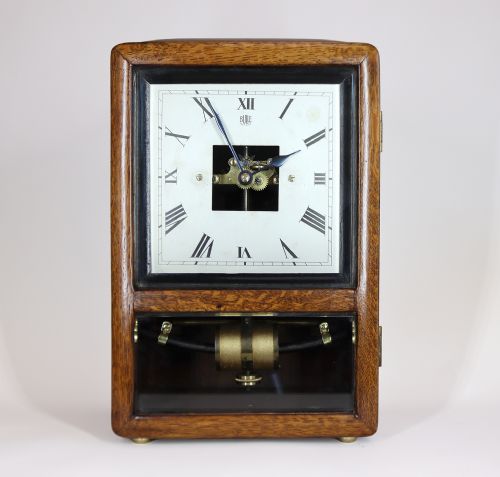
- An early electric clock utilising a battery-driven magnetic pendulum invented by Marcel Bulle. These movements became popular in domestic mantel designs during the 1920s.
- Skeleton clock
- A timepiece with openwork plates that reveal the gear train and electrical components to view. These are frequently displayed beneath protective glass domes.
- Master clock
- A central time-keeping device used in factories, hospitals, and stations to control a network of slave dials across a building.
- Mystery clock
- A decorative timepiece where the mechanism driving the hands is concealed or appears to operate without a visible connection, often housed in glass.
- Station clock
- A large, robust wall or double-sided clock designed for public transit environments, prioritising clear legibility and durable metal cases.
Antique Electric Clock: Frequently Asked Questions
How do early electric clocks work?
These movements rely on early battery power or low-voltage electrical currents to maintain the swing of a pendulum or drive the gear train, replacing traditional mainsprings.
Inventors like Marcel Bulle patented systems where an electric pulse impulses the pendulum directly, offering a fascinating glimpse into early domestic electrification.
Are these clocks suitable for daily use?
Many examples are restored to working order, though fragile internal wiring and delicate early mechanisms mean they require careful handling and appropriate power sources.
Collectors often run them intermittently or appreciate them primarily as historical kinetic sculptures rather than primary household timekeepers.
How do I identify an Art Deco model?
Art Deco pieces from the 1920s and 1930s typically feature geometric timber cases in oak, walnut, or rosewood, sometimes accented with blue glass, chrome, or brass.
The dial numerals and case silhouettes embrace streamlined modernity, marking a sharp departure from earlier Edwardian or Victorian ornamentation.
What is a master clock system?
Master clocks were precision instruments installed in large institutions like hospitals and factories to synchronise numerous subsidiary wall dials simultaneously.
These industrial survivors are prized for their utilitarian robustness, bold dials, and substantial metal or oak housings.