


Smiths Art Deco Clock
A smiths art deco clock brings geometric clarity and period materials into a room, offering functional timekeeping rooted in twentieth-century design.
Smiths Art Deco Clock
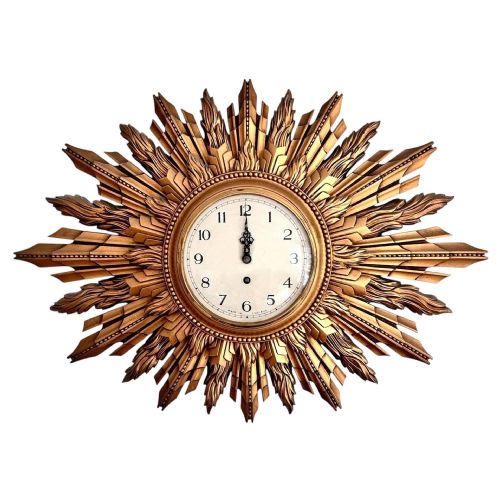
A smiths art deco clock represents British manufacturing from the twentieth century, focusing primarily on the 1930s alongside occasional later examples from the 1940s and 1960s. These pieces span wall clocks, large hospital clocks, and compact mantel clocks designed for domestic and commercial spaces.
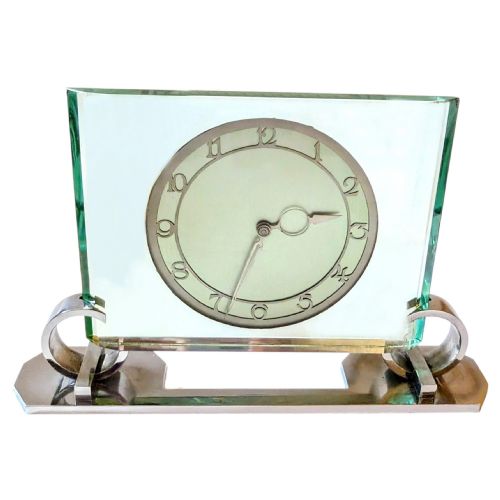
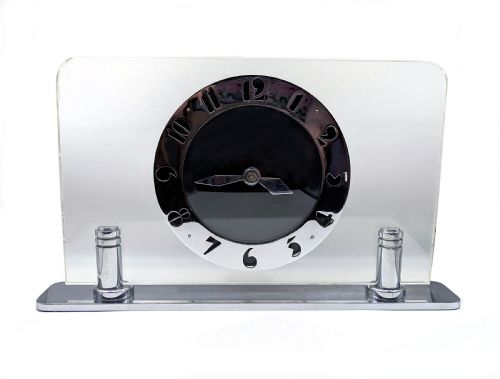
The objects combine modernist principles with practical timekeeping formats, utilising mechanical 30-hour and 8-day movements alongside early electric mechanisms. Common domestic versions feature architectural glass panels and easel stands suited for desks and mantelpieces.
Materials and Construction
Makers combined polished chrome, brass, and heavy cast metals with coloured and mirrored glass to achieve the signature aesthetic of the period. Peach, green, blue, and rose glass panels were cut and mounted onto metal chassis to create reflective depth.
Movements ranged from traditional wind-up mechanical calibres to innovative electric mechanisms, including mystery clocks where hands appeared to float without visible gears. Bakelite and early plastics also appeared in casings, offering durable moulded housings for electric coils.
Some travel models squeezed entire mechanical movements into pocket-sized leather folding cases.
Quality Variations
The standard of a clock rests on the crispness of the metal finishing and the integrity of the glass panels, where bevelled edges and unblemished mirror surfaces elevate the piece. Heavy cast bezels and substantial brass components indicate superior original manufacture compared to lighter mass-market alternatives.
Mechanical complexity also divides the range, distinguishing standard wind-up movements from intricate 8-day jewelled escapements or specialised electric mystery configurations. The retention of original dials, matching hands, and intact coloured glass panels determines the overall integrity of an example.
Smiths Clockmakers·Smiths Clock Company·Smiths Clocks Ltd·A.L. Davenport·The Sheffield Goldsmiths Co
The Smiths Art Deco Clock Glossary
- Sectric
- An electric clock movement produced by Smiths during the mid-twentieth century. These synchronous motor systems operated directly from mains electricity.
- Mystery clock
- A timepiece where the hands appear unsupported on a transparent glass dial. The movement uses hidden glass discs to transmit motion from the base.
- Bakelite
- An early synthetic thermosetting plastic used for durable moulded clock cases. It provides a dense, glossy housing typical of industrial production.
- Escapement
- The mechanical linkage that regulates the speed of a clock by controlling the release of power from the mainspring. Jewelled versions include synthetic rubies to reduce friction.
- Mantel clock
- A freestanding clock designed to sit on a fireplace mantel or shelf. These pieces typically feature decorative brass and glass housings.
Smiths Art Deco Clock: Frequently Asked Questions
How do electric Smiths clocks work?
These electric models utilise synchronous mains movements designed to keep time directly from alternating current frequency rather than a traditional mainspring.
Collectors often find these fitted with modern cords for safe everyday use while preserving the original internal motor.
How do I date a Smiths clock?
Dating relies on stylistic markers such as peach or green mirrored glass, modernist numerals, and the presence of Sectric electric branding from the 1930s.
Later pieces from the 1940s and 1960s often adopt simpler geometric layouts and alternative materials like polished wood.
Were these clocks made in England?
Production took place primarily in English factories, with many movements and casings stamped accordingly on the dials or rear plates.
Domestic manufacturing during this era emphasised robust chrome plating and heavy glass construction.