


Retro Mantel Timepiece
A retro mantel timepiece brings functional geometric elegance to a surface, offering period design through glass, chrome, and rich woods.
Retro Mantel Timepiece
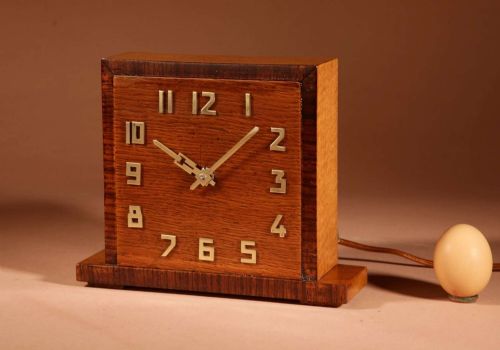
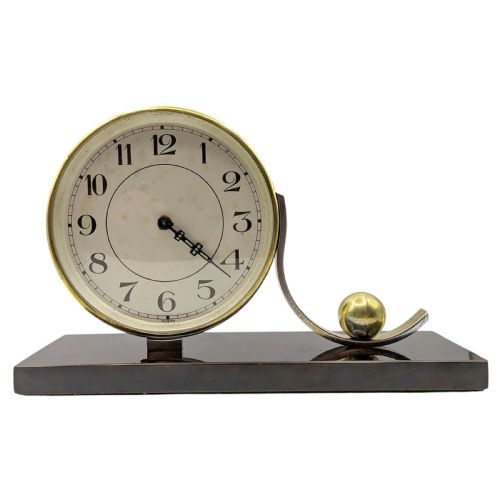
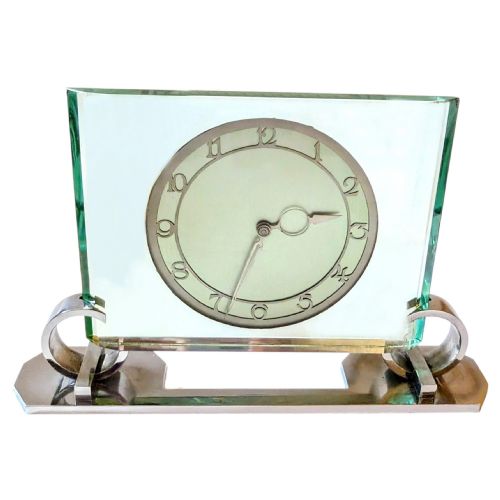
A retro mantel timepiece spans the decorative movements of the twentieth century, focusing heavily on Art Deco and Mid-Century Modern designs. When searching for a retro mantel timepiece, buyers encounter striking clocks intended for desks, tables, and mantelpieces.
The selections on this page draw from the 1920s, 1930s, 1940s, 1950s, and 1960s, reflecting shifts in interior taste from geometric wooden cases to streamlined industrial metals. Most pieces originate from English workshops or continental makers, spanning domestic living spaces and specialised environments like officers' messes and garages.
Forms range from compact desk clocks to substantial mantel clocks, utilising materials such as marble, brass, and bakelite. Buyers find both mechanical movements requiring manual winding and early electrical or battery-driven systems.
Materials and construction
Cases combine traditional cabinet timbers like oak, walnut, and rosewood with industrial innovations like moulded bakelite, chrome, and brass. Glass protects the dials, sometimes paired with mirrored surfaces or heavy French marble.
Movements vary from standard thirty-hour and eight-day mechanical calibres to fifteen-jewel mechanisms and early electrical systems. Makers housed these movements within geometric wooden veneers or polished metal housings designed for tabletop stability.
Listings span five decades from the 1920s to the 1960s, uniting domestic mantel designs with military and automotive promotional pieces.
What separates the standard
Quality rests in the precision of the dial execution, the selection of case materials, and the sophistication of the movement. Pieces featuring multi-tone timbers, heavy marble, or complex mechanical components sit higher in the range than simpler promotional items.
The reputation of the maker and the preservation of original finishes dictate the standing of an individual clock. Complete mechanisms with documented maker signatures distinguish finer examples from standard production pieces.
Smiths Clockmakers·Elliott of London·Jaeger LeCoultre·Imhof·A.L. Davenport·Blangy
The Retro Mantel Timepiece Glossary
- Art Deco
- A design style dominant in the 1920s and 1930s characterised by geometric shapes, streamlined forms, and modern industrial materials. It defines the aesthetic of the majority of pieces in this category.
- Bakelite
- An early form of synthetic plastic used extensively for clock cases during the mid-twentieth century. Its durable moulded properties allowed for curved, planar, and colourful geometric designs.
- Movement
- The internal mechanical or electrical mechanism that drives the clock hands and measures time. Movements in these listings range from simple thirty-hour variants to complex eight-day and fifteen-jewel configurations.
- Mystery clock
- A timepiece where the mechanism driving the hands is concealed or rendered visually obscure, often giving the impression of floating hands. This clever design creates a focal point on a mantelpiece.
- Mantel clock
- A portable clock designed to stand on the shelf or mantel above a fireplace. These forms prioritise decorative front facades and clear dial visibility from a seated position.
Retro Mantel Timepiece: Frequently Asked Questions
How do I wind an eight day clock?
An eight-day clock requires winding approximately once a week using a matching key inserted into the dial holes. Care must be taken not to over-wind the mainspring.
Consistent winding maintains proper tension and ensures accurate timekeeping across the week.
Where should I place a desk clock?
Desk clocks suit flat surfaces in studies, living rooms, and hallways where they can be viewed closely. Stable placement prevents vibrations that might disrupt mechanical movements.
Keep them away from direct sunlight and damp environments to protect wooden veneers and metal finishes.
What is the difference between a mantel clock and a desk clock?
Mantel clocks generally feature larger, heavier cases built to anchor a fireplace shelf or large sideboard. Desk clocks are typically more compact, intended for writing surfaces and smaller tables.
Both categories utilise similar mechanical movements and aesthetic styles from the mid-twentieth century.
How do I identify an Art Deco clock?
Art Deco clocks display symmetrical geometric patterns, stepped architectural cases, and stylised numerals on the dial. Materials often include contrasting woods, chrome, mirrored glass, and bakelite.
These pieces reflect the design vocabulary of the 1920s and 1930s, prioritising modern industrial lines over traditional ornamentation.