


1930s Smiths Clock
A 1930s Smiths clock brings genuine modernist design and reliable British engineering directly into a room, offering both practical timekeeping and striking geometric style.
1930s Smiths Clock
When you search for a 1930s Smiths clock, you encounter timepieces that reflect the bold, forward-looking aesthetic of the interwar period. These pieces originate primarily from the 1930 and 1940 periods, capturing the essence of Art Deco and industrial design.
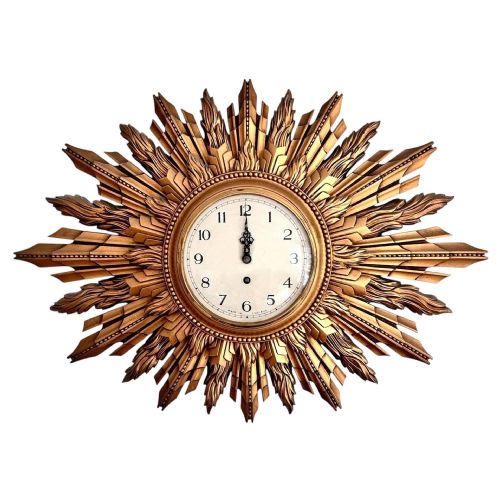
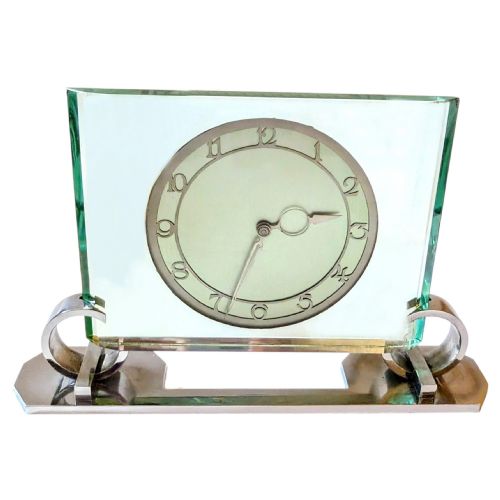
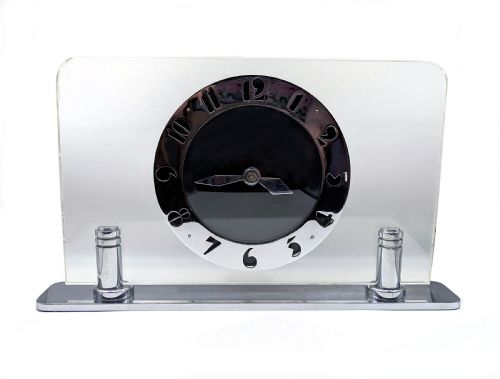
The selections available here range widely in form, spanning compact mantel clocks for the home to large wall clocks designed for schools, hospitals and factories. You will frequently meet mantel clocks, wall clocks and specialised designs such as star burst, mystery and easel clocks.
These clocks embody the manufacturing output of English clockmakers during a period of rapid stylistic change. They bridge the gap between domestic decorative arts and functional industrial equipment, making them versatile additions to various interior spaces.
How they were made
Makers utilised a diverse palette of materials typical of the interwar industrial shift, combining traditional metals with emerging synthetics. Chrome, brass and standard metal form the durable chassis and bezels, often paired with moulded dark bakelite for cases and wall surrounds.
Construction techniques balanced mass production efficiency with decorative flair, evident in the crisp lines of modernist mantel pieces and the robust builds of factory wall clocks. The integration of transparent elements and contrasting metallic finishes demonstrates a careful consideration of contemporary visual tastes.
The inventory records both traditional 8-day wind-up movements and early electric Sectric systems from the 1930 and 1940 periods.
What varies in quality
The distinction between standard production items and finer examples rests largely on the ambition of the design and the sophistication of the materials. Pieces featuring specialised configurations, such as mystery dials or star burst frames, demonstrate greater craftsmanship than standard utilitarian timepieces.
Material selection also plays a significant role in distinguishing the range, with coloured or mirrored glass and refined chrome plating elevating the visual presence of a mantel clock. The complexity of the movement, whether an 8-day wind-up or an early electric mechanism, adds another layer of distinction among surviving examples.
Smiths Clockmakers·Smiths Clock Company·Smiths Clocks·A.L. Davenport
The 1930s Smiths Clock Glossary
- Bakelite
- An early form of synthetic plastic used extensively for durable, moulded clock cases throughout the period. It allowed manufacturers to produce smooth, curved Art Deco silhouettes.
- Sectric
- The trademarked name for synchronous electric clocks introduced by Smiths, operating directly from mains electricity. This technology revolutionized household timekeeping by removing the need for regular winding.
- Mystery clock
- A timepiece where the hands appear to move without any visible mechanical connection to the movement, often achieved through transparent glass dials. These novelty designs remain highly sought after by collectors.
- Star burst
- A decorative wall clock style featuring rays or points radiating outwards from a central dial, embodying dramatic modernist geometry. This format makes a strong visual statement in any room.
- Easel clock
- A portable timepiece supported by a hinged back prop, designed to stand upright on desks or mantelpieces. They offer a neat, decorative footprint for smaller surfaces.
1930s Smiths Clock: Frequently Asked Questions
How do I wind a mechanical 1930s Smiths clock?
Most wind-up models utilise a key inserted into the dial or rear access panel to tension the mainspring.
Take care not to over-wind the mechanism, stopping as soon as you feel firm resistance to ensure the longevity of the gear train.
Are electric Sectric clocks safe to plug in?
Many surviving electric models retain their original wiring and synchronous motors designed for older voltage standards.
It is wise to have a qualified professional inspect the electrical components before connecting them to a modern mains supply.
Where should I place a heavy wall clock?
Large factory and hospital models require sturdy wall fixings anchored directly into solid masonry or stud work.
Ensure the hanging bracket securely supports the weight of the metal case and glass bezel before leaving the clock unsupported.
How do I distinguish between an original 1930s piece and a later reproduction?
Examine the materials closely for authentic period indicators, such as genuine bakelite casing, period typography on the dial and traditional mechanical or early electric fixings.
Construction methods and the natural patination of chrome and brass often reveal the genuine interwar origins of the piece.