


1930s Smiths Mantel Clock
A 1930s smiths mantel clock brings striking geometric lines and industrial materials directly onto the mantelpiece.
1930s Smiths Mantel Clock
A 1930s smiths mantel clock is a domestic timekeeper shaped by the prevailing Art Deco and Modernist aesthetic of the period. These pieces sit on a mantelpiece or desk, driven by mechanical wind-up movements or early electric mechanisms.
The versions most commonly met on this page belong squarely to the 1930 and 1940 periods. They display distinctive architectural silhouettes that reflect the British design output of the era.
Makers such as Smiths Clockmakers and Smiths Clock Company produced these timepieces in various formats, including easel clocks and see-through designs. They combine utility with the decorative ambition characteristic of interwar interiors.
How they were made
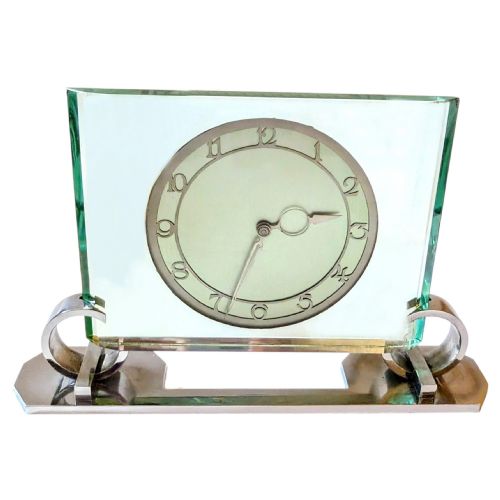
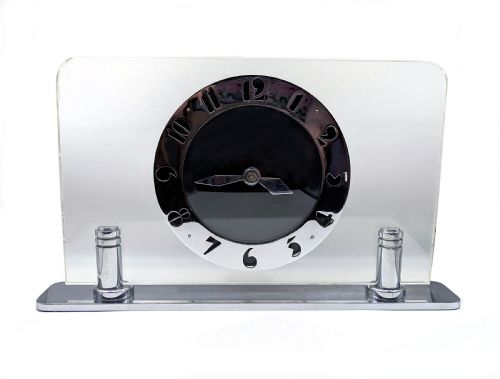
Makers constructed these clocks using a palette of glass, chrome, metal, bakelite, mirror glass, and brass. Transparent and reflective surfaces define the outer casing, paired with sturdy metal internal framing.
Wind-up mechanical movements and electric systems power the dials, housed behind curved or flat glass panels. Artisans mounted these components within stepped or streamlined enclosures typical of Modernist design.
Some dials manage to look entirely transparent, leaving guests to wonder how the hands stay up.
What varies in quality
The distinction between standard examples and finer pieces lies in the complexity of the housing and the choice of facing materials. Peach mirror glass or coloured glass panels require precise cutting and setting compared to plain metal casings.
The sophistication of the dial layout and the presence of specialised housing, such as mystery clock configurations or easel stands, elevate the construction standard across the range.
Smiths Clockmakers·Smiths Clock Company·A.L. Davenport
The 1930s Smiths Mantel Clock Glossary
- Art Deco
- A design style characterised by sleek geometric shapes, streamlined forms, and modern industrial materials. It dominated decorative arts throughout the interwar decades.
- Bakelite
- An early synthetic plastic valued for its durability and smooth finish in interwar manufacturing. Makers utilised it extensively for clock casings and electrical fittings.
- Mystery clock
- A timepiece where the movement mechanism is obscured or hidden, creating the illusion of hands moving without mechanical support. These dials often utilise transparent glass plates.
- Wind up
- A mechanical mechanism powered by a mainspring that requires manual key tensioning to operate. It represents the traditional method of powering domestic mantel clocks before widespread electrification.
1930s Smiths Mantel Clock: Frequently Asked Questions
How do I wind a mechanical clock?
Insert the appropriate key into the winding arbor on the dial or back plate and turn it gently until resistance is felt. Avoid over-winding to protect the interwar mainspring.
Ensure you match the correct key size to the square shaft to prevent slipping and wear on the brass components over time.
Are these clocks electric or mechanical?
The listings feature both wind-up mechanical movements and early electric configurations. Each type relies on the technology available during the interwar manufacturing period.
Electric variants require appropriate wiring checks before use, while mechanical versions depend entirely on manual spring tension for operation.
Where were these clocks manufactured?
British workshops and factories produced these timepieces, often bearing specific attribution to English production on the dial or casing. Regional hubs outputted diverse designs ranging from standard mantel formats to specialty easel pieces.
Local manufacturing standards ensured consistent integration of metal bezels and glass components within the domestic market.
How should I clean the glass and chrome?
Wipe mirror glass and chrome surfaces gently with a soft, dry lint-free cloth to remove dust. Avoid harsh chemical sprays that might degrade vintage metallic platings or seep into the movement housing.
Take care around painted numerals and delicate bezel rims when maintaining the exterior finish of the clock.