






Edwardian Mahogany Timekeeper
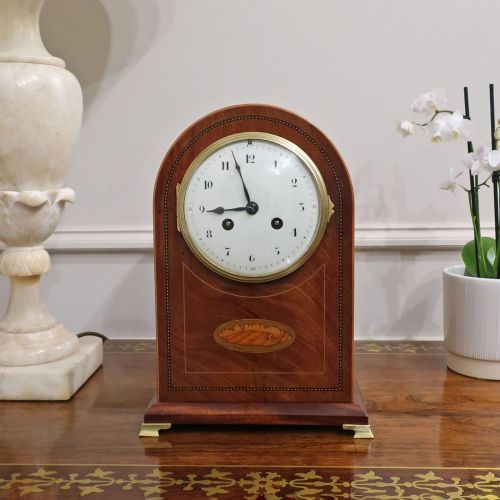
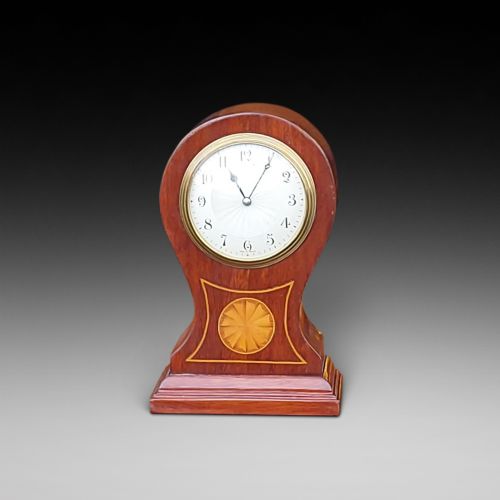
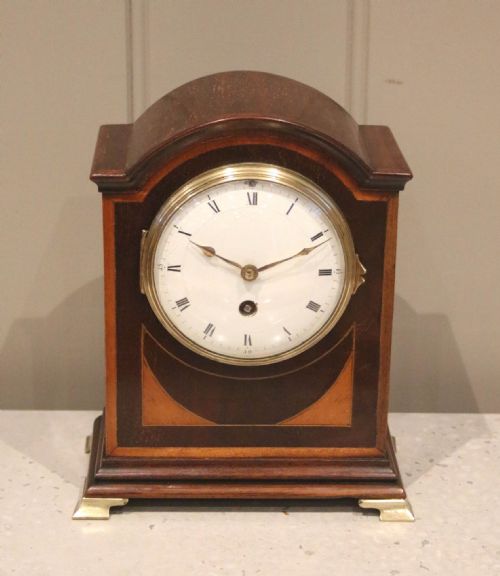
These pieces are Edwardian mahogany timekeeper examples, combining rich timber and precise mechanism to anchor a room.
Edwardian Mahogany Timekeeper
An edwardian mahogany timekeeper takes the form of a mantel clock, wall clock, or desk clock produced during the early twentieth century. Most examples found here sit on mantels or hang upon walls, built from rich timber with varied dial designs.
The dominant style on this page spans Edwardian production alongside Victorian and Belle Epoque transitional pieces. Makers housed these movements in architectural wooden cases, ranging from simple dome tops to richly inlaid surfaces.
Buyers seek these timekeepers for their blend of domestic utility and cabinetry craftsmanship. They bring period character to modern interiors through warm wood tones and traditional dial faces.
How they were made
Workshops built these cases using solid mahogany, frequently embellished with satinwood inlay or marquetry decoration. Glazed bezels protect enamel dials, whilst brass components form the structural framework of the internal movements.
Cabinets feature architectural shapes, including dome tops and bracket styles, constructed by skilled joiners. Dial faces incorporate Arabic or Roman numerals behind protective glass, paired with delicate metal hands.
Listings feature mahogany, brass, glass, enamel, and satinwood across Edwardian, Victorian, and Belle Epoque periods.
What varies in quality
The refinement of the timber and the intricacy of the inlay separate standard production from superior pieces. Finer examples display carefully matched grain patterns and precise marquetry rather than simple painted decoration.
Movement sophistication also dictates the tier of the piece, distinguishing standard eight-day mechanisms from single fusee configurations. The crispness of the brass fittings and the quality of the enamel dial complete the assessment.
W. Burton·Dent of London
The Edwardian Mahogany Timekeeper Glossary
- Fusee
- A conical pulley used in clockmaking to maintain even tension on the train as the mainspring unwinds. This mechanism improves the timekeeping accuracy of the clock.
- Mantel clock
- A portable clock designed to sit on the shelf above a fireplace. These domestic timepieces often feature decorative wooden cases.
- Inlay
- A technique where pieces of contrasting timber such as satinwood are inserted into the mahogany surface. This creates decorative patterns across the front of the case.
- Enamel dial
- A metal clock face coated with fused glass powder to create a smooth white surface. Numerals are then painted onto this durable background.
- Drop dial wall clock
- A wall-mounted timepiece featuring an extended case below the dial to accommodate a swinging pendulum. These were common in offices and hallways.
Edwardian Mahogany Timekeeper: Frequently Asked Questions
Where should I place a mantel clock?
These timepieces suit mantelpieces, sideboards, or deep shelves where their wooden cases can be appreciated.
Ensure the surface is level so the pendulum swings evenly and keeps accurate time.
How do fusee clocks work?
A fusee movement uses a spiral-grooved cone to equalise the declining power of the mainspring.
This traditional mechanical system ensures steady force is delivered to the gear train throughout the winding cycle.
How do I wind an eight day clock?
Use the designated key in the winding holes on the dial face to tension the internal springs.
Turn the key gently until resistance increases, taking care not to overwind the mechanism.
What is satinwood inlay?
Satinwood inlay involves setting pale, yellow-toned timber into recesses carved into darker mahogany cases.
This contrasting decorative work became popular during the Edwardian period to highlight architectural lines.