





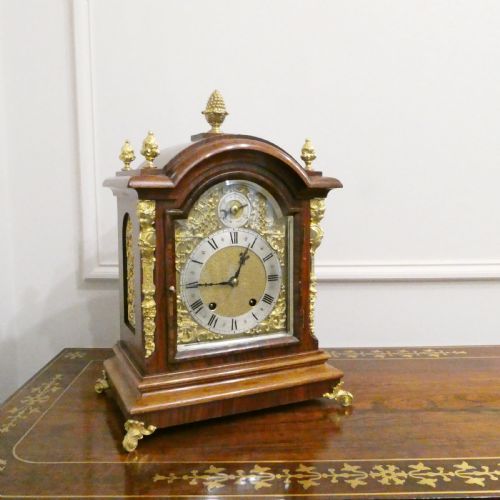


Mahogany Mantle Clock
A mahogany mantle clock brings architectural presence and mechanical precision to a desk, shelf, or table, drawing on centuries of cabinet-making skill.
Mahogany Mantle Clock
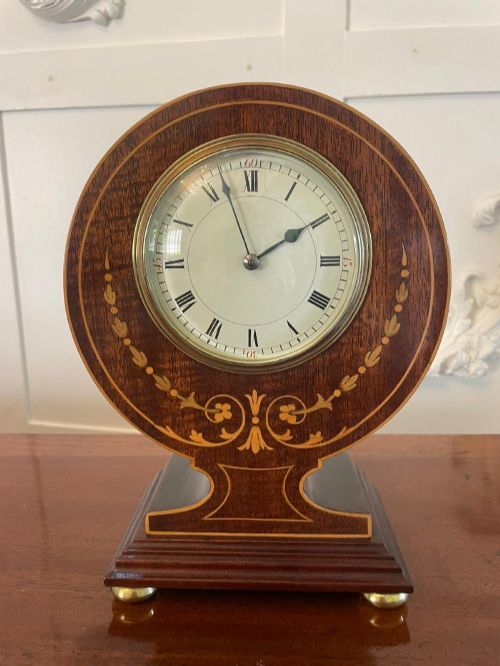
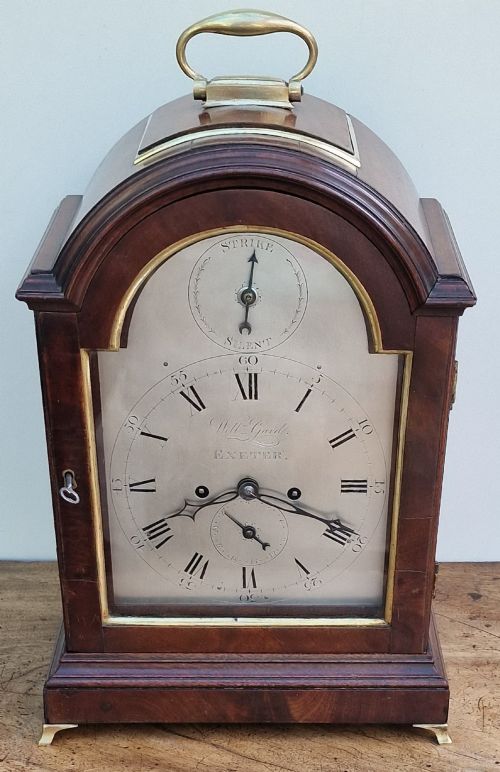
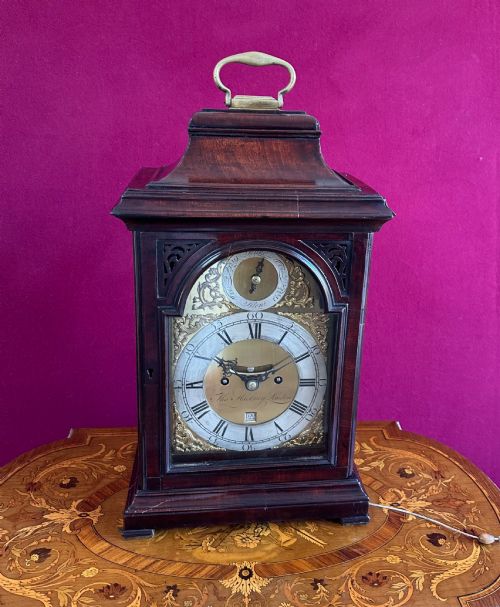
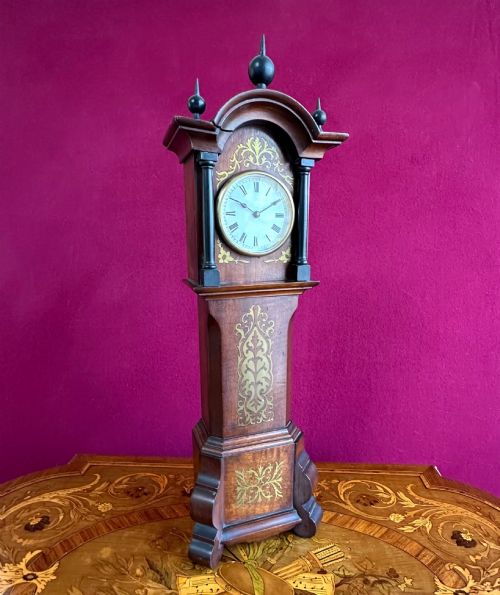
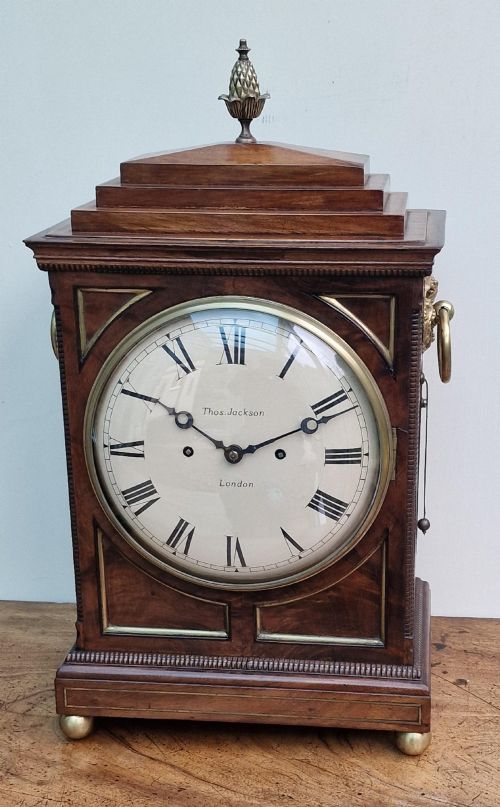
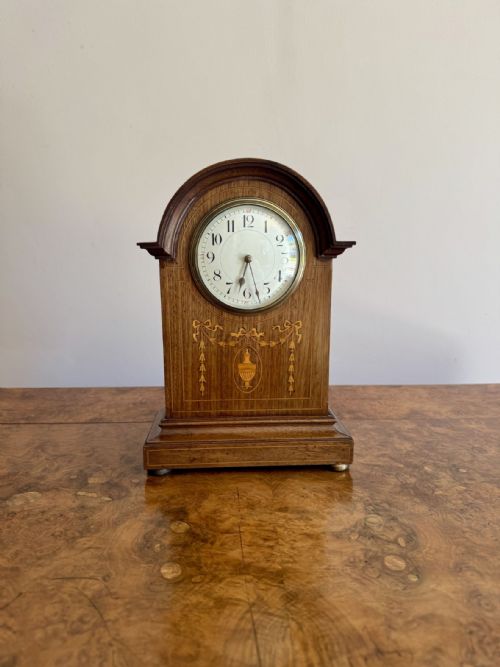
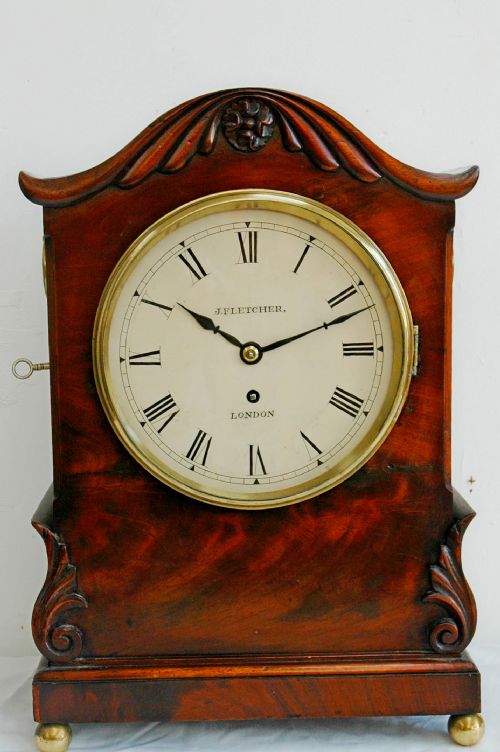
A mahogany mantle clock encompasses timepieces designed for domestic interiors, ranging from architectural bracket clocks to balloon-shaped mantel pieces. When exploring this selection, a buyer encounters domestic timekeepers spanning the Georgian, Regency, Victorian, and Edwardian periods.
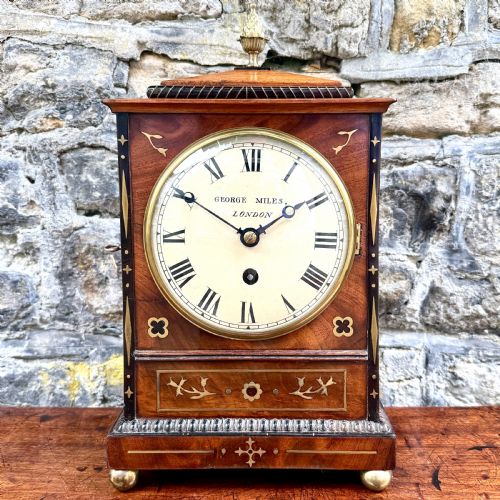
The assortment on this page draws heavily on Edwardian and Regency examples, alongside Georgian bracket clocks and later twentieth-century productions. These pieces reflect shifting domestic tastes, moving from formal library and bracket designs to decorative inlaid mantel timepieces.
Materials and Construction
Cabinet makers utilised dense timber foundations, frequently selecting mahogany and encrusting the surfaces with satinwood or boxwood inlay to create visual contrast. Brass mounts, ormolu details, and enamel dials complement the timber cases.
Movements rely on mechanical ingenuity, incorporating fusee mechanisms, verge escapements, and striking trains designed for eight-day operation. Glass panels protect the dials, allowing the inner workings to remain visible while shielding delicate hands.
Listings feature mahogany timepieces spanning the eighteenth, nineteenth, and early twentieth centuries, encompassing Georgian, Regency, Victorian, and Edwardian design idioms.
Distinctions in Execution
The refinement of cabinet work separates standard production from exceptional examples, observed in the precision of stringing, the harmony of timber grain, and the grace of case silhouettes like pad tops and break arches. Finer pieces display meticulous marquetry and balanced proportions that speak to the maker's hand.
Mechanical complexity and signature provenance elevate certain items, particularly those housing signed fusee movements or intricate chiming trains by established makers. The legibility of painted enamel dials and the crispness of brass fittings further indicate the tier of craftsmanship.
William Gard·Mappin And Webb·George Orpwood·L Vick·Webster Cornhill·Thomas Moss·Cording Of London·Piggin Norwich·Perigal And Duterrau·Seikosha Seiko·Chater And Son·Schneckenburger·John Meredith·Winterhalder And Hofmeier
The Mahogany Mantle Clock Glossary
- Bracket clock
- A portable domestic clock historically designed to sit upon a dedicated wall bracket or table. These spring-driven pieces often feature elaborate wooden cases with carrying handles.
- Fusee
- A conical pulley used in mechanical clocks to maintain an even pull on the driving chain as the mainspring unwinds. This mechanism ensures consistent timekeeping accuracy.
- Verge escapement
- An early type of clock escapement that controls the release of gear trains through a crown wheel and pallet arrangement. It is characteristic of mid-eighteenth-century movements.
- Inlay
- The technique of embedding contrasting strips or shapes of wood, such as satinwood or boxwood, into the mahogany surface to form decorative patterns.
- Ting-tang
- A striking mechanism that sounds two different notes on bells or gongs to mark the passing of the quarters or half-hours.
Mahogany Mantle Clock: Frequently Asked Questions
What is a fusee movement?
A fusee movement uses a conical pulley connected to the mainspring by a fine chain or cord. This clever design compensates for the diminishing power of the spring as it unwinds.
By regulating the tension evenly, the mechanism helps the clock maintain steady and accurate time over its running period.
How do I wind my clock?
Winding requires a dedicated key inserted into the winding holes on the enamel dial, turning gently until resistance is felt. Care should be taken not to overwind the mainspring.
Most traditional pieces operate on an eight-day cycle, meaning weekly attention keeps the mechanical train running smoothly.
Where should I place a bracket clock?
A sturdy shelf, mantelpiece, or dedicated wall bracket provides a stable surface free from excessive vibration. Level placement is essential for the pendulum or balance wheel to beat evenly.
Keeping the timber away from direct heat sources and strong sunlight preserves the polished mahogany finish and delicate veneer work.
How do I identify an Edwardian piece?
Edwardian timepieces often favour lighter decorative touches, featuring generous satinwood and boxwood inlay upon rich mahogany surfaces. Balloon shapes and arched case designs are particularly common from this era.
Maker signatures on the dial or movement backplate often help confirm the production period alongside the stylistic traits of the case.