

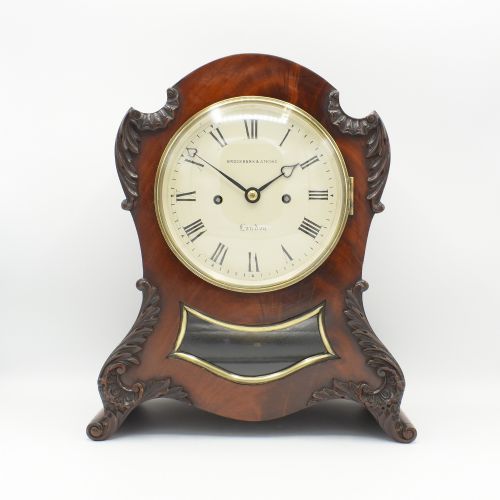
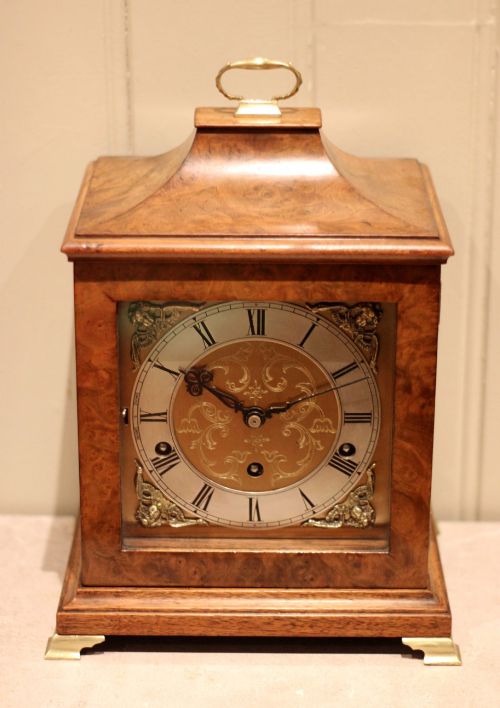
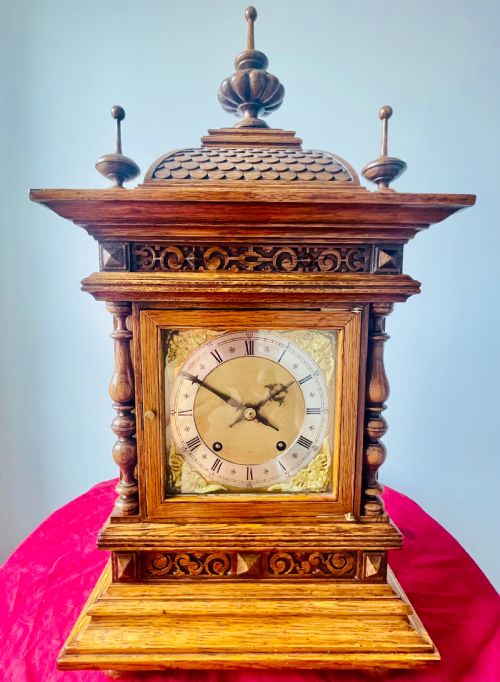
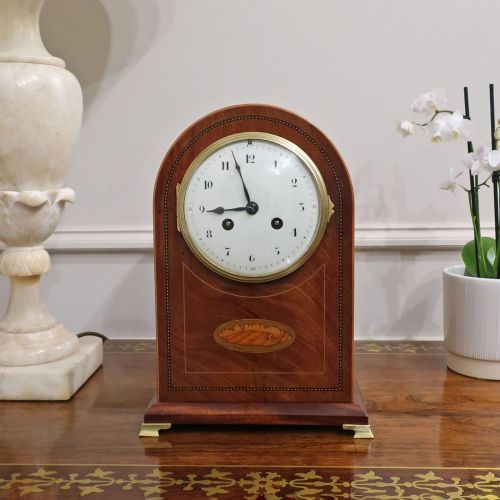


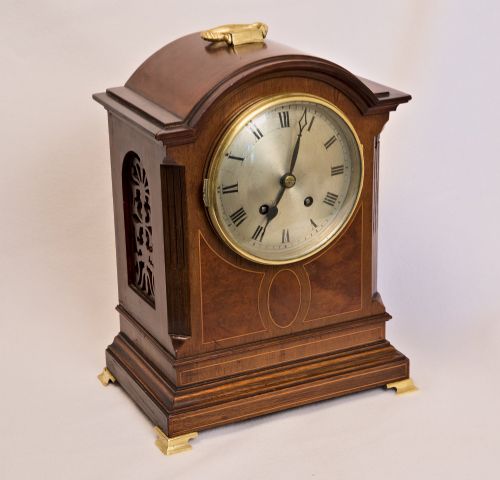


Traditional Chiming Mantel Clock
A traditional chiming mantel clock anchors a room with mechanical precision and resonant sound, drawing the eye to fitted timber and polished brass.

Traditional Chiming Mantel Clock
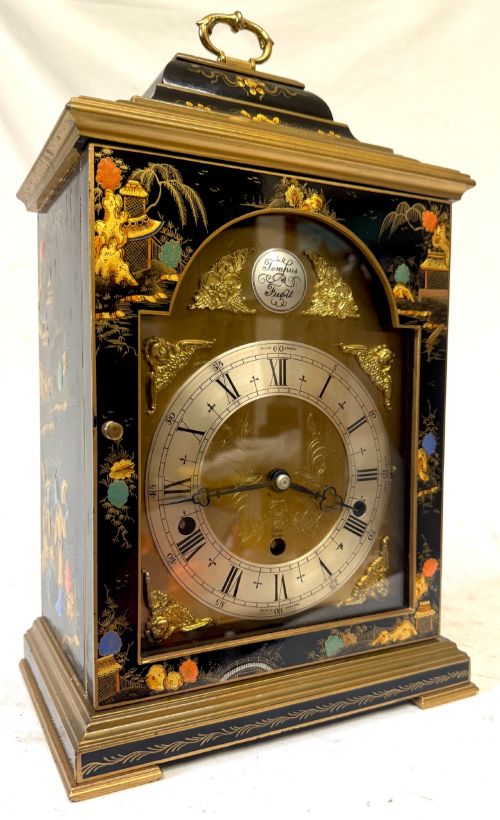
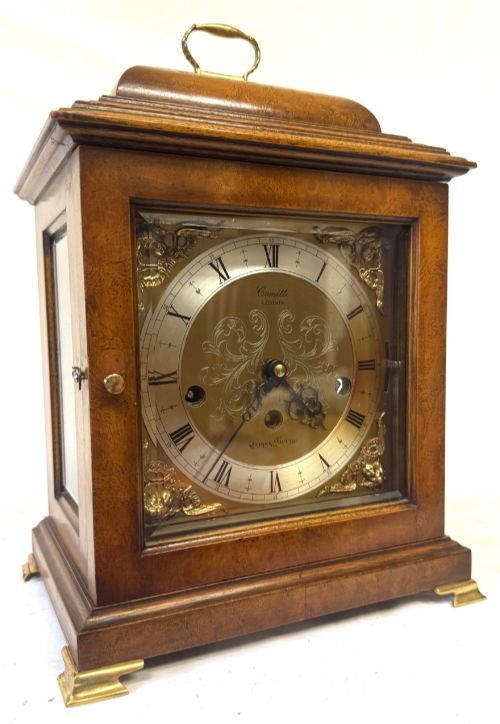
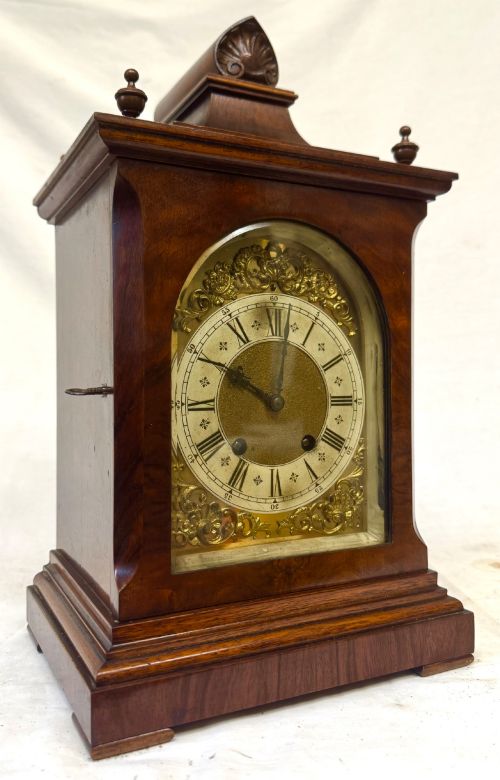
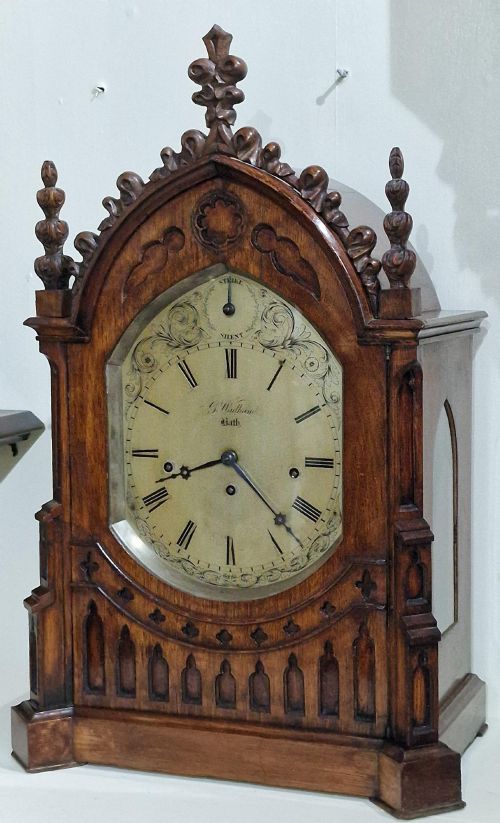
A traditional chiming mantel clock sits on a shelf or sideboard, bringing together timekeeping and acoustic chimes in a compact wooden case. These objects take the form of mantel clocks, bracket clocks, and table clocks, spanning the nineteenth century, the Victorian era, and the early twentieth century.
The versions most commonly met on this page are housed in mahogany, walnut, oak, or burr walnut, often built by English and German makers. Cases range from classical bracket shapes with brass dials to lancet tops and lacquered finishes.
Origins stretch from London workshops to continental makers, employing movements that strike on bells, gongs, or multiple tunes. Buyers encounter pieces styled in the Georgian revival, Gothic revival, Edwardian, and Victorian traditions.
Materials and Movements
Movements rely on twin or triple fusee systems, spring-driven or weight-driven mechanisms, and striking trains that operate bells or gongs. Dials incorporate enamel chapters, engraved brass backplates, and subsidiary hands for regulation and chime selection.
Several clocks carry engraved backplates and hidden date apertures, giving the diligent observer a glimpse into the workshop floor.
Craftsmanship and Mechanism
The standard of a traditional chiming mantel clock rests upon the complexity of its movement, from simple striking trains to multi-tune bracket clocks with fusee gear. Engraved backplates and signed movements by known makers separate ordinary production from superior workshop output.
Cabinetwork defines the exterior merit, judged by the choice of burr walnut or figured mahogany veneers, the crispness of inlaid details, and the integration of brass mounts and glass viewing panels.
H.A.C.·Elliott London·Comitti Of London·Lenzkirch·George Wadham·Brockbanks & Atkins·Mappin & Webb·Winterhalder·Garrards·Cording of London·W & H·Winterhalder & Hofmeier·frodsham & baker·John Taylor·Chater & Son
The Traditional Chiming Mantel Clock Glossary
- Bracket clock
- A portable timekeeper originally designed to sit on a wall bracket to aid sound projection, later placed on tables and mantelpieces. These house spring-driven movements.
- Fusee
- A conical pulley connected to the mainspring by a chain or cord, designed to equalise the torque as the spring unwinds. This mechanism maintains consistent force for better timekeeping.
- Striking train
- The secondary gear train within a clock that causes the movement to sound the hours or quarters. It releases at designated intervals to ring bells or gongs.
- Three train movement
- A clock mechanism containing three separate gear trains for timekeeping, striking, and chiming melodies such as the Westminster sequence. This configuration allows both hour strikes and tune playing.
- Twin fusee
- A movement utilising two separate fusee cones, one powering the timekeeping and the other driving the striking or chiming mechanism. It provides sustained tension across both functions.
Traditional Chiming Mantel Clock: Frequently Asked Questions
How do I wind a traditional chiming mantel clock?
Winding involves inserting a matching key into the designated winding holes on the dial and turning gently until resistance increases. Each train, whether time, strike, or chime, requires its own winding.
Care must be taken not to overwind the mainsprings, stopping as soon as the tension indicates the spring is fully engaged.
Where should I place a mantel clock?
These clocks belong on stable, level surfaces such as mantelpieces, sideboards, or dedicated wall brackets where vibrations are minimal. A level placement ensures the pendulum beats evenly and the escapement functions correctly.
Avoid areas exposed to direct sunlight, dampness, or extreme temperature fluctuations that affect timber cases and metal oils.
How do I identify the period of a clock?
Dating relies on stylistic clues in the wooden case, such as Victorian Gothic revival motifs, Edwardian lancet shapes, or Regency proportions. Movement signatures, dial materials, and construction techniques provide further chronological markers.
Comparing the complexity of the movement and the specific timber veneers helps narrow the decade of manufacture.
What is the difference between a bracket clock and a mantel clock?
Bracket clocks historically originated as portable spring-driven clocks placed on architectural wall brackets to distribute sound through a room. Mantel clocks evolved later to sit directly on furniture surfaces.
Over time, the terms became largely interchangeable in trade descriptions, though bracket clocks often retain classical architectural proportions.