


Dark Oak Bracket Clock
A dark oak bracket clock brings deep timber warmth and precise mechanical rhythm to a room.

Dark Oak Bracket Clock
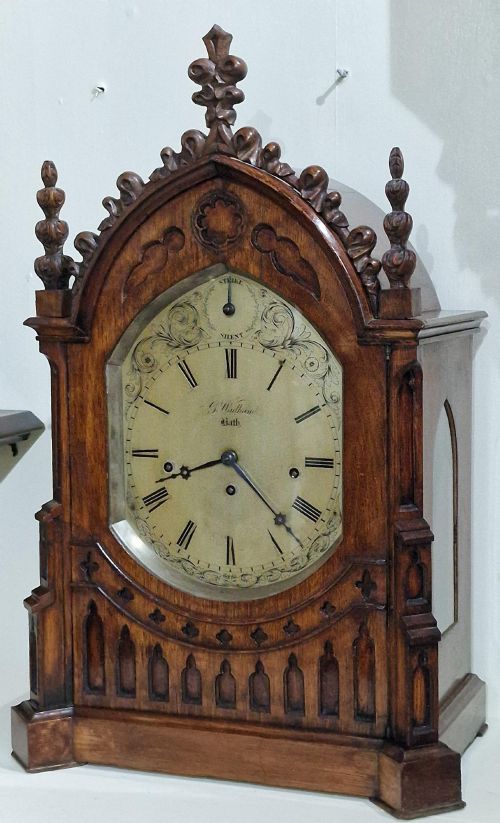
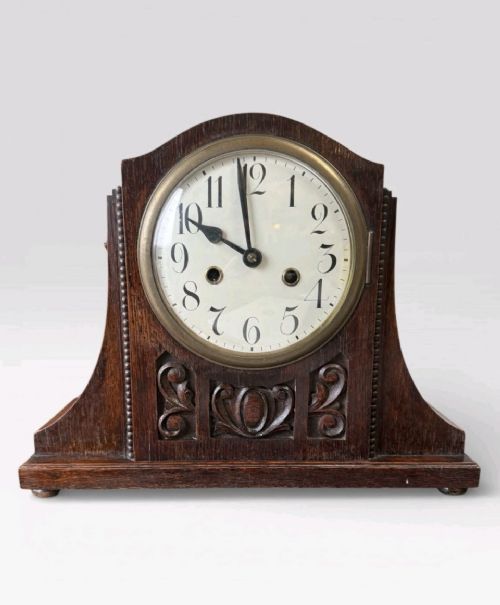
When you search for a dark oak bracket clock, you encounter substantial timepieces housed in sturdy timber cases, often designed to sit on brackets, shelves, or tables. These clocks span from the Victorian era through the Edwardian period and into the 1920s, reflecting changing domestic tastes in timekeeping.
The pieces appearing here include forms ranging from compact mantel clocks to larger boardroom and musical bracket clocks. You will find styles touching upon Gothic Revival, Arts and Crafts, Aesthetic Movement, and Art Deco traditions.
Most examples rely on mechanical movements driven by springs or fuses, housed within dark oak cases embellished with brass dials, bevelled glass, and occasionally hand-carved details. They serve as both functional timekeepers and architectural focal points for a room.
Materials and construction methods
Makers utilised solid oak for the structural carcasses, often selecting timber with prominent grain and applying dark finishes to achieve rich surface tones. Cases frequently incorporate hand-carving, ebonised accents, or clean geometric lines depending on the period and style.
Internal mechanics rely on brass plates, wheels, and escapements, paired with metal dials featuring enamel chapters or brass numerals. Protective glass doors or bezels safeguard the dial, while copper and ceramic components appear in specific movements and decorative fittings.
Listings feature oak-cased timepieces spanning from the Victorian era through the Edwardian period and into the 1920s.
Distinctions in quality
Quality reveals itself in the crispness of the oak carving and the structural integrity of the case joinery. Finer examples display meticulous hand-finishing to the timber and well-proportioned architectural details rather than hasty assembly.
The sophistication of the internal movement dictates much of the distinction at this level. Triple fusee trains, musical chimes, and signed maker movements separate standard timepieces from more complex mechanical achievements.
George Wadham Bath·Winterhalder and Hofmeier
The Dark Oak Bracket Clock Glossary
- Bracket clock
- A portable mechanical clock originally designed to sit on a wall bracket to improve air circulation around the movement. These pieces later became freestanding table and mantel clocks.
- Fusee
- A conical pulley used in mechanical clocks to maintain an even pull on the gear train as the mainspring unwinds. This mechanism improves timekeeping accuracy across the power reserve.
- Triple fusee
- A movement incorporating three separate fusee chains or cords to drive the timekeeping, the striking train, and the chime mechanism. It is typically found in clocks with multiple bells or gongs.
- Aesthetic movement
- A late nineteenth-century design style emphasising visual beauty and artistic expression over narrative or moral content. In clock cases, this often manifests as refined ebonised details and minimalist geometry.
- Arts and Crafts
- A design movement valuing traditional craftsmanship, visible construction, and hand-carved ornamentation. Pieces from this tradition showcase unpretentious oak surfaces and manual joinery.
Dark Oak Bracket Clock: Frequently Asked Questions
How do I wind a mechanical bracket clock?
Most mechanical clocks require a key inserted into specific winding holes on the dial face to tension the internal springs. Turn the key gently until you feel firm resistance, avoiding over-winding to protect the mechanism.
Different trains on the same clock, such as timekeeping and striking, require separate windings at regular intervals. Establish a routine day each week to maintain consistent operation and timekeeping accuracy.
Where should I place a dark oak bracket clock?
Position your clock on a stable, level surface away from direct sunlight, central heating vents, and damp areas. Substantial wooden cases require firm support, whether on a sturdy mantelpiece, sideboard, or dedicated wall bracket.
A level placement ensures the pendulum or escapement beats evenly, which keeps the mechanical movement running smoothly. Avoid placing clocks in high-traffic hallways where vibrations might disturb the pendulum.
How do I identify the period of an oak clock?
Examine the stylistic details of the oak case, as Victorian, Edwardian, and 1920s designs employ distinct decorative vocabularies. Gothic Revival and Aesthetic Movement pieces display specific carved motifs or ebonised highlights characteristic of their decades.
Internal movements and dial signatures also provide clues to the era of manufacture. Consulting maker names and movement types helps narrow down the production window alongside the exterior case style.
What maintenance does an antique clock need?
Keep the exterior oak case clean by dusting with a soft, dry cloth, avoiding harsh chemical polishes that can degrade the timber finish. Ensure the glass panels remain secure and free from moisture accumulation.
Mechanical movements benefit from professional servicing every few years to clean old oils and prevent wear on the brass gears. Regular attention preserves both the physical integrity and the timekeeping reliability of the piece.