

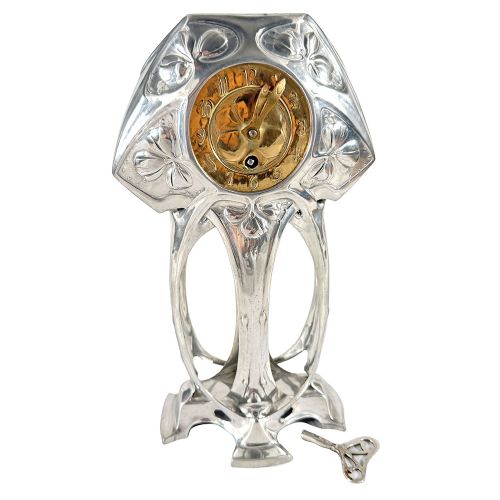
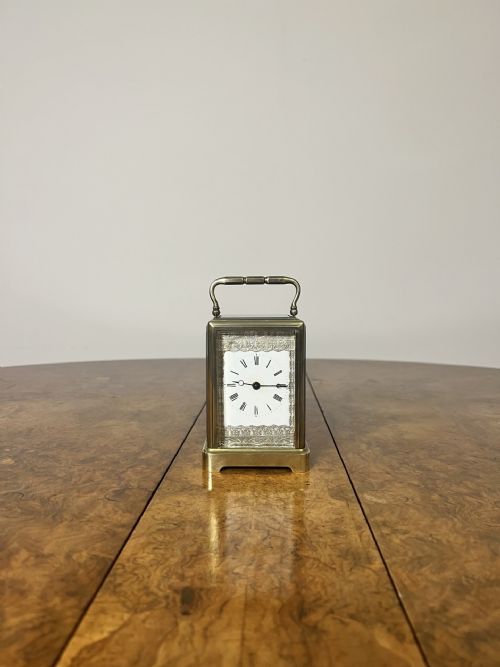


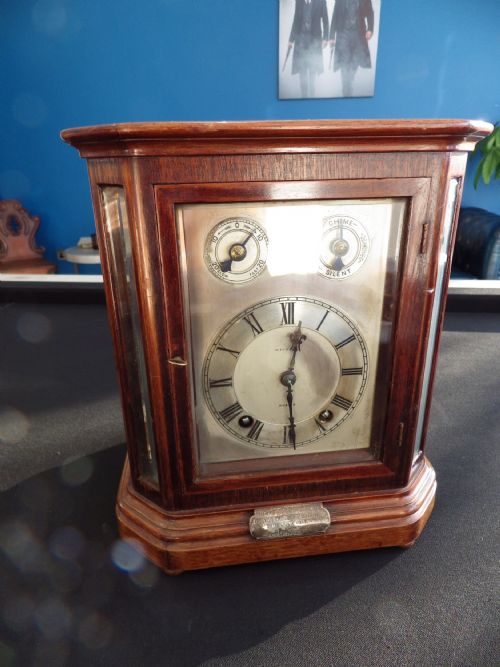


Silvered Dial Mantel Clock
A silvered dial mantel clock brings quiet mechanical rhythm and polished timber to a room, offering both reliable timekeeping and period design.

What a silvered dial mantel clock is
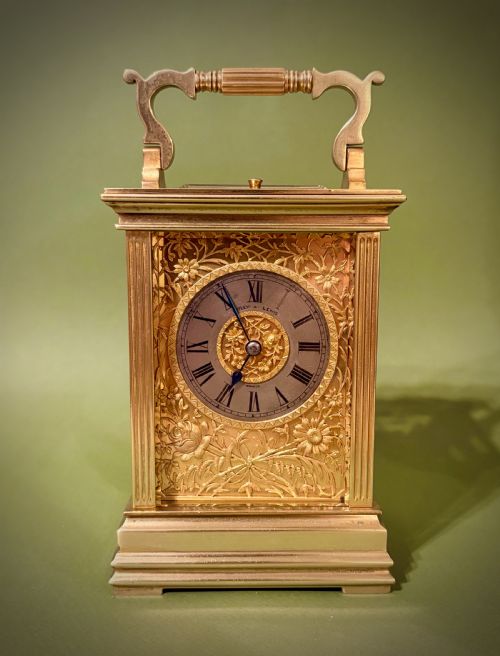
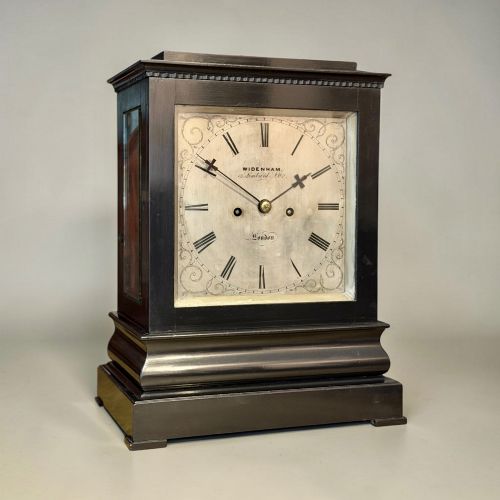
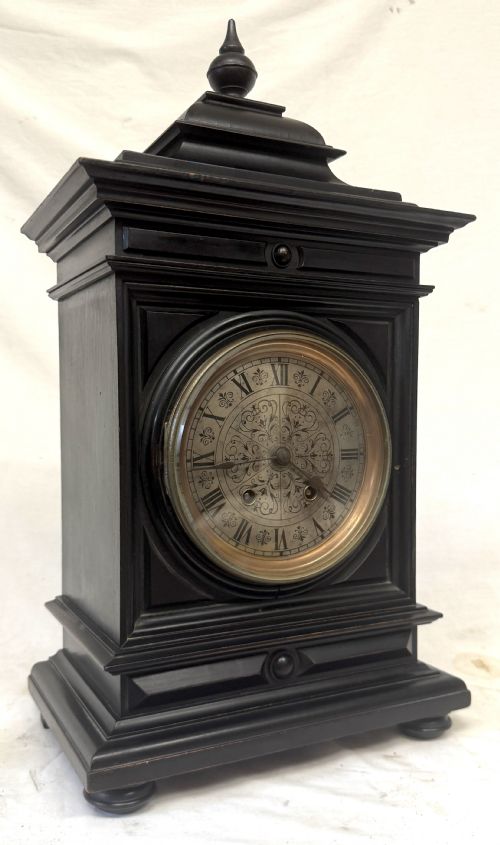
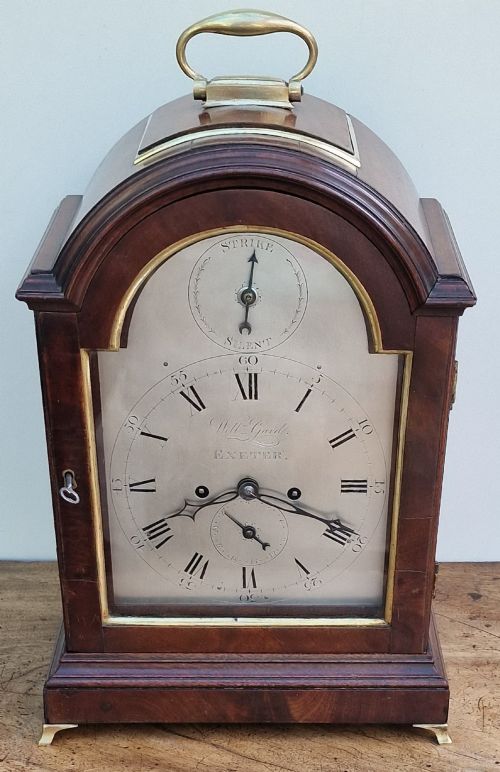
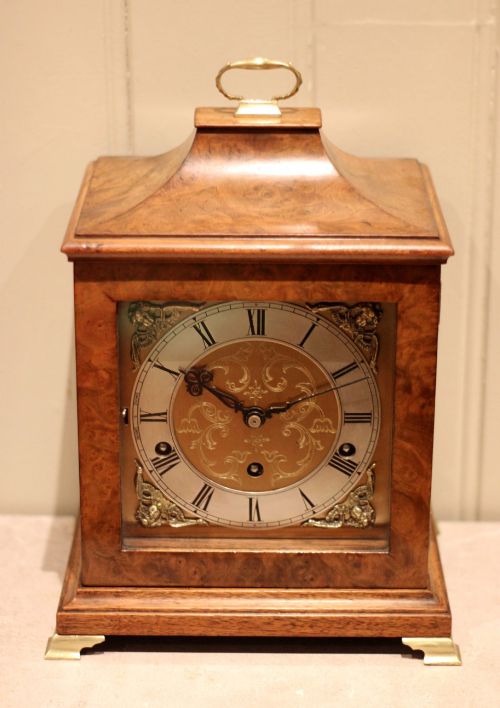
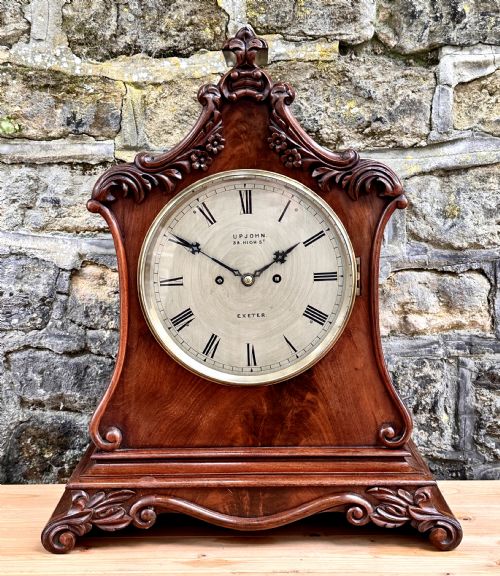
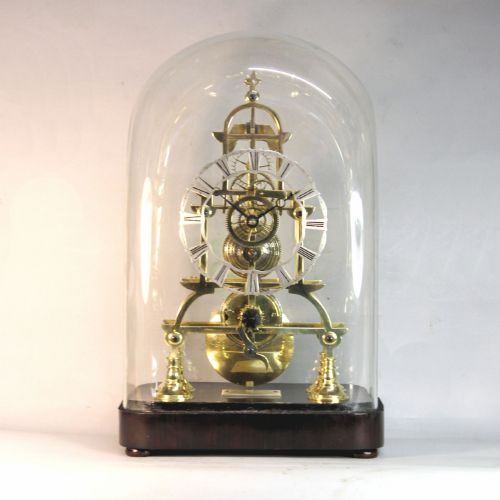
A silvered dial mantel clock stands as a sturdy timepiece designed for domestic interiors, typically occupying a prominent shelf, bracket or fireplace mantel. These pieces draw the eye immediately through their metallic chapter rings, which contrast sharply against dark timber cases.
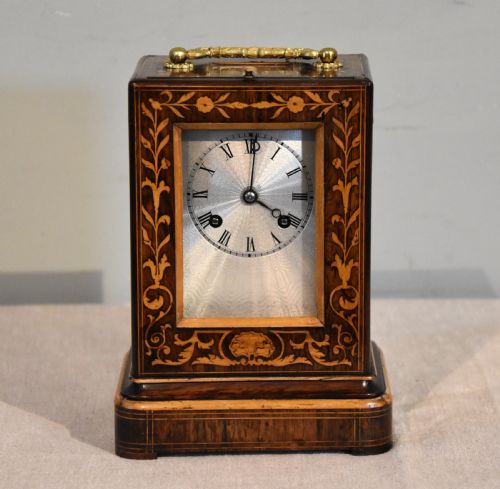
The versions most commonly met on this page span the Victorian and Edwardian eras, encompassing both architectural timber designs and glass-heavy library formats. Makers housed these mechanisms in oak, mahogany and exotic veneers such as coromandel wood, often embellished with mother-of-pearl.
Surviving examples range from straightforward striking models to complex fusee and Westminster-chime movements. Each piece reflects the domestic aspirations of the nineteenth and early twentieth centuries, functioning equally as a practical utility and a decorative centrepiece.
Materials and construction
Casework relies on substantial hardwoods including oak, mahogany and coromandel, chosen for their grain and stability. Cabinetmakers shaped these timbers into architectural pediments, bracket forms and five-glass library housings, sometimes incorporating mother-of-pearl inlay.
Mechanisms employ heavy brass plates and precise gear trains, driven by springs or fusee chains rather than weights. Dials feature a silvered finish achieved through chemical treatment of brass, creating a textured surface that receives engraved numerals and fine steel hands.
Retail Price Guide 2026
Typical UK retail prices for silvered dial mantel clock, calculated from the Sellingantiques database of over a million retail prices indexed since 2003. This retail price guide relies exclusively on Sellingantiques data; no external sources or auction records are used, so the figures do not describe the wider market.
Listings feature oak, mahogany and coromandel wood housings produced across Victorian and Edwardian periods.
Judging quality
Quality reveals itself in the weight of the brass movement and the complexity of the escapement. A superior piece employs a fusee movement to maintain even tension as the spring winds down, ensuring more reliable timekeeping than a standard barrel spring.
Cabinet work separates the ordinary from the exceptional through timber selection and joinery. Solid mahogany or figured coromandel with clean architectural mouldings and bevelled glass panels indicates a higher tier of production than simple veneered carcases.
DENT·W&H
The Silvered Dial Mantel Clock Glossary
- Fusee
- A conical pulley connected to the mainspring by a chain or cord, designed to equalise the torque as the spring unwinds. This mechanism is central to better quality nineteenth-century clocks.
- Silvered dial
- A brass clock face treated with a silver compound to produce a frosted, matte metallic finish. Blackened numerals are typically engraved directly into this surface.
- Ting Tang
- A striking mechanism that sounds two different notes on two separate bells or gongs to indicate the quarters. It provides an audible chime without playing a full melody.
- Bracket clock
- A portable clock originally designed to sit on a wall bracket to improve sound distribution. Later examples like these are simply self-contained mantel clocks with flat or arched tops.
Frequently Asked Questions
How do I wind the clock?
Wind the movement using the appropriate key inserted into the winding holes on the dial face. Turn gently until resistance is felt, taking care not to over-wind.
Keep the winding key in a safe place nearby so it remains with the clock. Regular, gentle winding maintains proper tension in the mainspring.
Where should I place it?
Position the clock on a stable, level surface such as a wooden mantelpiece, heavy sideboard or dedicated wall bracket. A solid foundation prevents vibrations from interfering with the pendulum or balance wheel.
Avoid placing the piece in damp rooms or areas subject to direct sunlight and extreme temperature fluctuations. Stable indoor conditions protect both the timber case and the brass movement.
How do I set the correct time?
Move the minute hand forward slowly until the clock shows the correct time. Avoid spinning the hands backward, particularly on chiming models, as this can jam the gear train.
Allow the striking mechanism to complete its sequence on the hour before advancing the hands further. Patience during setting prevents internal misalignment.
What maintenance does it need?
Dust the exterior timber case regularly with a soft, dry cloth and clean the glass panels with standard glass cleaner. Avoid harsh chemical polishes that might damage antique wood finishes.
Arrange for professional servicing every few years to clean old oil from the brass pivots and gears. Fresh lubrication prevents wear on the metal components.