


Brass Barograph
A brass barograph records atmospheric pressure onto paper charts day after day, combining precision mechanics with handsome cabinetry.
Brass Barograph
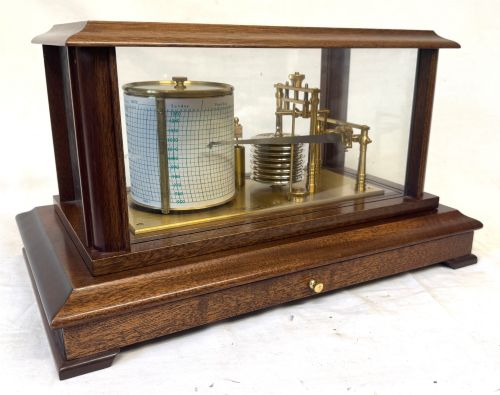
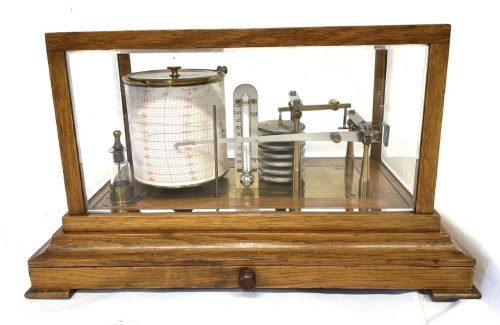
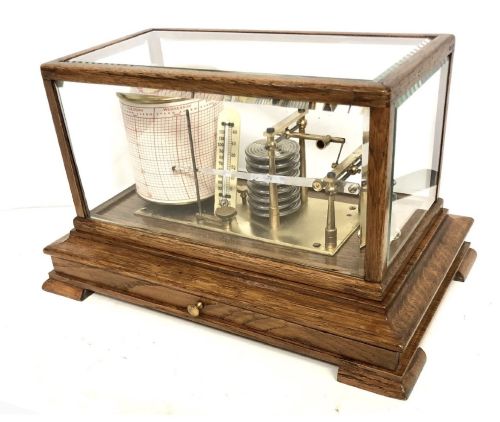
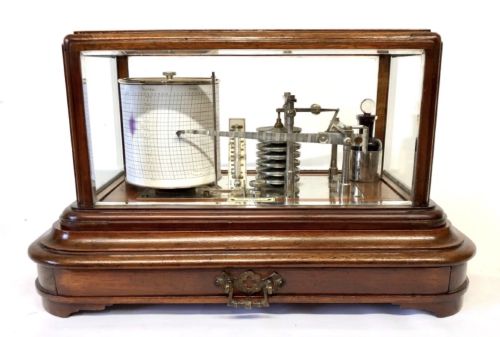
A brass barograph is a recording weather instrument housed within a glazed wooden or metal case, designed to chart changes in barometric pressure over time. When exploring this selection, buyers encounter instruments primarily spanning the Victorian, Edwardian, and interwar periods, alongside mid-century examples.
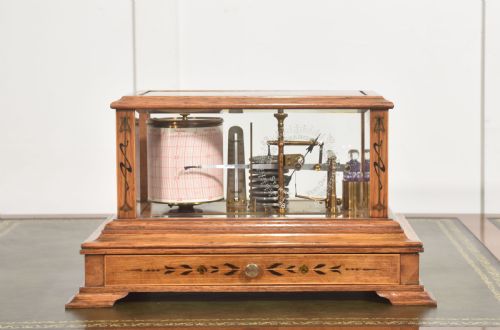
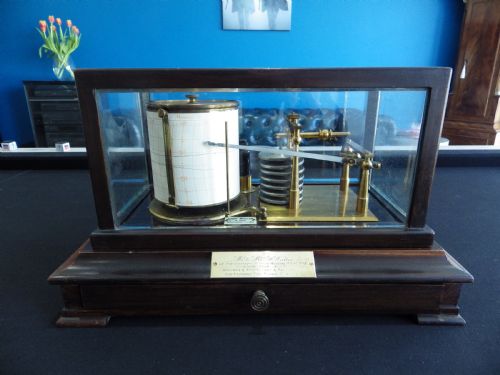
Most pieces combine a brass and steel movement with a cabinet of mahogany or oak, often incorporating bevelled glass panels to display the ticking mechanism. Certain models include an ancillary thermometer or a lower drawer intended for storing unused paper charts.
Makers such as Short & Mason and Negretti & Zambra dominate the recorded pieces, offering both standard table models and specialised variants bearing railway or retail connections. The forms range from simple five-glass enclosures to inlaid Art Nouveau designs and wall-mounted formats.
How they were made
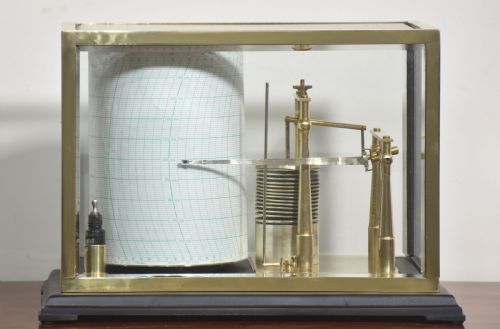
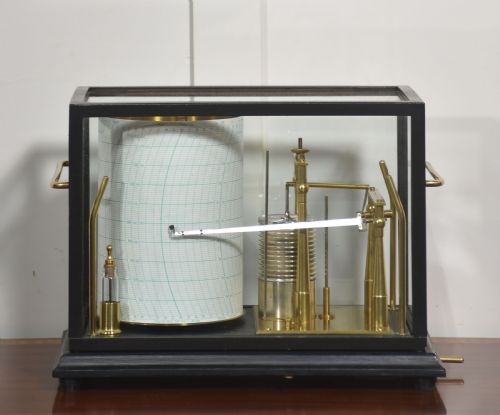
Makers constructed the primary chassis from brass and steel, utilising stacked aneroid metal diaphragms to expand and contract with shifts in atmospheric pressure. This movement connects via a delicate series of levers to an inked arm that traces a continuous line across a revolving drum clockwork mechanism.
Enclosures rely heavily on timber frames of mahogany, oak, or walnut, fitted with multiple panes of bevelled glass to protect the sensitive instrument while permitting observation. Cabinetmakers shaped and polished these woods to complement domestic interiors, frequently adding brass carrying handles and chart drawers.
A miniature French design exists solely to prove that complex weather tracking could fit neatly in the palm of a hand.
What varies in quality
Quality rests upon the reputation of the maker and the precision of the mechanical movement housed inside the cabinet. Signed instruments from established workshops display finer tolerances in their brass levers and more reliable clockwork drums.
The choice of exterior materials and decorative detailing similarly separates standard examples from superior pieces. Marquetry inlay, gilt brass fittings, or specific timber selections elevate the cabinet work considerably beyond a plain utility case.
Short & Mason·Negretti & Zambra·Richard Freres·Gaupp & Co·R Fuess
The Brass Barograph Glossary
- Aneroid barograph
- An instrument measuring atmospheric pressure without liquid mercury, using expanding metal chambers to drive a recording arm. This design allowed the apparatus to sit safely on a library table or mount to a wall.
- Chart drawer
- A shallow compartment built into the base of the wooden case to hold spare weekly paper graphs. This feature keeps replacement stationery close at hand for the operator.
- Bevelled glass
- Pane edges ground and polished at an angle to catch the light and fit neatly into the wooden framework. It marks a higher standard of cabinet finishing than flat-cut glass.
- Clockwork drum
- A cylindrical brass drum containing a spring-driven clock mechanism that rotates once every seven days. The paper chart wraps directly around this cylinder for the inked arm to mark.
- Thermometer
- A secondary temperature scale mounted alongside the main pressure dial or case interior. It provides an additional atmospheric reading within the same instrument housing.
Brass Barograph: Frequently Asked Questions
How does a brass barograph work?
Stacked metal vacuum chambers expand and contract as air pressure rises and falls. This movement transmits through brass linkages to an arm holding an ink nib.
The nib rests against a paper chart secured around a revolving drum, recording a continuous seven-day line of weather changes without human intervention.
How do I change the paper chart?
You lift the glass lid and gently release the inked arm from the paper surface using the small lever provided. The rotating brass drum lifts out or opens to allow the old weekly chart to slide off and a fresh one to be clipped in its place.
After refilling the nib with specialised ink, you lower the arm back onto the paper grid at the correct day and time.
Where should I place a barograph at home?
These instruments require a stable, level surface away from direct sunlight, radiators, and heavy vibrations that might disturb the delicate internal levers. A study, hallway, or living room table suits them well, provided the location maintains a relatively steady room temperature.
Wall-mounted versions need secure fixings into solid masonry or studs to support the weight of the brass and timber case.
How do I date an antique barograph?
Stylistic clues within the timber case offer the first indication of age, such as Victorian mahogany moulding, Edwardian oak finishes, or later Art Nouveau inlaid motifs. Maker signatures and engraved serial numbers on the brass bedplate often allow exact chronological matching against historical trade records.