


Antique Barograph Drawer
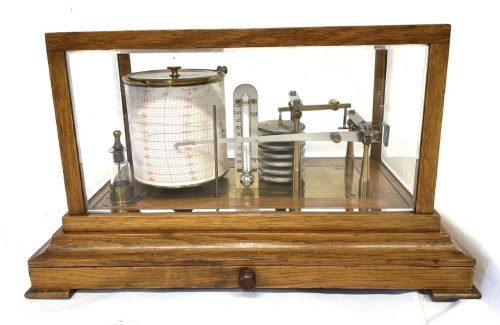
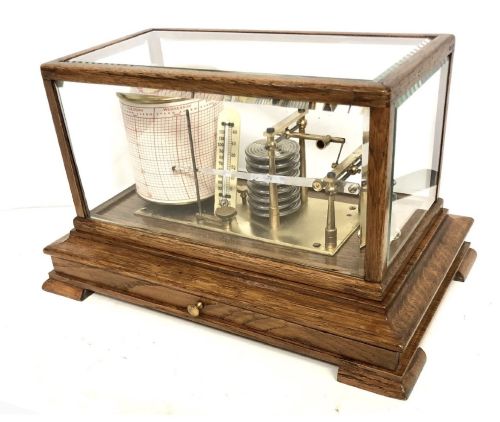
An antique barograph drawer holds the paper charts beneath a weather-recording instrument housed in glass and wood.
Antique Barograph Drawer
An antique barograph drawer forms the integral storage compartment located in the base of a recording barometer. These scientific instruments measure atmospheric pressure over time and trace the changes onto a paper chart stored right below the mechanism.
Most examples found on this page date from the Victorian and Edwardian periods, stretching into the nineteen-thirties. They take the form of five-glass wooden cases resting on flat plinths containing the pull-out storage tray for spare charts.
Buyers look for these pieces to acquire a working meteorological instrument that combines mechanical complexity with period furniture. The drawer itself provides the practical space that keeps the recording sheets organised beneath the brass and glass movement.
How they were made
Cabinet makers constructed the outer housings using solid and veneered timbers such as oak, mahogany and walnut. They fitted bevelled glass panels into the top and sides so the delicate internal brass and steel levers remain visible from all angles.
The lower section incorporates a pull-out drawer designed specifically to hold paper recording charts and spare ink bottles. Some models integrate additional thermometer scales or barometer dials directly into the wooden framework alongside the main drum.
Listings on this page combine brass, glass and steel mechanisms with oak, mahogany and walnut cabinetry spanning the Victorian and Edwardian eras.
What varies in quality
Quality depends upon the precision of the mechanical movement and the reputation of the maker supplying the instrument. Signed works by established scientific instrument houses show finer finishing on the brass levers and more precise calibration.
The choice of cabinet timber and the joinery of the housing also set examples apart. Heavier woods with bevelled glass panels and well-fitted chart drawers represent the higher standard of domestic scientific equipment.
SHORT AND MASON·CASELLA LONDON·BAINES HARROGATE·HARRODS OF LONDON·NEGRETTI AND ZAMBRA
The Antique Barograph Drawer Glossary
- Barograph
- A recording barometer that uses an aneroid mechanism to trace atmospheric pressure onto a rotating paper drum. The resulting ink line shows weather trends over a weekly cycle.
- Chart drawer
- The integrated storage compartment built into the base of the wooden case. It holds spare paper recording sheets ready for use.
- Aneroid
- A sealed metal capsule that expands and contracts with changes in atmospheric pressure without using liquid mercury. This movement drives the recording arm.
- Bevelled glass
- Glass panes with angled edges fitted into the sides and top of the wooden case. This technique adds depth and clarity to the display of the movement.
Antique Barograph Drawer: Frequently Asked Questions
What is a barograph drawer used for?
The drawer sits underneath the main weather-recording instrument to hold spare paper charts and ink supplies.
Keeping the spare sheets inside the base ensures they stay flat and clean until needed for the rotating drum.
How do you date an antique barograph?
Dating relies on the style of the wooden case, the type of timber used, and any maker signatures on the brass bedplate. Victorian and Edwardian models often feature distinct cabinetwork and bevelled glass.
Makers frequently signed the metal plates or paper dials, which helps narrow down the decade of manufacture.
Where were these instruments placed?
Owners kept these barographs in libraries, studies, and entrance halls of large homes to monitor daily weather changes. Their polished wood and glass cases matched the domestic furniture of the period.
The enclosed glass box protected the sensitive brass mechanism from dust while remaining decorative.
Do these barographs still record weather?
Many surviving examples retain their working aneroid movements and can still trace pressure changes onto paper charts. Proper calibration allows them to function just as they did over a century ago.
Collectors often source replacement charts and special ink to keep the mechanical drums operational.