



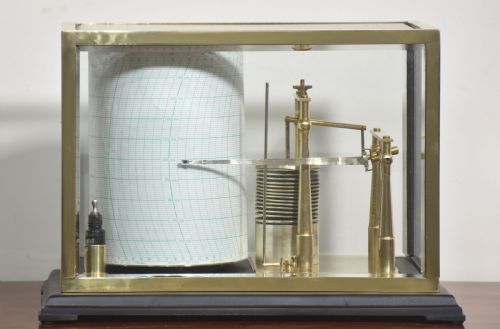
Scientific Instrument Barometer
A scientific instrument barometer records atmospheric pressure shifts, offering practical weather forecasting housed within handsome timber and metal casing.
Scientific Instrument Barometer
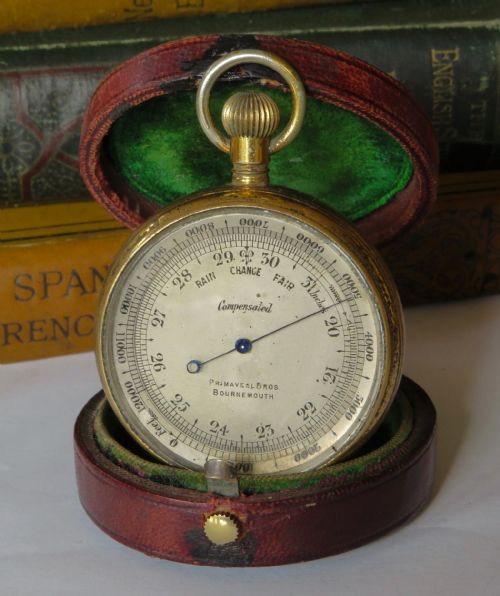
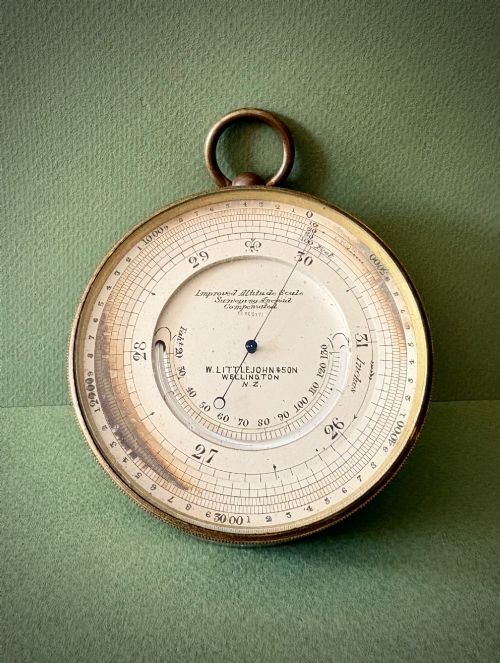
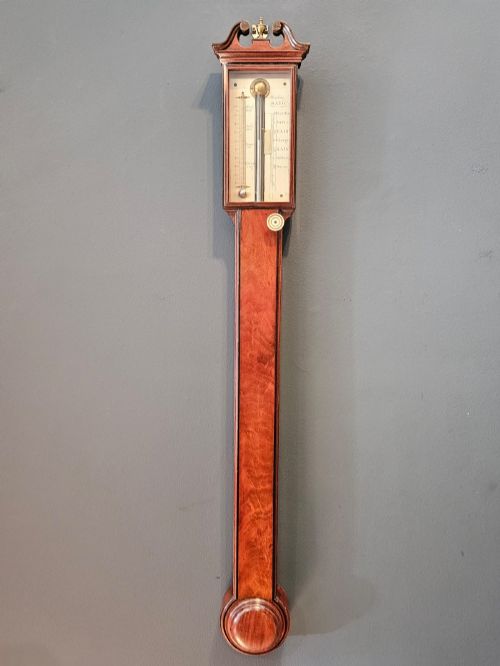
A scientific instrument barometer bridges functional meteorological recording and decorative domestic furnishing across several historic eras. Buyers examining this page encounter diverse formats ranging from portable pocket pieces to substantial wall-hanging stick barometers.
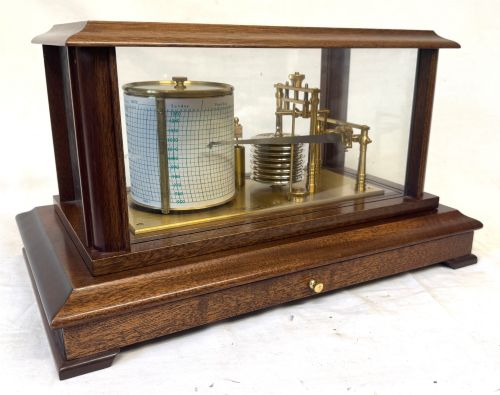
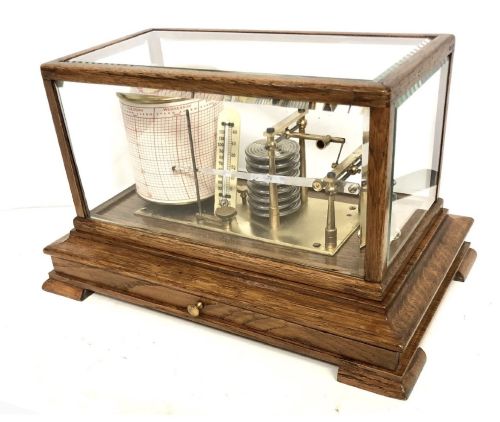
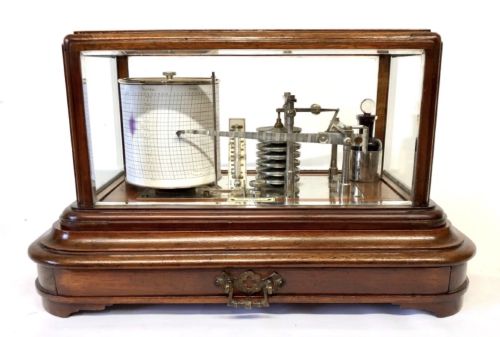
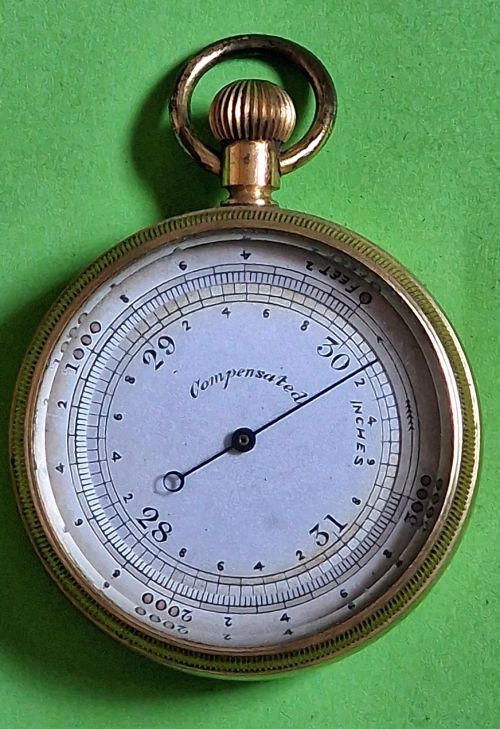
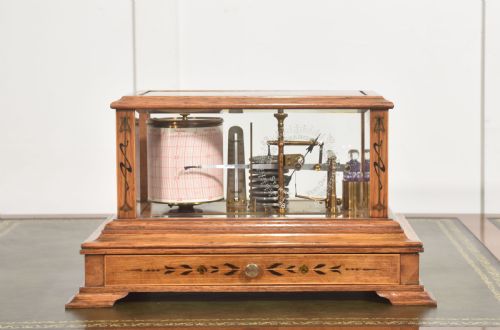
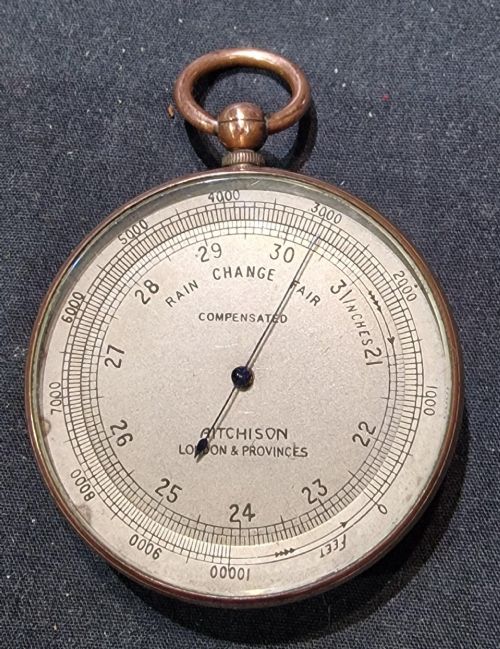
The selection encompasses Georgian, Regency, and Victorian stick barometers alongside mechanical barographs and pocket altimeters. Most examples present traditional timber framing paired with clear glass dials or protective bevelled panels.
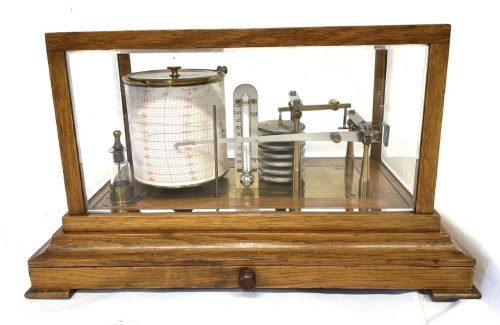
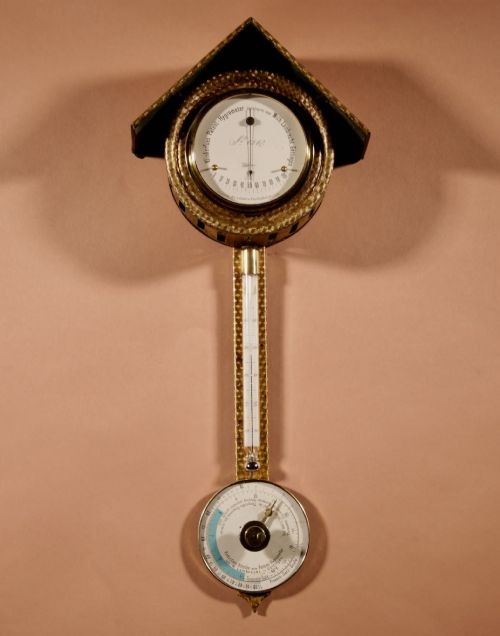
Originating primarily from British workshops, these instruments combine precision mechanics with cabinet-making traditions. Domestic interiors frequently accommodate wheel barometers or oak-cased weather stations featuring integrated thermometers.
How they were made
Cabinet makers utilised dense hardwoods including mahogany, oak, rosewood, and walnut to construct sturdy protective housings. Timber frames often incorporated fine veneers, mother-of-pearl inlay, or carved architectural details.
Internal mechanisms combine delicate brass components, steel springs, and glass barometer tubes filled with mercury or aneroid capsules. Bevelled glass viewing windows and bone scale plates provide clear visibility for reading pressure measurements.
Listings feature mahogany, oak, rosewood, and walnut timber housings combined with brass, glass, steel, and bone components.
What varies in quality
Execution of the timber cabinetry and the legibility of engraved scale plates distinguish superior specimens. Maker signatures from reputable scientific instrument firms often indicate higher grade mechanical calibration.
Integrity of the original glass components, dials, and supplementary thermometers influences the overall standard. Examples retaining original paperwork, boxes, or intact mechanical recording charts command greater attention.
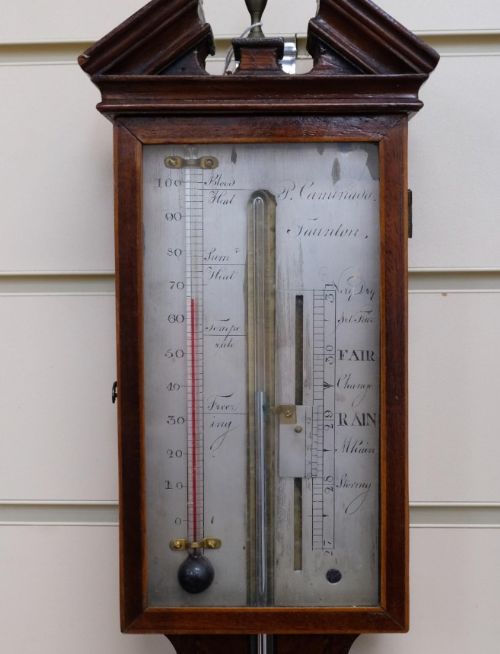
Negretti & Zambra·Short & Mason·George Adams London·P Caminada Taunton·Gaupp & Co Hongkong·Wilh Lambrecht Gottingen·G & L Guanziroli·Dollond of London·Ganthony of London
The Scientific Instrument Barometer Glossary
- Aneroid barometer
- An instrument measuring atmospheric pressure without liquid, using a flexible metal box that expands or contracts.
- Barograph
- A self-recording meteorological instrument that plots barometric pressure readings continuously onto a rotating paper chart.
- Stick barometer
- A tall, narrow wall-mounted instrument housing a vertical glass tube filled with mercury to display pressure changes.
- Altimeter
- A device measuring altitude above a fixed level, frequently combined with pocket barometer mechanisms for travel use.
- Hygrometer
- An instrument utilised for measuring the humidity content within the surrounding air.
Scientific Instrument Barometer: Frequently Asked Questions
How do I read a stick barometer?
Observe the height of the mercury column inside the glass tube against the engraved scale plates. Rising levels indicate improving weather conditions while falling columns suggest approaching storms.
Adjust the moveable vernier scale using the exterior brass key to align with the top of the mercury meniscus for precise readings. Comparing successive daily measurements reveals local pressure trends.
Where should I place a barometer at home?
Position the instrument on an interior wall away from direct sunlight, heating radiators, and draughty doorways. Rapid temperature fluctuations can interfere with the internal mechanical calibration.
Ensure the mounting surface remains stable and vertical, particularly for stick barometers and heavy oak-cased barographs. Height should permit easy viewing of the dial face and adjustment pointers.
How do I tell a Georgian barometer from a Victorian one?
Georgian instruments often feature restrained mahogany stick cases with simple architectural pediments and brass cistern covers. Maker signatures are frequently engraved directly onto the silvered brass dial plate.
Victorian examples embrace wider stylistic variety, including inlaid rosewood wheel barometers and mechanical oak barographs with chart drawers. Heavier ornamentation and the presence of aneroid movements typically point to this later period.
What maintenance do these barometers need?
Keep the exterior timber clean by applying occasional wax polish appropriate for historic furniture. Avoid using abrasive cleaning agents on the brass fittings or glass panels.
Internal mechanical adjustments should be left to specialist conservators to prevent damaging delicate linkages. Moving mercury instruments requires proper locking procedures to protect the glass tube.