
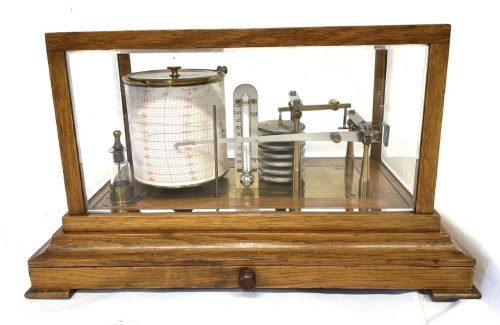
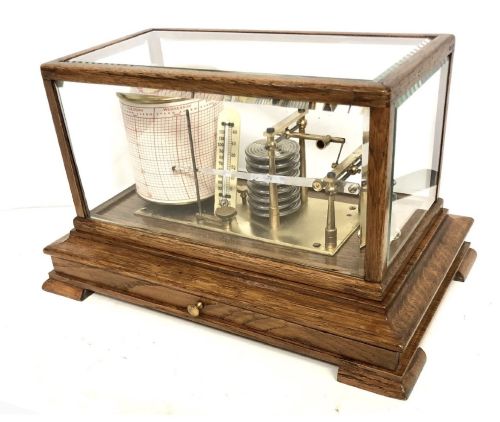
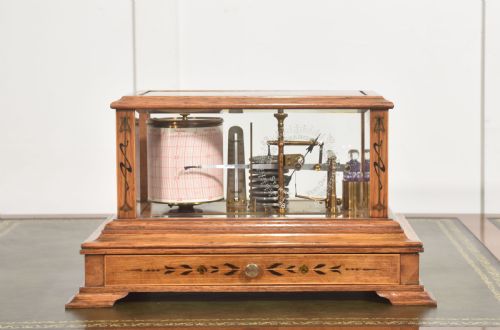


Oak Cased Barograph
An oak cased barograph records atmospheric pressure on paper charts, combining precision mechanics with a handsome wooden cabinet that sits proudly on any desk.
Oak Cased Barograph
An oak cased barograph is a meteorological instrument housed in a timber housing with glass panels, designed to track weather changes over a week. When you search for an oak cased barograph, you encounter pieces spanning from the Victorian and Edwardian eras through to the 1930s and 1940s, alongside broader nineteenth century examples.
The version most commonly met on this page is the five glass case configuration, often fitted with a chart drawer beneath the main mechanism. Many examples incorporate a thermometer mounted on the bedplate or feature combination units that pair the recording drum with an aneroid barometer dial.
Makers and retailers such as Short & Mason, Negretti & Zambra, and Hezzanith stamped their names on these instruments, reflecting both British scientific workshops and regional outfitters across England and Scotland.

Materials and construction
The housing relies heavily on solid oak, frequently paired with bevelled glass panes that allow a clear view of the working brass mechanism and steel recording arm inside. Cabinetry varies from dark Victorian timber to lighter Edwardian or golden oak variants.
Internal components combine brass for the stacked vacuum chambers and gear trains, steel for springs and levers, and paper for the weekly recording charts. Some models display decorative touches like Art Nouveau inlay on the woodwork.
Oak Cased Barograph Retail Price Guide 2026
Typical asking prices for oak cased barograph among the pieces listed under this phrase on Sellingantiques today, from the lower quarter to the upper quarter. They describe what is for sale here now, not the wider market.
Archived records show Scottish retailers and London scientific makers produced weather stations housed in golden and dark oak cabinets.
Evaluating quality and finish
Quality rests in the crispness of the maker's signature engraved on the bedplate and the robustness of the oak joinery. Finer instruments exhibit heavy cast brass frames, thick bevelled glass panels, and smooth cabinet finishes with integrated chart drawers.
Makers like Negretti & Zambra and Short & Mason generally represent higher grade scientific production compared to unsigned or simpler workshop variants, while details such as matching aneroid barometer dials or fitted thermometers elevate an instrument's presence.
Short and Mason·Negretti and Zambra·Hezzanith·Jules Richard·John Trotter of Glasgow·Armstrong of Manchester·A J Lizars·Dobbie son and Hutton·J Hicks of London·Baines Harrogate
The Oak Cased Barograph Glossary
- Barograph
- An instrument that records atmospheric pressure continuously onto a revolving drum holding a paper chart. It uses stacked aneroid metal capsules to drive a pen arm.
- Aneroid Barometer
- A device for measuring air pressure without liquid, using a flexible metal box that expands or contracts as pressure shifts. Many listings pair this dial directly with the recording drum.
- Bedplate
- The heavy metal baseplate that anchors the recording mechanism, barometer dials, and thermometers inside the wooden enclosure. It frequently bears the maker's signature and serial number.
- Chart Drawer
- A shallow storage compartment built into the base of the wooden housing to hold spare weekly recording papers and ink. It is a hallmark of better quality domestic weather stations.
- Bevelled Glass
- Panes of glass with edges cut at an angled slope, fitted into the top and sides of the wooden case to catch the light. This treatment signifies a higher standard of cabinet making.
Oak Cased Barograph: Frequently Asked Questions
How do I operate an oak cased barograph?
Operation involves winding the clockwork drum that rotates the paper chart once a week and ensuring the pen holds fresh ink. The stack of metal vacuum capsules responds to changing air pressure, moving the arm up and down.
Charts must be replaced weekly to maintain a continuous weather record. The instrument needs to sit on a level surface away from direct heat sources to register accurate pressure readings.
How do I tell an Edwardian barograph from a Victorian one?
Victorian examples tend to use darker, heavier timber and sometimes incorporate more ornate brass fittings or mid-century proportions. Edwardian pieces often showcase lighter oak tones and cleaner lines reflecting the turn of the century.
Makers often dated their bedplates or chart drawers, providing a direct reference point. Stylistic clues like subtle Art Nouveau inlay point towards the early twentieth century.
Where should I place a barograph at home?
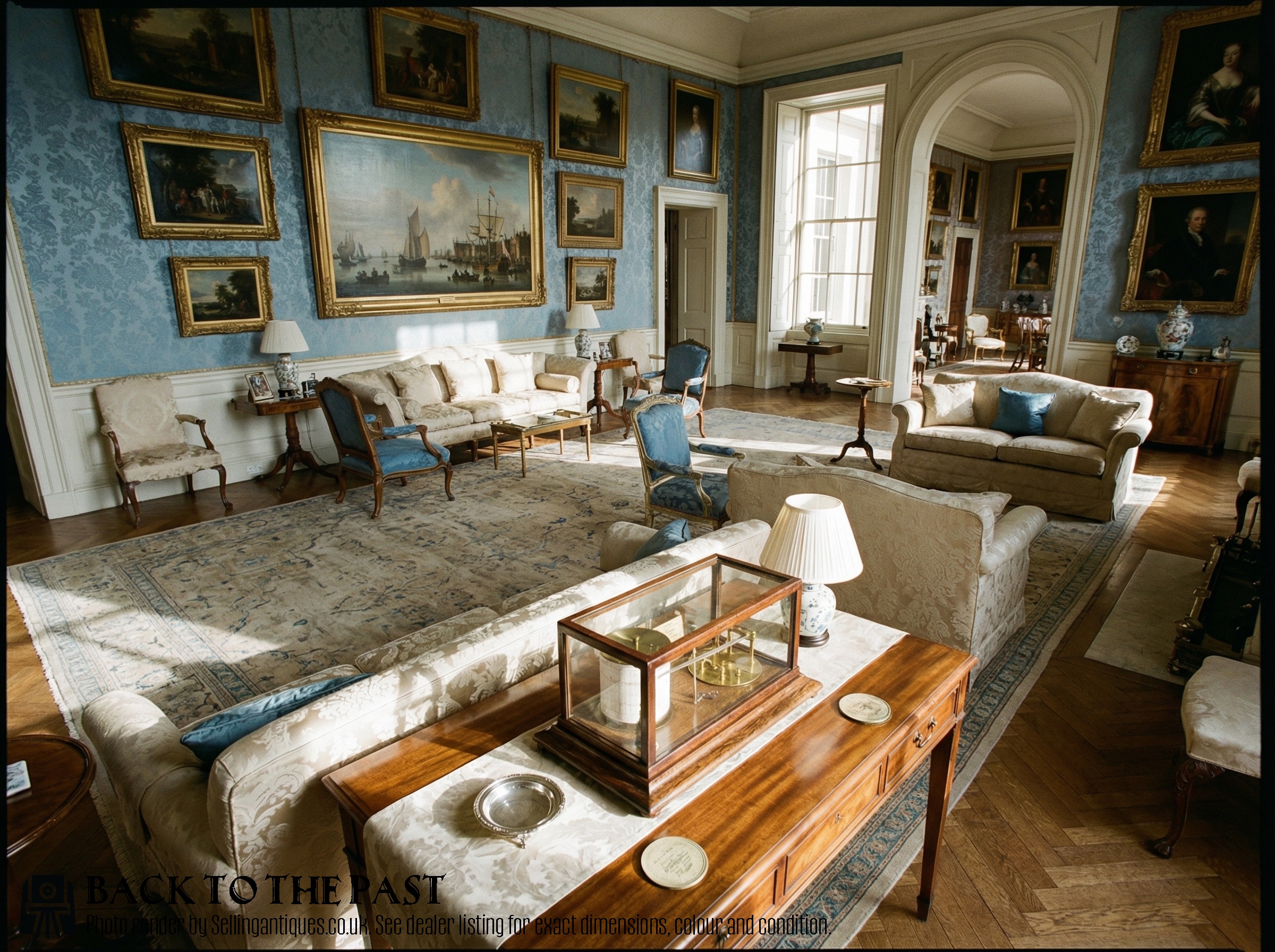
Place the instrument on a sturdy desk, table, or sideboard where it is safe from vibrations and heavy foot traffic. A stable indoor environment ensures the aneroid mechanism records true barometric pressure rather than mechanical bumps.
Keep the piece out of direct sunlight to prevent the oak case from drying out and to protect the paper charts stored in the base drawer.
Did all barographs include thermometers?
Many models incorporated a thermometer mounted on the brass bedplate alongside the recording drum, but plenty of standard units omitted them. Combination pieces also frequently paired the barograph with a separate aneroid barometer dial.
Whether a thermometer is present depends on the specific model ordered from makers like Negretti & Zambra or Short & Mason.